The legacy of Henri Duparc (1848-1933), who died at Mont-de-Marsan on 12 February 1933, rests on a remarkably small body of works. Although he only composed a limited number of French mélodies, either sixteen or seventeen, depending on the source, these songs are widely regarded as among the finest ever written in the genre.
Duparc’s life tells a story of immense promise, intense self-criticism, and devastating illness that culminated in decades of creative silence. His physical and psychological suffering profoundly shaped his artistic outlook, and his obsessive devotion to perfection is evident in his songs.
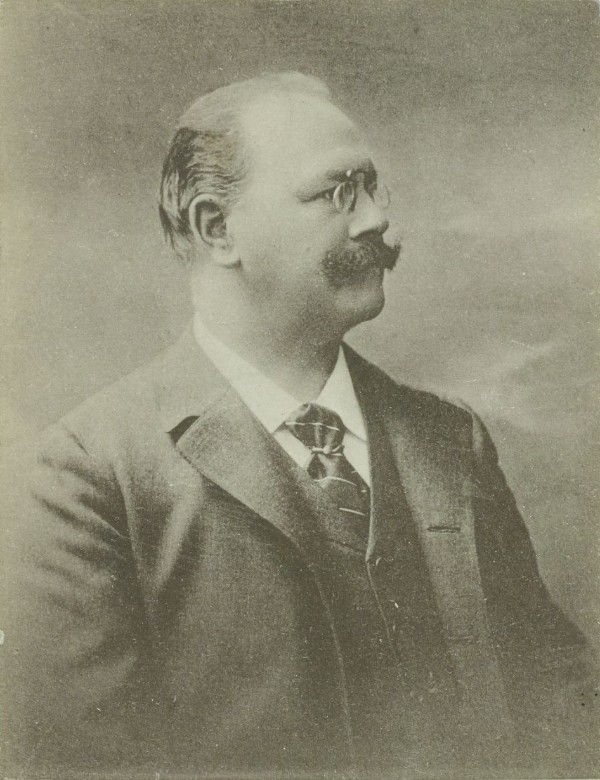
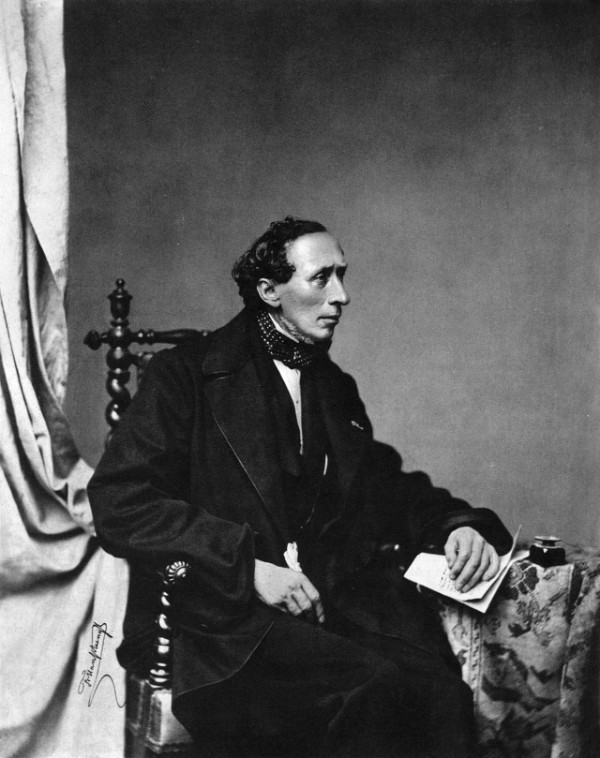
Henri Duparc
Duparc was able to distil emotional intensity, harmonic richness, and poetic sensitivity into forms of extraordinary concentration. In fact, as Martin Cooper suggested, “Duparc was unique in giving the French mélodie a musical substance, an emotional intensity and a unity of poem and music that were not to be equalled until the songs of Fauré’s maturity.” (Cooper, 2001)
Henri Duparc: “La vie antérieure”
Silence Forged in Song
Henri Duparc was born in Paris in 1848 into a cultured bourgeois family. His musical talent appeared early, and he began composing while still a teenager. Crucially, he studied with César Franck, one of the most influential musical figures in late nineteenth-century France.
Franck’s emphasis on structural coherence, chromatic harmony, and spiritual seriousness left a lasting imprint on Duparc’s musical language. Through Franck, Duparc absorbed the ideals of German Romanticism, especially those associated with Beethoven and Wagner, while remaining deeply attentive to French clarity and refinement.
In his twenties, Duparc seemed poised for a substantial career. He composed orchestral works, chamber music, and piano pieces, and he was active in Parisian musical circles. He also co-founded the Société Nationale de Musique, an organisation dedicated to promoting French instrumental music at a time when German influence dominated concert life.
Yet even during this period of productivity, signs of Duparc’s uncompromising temperament were evident. He was intensely self-critical and prone to doubt. Unlike composers who revise works repeatedly before publication, Duparc frequently destroyed pieces he deemed unsatisfactory.
Henri Duparc: Le manoir de Rosemonde (Gérard Souzay, baritone; Dalton Baldwin, piano)
When Words Become Music
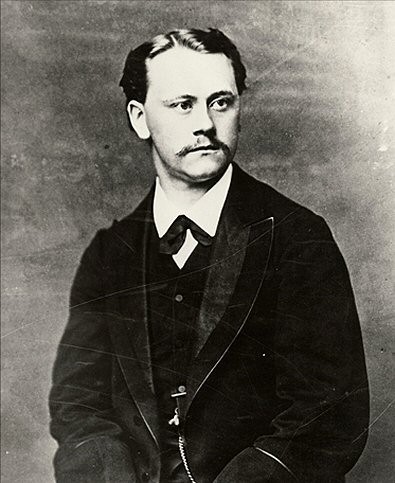
Henri Duparc
Duparc’s lasting contribution lies almost exclusively in the French mélodie, a genre roughly analogous to the German Lied but shaped by the French language and aesthetic. During the late nineteenth century, the mélodie was undergoing a transformation, shifting from salon charm towards deeper psychological and poetic engagement.
Duparc played a crucial role in this evolution. He chose his texts with exceptional care, setting poets such as Charles Baudelaire, Théophile Gautier, Leconte de Lisle, and Jean Lahor. These poets shared an attraction to symbolism, sensuality, and introspection, qualities that resonated strongly with Duparc’s temperament.
His settings reveal a profound sensitivity to prosody and meaning. Rather than simply illustrating a poem, Duparc sought to inhabit it, allowing musical structure, harmony, and texture to arise organically from the text.
In songs like L’Invitation au voyage, Phidylé, Extase, and La vie antérieure, the piano part is not subordinate but symbiotic. It creates an atmosphere within which the vocal line unfolds with restrained intensity. Wagner’s influence is audible in Duparc’s chromatic language and long-breathed phrases, yet the results are intimate, inward, and concentrated.
Henri Duparc: “Phidylé”
Silence by Compulsion
Duparc’s compositional output slowed dramatically in his early thirties, coinciding with the onset of severe mental illness. The exact nature of his condition remains a subject of debate among historians and medical scholars.
Diagnoses proposed retrospectively include neurasthenia, obsessive-compulsive disorder, severe depression, and forms of psychosis. What is certain is that Duparc experienced debilitating anxiety, intrusive thoughts, and a profound loss of creative confidence.
By the mid-1880s, his condition had worsened to the point that composing became psychologically intolerable. He reported feeling unable to write without overwhelming distress, and even listening to music caused him anguish.
One of the most striking manifestations of Duparc’s illness was his compulsion to destroy his own music. He eliminated nearly all of his early works, including orchestral and chamber compositions that contemporaries had admired. What survives today represents only a fraction of what he actually wrote.
Henri Duparc: “Extase”
A Voice Paused
Duparc effectively ceased composing by the age of thirty-six, and he never truly resumed his work. He lived for nearly half a century afterwards, gradually losing his eyesight and becoming increasingly isolated.
These decades of silence have profoundly shaped how his music is perceived. His small oeuvre appears almost sculptural, each piece polished to an extreme degree, standing alone without surrounding works to contextualise or dilute its impact.
This silence also reinforces the tragic aura surrounding his mélodies. They feel like the last utterances of a voice cut short, charged with longing and restraint.
Themes of desire, memory, unattainable beauty, and distant paradise recur throughout his songs, often couched in harmonic suspensions that delay resolution. It is tempting, and perhaps inevitable, to hear in this music a premonition of the silence to come.
Henri Duparc: “Chanson Triste”
Distilled to Essence
Duparc’s illness did not merely limit the quantity of his output; it also shaped the nature of what he wrote. His songs are marked by an extraordinary economy of means. There is little ornament for its own sake, and almost no sense of casual inspiration.
This intensity aligns closely with the psychological pressure under which Duparc worked. For a composer plagued by doubt and obsessive self-scrutiny, only music that achieved total expressive coherence could be tolerated.
The mélodie, with its compact scale and close union of text and music, offered a form in which perfection might still be conceivable.
In this light, his illness paradoxically contributed to the refinement of his art. The narrow funnel through which his creativity passed resulted in music of exceptional focus. Duparc’s songs feel less like spontaneous expressions than carefully distilled essences.
Henri Duparc: Lamento (Catherine Dagois, contralto; Edgar Teufel, piano)
Influence in Every Note
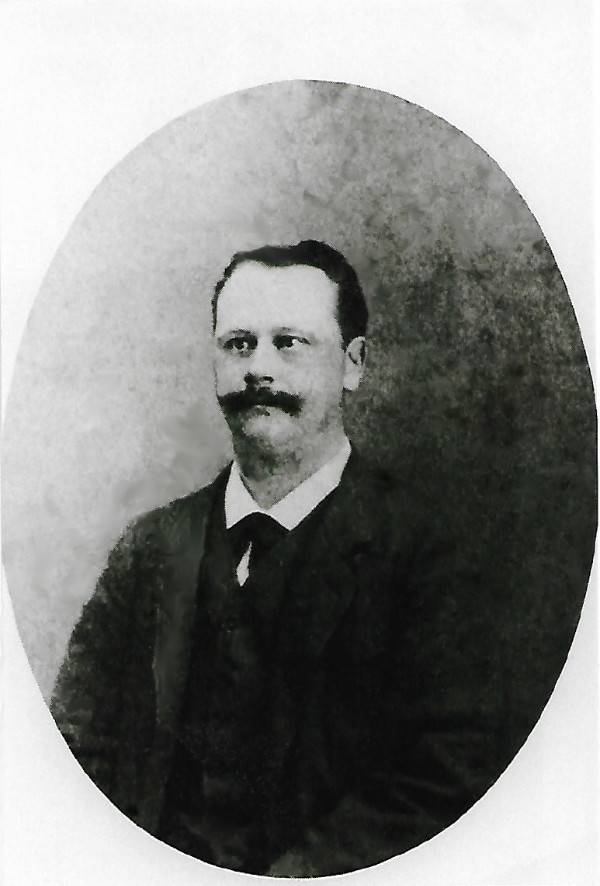
Henri Duparc
Despite their rarity, Duparc’s mélodies exerted a lasting influence on the development of the French art song. Their concentrated expressive power and richly chromatic harmonic language helped shape the emerging mélodie tradition, and elements of Duparc’s approach can be heard in the early songs of Debussy.
Fauré, while pursuing a more understated and continuous lyricism, shared Duparc’s close attention to poetic nuance and expressive restraint. Later composers such as Poulenc, working within the same tradition, inherited this emphasis on clarity, sincerity, and fidelity to text that Duparc helped to establish.
Performers, too, hold Duparc’s songs in special esteem. For singers, they demand exceptional control, long-breathed phrasing, and emotional discipline. For pianists, they require orchestral imagination within a chamber scale and a seriousness of intent that doesn’t tolerate superficiality.
Duparc’s legacy challenges conventional measures of artistic success. He produced no operas, no symphonies, no extended catalogue of works. Yet his mélodies remain central to the repertoire, and are studied, performed, and revered more than a century after their creation.
Henri Duparc: Au pays ou se fait la guerre (Veronique Dietschy, soprano; Emmanuel Strosser, piano)
Perfection in Fragments
Henri Duparc’s life and music are inseparable from his illness, yet his story is not merely one of tragedy. His suffering curtailed his output, but it also sharpened his artistic conscience to an almost unbearable degree.
The result is a body of work that feels complete despite its small size, each song standing as a testament to absolute commitment.
In Duparc’s mélodies, we hear the beauty of Romantic poetry and lush harmony. In addition, we also hear the sound of a composer wrestling with himself, and refusing to speak unless he could express himself with total honesty.
His long silence, painful as it was, frames these works with an almost sacred intensity. They remain as luminous fragments that burn brightly enough to define an entire tradition.
For more of the best in classical music, sign up for our E-Newsletter