Classical music is difficult to write, and most people assume that you need a rigorous formal education to be able to write great works.
However, some of history’s most extraordinary composers forged their creative paths without extensive formal education, relying instead on their natural talent and, most importantly, their determination to teach themselves.
Today, we’re looking at four of the greatest self-taught composers, who remind us all that passion and perseverance can sometimes take you farther than formal schooling can.
Scott Joplin (1868-1917)
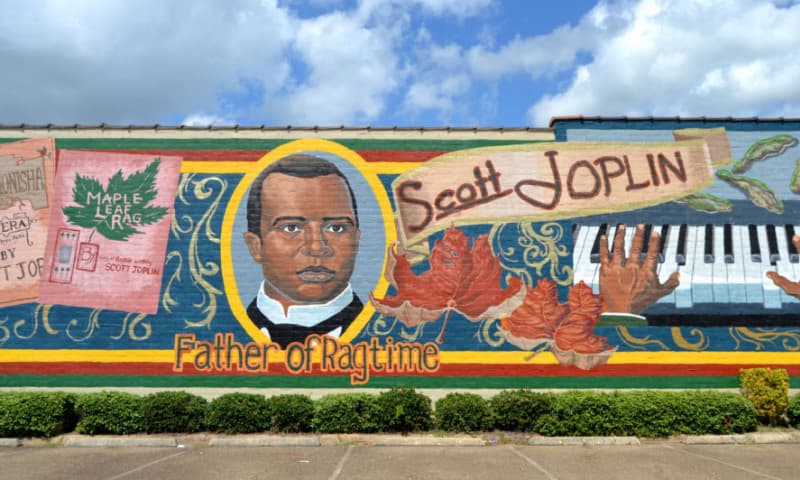
A Scott Joplin mural in Texarkana, Arkansas
Scott Joplin, the future king of ragtime, was born to a former slave and a freed Black woman in a small town on the border of Texas and Arkansas.
His father worked on the railroads, and his mother cleaned houses, so there wasn’t extra money to send Joplin to a conservatory. And even if there had been, Black people faced intense discrimination at American educational institutions, especially in the years immediately following the Civil War.
When he was seven, Joplin began playing the piano in houses while his mother cleaned. He also learned how to play the violin from his amateur musician father.
At eleven, he began studying with Julius Weiss, a piano teacher who had been hired by a wealthy local family.
Weiss gave him lessons free of charge and began sharing new genres of music with his prize pupil, from folk music to opera.
Scholarships are limited and records are spotty, but we do know that Joplin eventually enrolled at the George R. Smith College, a historically Black college located in Sedalia, Missouri.
Some biographies claim that Joplin studied advanced composition here, while others doubt that the college’s curriculum included any advanced courses in composition.
Sadly, the college’s archives were destroyed by fire in 1925, so many details of Joplin’s education here remain unknown.
In any case, it wasn’t a conventional conservatory education. Despite this, and despite a variety of professional and personal obstacles he faced later in his career, he has since become one of the most famous American composers of his generation.
In 1976, he won a posthumous Pulitzer Prize.
Scott Joplin: Maple Leaf Rag
Arnold Schoenberg (1874-1951)
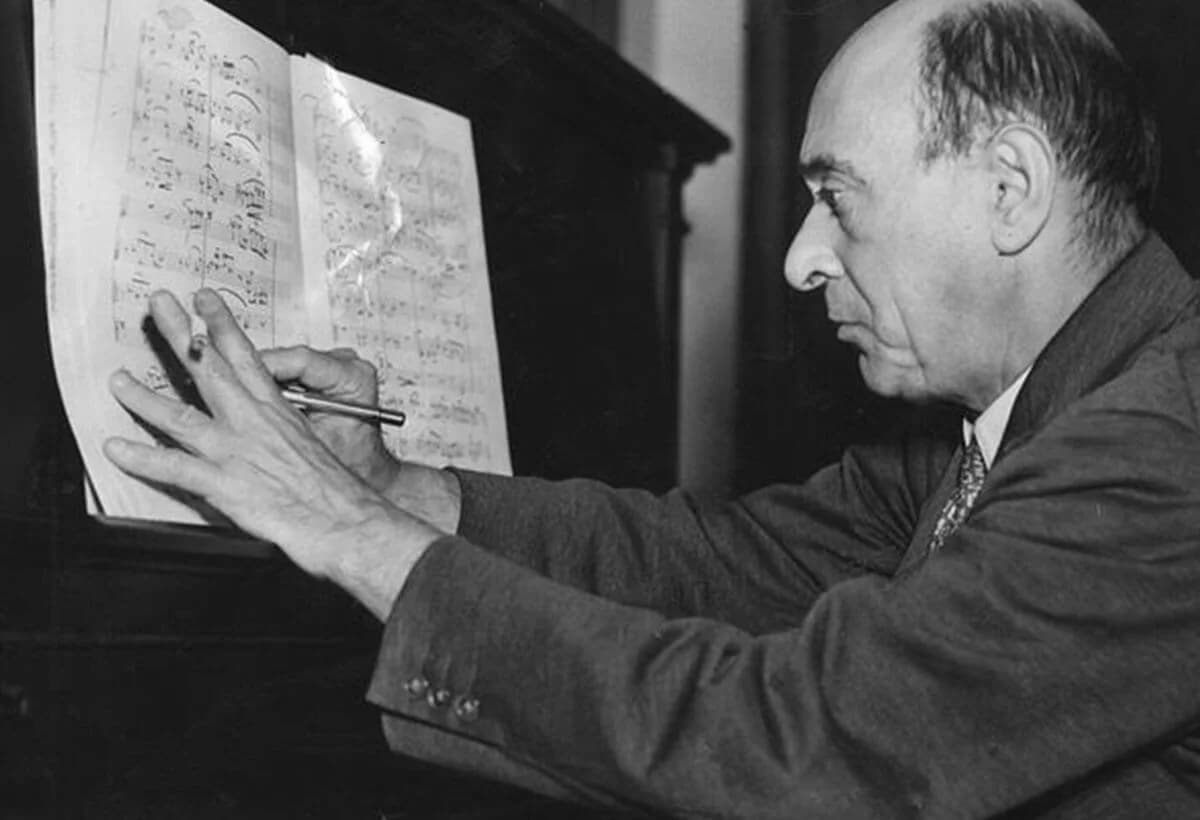
Arnold Schoenberg
Arnold Schoenberg was born to a modest Viennese family, headed by a keeper of a shoe shop and his wife.
Arnold began learning the violin when he was eight years old. As a little boy, he began writing violin duets to play with his teacher and his friends. When a friend took up the viola, he graduated to composing string trios.
After another friend pointed out that he could play in a string quartet if he learned cello, he began studying cello, too.
He soon became keen to write a string quartet, but he had to wait for his family to receive the S volume of an encyclopedia, which his family was buying on an instalment plan, so he could study “sonata form.”
After his father’s death in 1889 left the family increasingly destitute, he began working as a bank clerk, meaning that formal full-time musical study was impossible.
But in 1895, after the bank he worked at went bankrupt, Schoenberg began focusing on music.
He began studying counterpoint with composer Alexander von Zemlinsky, whom he had met while playing cello in an amateur orchestra.
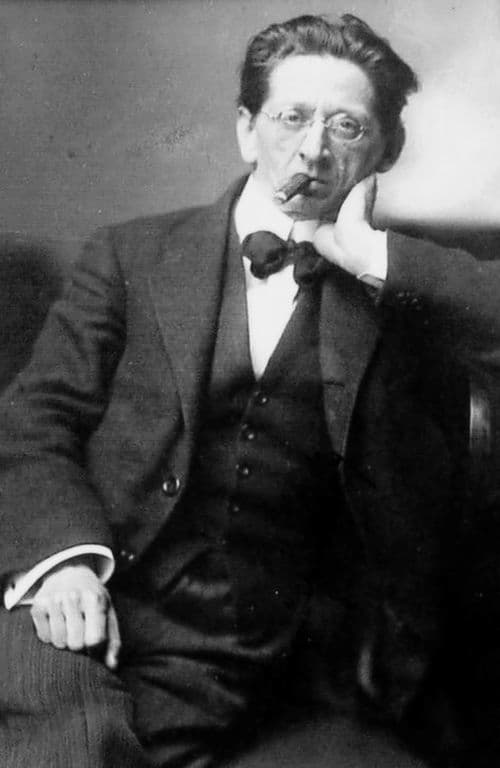
Alexander von Zemlinsky
Schoenberg was twenty-one and Zemlinsky was just twenty-four, but he’d studied at the Vienna Conservatory for years.
The two cemented their friendship after Schoenberg married Zemlinsky’s sister Mathilde in 1901.
Schoenberg would later name Zemlinsky as his only teacher. His music would go on to shake the foundations of the classical music world. If he’d had a traditional conservatory education, would he have been as influential as he turned out to be?
Arnold Schoenberg: Verklärte Nacht
George Gershwin (1898-1937)
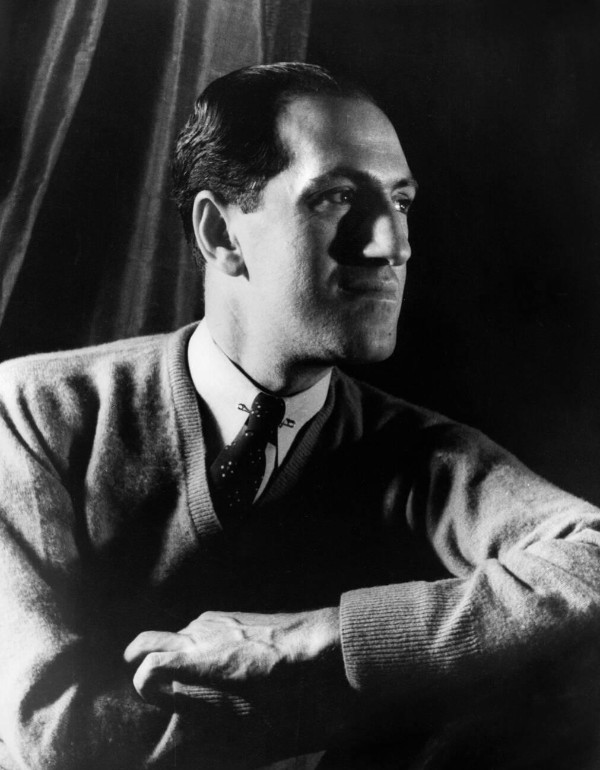
Portrait of George Gershwin
George Gershwin was born to immigrants in New York City in 1898.
He was an active boy who enjoyed spending time playing sports on the streets.
But when he was ten years old, his life changed forever. While playing hooky, he heard a young violinist named Maxie Rosenzweig practicing through an open window.
Gershwin was entranced. He waited outside in the rain until it became clear that Rosenzweig had left through another exit. Eventually, the two students connected and became friends.
Around the same time, Gershwin’s parents bought an upright piano for George’s older brother Ira. But thanks to his newfound passion for music, the piano soon became more George’s than his brother’s.
Gershwin started taking piano lessons with various local teachers. Around 1913, he began working with one named Charles Hambitzer, who, in addition to teaching, served as a pianist in the Waldorf-Astoria Orchestra.
Around the same time, he quit school to work on Tin Pan Alley, while still taking lessons from Hambitzer. After Hambitzer died young in 1918 of tuberculosis, Gershwin didn’t seek further training.
In the 1920s, Gershwin traveled to Paris, a trip that provided the inspiration for An American in Paris.
While there, he approached teacher Nadia Boulanger to ask for music lessons. But after they spoke, she said she could teach him nothing.
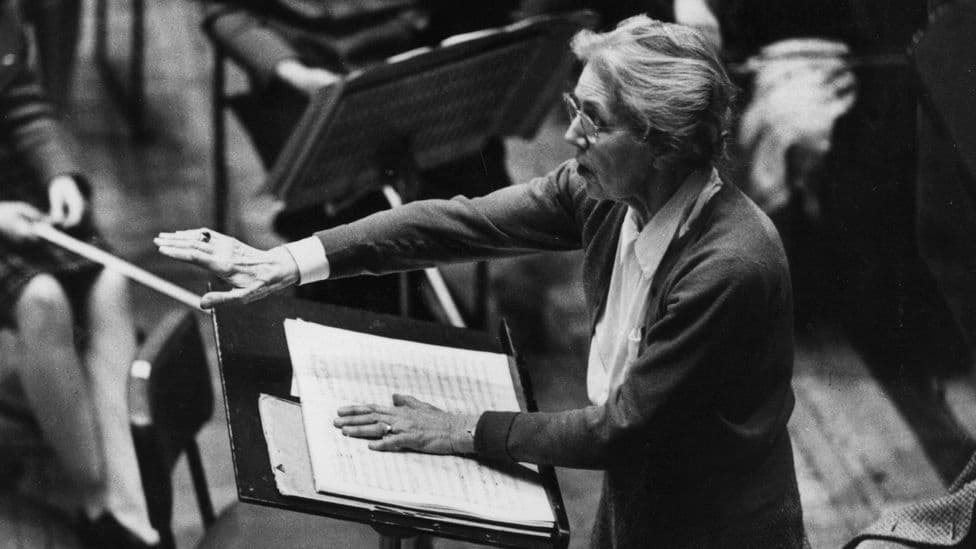
Nadia Boulanger
This was a bold statement, given that Boulanger was the greatest composition teacher of the twentieth century, and possibly of all time.
There are also a number of circulating anecdotes about Gershwin seeking lessons from Schoenberg and Ravel, both of whom supposedly turned him down. They agreed with Boulanger that formal training ran the risk of inhibiting his unique creative voice.
In the words of Ravel’s rejection letter, “Why become a second-rate Ravel when you’re already a first-rate Gershwin?”
George Gershwin: Rhapsody in Blue
Tōru Takemitsu (1930-1996)
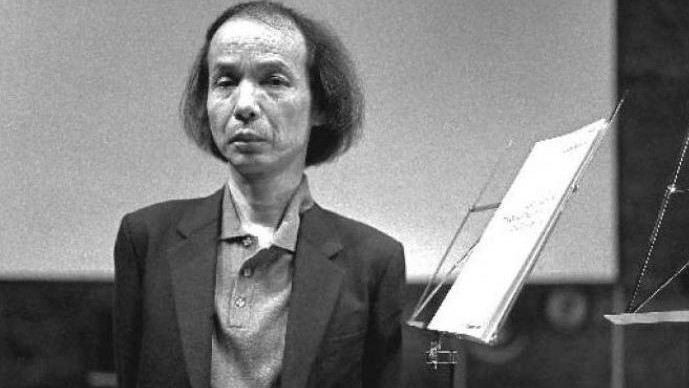
Tōru Takemitsu
Tōru Takemitsu was born in Tokyo in 1930. At the age of fourteen, in 1944, he faced military conscription. The experience made him deeply unhappy.
While he was in the military, he heard a recording of Western music for the first time. He and his friends gathered round a record player and used a piece of bamboo as a makeshift needle.
After the war ended, during the American occupation of Japan, Takemitsu worked for the American military. He became ill and bed-bound, and began listening to American radio. The music stuck with him.
In 1946, when he was sixteen, he began composing music in a Western style.
He later wrote:
Being in music, I found my raison d’être as a man. After the war, music was the only thing. Choosing to be in music clarified my identity.
In 1948, he studied briefly with Japanese composer Yasuji Kiyose, who embraced using elements of Japanese folk song. In the early 1950s, he would also study with film composer Fumio Hayasaka. However, because of where he was born and the war he grew up during, he never had a traditional conservatory education.
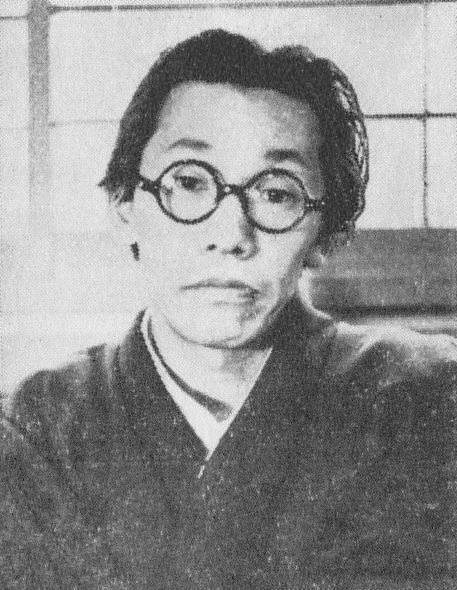
Fumio Hayasaka
Over the course of his career, Takemitsu would extensively explore the intersection of Japanese and Western music. He eventually counted among his many fans Igor Stravinsky and Aaron Copland.
It’s fascinating to consider how much of his unique musical voice would have been muffled by a traditional, prestigious education. Surely we’re all the richer for it.
For more of the best in classical music, sign up for our E-Newsletter