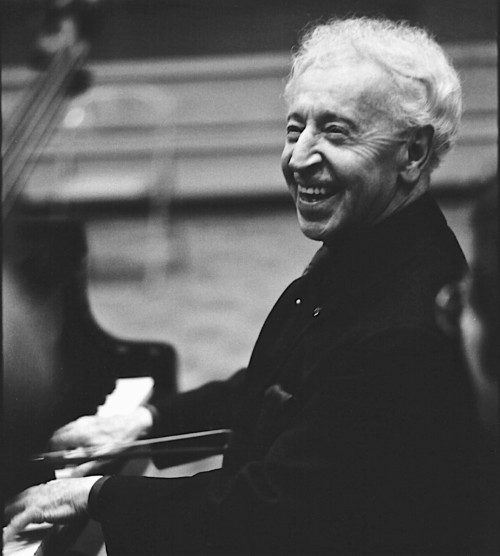
From the Renaissance to the Romantic Era, royal patronage was vital in shaping the course of classical music history.
Many of the great composers owed their success to their relationships with kings, queens, and courts, whether it was Domenico Scarlatti dazzling the Portuguese and Spanish aristocracy, Wolfgang Mozart navigating the complicated politics of Salzburg and Vienna, or Richard Wagner enjoying the passionate support of lonely King Ludwig II of Bavaria.
Royal patronage wasn’t just about money for these composers. It was about stability, prestige, and opportunities to create their best work.
Today, we’re looking at the relationships between three composers and their royal patrons…and how those connections influenced the music we still love centuries later.
Domenico Scarlatti
Scarlatti’s Sonata, K.455
Domenico Scarlatti was born in 1685 in Naples to one of the greatest composers of the seventeenth century, Alessandro Scarlatti.
Domenico began his music studies with his father and even worked under him at the Chapel Royal of Naples.
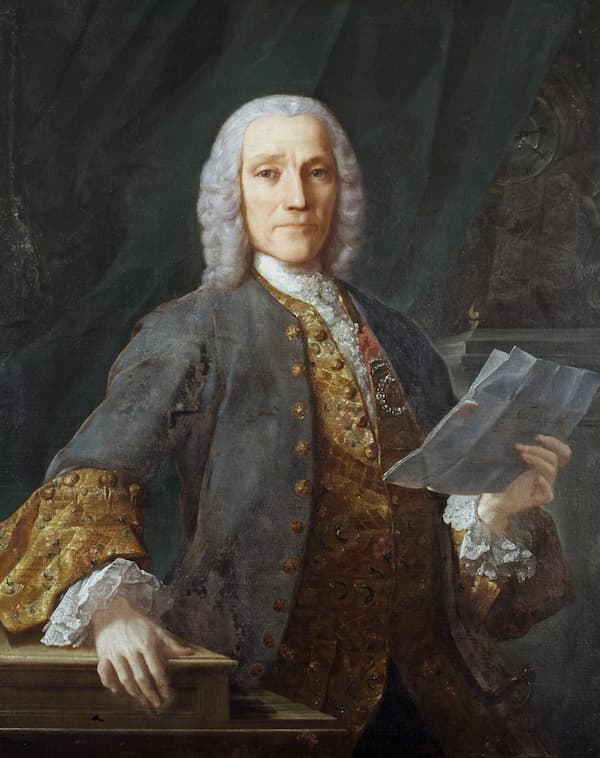
Portrait of Scarlatti wearing the Order of Santiago (1738)
He worked for a while in Rome before being hired by the Portuguese royal family in 1719, at the age of thirty-four.
That year, he moved to Lisbon to enter the service of King João V. He was appointed maestro di cappella and court harpsichordist, tasked with composing and leading music for the royal chapel.
He also taught harpsichord to the king’s daughter, Princess Maria Magdalena Barbara of Portugal, a relationship that would prove to be consequential.
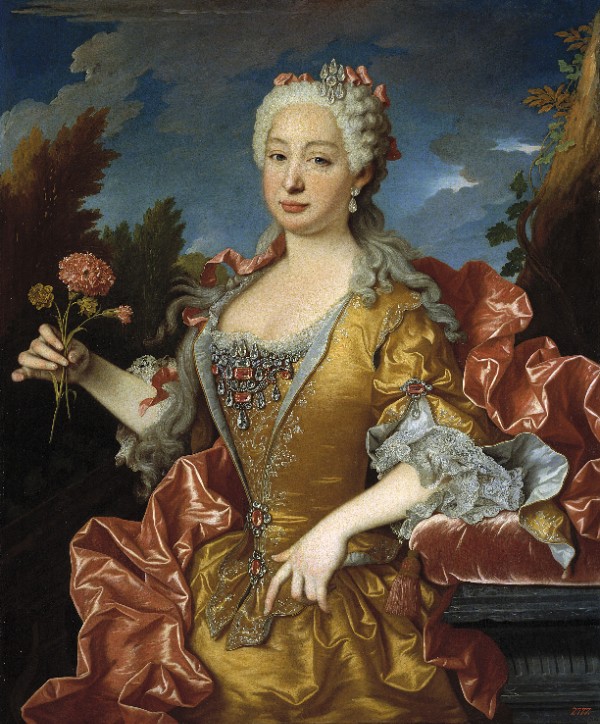
Princess Maria Magdalena Barbara of Portugal
In 1727, he left the royal family for a time, returned to Italy, married, and then moved to Seville.
But in 1733, he reunited with his former pupil, who had since married Ferdinand VI of Spain. He and his growing family would stay in Spain for the rest of his life.
While in Madrid working with the queen, he wrote most of his 555 (!) keyboard sonatas, many of which were revolutionary.
Without the security of royal patronage, it’s doubtful that these sonatas ever would have been composed…and the history of keyboard music might have been a very different thing.
Read more about composer Siri Livingston’s heartfelt thoughts about one of the sonatas Scarlatti wrote while in service to the royal family.
Wolfgang Amadeus Mozart
Mozart’s Sonata for Two Pianos in D-major, 1781
Wolfgang Mozart and his father, Leopold, both had complicated relationships with aristocrats and royalty.
Leopold was a professional violinist who worked for the Prince-Archbishop of Salzburg, Sigismund von Schrattenbach.
After Leopold’s wife gave birth to two historically talented prodigies – Nannerl and Wolfgang – Leopold went to the Prince-Archbishop to ask for permission to go on leave and tour across Europe with his children. Fortunately for music history, the Archbishop granted his permission.
During this tour, the family met a staggering number of royals: Empress Maria Theresa (where Wolfgang met her daughter Marie Antoinette), King George III and Queen Charlotte, and King Louis XV.
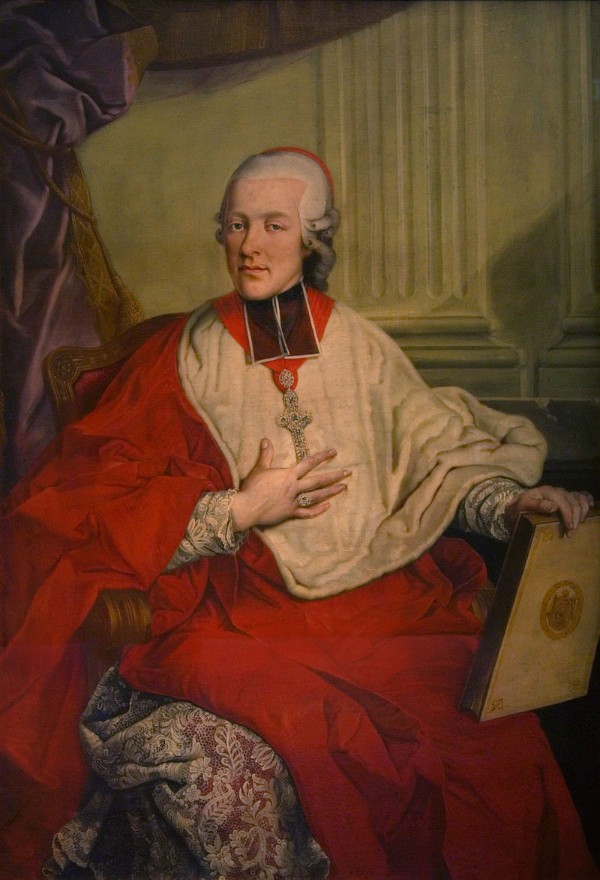
Hieronymus von Colloredo
Sigismund von Schrattenbach died in 1771. His successor, Hieronymus von Colloredo, was viewed as an autocrat who had trouble getting along with his colleagues.
One of those colleagues was Wolfgang, who, in 1773, began working with his father in the court orchestra.
Mozart bristled under Colloredo’s leadership, and Colloredo was upset with his continued work-related absences.
Leopold, meanwhile, went along to get along and urged his son to do the same, since he didn’t have another job lined up elsewhere.
In 1781, tensions came to a head with Wolfgang. He left Colloredo’s service after Colloredo’s steward threw him out of the room, complete with an infamous “kick up the backside.”
This treatment is what led Mozart to leave his hometown once and for all in favour of Vienna, where he’d cobble together a career as a pianist, teacher, conductor, and freelance composer.
He wasn’t, however, done taking payments from kings: while in Vienna, he received some much-appreciated support from Emperor Joseph II.
Learn more about why Mozart disliked his hometown.
Richard Wagner
Excerpt from Wagner’s Das Rheingold from the Ring Cycle
When Richard Wagner was thirty, he accepted a position as the Hofkapellmeister (Royal Kapellmeister) in Dresden, directing the court orchestra and opera. His boss was King Frederick Augustus II of Saxony.
Wagner used the money he earned to help subsidise his opera writing…and, secretly, his revolutionary activities.
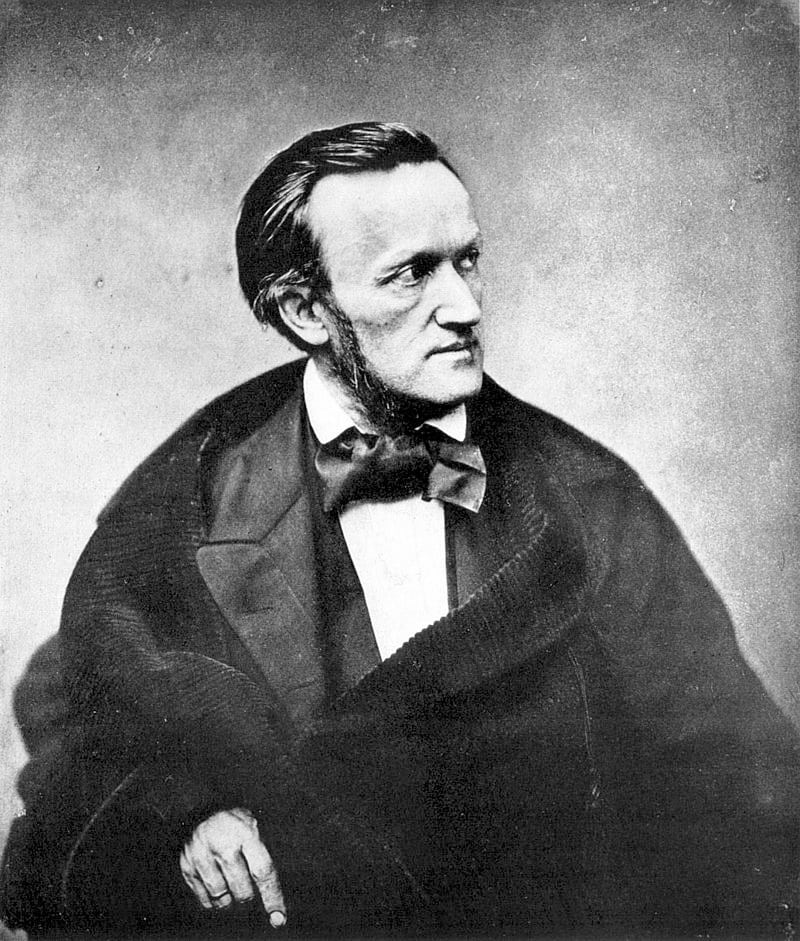
Richard Wagner, 1861
Despite being an employee of the king, he had become swept up in the revolutionary fervour of 1848.
After the failure of the following year’s uprising, he was forced into exile.
However, Wagner’s most famous relationship with a member of royalty was with King Ludwig II of Bavaria.
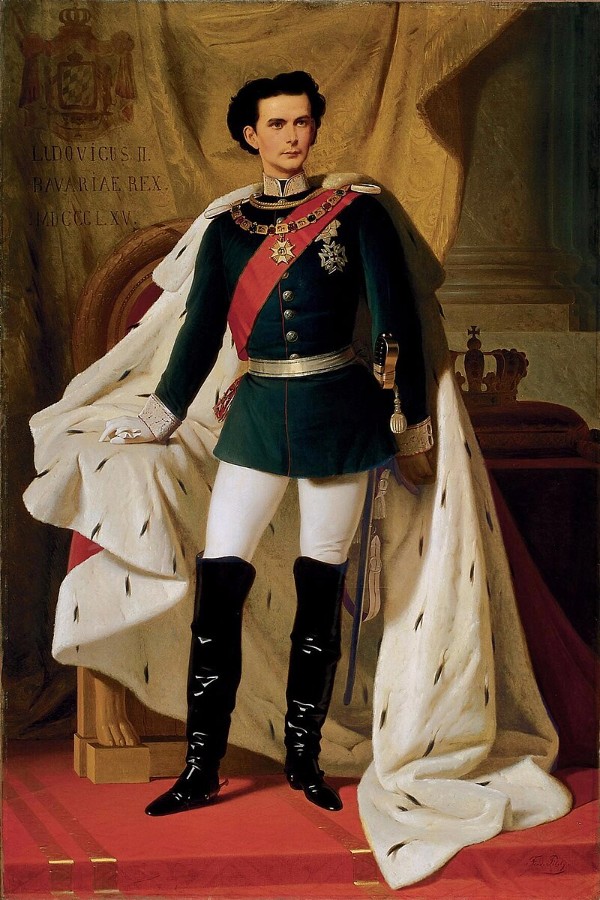
King Ludwig II of Bavaria
In 1864, the 18-year-old Ludwig, an obsessive admirer of Wagner’s music, summoned the composer to Munich and became his patron at a moment when Wagner’s finances were especially grim.
Ludwig provided Wagner with a beautiful villa near the royal castle, along with a generous allowance so that Wagner could focus on creating art in a luxurious and stress-free environment.
That support not only brought Wagner peace of mind; it also allowed him to finish and even mount some of his operas.
Without the extravagant support of Ludwig II, it seems unlikely that Wagner would ever have finished the Ring Cycle.
Tragically, Ludwig never got a happy operatic ending of his own. In 1886, he was found drowned under mysterious circumstances, just three years after Wagner’s death.
Learn more about the unconventional love between Wagner and Ludwig.
Conclusion
These stories remind us that musical masterpieces aren’t just about music. They’re also about the networks of power, wealth, and patronage that made those masterpieces possible in the first place.
Whether the relationships between the monarchs and musicians ended happily or tragically, royal support played a major role in shaping the classical music canon as we know it today.
For more of the best in classical music, sign up for our E-Newsletter