Johann Nepomuk Hummel (1778-1837) and Franz Schubert (1797-1828) were at the heart of Viennese music making, Hummel as a student of Mozart’s and Schubert for his lied. Both, however, used the unusual combination of piano, violin, viola, cello and double bass for their ‘Military’ and ‘Trout’ Quintets.
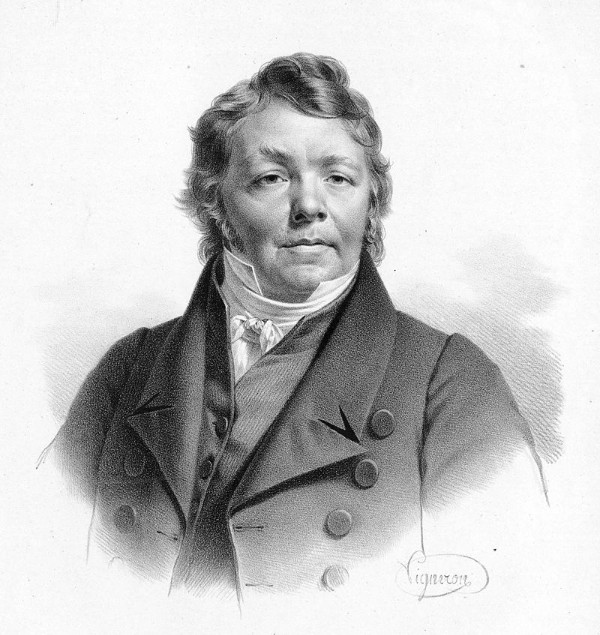
Johann Nepomuk Hummel
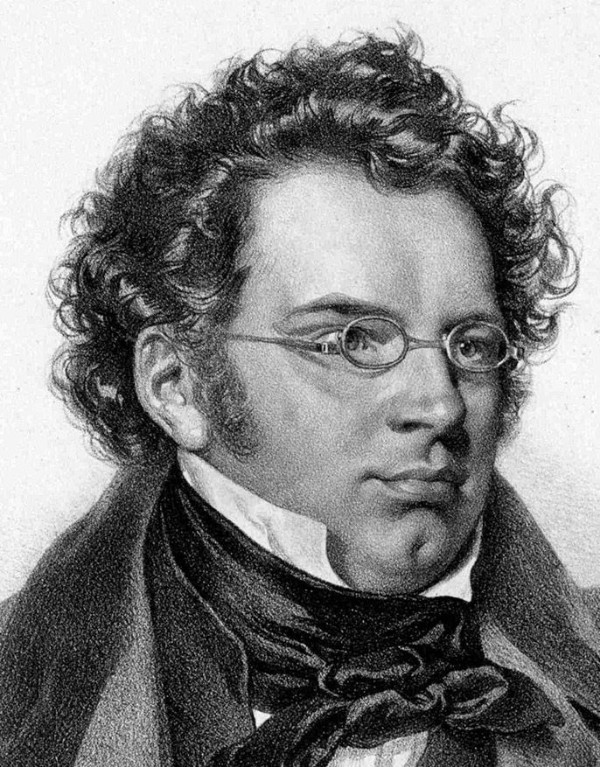
Franz Schubert
In the 1820s Vienna, both Schubert and Hummel were stars. Schubert’s lied redefined German song in a new dramatic manner, and his Trout Quintet builds on that repertoire.
The Trout Quintet was inspired by a visit by Schubert to Steyr, where he met Sylvester Paumgartner, an amateur musician who put on recitals and chamber concerts in his house’s music room. Schubert had completed the song Die Forelle in 1817, and it was a particular favourite of Paumgartner’s. He asked Schubert to write a set of variations on it for him, and Schubert responded with his five-movement quintet (which includes the variation set). The particular instrumentation of piano, violin, viola, cello and double bass was set by the other piece on the program that night: Hummel’s Piano Quintet in E flat major, Op. 87. The composer rose to the occasion where he lacked a second violin and had a lower bass instrument than in a usual string quartet through his use of the piano. The piano has an emphasis on its higher and middle range (supporting the violin) rather than taking its usual role of supporting the cello in the bass line – the double bass did that already.
The quintet has become a favourite for chamber ensembles, and Paumgartner’s commission had led to a work of universal appeal.
If you haven’t heard of Hummel’s Military Quintet, it might be because this is its first recording. The Quintet is an arrangement by Hummel of his own 1829 Military Piano Septet No. 2. The original septet, for piano, flute, clarinet, trumpet, violin, cello, and double bass, was prepared for piano quintet as an alternate version. The wind and brass parts are played by the strings in the new arrangement, with the addition of a viola.
Hummel was the leading composer and performer in Vienna, surpassed only by Beethoven. He had studied with both Mozart and Haydn and had succeeded Haydn as Kapellmeister to the Esterházy family. Schubert and Hummel knew each other, and they both admired Beethoven. Both were part of Beethoven’s funeral in March 1827. Schubert dedicated his last three piano sonatas to Hummel, although when they were published, as both composers were dead, the publisher changed the dedication to Robert Schumann.
To return to the Military Quintet, it is in a very different style than Schubert’s offering to Paumgartner. The piano was written for a true virtuoso, rather than the amateurs who might be attempting the Trout Quintet. The first movement uses the full range of the piano’s emotional and dramatic qualities to carry us forward.
Johann Nepomuk Hummel: Piano Quintet in C, Op.114a – I. Allegro con brio
The addition of the Military Quintet to the quintet repertoire will be a wonderful way to broaden our knowledge of Hummel, who has rather vanished in the shadow of his teachers. The performance on the recording is sure and polished, bringing out the holiday qualities in the Schubert work and the more professional polish of the Hummel work.
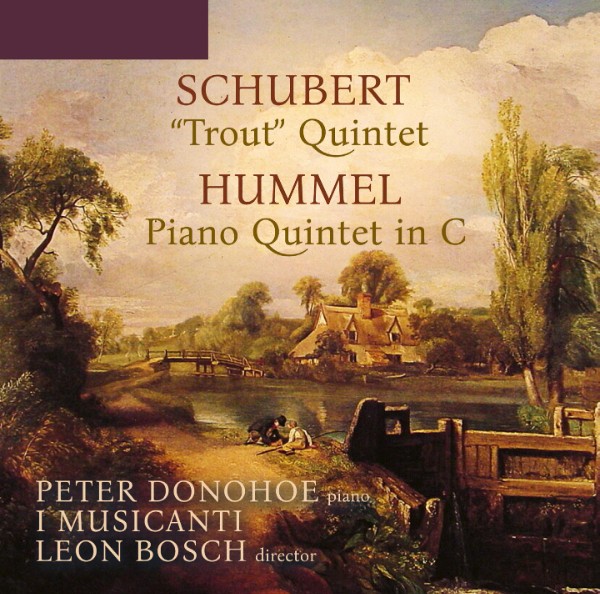
Schubert: “Trout” Quintet – Hummel: Piano Quintet in C
I Musicanti
Peter Donohoe (piano)
Leon Bosch (double bass & director)
SOMM Recordings: SOMMCD 0712
Official Website
For more of the best in classical music, sign up for our E-Newsletter