Born amid the chaos of World War II, Ruggero Raimondi rose from the rubble of Bologna to command the world’s greatest stages. His voice was a resonant force that could summon the thunder of Verdi’s kings or the seductive charm of Mozart’s libertines.
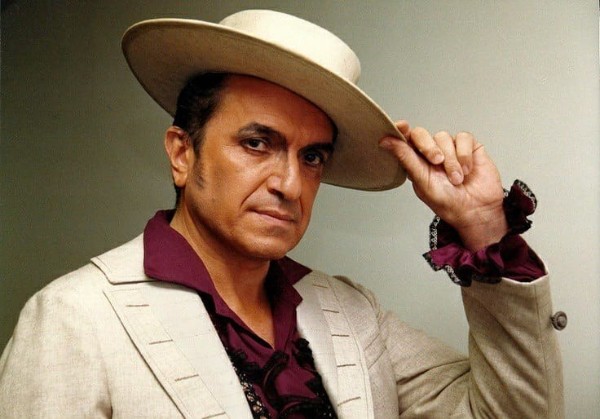
Ruggero Raimondi
Over a career spanning more than five decades, he not only interpreted but redefined roles in operas by Rossini, Verdi, and Mussorgsky, while extending his artistry to film and television. Yet, beyond the spotlight, Raimondi’s life reveals a man of profound personal convictions, shaped by family joys and challenges.
To celebrate his birthday on 3 October 1941, let us celebrate an artist who infused his performances with an authenticity rare in the operatic world.
Ruggero Raimondi sings Bizet: “Toreador Song,” from Carmen
The Heart behind the Voice
Ruggero Raimondi’s artistry was inseparable from his personal ethos, a blend of stoic resilience and familial devotion that lent his portrayals an undercurrent of lived truth. Little is documented of his private life, but glimpses reveal a man grounded in love and adversity.
His son Rodrigo was born in the late 1990s with Down syndrome. In a 1998 interview, he shared a raw vulnerability. “When my son was born, I was very shocked because I gave a lot of importance to a malformation that, in the end, wasn’t much.”
“The doctor said he would be a vegetable his whole life. If only he saw him today…” Rejecting medical pessimism, he added. “I would like to add that these children are so attaching. They find such pleasure in life. They are capable of giving out so much love. The big question I ask myself is whether I will be able to give him as much love as he gives me.”
Ruggero Raimondi sings Donizetti: “Splendon più belle in ciel le stelle” from La Favorita
Forged in Adversity
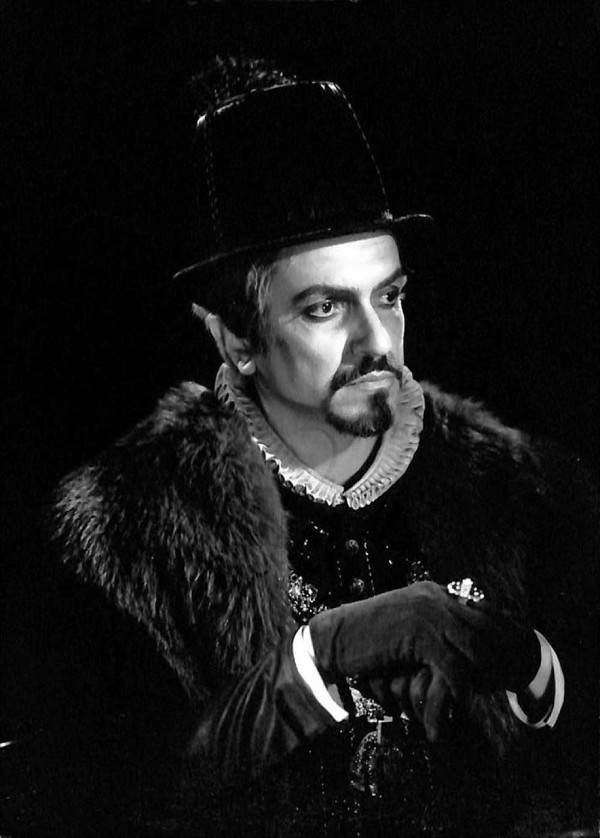
Ruggero Raimondi on stage
Raimondi spent his own childhood in Bologna, Italy, a city scarred by Allied bombings and the encroaching shadow of fascism. Air raid sirens and rationed meals were the soundtracks of his childhood.
Yet, it was music that offered solace and ultimately, salvation. Initially drawn to the piano, young Ruggero discovered his true calling at age 15 when his voice deepened into its mature timbre almost overnight. He summoned the courage to audition for the esteemed conductor Francesco Molinari-Pradelli, who told him, “forget about the piano, this is an important voice.”
By 16, he was enrolled at the Giuseppe Verdi Conservatory in Milan, studying under Ettore Campogalliani, a pedagogue who honed the raw power of his bass-baritone. Raimondi’s education continued in Rome at the Santa Cecilia Conservatory, where he trained with Teresa Pediconi and the venerable Armando Piervenanzi.
Ruggero Raimondi sings Offenbach: “Scintille diamant” from Les Contes d’Hoffmann
A Voice for the Ages
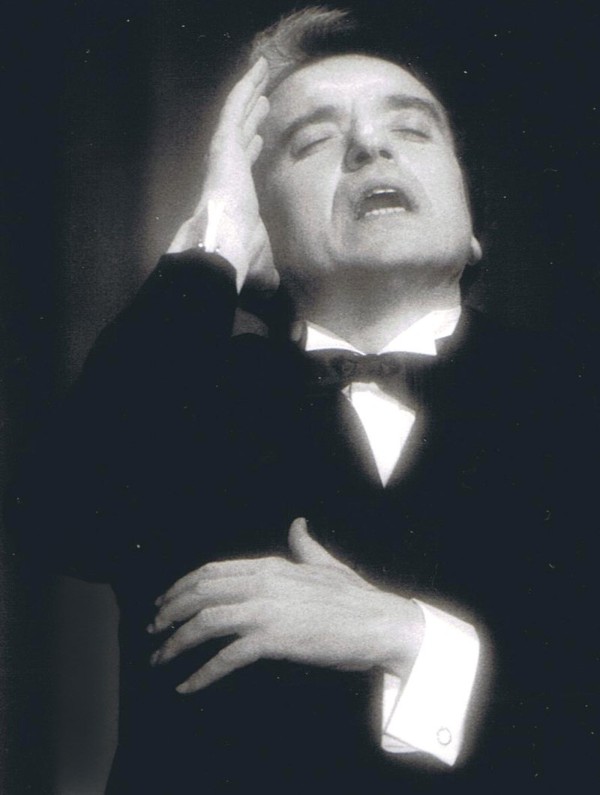
Ruggero Raimondi
His breakthrough came in 1964 at the Spoleto Festival’s National Competition for young opera singers, where victory led to an immediate debut as “Colline” in Puccini’s La bohème. A fortuitous substitution soon followed as he stepped in as “Procida” in Verdi’s I vespri siciliani at Rome’s Teatro dell’Opera, captivated audiences and critics alike.
Raimondi’s professional ascent was meteoric, propelled by a voice that blended the warmth of a baritone with the profundity of a bass, ideal for the bel canto demands of Rossini and the psychological depths of Verdi.
Notable Italian debuts at La Fenice, Teatro Regio, and Teatro Comunale by the late 1960s were followed by international triumphs at La Scala (1968), the Metropolitan Opera (1970), and Covent Garden (1972). His Mozartian finesse shone at Glyndebourne’s 1969 Don Giovanni, while collaborations with maestros like Abbado, Karajan, Muti, and Giulini cemented his global legacy.
Wolfgang Amadeus Mozart: Don Giovanni, K. 527 – Act I Scene 9: Duet: La ci darem la mano (Zerlina, Don Giovanni) (Lucia Popp, soprano; Ruggero Raimondi, bass; Bavarian State Orchestra; Wolfgang Sawallisch, cond.)
Vulnerability as Strength
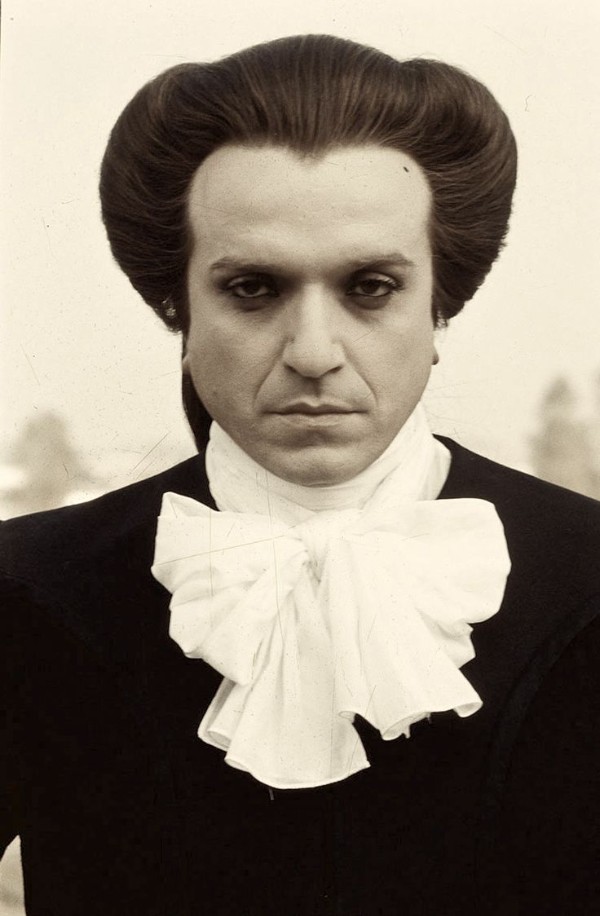
Ruggero Raimondi as Don Giovanni
At the heart of Raimondi’s repertoire were roles that demanded both vocal prowess and theatrical magnetism. His commanding performances as “King Philip II” in Verdi’s Don Carlos and “Boris Godunov” in Mussorgsky’s opera showcased his ability to convey tormented power and guilt.
In iconic roles like “Escamillo” in Bizet’s Carmen and “Scarpia” in Puccini’s Tosca, Raimondi highlighted his charismatic and menacing stage presence. By the 1980s, Raimondi ventured into directing, and his forays into film extended his reach beyond opera aficionados.
From Bologna’s war-torn streets to the silver screen, Ruggero Raimondi affirmed opera’s power to exalt the human spirit. As he once implied in his reflections on fatherhood, “true mastery lies not in perfection, but in the boundless love that sustains us.” After all, in art as in life, vulnerability is the source of our deepest strength.
For more of the best in classical music, sign up for our E-Newsletter