Since its invention in the eighteenth century, the piano has stood as both an expressive outlet and a tool of innovation, and its versatility has allowed countless composers to explore new emotional depths, technical possibilities and stylistic revolutions. Among the towering figures of music are those who not only played the piano with brilliance but also composed music that redefined its role in art and culture.

Portrait of Frédéric Chopin
Few names resonate more powerfully in this regard than Frédéric Chopin. A poet of the piano, Chopin’s works capture a very personal blend of lyricism, melancholy and technical elegance. Importantly, when writing for the piano, Chopin understood the mechanics of the pianist’s hand and body, emphasising the need for a natural hand position that allowed control and suppleness, free from tension. One sees this in his Études in particular, where the writing, though complex, is comfortable under the fingers.
Frédéric Chopin: Ballade No. 3 in A-Flat Major, Op. 47 (Idil Biret, piano)
Chopin: Etude Op.10 No.3 “Tristesse”
Frédéric Chopin: Piano Sonata No. 3 in B Minor, Op. 58 – IV. Finale: Presto non tanto (Benjamin Grosvenor, piano)
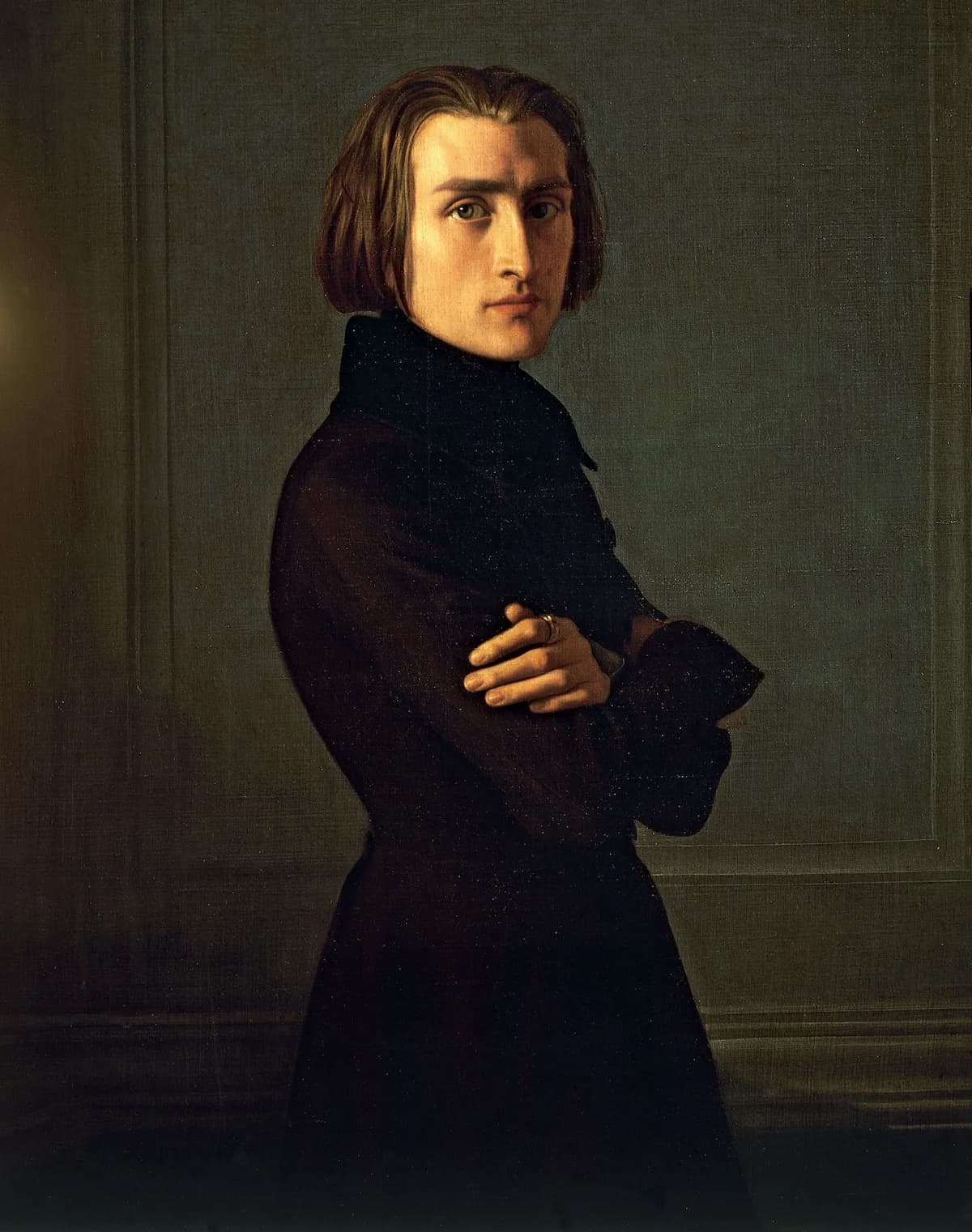
Henri Lehmann: Franz Liszt, 1840 (Paris Carnavalet Museum)
Franz Liszt, perhaps the most dazzling virtuoso of all time, also understood piano hand mechanics through a combination of his own physical abilities (a large hand span and extreme flexibility) and a technical approach that emphasised the coordination of the entire arm and wrist, not just the fingers. As a pianist with fairly small hands, for a long time I believed his music was literally out of my reach, but my teacher showed me the importance of flexibility and tension-free playing, and through this approach I was able to learn some of Liszt’s most beautiful piano music.
Yunchan Lim plays Liszt’s 12 Transcendental Etudes – Semifinal Round Recital–2022 Cliburn Competition
Franz Liszt: Annees de pelerinage, 2nd year, Italy, S161/R10b – No. 5. Sonetto 104 del Petrarca (Sonnet 104 of Petrarch) (Lazar Berman, piano)
Martha Argerich plays Liszt’s Funerailles
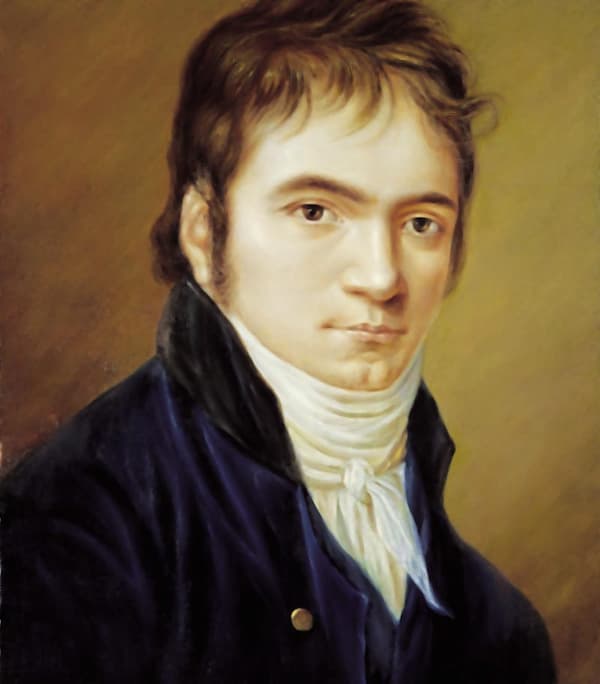
Christian Horneman: Beethoven, 1803 (Beethovenhaus Bonn)
Beethoven was a virtuoso pianist, and his writing for the instrument, both solo and chamber music, amply demonstrates this. In the duo sonatas for violin and piano, and cello and piano, for example, the piano parts are equal if not more impressive than the other instrument – Beethoven was not to be outdone by some mere string player! He was also central to the instrument’s development in the early nineteenth century, demanding greater power, sound, range and responsiveness from instrument makers.
Ludwig van Beethoven: Piano Sonata No. 1 in F Minor, Op. 2, No. 1 – I. Allegro (Igor Levit, piano)
Maurizio Pollini plays Beethoven’s Piano Sonata No 31 A-flat major Op. 110
Ludwig van Beethoven: Violin Sonata No. 3 in E-Flat Major, Op. 12, No. 3 – III. Rondo: Allegro molto (Krysia Osostowicz, violin; Daniel Tong, piano)
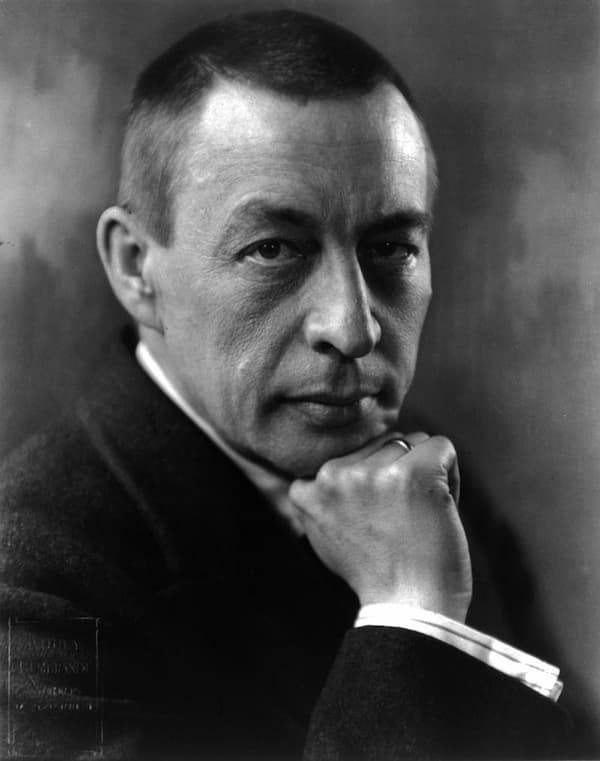
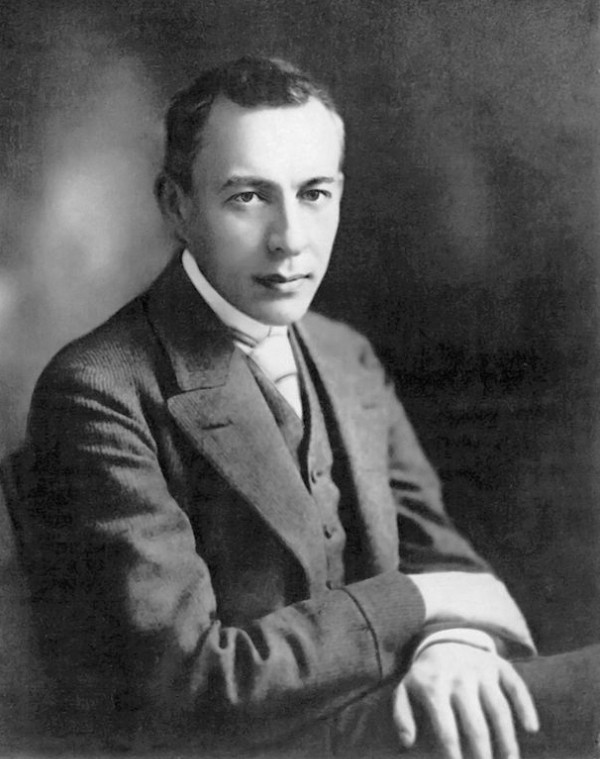
Kubey-Rembrandt Studios: Sergei Rachmaninoff, 1921
Sergei Rachmaninoff had famously large hands, possibly the result of Marfan syndrome, and his piano music, with its big, hand-filling chords and complex textures, was clearly written with his own hands in mind. His music embodies late Romantic grandeur infused with Russian soul, blending lyrical warmth with formidable power. As a virtuoso pianist himself, Rachmaninoff’s music demands artistry and emotional depth, underpinned by rock-solid technique.
Sergei Rachmaninoff: 12 Songs, Op. 21: No. 5. Siren’ (Lilacs) (version for piano) (Sergey Rachmaninov, piano)
Evgeny Kissin plays Rachmaninoff’s Prelude Op. 3 No. 2 in C Sharp minor
Sergei Rachmaninoff: Études-tableaux, Op. 33 – No. 7 (4) in E-Flat Major – Allegro con fuoco (Rustem Hayroudinoff, piano)
Yuja Wang plays Rachmaninoff’s Piano Concerto No. 2 in C minor Op. 18
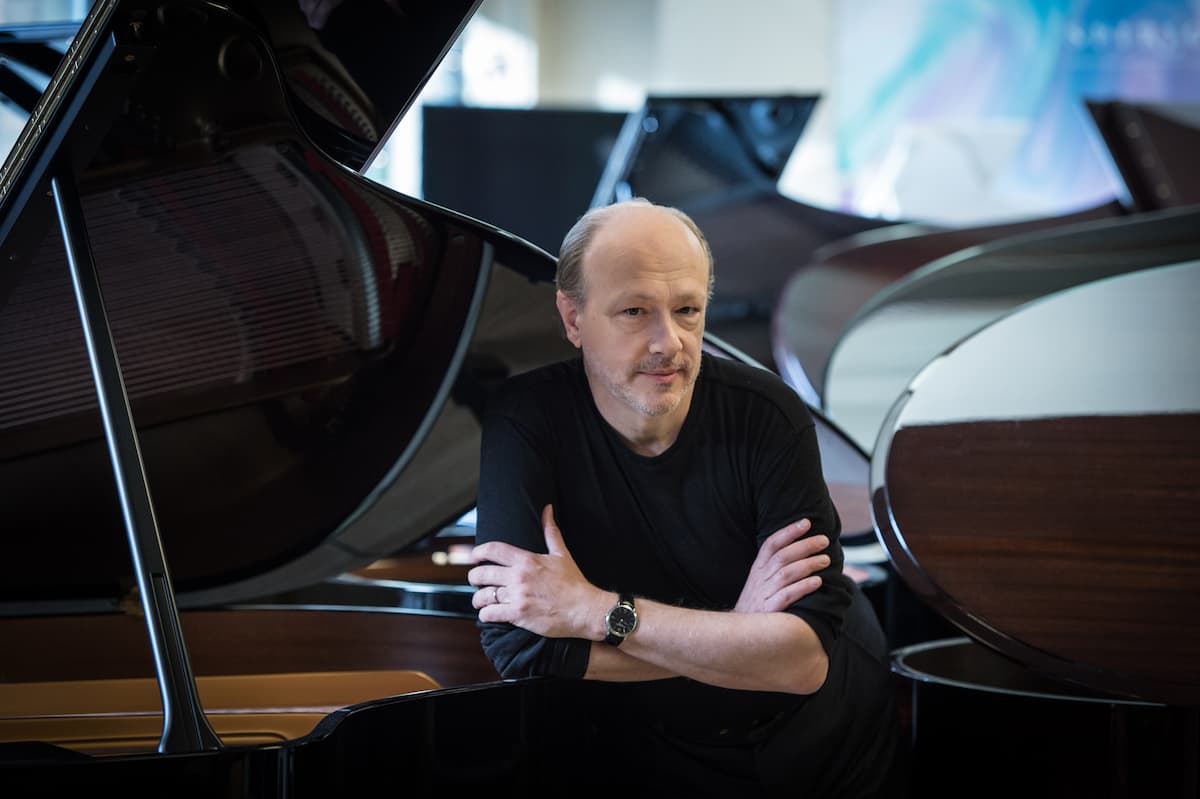
Marc-André Hamelin © Sim Canetty-Clarke
Fast-forward to the 20th and 21st centuries, one of the greatest pianist-composers of today has to be Canadian Marc-André Hamelin. A phenomenal pianist who seems able to play anything with ease – from C.P.E Bach to Frank Zappa – Hamelin also composes. His piano works are often technically challenging and highly virtuosic, inspired by past masters such as Leopold Godowsky (also a pianist-composer).
Marc-André Hamelin: 12 Etudes in All the Minor Keys: No. 3 in B Minor (after Paganini-Liszt) (Marc-André Hamelin, piano)
Marc-André Hamelin: Étude No. 1 in A minor ‘Triple Étude, after Chopin’
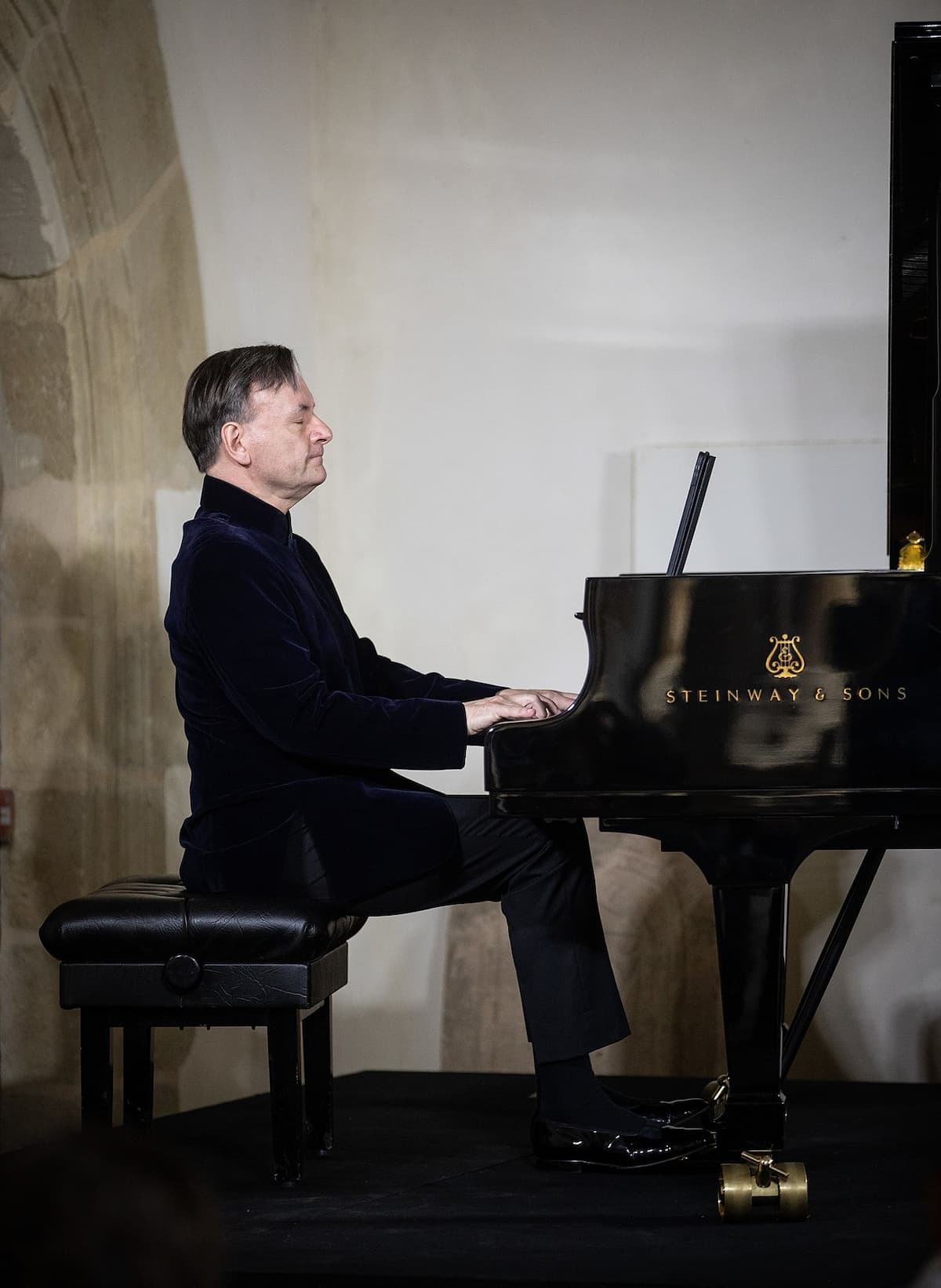
Sir Stephen Hough
British pianist Stephen Hough premiered his own piano concerto in 2024, adding to his extensive oeuvre of both solo piano and chamber music. His piano concerto, called The World of Yesterday, harks back to an earlier era when composers wrote piano concertos which they performed themselves, showcasing their prowess and personality as both performer and composer.
Stephen Hough: Piano Concerto, “The World of Yesterday”: I. Prelude – Cadenza (Stephen Hough, piano; Hallé Orchestra; Mark Elder, cond.)
Hough’s Nocturne Oriental, written for Jiu Li, combines orientalist idioms with musical quotes from 16 different pieces by Chopin.
Stephen Hough: Nocturne Oriental (Performed by Ji Liu)

Ludovico Einaudi © Decca/Ray Tarantino
Composer and pianist Ludovico Einaudi has achieved global acclaim with minimalist works that blend classical harmony, ambient textures, and emotional accessibility. Despite its apparent simplicity, Einaudi’s piano music offers technical and artistic challenges to the pianist: he utilises broken chords and arpeggios, often with large stretches which require the same flexibility demanded by, for example, Liszt’s piano music, while the artistic challenge is to ensure that repetitions do not become monotonous.
For more of the best in classical music, sign up for our E-Newsletter
Ludovico Einaudi: Nuvole Bianche (Live From The Steve Jobs Theatre / 2019)
Ludovico Einaudi: Le Onde (Ludovico Einaudi, piano)