In the late 19th century, Paris was truly the place to be for music. It had no fewer than ‘four of the best symphony orchestras in the world’, many private salons, and many public concert series. The Ballets Russes were based in Paris, and societies for new music abounded, including the Société Nationale de Musique and the Groupe Jeune France. Critics as well found a home in Paris, so all concerts were noted and commented on.
This new recording by Rachel Barton Pine on violin, Orion Weiss on piano, and the Pacifica Quartet brings us violin sonatas, string quartets, and a unique work by Ernest Chausson, his Concert for Violin, Piano, and String Quartet, Op. 21.
The Concert (note, not Concerto), was written for and dedicated to the Belgian violinist Eugène Ysaÿe, who also played its premiere in 1892. It takes a unique position in chamber music by mixing a work for solo piano, a sonata for violin and piano, a violin concerto, and a string quartet into one work. The string quartet is turned into a miniature orchestra. The work as a whole harks back to Baroque composers such as Jean-Philippe Rameau, who also wrote works entitled ‘Concert’. Of note, as well, is that the performance indications in the work, from the opening Décidé to the Finale’s Très animé are in French, rather than the more common Italian.
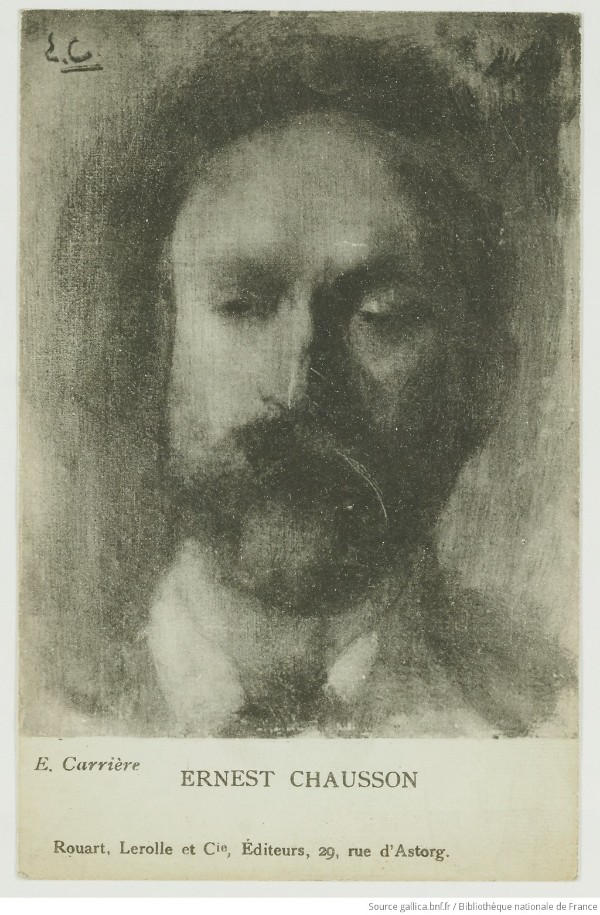
Eugène Carrière: Ernest Chausson (Gallica: btv1b100263332)
Ernest Chausson: Concert for Violin, Piano, and String Quartet, Op. 21 – II. Sicilienne
After this work by Chausson, the rest of the album is made up of music by Germaine Tailleferre, perhaps the most ignored of the fabled French composer group Les Six (comprised of Tailleferre plus Francis Poulenc, Arthur Honegger, Darius Milhaud, Georges Auric, and Louis Durey). Tailleferre (1892–1983) had a very long career and, as the group did not get their collective name until 1920, Tailleferre had made her name before the group got its title from critic Henri Collet. Her 1919 String Quartet, dedicated to Arthur Rubinstein, received its premiere at a concert of the Société Nationale de Musique and was singled out for praise by Collet in his review of the concert.
Her Berceuse, written in 1913, was dedicated to Henri Édouard Dallier, her harmony teacher at the Conservatoire. The simple rocking tempo accompanies a violin melody that is continually developing. The melody traverses the entire range of the violin, venturing into a little dissonance in the spirit of adventure. Elinor Olin summarises the work as an ‘early musical gem [that] both foreshadows and encapsulates the spontaneity, succinct expression, and Gallic refinement of Tailleferre’s distinctive musical style’.
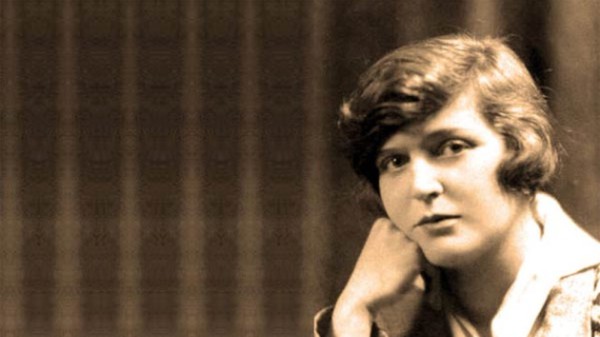
Germaine Tailleferre
Germaine Tailleferre: Berceuse
The recording, with its mix of works for violin and piano, string quartet, and violin, piano, and string quartet, gives us a glimpse through just two composers of the variety of music in over 50 years of music making in the French capital. It has its own particular style and is some of the most finely developed chamber music of its time.
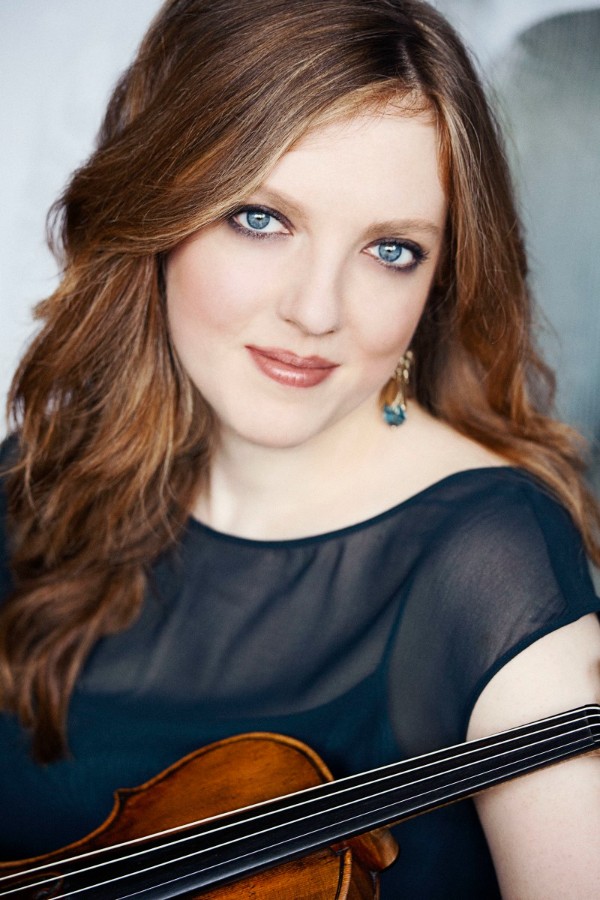
Rachel Barton Pine
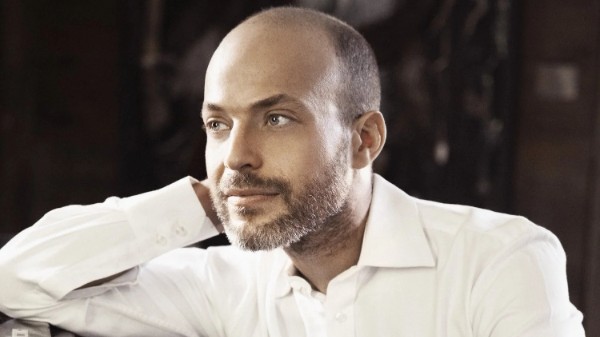
Orion Weiss (photo by Lisa-Marie Mazzucco)
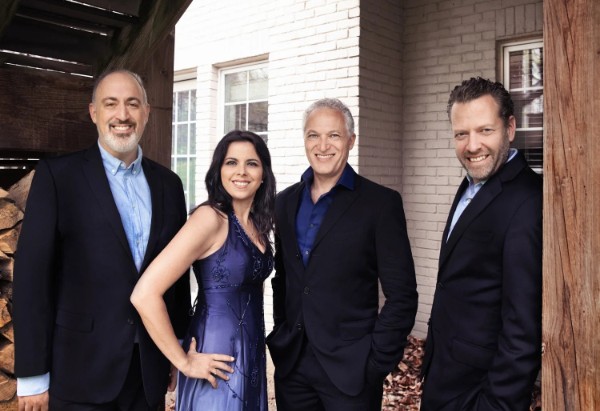
The Pacifica Quartet (photo by Lisa-Marie Mazzucco)
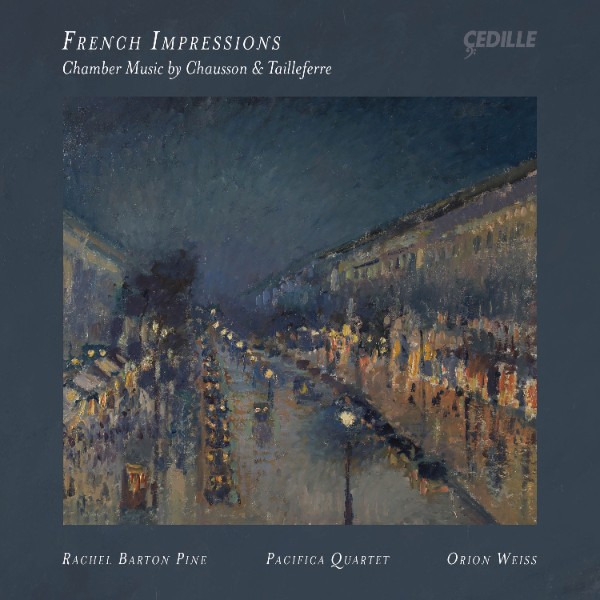
French Impressions: Chamber Music of Chausson & Tailleferre
Rachel Barton Pine, violin; Orion Weiss, piano, and the Pacifica Quartet
Cedille Records CDR 90000 238
Release date: 11 July 2025
For more of the best in classical music, sign up for our E-Newsletter