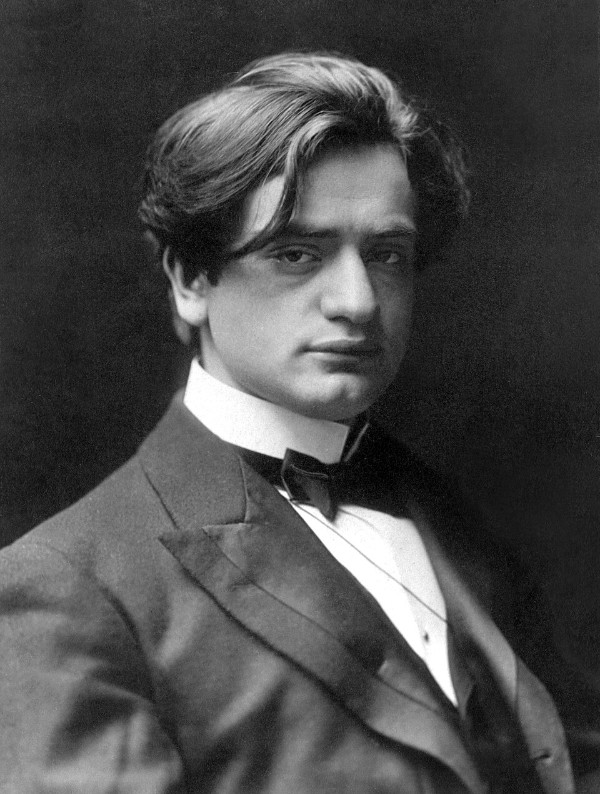
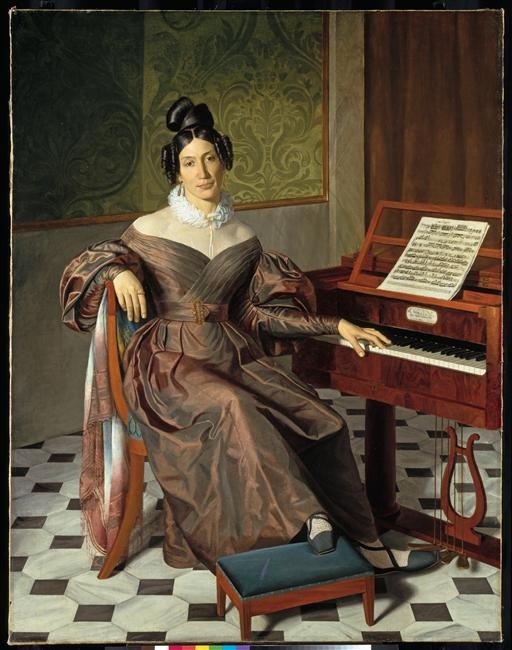
During the golden age of eighteenth-century English music, no single family in the entire British Empire was more talented than the Linleys of Bath.
Parented by the ambitious composer and impresario Thomas Linley the Elder and his wife Mary Johnson Linley, the seven Linley children became a national sensation: singers, composers, and prodigies who dazzled audiences from Bath to London.
Their home was nicknamed a “nest of nightingales”, and it produced a short-lived dynasty sometimes compared to the Mozart family’s.
Through their concert tours, collaborations with figures like Richard Brinsley Sheridan and Thomas Gainsborough, and friendships with Mozart himself, the Linley children became poster children for eighteenth-century accomplishment…and ambition.
Their Parents: Thomas Linley the Elder and Mary Johnson Linley
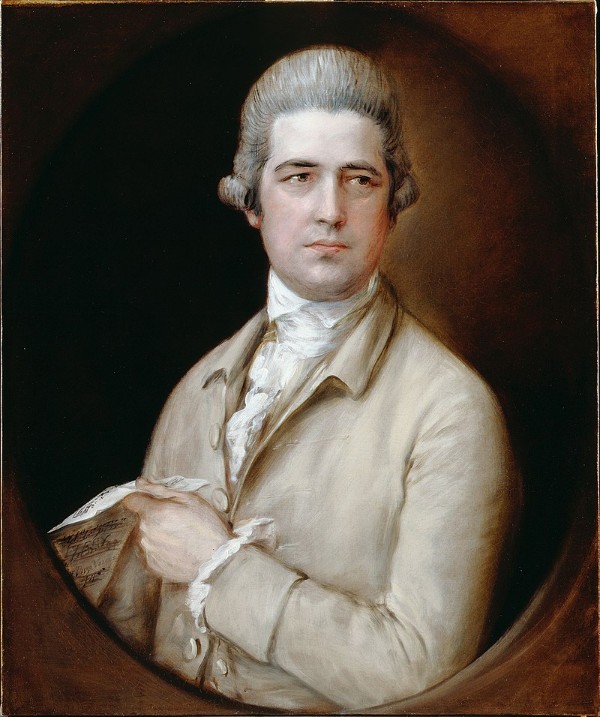
Thomas Linley the Elder
Thomas Linley, Sr., was born on 17 January 1733. In 1744, he moved to the town of Bath and began training as a singer, organist, and musician.
In 1752, when he was nineteen, he married a fellow musician named Mary Johnson.
Over the next two decades, Thomas and Mary had seven musical children, who would become one of the most talented families in British music history.
By 1762, Linley was mounting concerts for the wealthy citizens and tourists of Bath, and enlisting his young children as helpers and performers. His wife gave up singing to oversee the administration of the household.
Here is what happened to the seven Linley children.
Elizabeth Ann Linley Sheridan (1754–1792)
Thomas and Mary’s first baby, a son, died young. Elizabeth was their first surviving child, born in Bath in September 1754.
Her mother oversaw her general education, while her father focused on teaching her music.
Thomas, Sr., was infamously strict and demanding. Elizabeth became indentured to him, meaning that the money she earned as a child performer returned to him, and she would have no say in how it was spent or invested.
She made her singing debut at the age of nine and made her official stage debut at Covent Garden in London the year she turned thirteen. She also toured around England.
She was both incredibly talented and hard-working, and her father didn’t rest until she was among the best-loved sopranos in Britain.
Her 1768 performances of Handel’s Acis and Galatea, in the role of Galatea, were especially popular.
An excerpt from Handel’s Acis and Galatea
In late 1770, soon after she turned sixteen, her socially ambitious father pressured her to marry a wealthy sixty-year-old landowner.
However, before the wedding, she apparently told her fiancé that she’d never be happy as his wife, and he ended the relationship.
The affair turned into a scandal. In 1771, a play called The Maid of Bath by Samuel Foote, satirising the entire business, was mounted in London. It was a humiliating experience.
While still a teenager, Elizabeth was pursued by several possessive men. One – a married man named Captain Mathews – even threatened to assault her. All the while, her father continued to control her career and life.
She became suicidal. In 1772, when she was seventeen, she overdosed. After she survived her suicide attempt, she enlisted the help of two of her close friends, the siblings Richard and Alicia Sheridan, to escape her father’s house…and the country. She ended up in a French convent for a time.
(Later that year, Richard and Captain Mathews participated in two duels over Elizabeth’s honour.)
An interview with a historian about Elizabeth Linley outside of the Linley family home
Her father soon got in touch with Elizabeth, softened his demands of her, and convinced her to take to the stage again. She also, after some initial wavering, married Richard Sheridan in 1773.
However, Richard hated the idea of his wife earning money; he felt it reflected badly on him and his inability to provide.
So instead, the Sheridans began making careers as a glamorous power couple who entertained the aristocracy.
Both were talented writers and wits, and collaborated on projects together. Elizabeth also supported Richard’s ambitions as he began leveraging their connections and venturing into politics in the 1780s.
At the same time, she was struggling with a tuberculosis diagnosis and a series of pregnancies and miscarriages. They finally had a son in 1775.
In mid-1791, she had an affair with the Irish aristocrat and revolutionary Lord Edward FitzGerald. She got pregnant and delivered a daughter in March after a traumatic labour. She made Richard promise to take care of the baby, then died that summer.
She was 37, and by the time of her death, had become known for so much more than being one of the most famous singers in England.
Thomas Linley, Jr. (1756–1778)
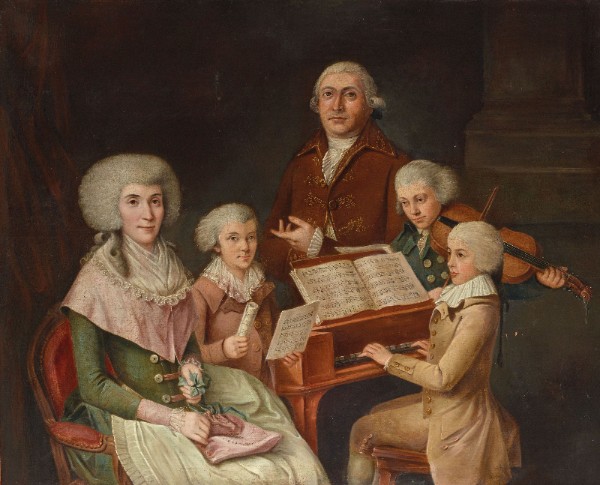
Portrait of Mozart, Thomas Linley and a family from Florence
Thomas Linley the Younger was born in May 1756, four months after Mozart. He would end up becoming one of the most impressive prodigies of the century.
He, along with his older sister, started studying music from an early age.
In 1762, as soon as they were able, he and Elizabeth were put to work taking tickets from audience members.
By 1763, he was performing during those same concerts, with Elizabeth at his side. That year, when he was just seven, he made his debut as a violin soloist, playing a concerto at a public concert in Bath.
Thomas Linley’s surviving violin concerto
He and his siblings began performing on tour, and he began to be interested in composing.
In 1767, when he was eleven, he sang, danced, and played the violin and hornpipe at Covent Garden. One newspaper raved, “[Not] enough [could] be said of the little boy [whose] singing, playing on the violin, and dancing […were] all beyond expectation.”
In 1768, he set off for Italy to study violin and composition with the famous violinist Pietro Nardini.
He met Mozart in Florence in 1770. The two prodigies shared a profound emotional connection, weeping when they parted.
He returned to England in 1771 at the age of fifteen and began making his career as a violin soloist and composer.
“Arise! Ye spirits of the storm!” from The Tempest by Thomas Linley
Many of his musical activities were undertaken together with his sister Elizabeth.
In 1775, he collaborated with Elizabeth’s husband, author and librettist Richard Brinsley Sheridan, on the hit opera The Duenna.
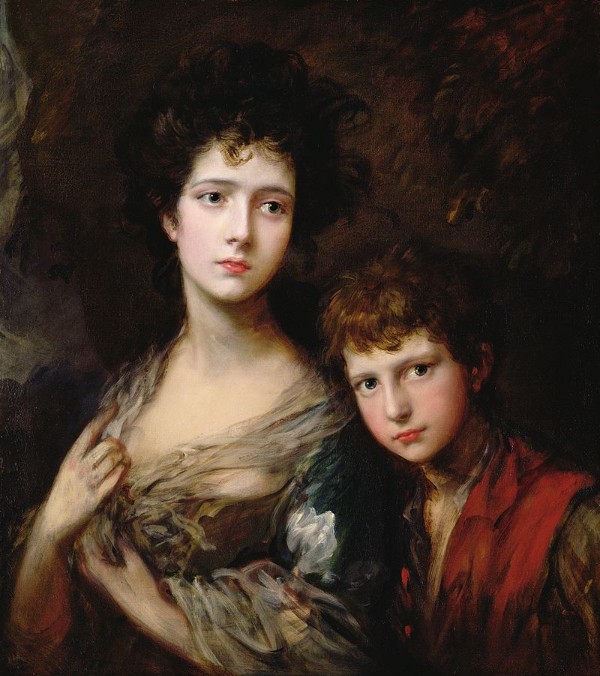
Elizabeth and Thomas Linley
The plot takes inspiration from Elizabeth’s escape to France and her relationship with Richard. Thomas Linley, Sr., was supposed to be the original composer, but it turned into a joint effort, with much of the music being provided by Thomas, Jr.
His career was shaping up to be something spectacular. But unfortunately, it wouldn’t last.
During the summer of 1778, Thomas, Jr. and his younger sister Mary were visiting Grimsthorpe Castle in Lincolnshire when he drowned in a freak boating accident.
The entire musical world was shocked, including his old friend Mozart. So was his family; Elizabeth, by this point more active as a writer than a singer, wrote poetry to pay tribute to him.
Thomas Linley, Jr. had just turned 22.
Mary Linley Tickell (1758–1787)
Mary was the third surviving Linley child.
She was also trained as a singer and appeared with her siblings at the performances organised by her father.
She toured along with them, appearing at the Three Choirs Festival and in Gloucester.
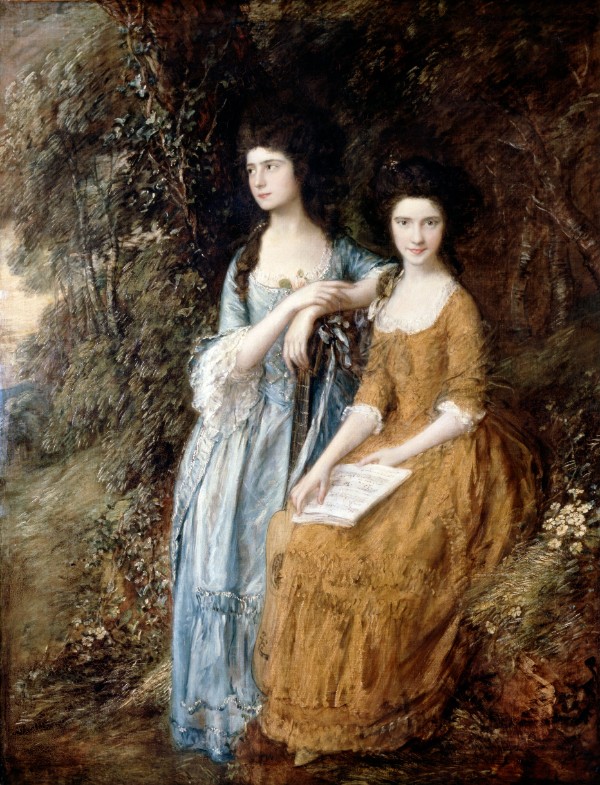
Thomas Gainsborough: Elizabeth and Mary Linley
In 1772, Elizabeth and Mary, then seventeen and fourteen respectively, sat for portraitist Thomas Gainsborough. The resulting image became well-known.
After Elizabeth fled England that year, and then after her marriage to Richard, Mary took Elizabeth’s place in family performances.
In the summer of 1780, when Mary was 22, she married Richard Tickell, a pamphleteer and commissioner of stamps.
She had three children with him, and for a brief time, let her younger sister Maria move in with her.
Unfortunately, she died tragically young in the summer of 1787 at the age of 29.
Elizabeth and Mary had been close, and Elizabeth wrote verses to commemorate the tragedy of her sister’s untimely death, just as she had with Thomas’s.
Samuel Linley (1760–1778)
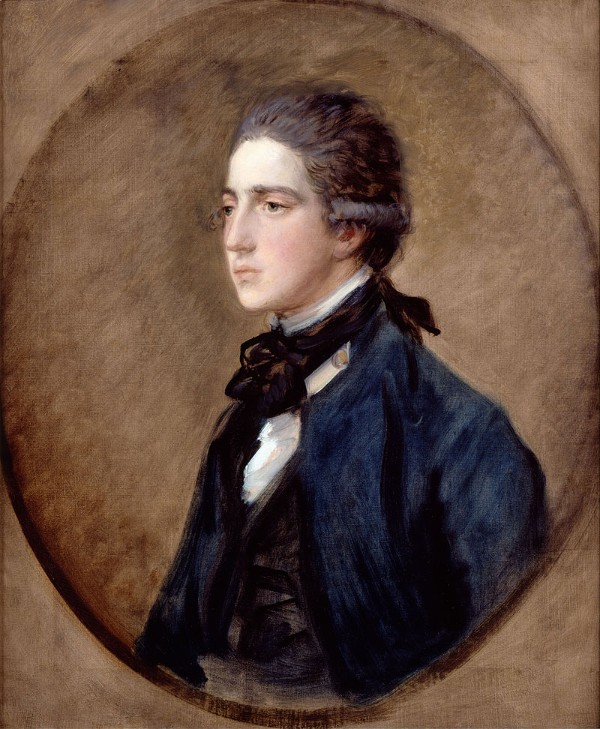
Samuel Linley
Samuel was the Linleys’ fourth surviving child.
The earliest record of his musical activities dates from 1766, when he played hornpipe during a performance of Shakespeare’s play King John.
Interestingly, he became known for his virtuosity on the oboe, an instrument that wasn’t as popular a solo instrument as the piano or violin. In 1774 and 1775, he actually appeared publicly as an oboe soloist.
However, he did not stick around to continue working with the Linleys.
In 1778, he joined the Navy and was assigned to the HMS Thunderer.
Soon after joining the crew, he came down with a fatal fever. He returned home and died in December of that year. He was just 18.
Maria Linley (1763–1784)
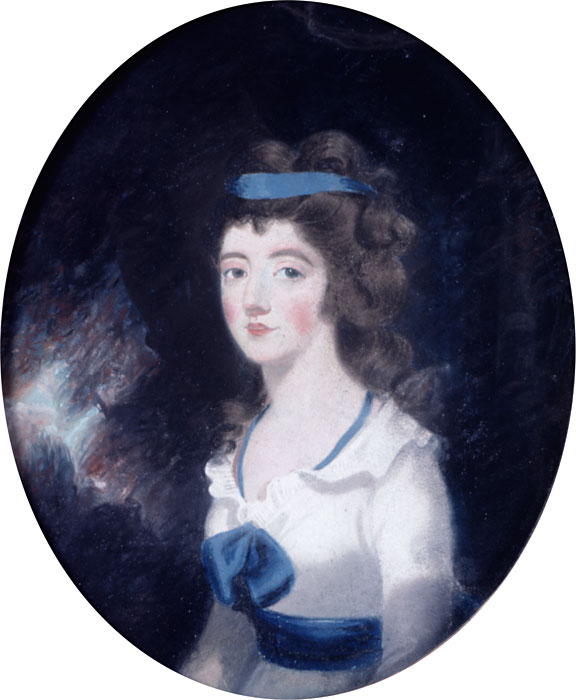
Maria Linley
Maria Linley was born in 1763 and received her musical education alongside her older siblings. She performed with them in Bath, London, and on tour.
She was around ten years old when she watched her older sister, Elizabeth, endure scandal and become suicidal.
It seems like the situation may have affected her. Maria ended up becoming rebellious and “eccentric”, refusing to go along with her father’s demands.
She left the Linley household and moved in with her sister Mary, who was five years older than her.
At Mary’s house, she was relegated to an attic room. She wasn’t happy there and decided to relocate again, but instead of returning to her father’s house, she moved in with a female friend.
Unfortunately, that living arrangement fell through, too. Again, she decided not to return to her father’s home, moving in with her grandparents in Bath instead.
Soon after she arrived, tragedy struck, and she came down with a fever that would prove fatal. She died in September, the month before her 21st birthday.
Between family strife and poor health, her musical talent was never able to blossom. That said, it also remains an open question about whether she ever wanted it to.
Ozias Thurston Linley (1765–1831)
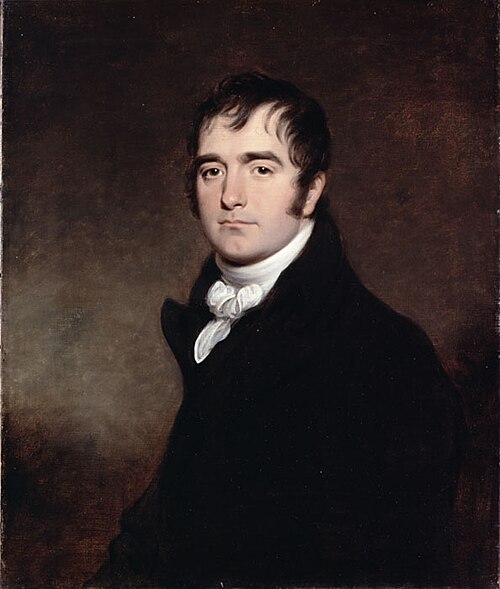
Ozias Thurston Linley
There isn’t as much biographical information available on Ozias as on his eldest siblings, but it does appear that he, like them, was trained in music from an early age.
However, his interests extended far beyond music. He was passionate about art; he was a mathematician; and he loved debating philosophy (forcefully, apparently, which led his family to nickname him “The Philosopher”).
In 1780, the year he turned fifteen, he was sent to Harrow. He later graduated from Oxford in 1789, when he was 24.
He was named a minor canon of Norwich Cathedral the following year and became vicar at Holy Cross Church in Stoke, South Norfolk.
In 1816, when he was 51, he was hired as an organist and music teacher at Dulwich College in London, where boys were prepared for university education.
He died in 1831 and left his art collection to the College.
It seems that he, like his sister Maria, resisted the idea of following in the family business, and sought to make an identity far away from it…although he did, clearly, use his training as organist to good effect.
William Linley (1771–1835)
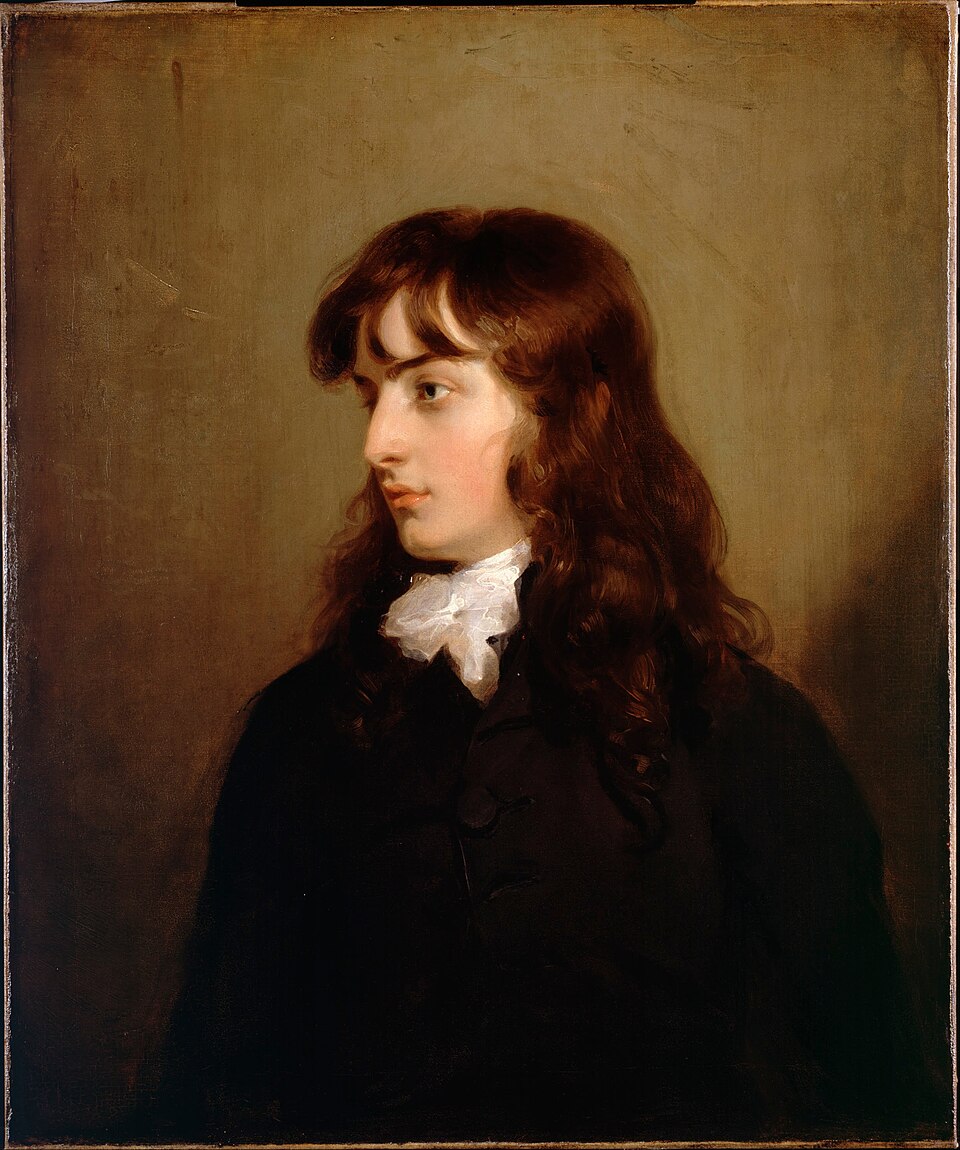
William Linley
William was the youngest surviving child of the Linleys.
He received his initial musical education from his father.
Later, perhaps indicating the family’s increasing social position, he attended Harrow and St. Paul’s School.
He also took music lessons from Carl Friedrich Abel, an elderly composer who worked during the late Baroque and early Classical eras.
Abel had studied under Johann Sebastian Bach, and was a close colleague of his son, Johann Christian Bach.
Carl Friedrich Abel: Symphony No. 6 in B-Flat Major, Op. 7 (Cantilena; Adrian Shepherd, cond.)
Like his siblings, William had a beautiful voice. (In fact, upon hearing it, poet Samuel Taylor-Coleridge wrote a sonnet about it in 1800 entitled “Lines to W. Linley, Esq.”)
As a young man, he joined the British East India Company, living and working there between 1790 and 1795, as well as from 1800 to 1805, trying to make a living as a writer.
In between, he came back home to work as a composer at his father’s Drury Lane theatre.
William Linley: Down in the Gleamy Vale (Invocation, Ensemble; Timothy Roberts, cond.)
In 1810, at the age of 41, he retired from the company. He chose to spend the rest of his life singing, composing, and (like his literary sister Elizabeth) writing.
He died in London in 1835.
Conclusion
The story of the seven Linley prodigies is one of dazzling promise, lost potential, and heartbreak.
Within a single generation, the Linleys transformed Bath into a hub of British musical life, leaving behind operas, songs, and paintings that captured the spirit of their age…then vanished.
They remain hugely fascinating, and also serve as a cautionary tale of what can happen when a parent pushes a talented family to the brink.
For more of the best in classical music, sign up for our E-Newsletter