Sergei Prokofiev, the Russian composer whose innovative and vibrant works revolutionised 20th-century music, holds a special place in the hearts of classical music enthusiasts. Known for his bold harmonies, rhythmic vitality, and a unique blend of lyricism and irony, Prokofiev’s compositions resonate with intensity, technical brilliance, and emotional depth.
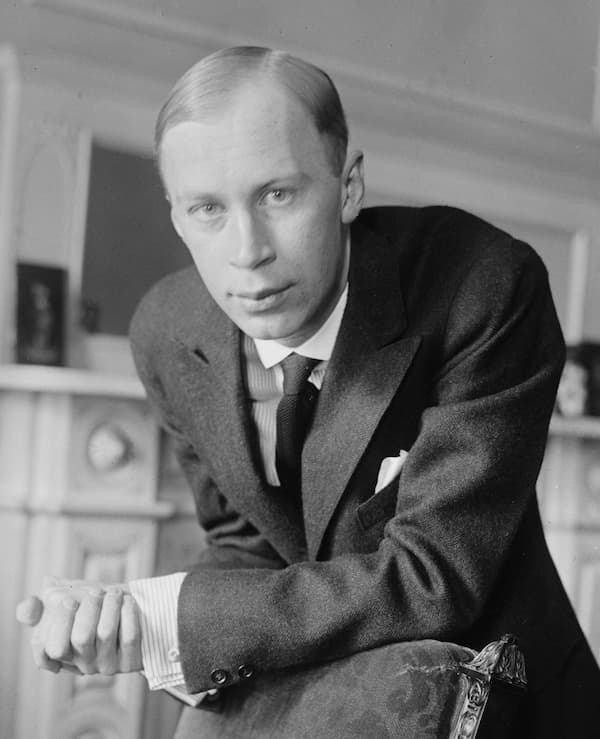
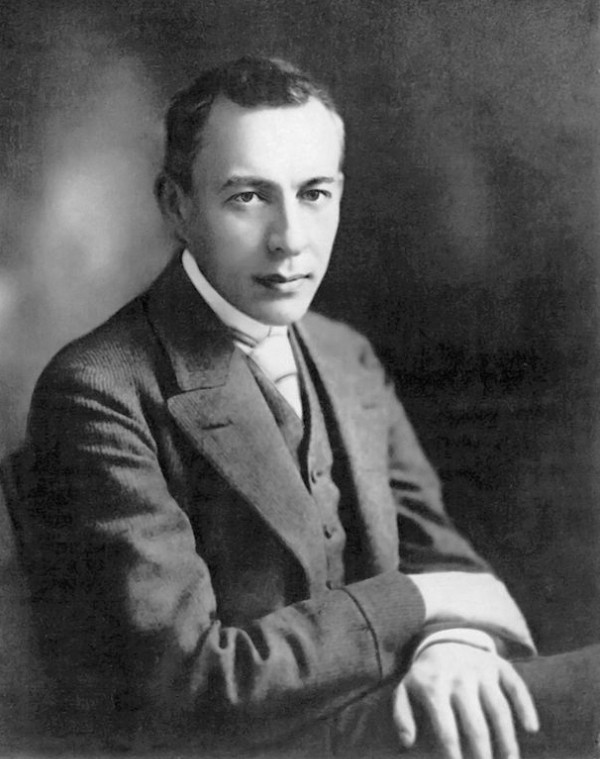
Sergei Prokofiev, ca 1918
For those captivated by Prokofiev’s distinctive sound, the performances by pianist Yuja Wang offer a compelling complement. Wang, a Chinese-born virtuoso, has emerged as one of the most electrifying interpreters of Prokofiev’s music, bringing her own flair to his works while embodying the qualities that make his compositions so thrilling.
Yuja Wang performs Prokofiev: Toccata in D minor, Op. 11
Demanding Virtuosity and Emotion
Born in 1891, Sergei Prokofiev was a musical innovator who bridged Romanticism and modernism. His works are characterised by sharp contrasts that juxtapose lyrical melodies with angular, dissonant passages, playful humour alongside brooding intensity, and a rhythmic drive that pulses with energy.
Prokofiev’s piano works showcase his own prodigious skill as a pianist. His concertos and sonatas are technically demanding, requiring precision, speed, and stamina, but they also reward performers who can infuse them with personality. The ideal interpreter is one who can capture the music’s kaleidoscopic emotion, its wit, its tenderness and its ferocity and bring a fresh perspective to these challenges.
Enter Yuja Wang, whose performances of Prokofiev’s works have earned her acclaim as one of the composer’s most compelling modern champions. Known for her dazzling technique, fearless interpretations, and charismatic stage presence, Wang has become a global sensation in the classical music world.
Yuja Wang performs Prokofiev: Piano Concerto No. 3 in C Major, Op. 26
Shared Passion

Yuja Wang
Wang’s affinity for Prokofiev’s music is evident in her recordings and live performances, particularly of his piano concertos and sonatas. Her approach to Prokofiev aligns perfectly with the composer’s aesthetic, particularly in their shared emphasis on technical brilliance.
Prokofiev’s piano writing is notoriously difficult, with rapid-fire passages, complex polyrhythms, and wide leaps that test a pianist’s dexterity. Wang, renowned for her seemingly effortless command of the keyboard, tackles these challenges with astonishing precision and ease.
Wang’s performances are marked by a crystalline clarity in the fastest passages and a commanding power in the concerto’s dramatic climaxes. Critics have praised her ability to make Prokofiev’s technical demands seem almost incidental, allowing the music’s emotional and narrative arcs to shine through. For fans who revel in Prokofiev’s virtuosic writing, Wang’s technical mastery is a thrilling match.
Yuja Wang performs Prokofiev: Piano Sonata No. 8 in B-flat Major, Op. 83 “Vivace”
Elegance and Audacity
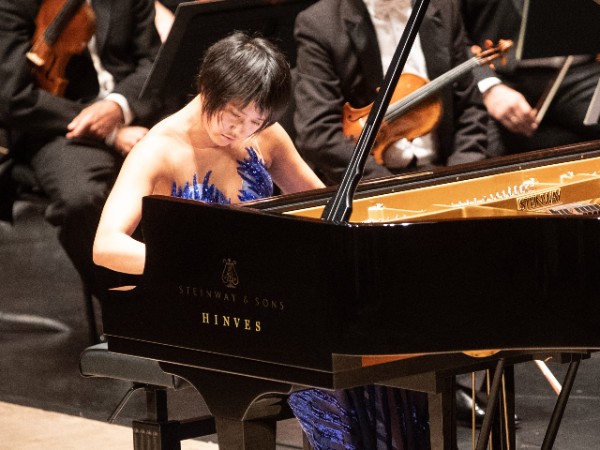
Yuja Wang
Beyond technique, Wang’s interpretive choices resonate with Prokofiev’s spirit of innovation and individuality. Prokofiev was known for pushing boundaries, blending classical forms with modernist sensibilities and infusing his music with a sense of irony and playfulness. Similarly, Wang is unafraid to take risks in her performances, offering bold, sometimes provocative interpretations that challenge conventional expectations.
This ability to balance Prokofiev’s contrasting moods, his classical elegance and modern audacity, makes Wang a natural fit for his music. Prokofiev’s music is inherently theatrical, as his works often tell stories or evoke vivid characters requiring performers to act as musical storytellers. Yuja Wang excels in this regard, bringing a cinematic quality to her performances that aligns with Prokofiev’s dramatic instincts.
To be sure, her dynamic stage presence, marked by expressive gestures and an almost choreographic approach to the piano, enhances the theatricality of Prokofiev’s music. Wang conveys the music’s stormy intensity and tender introspection with equal conviction, drawing listeners into the composer’s narrative world.
Yuja Wang plays Prokofiev: Piano Sonata No. 6, Op. 82
Theatrical Homage
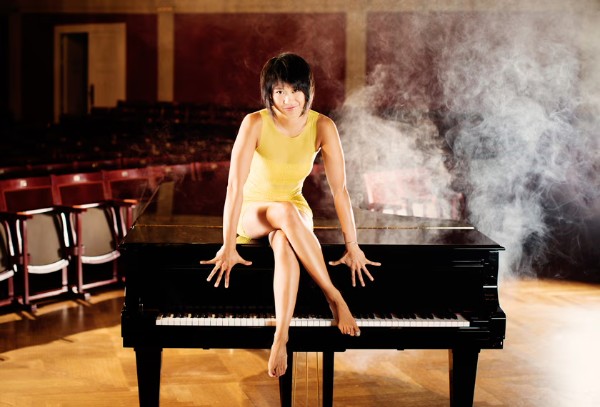
Yuja Wang
Yuja Wang’s interpretations of Prokofiev are a natural draw. Like Prokofiev, who was a polarising figure in his time due to his bold innovations, Wang is a polarising yet undeniably compelling figure in contemporary classical music. Her flamboyant stage outfits, unconventional recital programming, and willingness to push boundaries echo Prokofiev’s own penchant for defying norms.
For listeners who appreciate Prokofiev’s rebellious spirit, Wang’s unapologetic individuality is likely to resonate. Moreover, Wang’s versatility as a performer complements the eclectic nature of Prokofiev’s output. Prokofiev wrote across genres, and Wang similarly thrives in diverse repertoire, from Bach to Bartók to contemporary composers. Her ability to navigate different musical worlds while maintaining a distinctive voice mirrors Prokofiev’s own genre-spanning career.
For those who love Prokofiev’s music, Yuja Wang represents an ideal interpreter who brings his works to life with unparalleled energy and insight. Her technical virtuosity matches the demands of Prokofiev’s piano writing, while her bold interpretive choices capture the composer’s innovative spirit. Her theatrical flair and storytelling ability amplify the dramatic qualities of Prokofiev’s music, and her modern, boundary-pushing persona aligns with the composer’s own iconoclastic legacy.
For more of the best in classical music, sign up for our E-Newsletter