Even the greatest classical musicians – those renowned the world over for their superhuman discipline and focus – have moments when everything just goes blank.
In an era when memorisation is seen as a prerequisite for performing, memory lapses have destroyed confidence and ended careers.
However, these mistakes also highlight the humanity of the musicians who made them…and will hopefully make you feel a little less alone every time you step onstage yourself!
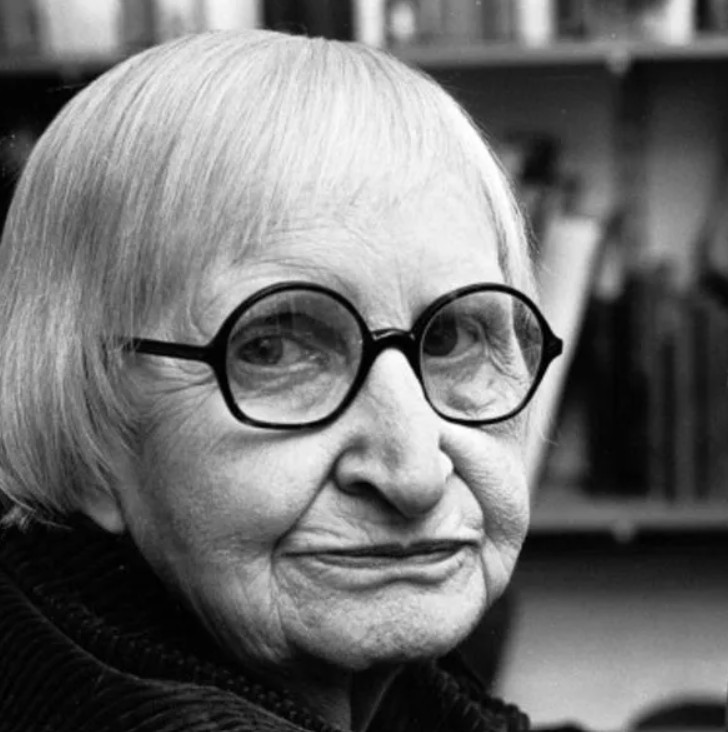
Adelina de Lara, ca. 1907
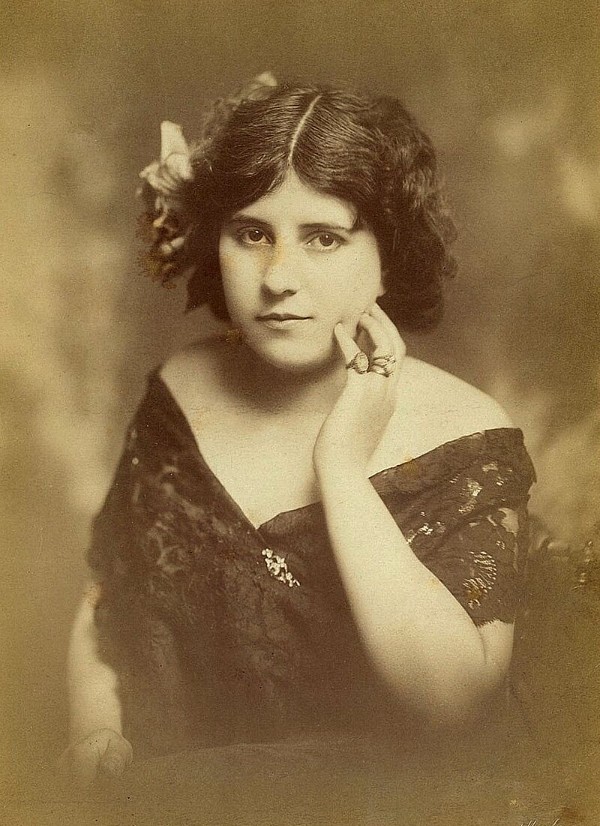
Adelina de Lara
Adelina de Lara was a British pianist born in 1872. Although she is forgotten today, she led a colourful life and career.
In 1955, at the age of 83, she published a remarkably frank memoir called Finale.
In it, she discusses a life-changing memory lapse that traumatised her so badly that she refused to play concertos again for decades afterwards.
She was performing the Robert Schumann piano concerto with conductor Landon Ronald in Birmingham. (The exact date of the concert is unclear, but it would have been sometime around 1907.)
The morning of the concert, Landon told her that she was playing “splendidly” and that he was looking forward to the concert.
He then made a fateful throwaway remark: “The last three times I have conducted the Schumann concerto, the pianist’s memory has failed during the performance!”
Robert Schumann Piano Concerto
De Lara immediately had a physical reaction. The way she describes it sounds like what we might call a panic attack today: chills, weak knees, an adrenaline rush, and a sudden inability to concentrate.
As she’d recount in her book decades later:
“I played the second movement and began the third. I was making fine progress; Landon was conducting superbly. And then, at the repetition of the brilliant third subject — it happened! I played a phrase with both hands an octave lower than it is written. Only one bar — but I lost my head. It put me right out — panic seized me.”
Landon stopped the orchestra. She rushed backstage and burst into tears. Nobody came to check on her. She was scheduled to play solo works by Chopin after the intermission, but she was so horrified she fled to her hotel instead.
She wrote in her memoir:
“It was the worst thing I could have done. I blamed only myself, but after all these years, other musicians have told me Landon was to blame. He should have gone on directing the orchestra, and I could have come in again.”
She returned to her home in London the next day. Her partner asked what had happened. After she explained, he told her the memory slip wasn’t the problem; it was the fact that she hadn’t gone back to try a second time. In response, she declared that she’d never play another concerto again.
Adelina de Lara ended up having a nervous breakdown over the event. And true to her word, she didn’t accept a single concerto invitation for 27 years afterwards.
Still, she had regrets:
“Only when I did at last play successfully the Schumann Concerto from memory with Claud Powell, conductor of the Guildford Symphony Orchestra, did I write to Landon and tell him. It was a few years before his death. This letter shows how foolish I had been to let my nerves get the better of me for so long. If only I had had it sooner!”
Adelina de Lara performing Schumann’s Kreisleriana in 1951
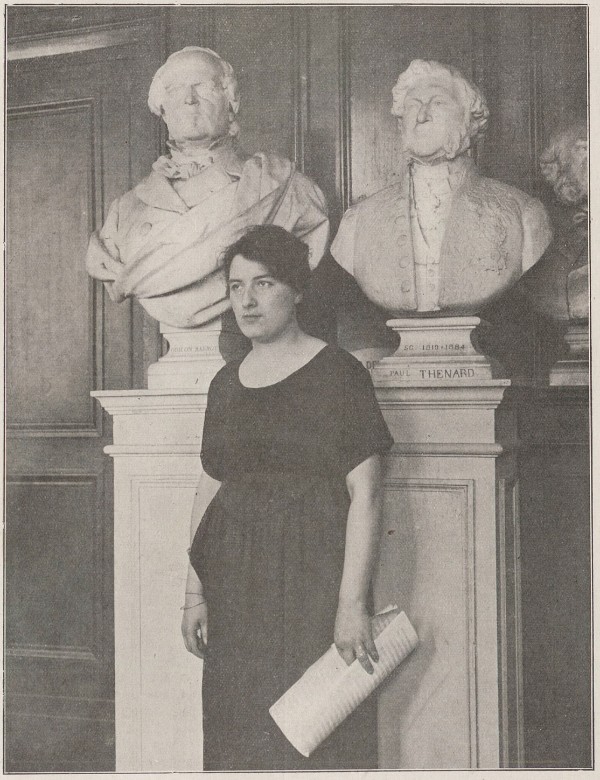
Olga Samaroff, 1917
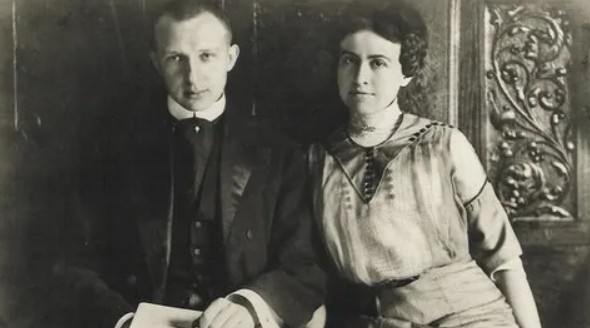
Olga Samaroff and Leopold Stokowski
Pianist Olga Samaroff – the exotic stage name of American pianist Lucy Hickenlooper – made a disastrous early marriage to a wealthy Russian man in 1900. He forced her to give up her performing career, which was just taking off at the time.
Four years later, she left him and sailed back to America to reinvent herself as a piano soloist. Her hard work paid off, and she became a prominent pianist in both the United States and Europe.
Around 1905, she met the organist and choirmaster at St. Bartholomew’s Church in New York City, a man by the name of Leopold Stokowski. She liked him and pulled strings to help get him the music directorship at the Cincinnati Symphony, which assured his American career.
They ended up marrying in 1911. In June 1912, Stokowski was hired to become the music director of the Philadelphia Orchestra, a post he would retain for decades.
Although Samaroff cut back somewhat on her concert career after the wedding, they did still enjoy performing together, with Stokowski on the podium and Samaroff at the piano.
Samaroff playing Liszt’s Liebestraum No. 3 in 1921
Unfortunately, their marriage ran into trouble quickly. Stokowski was terminally unfaithful to Samaroff. World War I was difficult on both of them, given their sympathy for German musical culture. Minor irritations grew more heated, and they started hating the sound of hearing the other practice.
The marital tension came to a head in January 1917, when Samaroff had a major memory lapse in Pittsburgh while on tour with the Philadelphia Orchestra and Stokowski. It was so severe that she was forced to stop and walk backstage to collect herself.
A few months later, she, like Adelina de Lara, had a mental breakdown over it. But she was able to rally and returned to the concert stage before the end of the year. And in 1923, she divorced Stokowski.
Josef Hassid, 1940
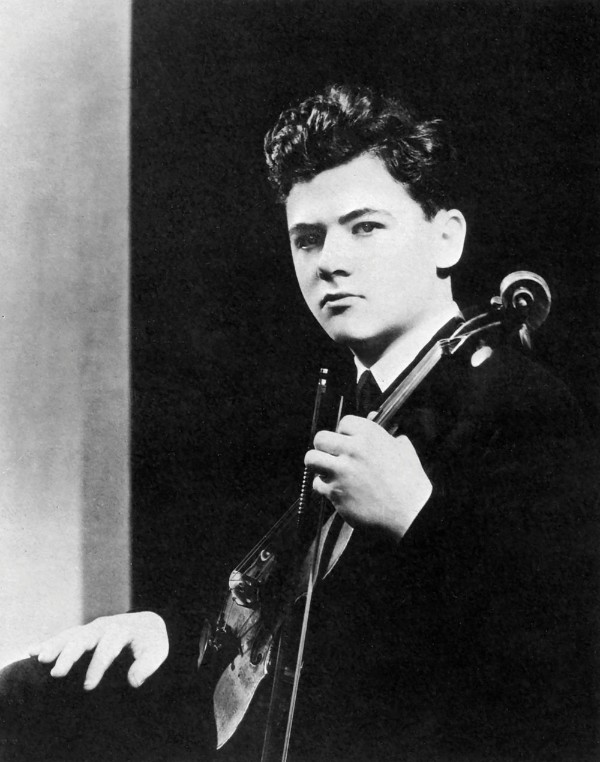
Josef Hassid
Josef Hassid, born in 1923 in Poland, is widely considered to be one of the greatest violinists to have ever lived.
In 1935, the year he turned twelve, he competed in a legendary year of the Henryk Wieniawski Violin Competition. His fellow competitors included violin giants Ginette Neveu and David Oistrakh.
While competing, he suffered a memory lapse. However, he was extended grace and allowed to continue.
In the end, he earned an honorary diploma. Fifteen-year-old Neveu placed first in the competition; 27-year-old Oistrakh second.
Still, despite the memory slip, it was clear that Hassid was headed for a major career.
He became one of the best-loved students of violin teacher Carl Flesch, who taught many of the great violinists of the early twentieth century.
Hassid’s performance of Tchaikovsky’s Melody, 1940
In early 1940, the year he turned seventeen, he made his concerto debut in London in the Tchaikovsky concerto, but suffered more memory lapses during the performance.
They continued with some frequency in the months to come.
A reviewer noted it in a performance of the Brahms concerto in March 1941:
“The solo performance was scarcely more than that of a clever student who has worked hard to memorise the concerto but is still liable to be thrown off his stroke, even to the point of forgetting his notes occasionally.”
He was suffering in his personal life, too. He had extreme mood swings and became unable to recognise people.
In June 1941, he was involuntarily committed to a mental institution and diagnosed with schizophrenia. He received insulin treatment and electroshock therapy.
In October 1950, after his father’s death, his doctors performed a lobotomy on him. He developed meningitis after the surgery and died at the age of 26.
Artur Schnabel, 1946
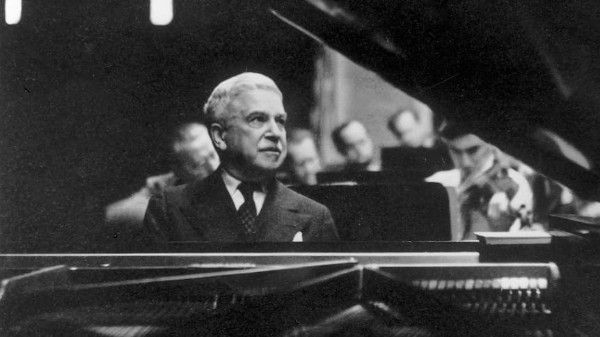
Artur Schnabel
In 1946, while playing Mozart’s Piano Concerto No. 23 with the New York Philharmonic, pianist Artur Schnabel had a memory lapse in the third movement.
He had to stop, stand, and look at the conductor’s score before continuing.
When the live performance was issued on disc, a version without the mistake was included.
In 1991, the National Public Radio program “Fresh Air with Terry Gross” ran a brief segment about this infamous performance, which includes the audio of the breakdown. Contributor and critic Lloyd Schwartz declared the messier version his favourite.
Schnabel playing Mozart’s Piano Concerto No. 23, 1946
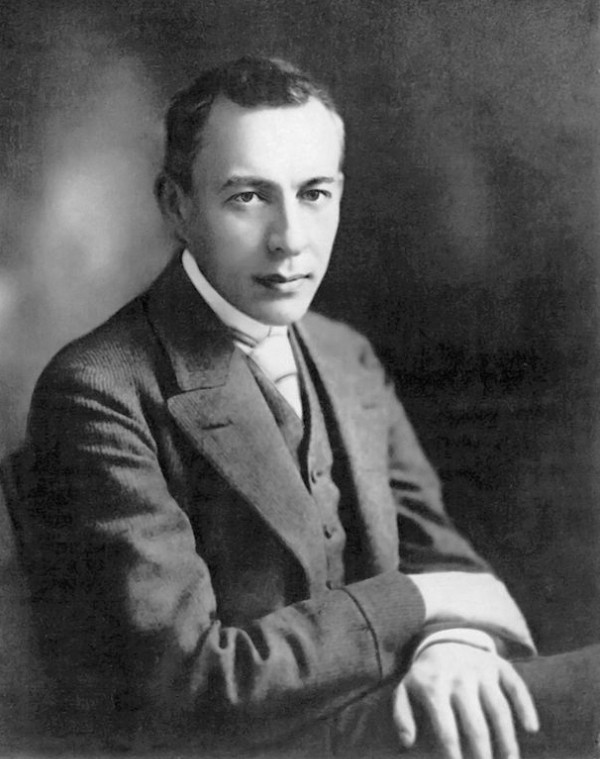
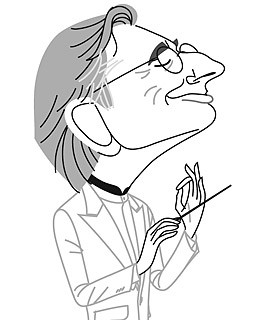
Arturo Toscanini, 1954
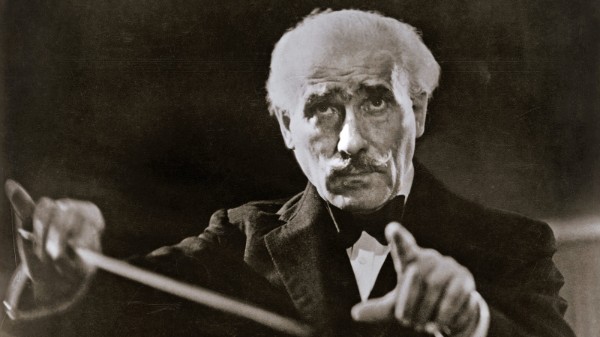
Arturo Toscanini
On 4 April 1954, indomitable and indefatigable 87-year-old maestro Arturo Toscanini led the NBC Symphony Orchestra in the Bacchanale from the opera Tannhauser. The concert was being broadcast nationally, and millions were listening.
But to his horror, he suffered a memory lapse halfway through the piece. He froze, with his arms falling to his side, his body unsure what to do. The principal cellist had to save the day by cuing in his colleagues.
The experience shook Toscanini so deeply that he decided never to conduct again.
Toscanini’s final performance, featuring music from Tannhauser
Arthur Rubinstein, 1964
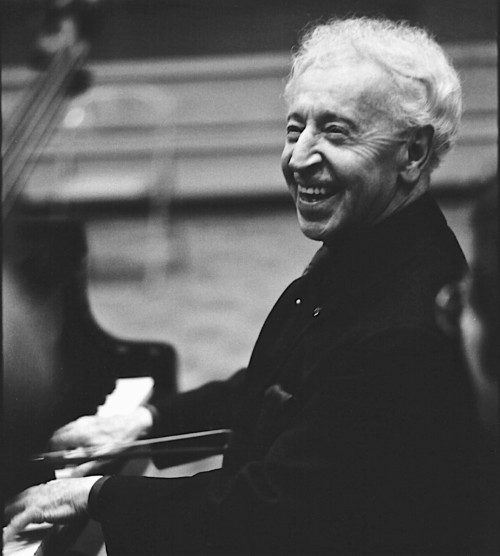
Arthur Rubinstein
Once, while concertizing in Moscow in 1964, Rubinstein had a memory lapse playing the scherzo from Chopin’s second piano sonata…and video exists.
Without giving any outward indication that anything was wrong, Rubinstein tried repeating the passage.
When that didn’t work to get him out of his jam, he simply ad-libbed a transition to the next section!
One wonders how many in the audience were any the wiser as to what happened.
The ironic thing is, Chopin himself disapproved of his students playing from memory: he felt that it was disrespectful to the composer and to the music. It was his colleagues, Franz Liszt and Clara Schumann, who popularised the practice, not Chopin!
Rubinstein playing Chopin’s Piano Sonata No. 2 in 1964
Conclusion
For audiences, a memory slip might last only seconds…or perhaps not even register at all!
However, just the memory of a single one can haunt a performer for decades. Some musicians never recovered from theirs; the others figured out how to do the mental work to get back onstage.
It’s important to remember that memory lapses are almost inevitable. They’re also nothing to be ashamed of; on the contrary, they demonstrate a musician’s humanity and artistry. And that humanity is the whole reason anyone wants to hear what you have to say in the first place!
For more of the best in classical music, sign up for our E-Newsletter