
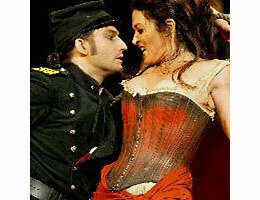
Georges Bizet’s opera Carmen was first produced at the Vienna Opera on 23 October 1875, with an extremely curious Johannes Brahms in the audience. Brahms had been aware of the scandalous Parisian premiere, summarized by a local critic. “Mr. Bizet
In essence

We’ve looked at English ceremonial music – now let’s cross La Manche and look at French music of the same kind. A king such as King Louis XIV and centrality of the court at Versailles meant that there was the
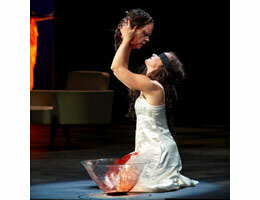
Six years after the dismal failure of his opera Guntram in Munich, Richard Strauss collaborated with the librettist Ernst von Wolzogen on a project he hoped would exact revenge on the bourgeois provincialism of his hometown. Feuersnot (In need of

The American composer George Crumb took the idea of the classical string quartet and turned into an electric ensemble of darkness. His 1971 work, Black Angels: Thirteen Images from the Dark Land, extended the string quartet by electrifying it, and
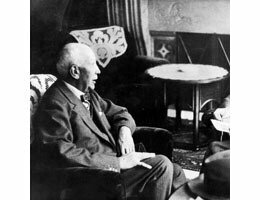
The Allied initiative to rid German and Austrian society, culture, press, economy, judiciary, and politics of any remnants of National Socialist ideology was launched after the end of the Second World War. The directives of “denazification” identified specific groups and
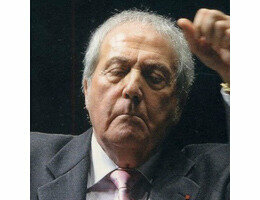
We heard, the other day, a new disc by Aldo Chiccolini, simply entitled 13 Waltzes and it got us thinking about the waltz. The waltz was one of several similar dances that came out of southern Germany, Bavaria and Austria

It’s always a surprise when Pop and Classical music overlap. We already looked at Pop singers taking on the Classical repertoire, often with a lamentable result. But, if we look at the influence moving in the other direction, where Pop

Richard Strauss first met Francesca Gaetana Cosima Liszt-Bülow Wagner in March 1889. Of all his acquaintances and friendships during this period of his life, this one was to have the most important consequences for his immediate future. Alexander Ritter had