Pianist and composer Marina Baranova grew up in Ukraine in a household where music was constant and diverse. Both of her parents were pianists and teachers. Her mother taught classical piano, while her father specialised in jazz and improvisation. Their small apartment contained several pianos, often played at the same time.
“As a child, I loved moving from room to room,” Baranova says. One space was dominated by classical repertoire, where she listened to her mother and her students work through pieces. “That music always turned into a kind of film in my head, full of depth and emotional intensity.” Classical music, she explains, shaped her early understanding of musical structure, storytelling, and emotional expression.
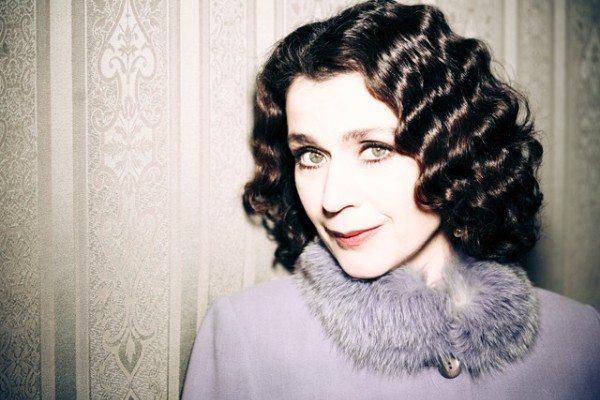
Marina Baranova
In another room, her father was immersed in jazz. “It expressed freedom, rebellion, and creativity without borders,” Baranova recalls. Jazz was forbidden in the Soviet Union, and her father’s involvement with it carried personal and political significance. “The fact that my father played it was, in itself, an act of resistance. You could feel that defiance directly in the sound.”
Growing up with these contrasting musical languages shaped Baranova’s view of genre. “Music has many faces, yet everything can exist under the same roof,” she says. “I like to think of musical genres as different rooms in one house. Each has its own atmosphere, but there is always a door connecting them.”
Maurice Ravel’s Pavane pour une infante défunte, M. 19
Baranova’s recent recording projects reflect her interest in connection and contrast. Last year, she released Salon de Ravel and The Star of Mendelssohn, two albums with distinctly different conceptual frameworks. “They may appear very different at first glance,” she notes, “yet both come from my musical curiosity.”
Marina Baranova’s Prélude a la manière de Ravel
Salon de Ravel was inspired by an imagined artistic environment in Paris around 1900. “I pictured Ravel surrounded by musicians, painters, and poets, sharing ideas and new works,” Baranova explains. The album reflects her interest in artistic exchange and influence, particularly the composers Ravel admired, including Borodin, Chabrier, Debussy, and Fauré.
The Star of Mendelssohn, by contrast, has a more personal foundation. The album intertwines Mendelssohn’s Songs Without Words with traditional Christmas carols. “It was conceived as a bridge between worlds,” Baranova says, drawing on her experience of growing up with a Jewish background and later embracing Christian holiday traditions. She also sees parallels in Mendelssohn’s own life. “It mirrors the dualities shaped by multiple traditions.”
That idea of openness and exchange also defines her collaboration with her husband, composer and visual artist Damian Marhulets. The two met when they were twenty and have shared an ongoing artistic dialogue ever since. “We’ve never stopped talking about what it means to be an artist,” Baranova says, describing conversations that range from aesthetics to creative process.
Felix Mendelssohn/Marina Baranova’s Drinking Song, Op. 75 No. 3
She often plays new piano works for Marhulets, using their discussions as a way to test and refine ideas. “Those conversations are incredibly inspiring and often open doors I didn’t even know were there.” After a recording is completed, Marhulets frequently creates visual artwork in response to the music. “He approaches the music from a different angle, and his visual interpretation uncovers layers I hadn’t seen before,” she says.
Marina Baranova’s The Sense of Cohesion
In recent years, Baranova has expanded her role beyond performing and recording by curating her own music salon at Villa Seligmann in Hannover, a center dedicated to Jewish music and culture. After renting a studio in the building, she began organising intimate concerts for small audiences. “From the very beginning, I dreamed of creating a music salon,” she says.
The project quickly grew into the ImproVision Festival, developed in collaboration with Villa Seligmann. The festival brings together international musicians to improvise, perform repertoire, and present original works. One highlight was an improvised twelve-hands performance on two pianos shaped by audience suggestions. “It was full of spontaneity and connection,” Baranova recalls.
When Baranova sits at the piano today, she describes the creative impulse as constantly changing. “Each time, the approach feels different,” she says. Sometimes she begins with improvisation, while at other times a connection emerges through sight-reading. “It can feel like a dialogue across time.”
Music also serves a personal function. “Sometimes music feels like a kind of embrace,” she says. “I often feel that new music already exists somewhere, waiting to be given sound.” Honesty, she emphasises, is central to her work. “I only create when the impulse comes from the deepest place within me. I cannot lie in front of music.”
Currently, her piano showcases her diverse interests. Beethoven scores sit next to handwritten sketches for a reworking of Sweeney Todd, originally by Stephen Sondheim. As she says, it’s “a very unlikely house share: Beethoven on one side, Sondheim on the other.” To learn more about Marina Baranova, visit her website at www.marinabaranova.com.
For more of the best in classical music, sign up for our E-Newsletter