
Andrei Gavrilov, born on 21 September 1955 in Moscow, emerged from the Soviet Union’s rigorous musical crucible as a prodigy whose fingers danced with both ferocity and finesse. His victory at the 1974 International Tchaikovsky Competition, at the tender age of 18, announced his arrival as a force of nature, blending technical virtuosity with a daring, almost rebellious interpretive spirit.
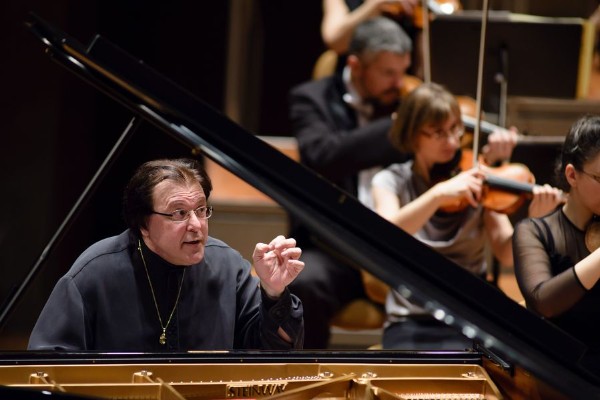
Andrei Gavrilov
Gavrilov’s story, however, is not merely one of triumphs. It is a tapestry woven with threads of artistic defiance, personal struggle, and an unyielding quest for musical truth. His journey reflects a life dedicated to pushing the boundaries of expression, challenging conventions, and breathing life into the timeless works of the great composers.
Yet, beyond the accolades and ovations lies a complex figure, a man who navigated the oppressive constraints of Soviet cultural politics, defected to the West, and grappled with the weight of his own genius. To celebrate his birthday, let’s sample some of his most iconic performances and recordings.
Andrei Gavrilov performs Chopin: Ballade No. 1 in G minor Op. 23 and Ballade No. 2 in F major Op. 38
Russian Souls
Andrei Gavrilov, renowned for his virtuosic flair and emotive depth, shares a profound artistic kinship with Sergei Rachmaninoff. Gavrilov’s connection to Rachmaninoff is rooted in a deep affinity for the composer’s emotional intensity, technical demands, and distinctly Russian soul, which resonate with Gavrilov’s own interpretive style.
Gavrilov’s performances of Rachmaninoff have been met with widespread critical acclaim for their electrifying energy and interpretive insight. In fact, navigating the fiendish technical demands while conveying its emotional depth earned him comparisons to legends like Vladimir Horowitz.
However, not all critical reactions have been unanimously glowing, reflecting the polarising nature of Gavrilov’s bold interpretive choices. Some critics argued that his Rachmaninoff performances could occasionally lean too heavily on extroverted virtuosity, risking exaggeration in moments of high drama. Be that as it may, Gavrilov’s personal connection to the composer, forged through a shared cultural heritage and an intuitive grasp of Rachmaninoff’s expressive language, continues to resonate in performances.
Andrei Gavrilov performs Rachmaninoff: Piano Concerto No. 2, Op. 18 “Allegro scherzando”
Order and Emotion
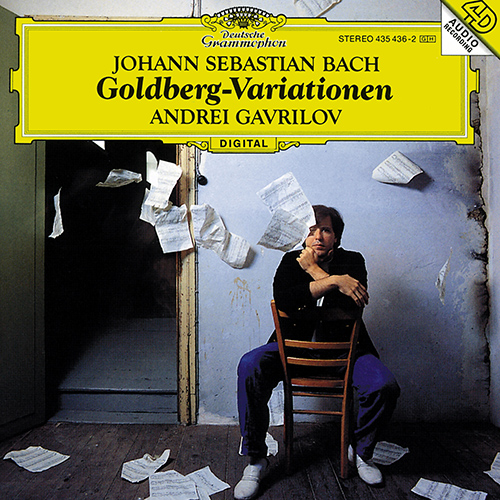
Gavrilov’s connection to the Goldberg Variations is grounded in his reverence for Bach’s ability to weave intellectual rigour with expressive freedom, a duality that mirrors his own approach to music-making. He described Bach’s music as “a universe of order and emotion.”
In interviews, he has spoken of Bach’s music as a kind of spiritual and intellectual refuge, a space where the performer must surrender ego to serve the composer’s vision. In a 1990s interview with Gramophone, Gavrilov remarked that Bach’s music “speaks to the soul directly, without intermediaries,” a sentiment that certainly informs his approach to the Goldberg Variations.
Gavrilov’s engagement with the Goldberg Variations also reflects his broader artistic philosophy, which emphasises music as a living, evolving dialogue between composer, performer, and audience. He described Bach’s music as a “conversation with eternity,” suggesting that it represents a journey through human experience. This perspective is evident in his performance, where he treats each variation as a miniature world, from the delicate ornamentation of the aria to the exuberant energy of the final quodlibet.
Johann Sebastian Bach: Goldberg Variations, BWV 988 (Andrei Gavrilov, piano)
A Prism of Emotions
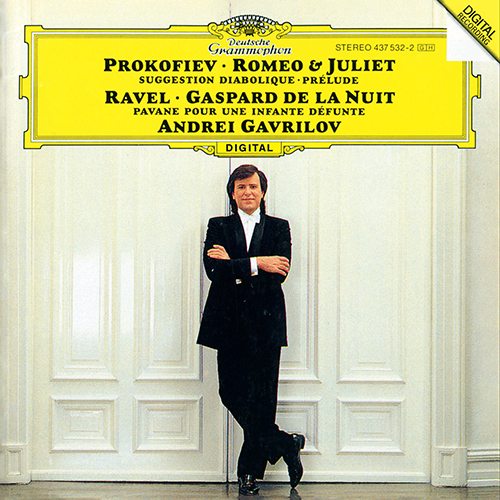
Gavrilov’s intimate connection to Maurice Ravel is evident in his approach to Gaspard de la nuit, a triptych of nightmarish vignettes that demands both virtuosic precision and imaginative storytelling. In interviews, Gavrilov has described Ravel’s music as a “prism of emotions,” reflecting its ability to evoke vivid imagery through intricate textures and dynamic contrasts.
Critical response has been overwhelmingly positive, though not without debate. While Gramophone lauded his “poetic finesse and breathtaking control, Fanfare has suggested that “Gavrilov’s intense, almost orchestral approach can occasionally overshadow Ravel’s subtler nuances, particularly in quieter moments.”
Gavrilov’s connection to Ravel extends beyond technical execution to a shared sense of music as a transformative experience. In a rare 1990s interview, he spoke of Ravel’s ability to “paint with sound,” a quality he seeks to amplify in his performances by treating each phrase as a brushstroke on a larger canvas.
Maurice Ravel: Gaspard de la nuit (Andrei Gavrilov, piano)
Fiery Russian Legacy
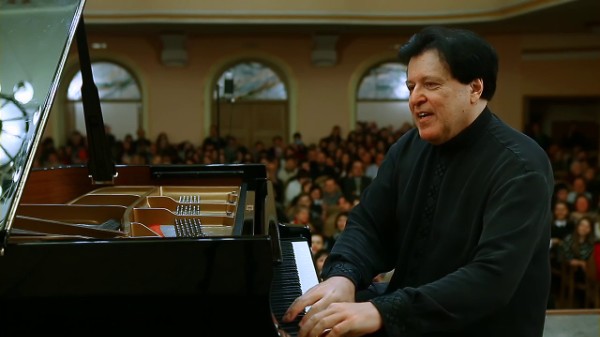
Andrei Gavrilov
Gavrilov’s affinity for Prokofiev shines through in his thoughtful engagement with the composer’s piano repertoire. In a notable 1990s broadcast session, he demonstrates Prokofiev’s rhythmic intricacies and dramatic contrasts describe the 8th sonata as a “cry of the soul amid chaos.”
Gavrilov’s exhilarating command and rhythmic propulsion of Prokofiev’s music is often hailed as among his finest achievements. For a good many critics, Gavrilov’s relationship with Prokofiev transcends mere performance, embodying a cultural and artistic continuity that bridges the Soviet past with contemporary expression.
Andrei Gavrilov’s career is a story of remarkable talent tangled with real struggles. A mental health crisis led to a decade-long retreat in the 1990s that tested him severely. Now 70, he is back in selective concerts and masterclasses, focusing on music’s raw connection over past stardom.
For more of the best in classical music, sign up for our E-Newsletter





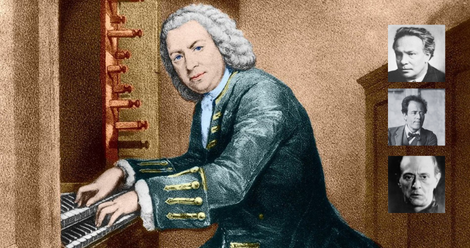
Gavrilov’s interpretation of Bach’s French Suites is outstanding. What a fine pianist!