Alexander Siloti was many things: a virtuoso pianist, beloved teacher, connector of musicians…and Sergei Rachmaninoff’s cousin!
He studied with Liszt, edited Tchaikovsky, conducted the premiere of Rachmaninoff’s second piano concerto, and introduced audiences to music that would go on to define the twentieth century.
Today, we’re looking at the life of overlooked genius Alexander Siloti.
Alexander Siloti’s Childhood and Family
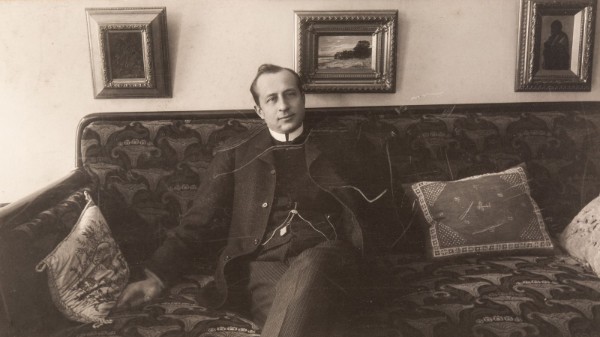
Alexander Siloti
Alexander Ilyich Siloti was born on 9 October 1863 on his family’s estate outside of Kharkiv, five hundred kilometers east of Kyiv.
Through his mother, he was the first cousin of composer Sergei Rachmaninoff, who was a decade his junior.
He began studying the piano as a child and proved to be a prodigy.
Early Studies with Nikolai Zverev
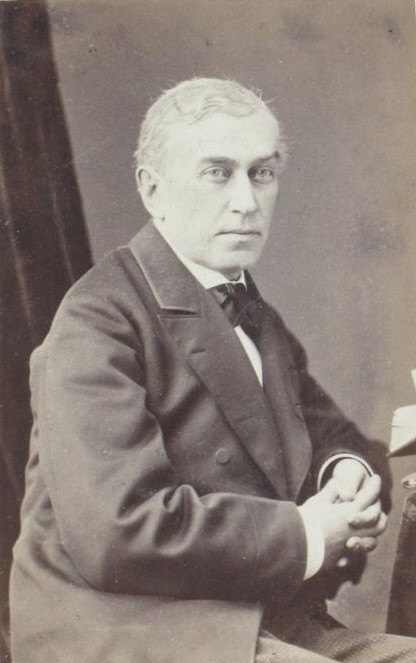
Nikolai Zverev
In 1871, the year he turned eight, he was sent to study at the Moscow Conservatory.
His first professor was Nikolai Zverev, a professor who taught Rachmaninoff and Scriabin, among others.
If a student was accepted into Zverev’s studio, he would also move into Zverev’s house, free of charge.
Despite that hospitality, Zverev had an intimidating reputation. Occasionally, he would even commit physical violence against his students.
Rachmaninoff once wrote:
“Zverev had a temper and could launch himself at a person, fists flailing, or hurl some object at the offender. I myself had been the object of his fury on three or four occasions…”
But he also credited Zverev with teaching his students discipline and bringing them to all kinds of performing arts events for free.
Studying With Nikolai Rubinstein
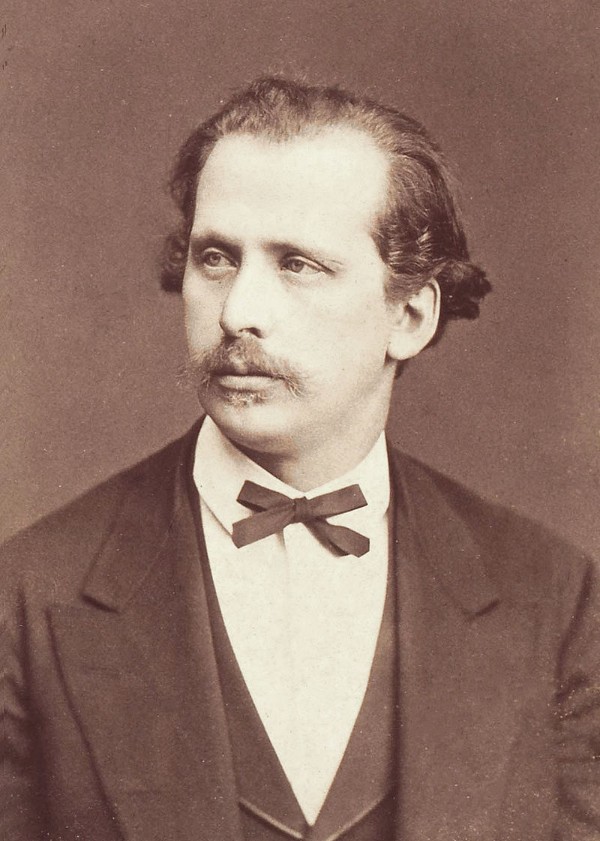
Nikolai Rubinstein
In 1875, the year Siloti turned twelve, he began studying with Nikolai Rubinstein, the founder of the Moscow Conservatory. The boy impressed Rubinstein with his work ethic.
Siloti also studied harmony with Pyotr Ilyich Tchaikovsky, who he would later claim was one of his most influential mentors. Over the course of their lives, they wrote dozens of letters to each other.
In 1880, he gave a concert attended by Tchaikovsky’s patroness Nadezhda von Meck. (She was “deeply impressed” by him.)
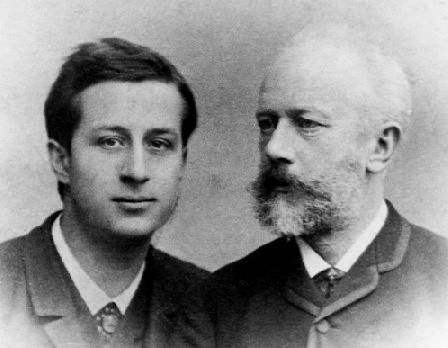
Alexander Siloti and Pyotr Ilyich Tchaikovsky
In 1881, the year he turned 18, he graduated from the conservatory with a gold medal.
Studying With Franz Liszt
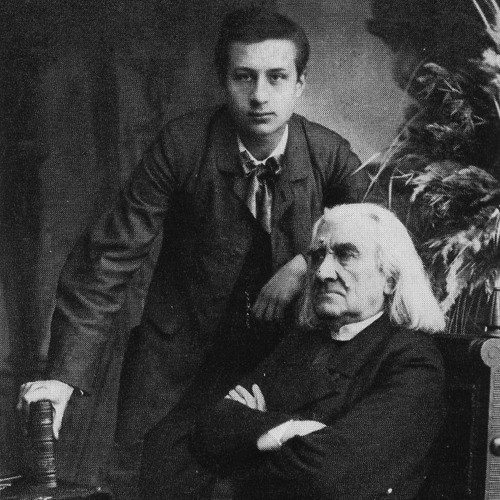
Alexander Siloti and Franz Liszt
His teachers urged him to travel to Leipzig to study with Franz Liszt, which he did.
The Russian government gave him 10,000 rubles…which he set aside for gambling!
Liszt adored him. After Siloti performed Liszt’s Totentanzas for him, the great pianist reportedly said, “You are an honour to your teacher.”
He made his solo debut in November 1883.
His lessons with Liszt continued until Liszt’s death in 1886.
An audiobook of Siloti’s 1913 memoirs recounting his time with Liszt
Falling in Love and Returning to Russia
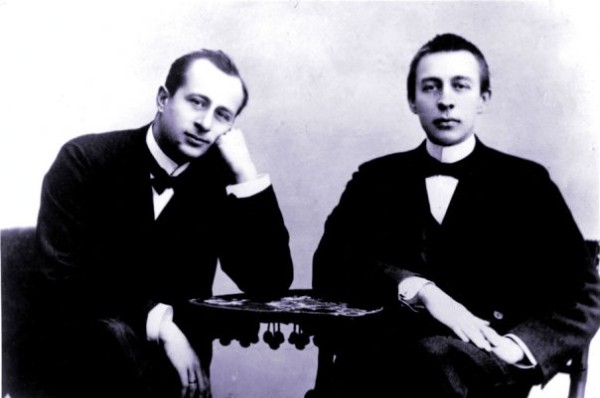
Alexander Siloti and Sergei Rachmaninoff
In 1887, after Liszt’s death, Siloti returned to Russia and took a job at the Moscow Conservatory. While there, one of his students was his cousin, Sergei Rachmaninoff.
He also helped to edit Tchaikovsky’s first two piano concertos and even wrote the piano transcriptions of The Sleeping Beauty.
In 1886, he announced his engagement to pianist Vera Tretyakova, the beautiful daughter of massively wealthy banker, industrialist, and art patron Pavel Tretyakov, who owned five houses in Moscow.
Unfortunately, Pavel disapproved of the union, claiming that musicians “don’t know how to earn a living.” But despite her father’s disapproval, Vera married Siloti in February 1887.
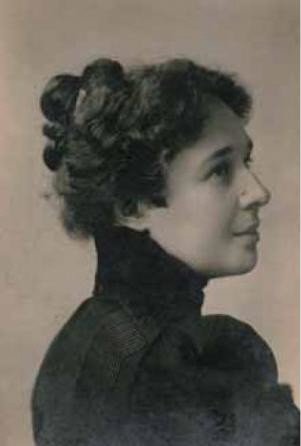
Vera Tretyakova Siloti
The Silotis left Moscow after their marriage, decamping to Leipzig and determined to prove Pavel wrong. For the next decade, Siloti toured across the world with his wife and young children, doing his best to make good on his promise.
On tour, he presented a number of Rachmaninoff’s works to audiences for the first time. It was Siloti who introduced American audiences to Rachmaninoff’s famous 1892 Prelude in C-sharp-minor.
The work would become so popular that Rachmaninoff would resent its success!
Rachmaninoff’s Prelude in C-sharp-minor
Premiering Rachmaninoff’s Piano Concerto #2
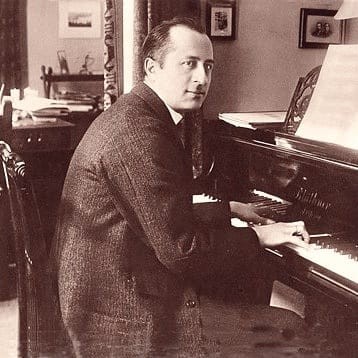
Alexander Siloti
Around this time, Siloti also began pursuing his interest in conducting.
In December 1900, he took to the podium for the first time, conducting the premiere of the second two movements of his cousin’s new piano concerto.
He was under an extraordinary amount of pressure. After another conductor had botched the premiere of his first symphony in 1895, Sergei Rachmaninoff had fallen into a deep depression and developed a paralysing case of writer’s block. It had taken the aid of a hypnotherapist to get him back on track. Rachmaninoff’s second piano concerto was the first big work he wrote after entering therapy.
Unfortunately, the night before the performance, Rachmaninoff developed a cold and drank too much mulled wine to treat it. He wanted to cancel the performance, but was afraid to, not wanting to disappoint Siloti.
Luckily the concerto was a major success.
Critic Ivan Lipaev wrote:
“It’s been long since the walls of the Nobility Hall reverberated with such enthusiastic, storming applause as on that evening… This work contains much poetry, beauty, warmth, rich orchestration, healthy and buoyant creative power. Rachmaninoff’s talent is evident throughout.”
To help his cousin finish the concerto, Siloti sent Rachmaninoff money to live on. While living on Siloti’s loan, Rachmaninoff finished the first movement.
The entire concerto was premiered in November 1901, with Siloti on the podium again.
Siloti even took the work into his own repertoire as a pianist and began touring with it, helping to establish it in the repertoire.
Rachmaninoff repaid the loan within a year, and the work went on to become one of the most popular piano works of all time.
Rachmaninoff’s second piano concerto
Presenting Others’ Music
Between 1901 and 1903, Siloti led the Moscow Philharmonic.
Later, from 1903 to 1917, he was involved with presenting his own concerts under the banner of the Siloti Concerts in St. Petersburg.
During those fourteen years, he presented many of the most famous soloists of the day and gave premieres by a dozen-plus composers.
Sergei Diaghilev attended one of these concerts, where he heard the music of Igor Stravinsky. This led to the commission of The Firebird and The Rite of Spring. Classical music would never be the same!
Siloti was dearly beloved by his colleagues. Over the course of his career, he earned many dedications, including from Liszt, Tchaikovsky, Stravinsky, and others.
He also wrote a number of influential transcriptions for solo piano, including a particularly famous one of a Bach prelude that he transcribed to B-minor.
Prelude in B-minor, by Bach/Siloti
Later Life and Legacy
Siloti fled the Russian Revolution in 1918, ultimately settling in New York City in 1921. Between 1925 and 1942, he taught at Juilliard.
Over the course of his wide-ranging musical career, he not only succeeded as a performing musician but also as a creative partner who helped to foster connections between his colleagues.
And what other conductor can claim that their very first conducting gig involved premiering one of the most popular piano pieces of the twentieth century?
Watch a news story about a 1990 Juilliard benefit concert for a fund in memory of Alexander Siloti.
Alexander Siloti died in December 1945. He was 82 years old.
Writer Jason Terry wrote a fitting tribute to him on the Steinway website:
“Throughout his life he constantly placed others’ needs and prospects above his own personal gains. And although his name is not readily preserved in historical textbooks, his abilities and accomplishments warrant merit, acknowledgement, and appreciation among the current generation of musicians who must always be searching for renewed inspiration from those who have gone before us.”
For more of the best in classical music, sign up for our E-Newsletter