On 21 November 1926, the writer, journalist, and women’s rights advocate Zofka Kveder died in Zagreb, Croatia. She is considered one of the first Slovene women writers and feminists, noted for her nuanced portrayals of women’s lives at every stage of life and across a range of social and class backgrounds.
Her work aligns with the early modernist movement in Central Europe, as her prose depicts gender-based violence among the working classes, as well as the more subtle ways in which society confined women in loveless arranged marriages.
A Woman’s Voice
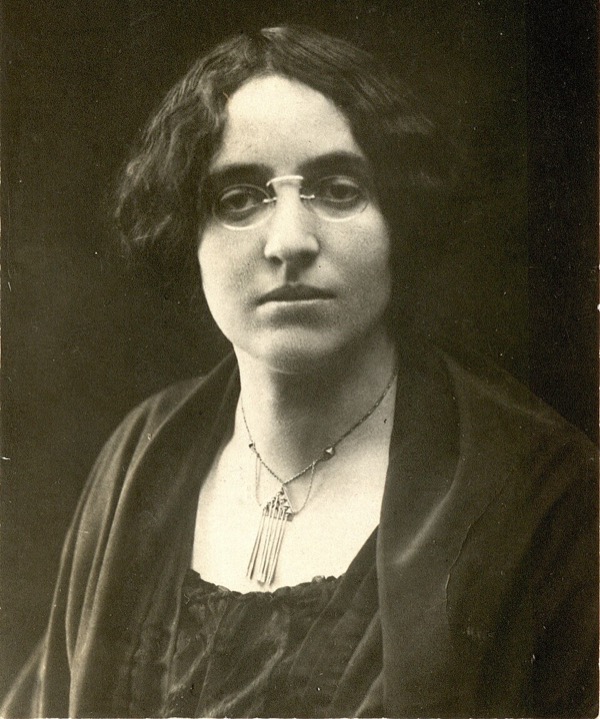
Zofka Kveder, 1920s
She addressed topics that were deemed unmentionable at the time, in particular sexuality. Her writing is imbued with new ideas of women’s empowerment. She wrote and published in several languages, demonstrating immense compassion for marginalised people while expanding the horizons of Slovene literature and culture.
To commemorate the centenary of her death, let us explore the life and works of one of the most remarkable women in Slovenia’s cultural history and the wider Slavic world at the turn of the twentieth century.
Leoš Janáček: Jenůfa, (excerpt)
The Making of a Writer
Zofka Kveder was born in Ljubljana, Slovenia, on 22 April 1878. At that time, Ljubljana was part of the Austro-Hungarian Empire, a relatively small provincial capital within the empire’s German-speaking administrative structure.
Kveder had an unsettled childhood, as her father’s frequent changes of employment necessitated repeated moves around the Slovenian countryside. He struggled with alcoholism, while her mother held strong religious convictions. Family conflict and the restricted position of women would become central subjects of her writing.
She attended four years of elementary school and continued her education with the Ursuline sisters in Ljubljana. Her talent for writing became apparent, and in 1897 she settled in Ljubljana and took a position in a law office. She also began writing more seriously and submitted short prose works to Slovenian newspapers and literary periodicals.
Kveder moved to Trieste in 1898–99, where she contributed literary and journalistic work to Slovenka, the first Slovenian women’s magazine. She began to develop her belief that women needed access to education, professional employment, and the freedom to make their own decisions.
Anton Lajovic: Spring Song
The Mystery of Woman
Pursuing her intellectual ambitions, Kveder moved to Bern to study philosophy at the University of Bern. Unable to support herself financially, she left after only a few months and travelled through Munich before settling in Prague in 1900.
Kveder lived in Prague from 1900 until 1906, entering a lively intellectual environment where literature, theatre, and journalism were rapidly developing. Czech cultural nationalism was flourishing, and she found work as a correspondent for Slovenian, Croatian, and German publications.
Her literary breakthrough came in 1900 with a collection of short prose pieces titled The Mystery of Woman. In this collection, Kveder addresses the fate of women experiencing violence at the hands of men and other women, and challenging the Church’s idealised picture of loving and harmonious families.
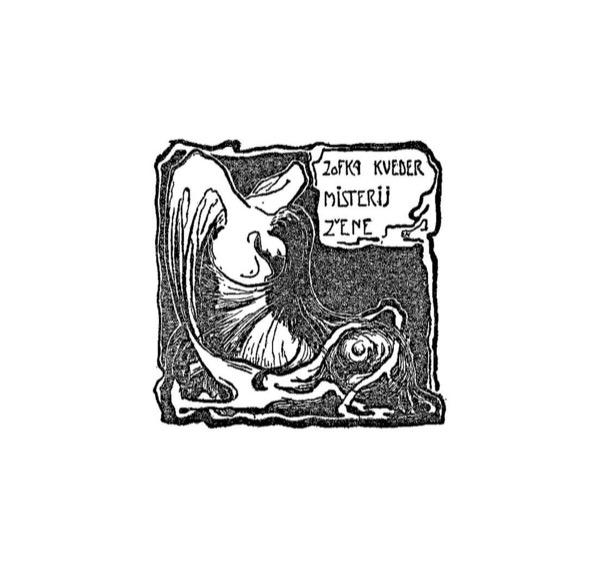
Zofka Kveder, The Mystery of Woman
Over the following years, Kveder published a number of dramatic sketches, short theatrical works, collections of short prose, and the novel Nada, which appeared in instalments. She also met Vladimir Jelovšek, a Croatian medical student, and after giving birth to their first daughter, they married in a civil ceremony in 1903.
Josef Suk: Scherzo fantastique
Building a Literary Community
In 1904, Kveder became the editor of The Home Friend, a Slovenian-language literary magazine published in Prague. She was its first and only editor, remaining associated with the publication until 1914 or 1915.
Kveder invited established writers, yet she also actively encouraged younger and previously unpublished authors. By creating opportunities for other writers, her editorial work was one of her many important contributions to Slovenian literary culture.
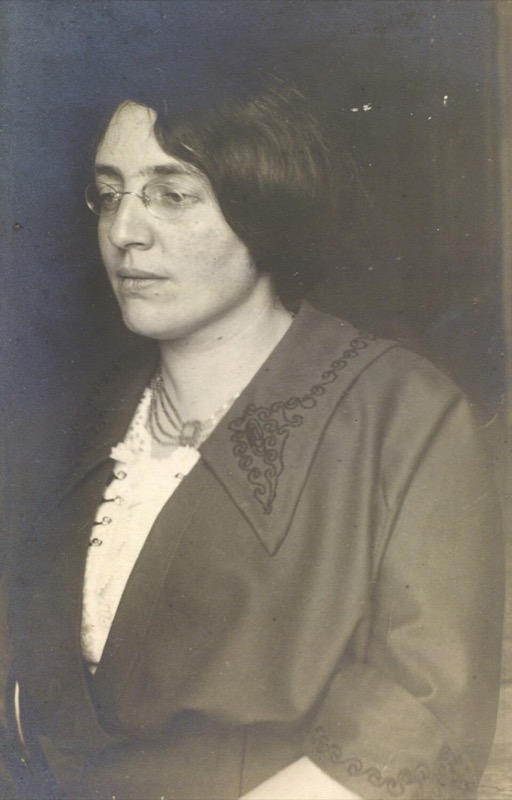
Zofka Kveder, 1920–26
Kveder and her family moved to Zagreb in 1906, and she quickly established herself as a journalist, editor, and writer. Her marriage gradually deteriorated, and after her divorce in the early 1910s, she married the Croatian writer and politician Juraj Demetrović, who would later become involved in the leadership of a new Yugoslav state.
Kveder published one of her most significant novels in 1914. Her Life is a harsh story of a family’s self-destruction. It is told in a graceful yet straightforward manner from the perspective of a Slovene woman who suffers greatly through a marriage to a wastrel. Their children all meet sad ends, and both parents die in the course of the story.
Hugo Wolf: Ergebung (Submission)
Social Criticism
Kveder also developed a substantial body of dramatic writing, and her theatrical pieces explore personal relationships, social conventions, and the conflicts arising from expectations imposed on individuals.
Her ambitious play The Americans of 1908 deals with economic emigration and the seductive lies of the “American dream.” Her work has a strong social dimension, reflecting her social-democratic worldview. She wrote about unfair labour conditions and the failures of the capitalist system that forced so many people into poverty.
In 1917, Kveder founded a monthly magazine devoted to women’s cultural, social, and political interests. Initially titled The Women’s World, it was renamed The Yugoslav Woman. The publication provided a platform for connecting women from Slovenia, Croatia, and Serbia, encouraging exchange and greater participation in the emerging new state.
As she wrote, “Our Yugoslavia is not without its faults, but I firmly assert that life is more beautiful and better for us in our country than for any other nation in theirs.” Her political views were shaped by the complexities of her time, and she also reflected some of the attitudes common to her generation.
Emil Adamič: Separation
Loss and Legacy
The death of her eldest daughter in Prague in 1920, as a result of the Spanish influenza pandemic, was a devastating blow to Kveder. Their intimate relationship is documented through an extensive correspondence, and it left a mark on her subsequent writing.
Although her second marriage was deteriorating and her health failing, Kveder published two further dramatic works in 1922, and her final collection Along the Paths of Life appeared in 1926, the year of her death.
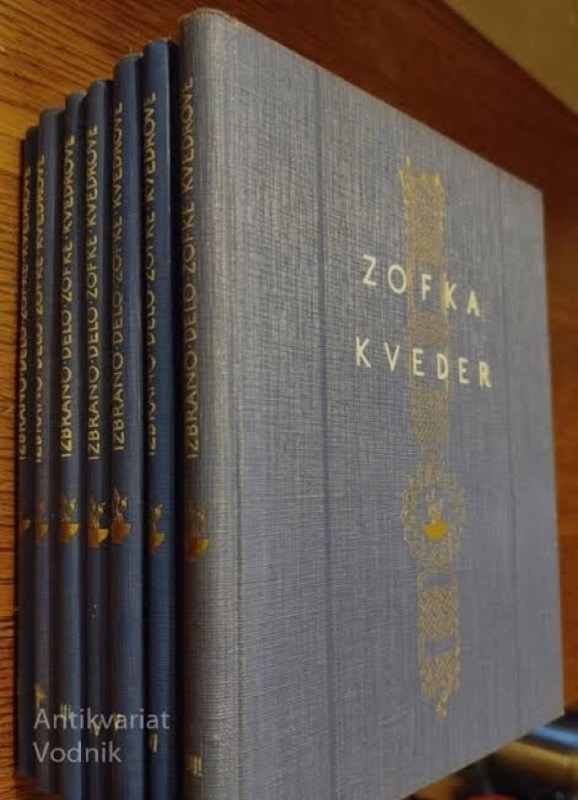
Zofka Kveder, collected works
Kveder died in Zagreb on 21 November 1926, aged 48, under circumstances that remain unclear. She challenged the boundaries of what was deemed possible for a woman at the time and embodied the archetype of the “new woman” in the fin-de-siècle era.
She cut her hair short, wore trousers, and was an international traveller. She became a symbol of women’s empowerment, particularly through her pursuit of financial independence. Kveder belonged to the cultural world of Central European modernism, a period when literature, theatre, music, and the emerging women’s movement were increasingly interconnected.
For more of the best in classical music, sign up for our E-Newsletter