The winner of Spain’s National Dance Award in 2023, Rafaela Carrasco, pays a flamenco tribute to the forgotten women behind the legend of Carmen. Humo (Smoke) takes its subject from the Seville “cigarreras,” the real women who worked in the Royal Tobacco Factory from the eighteenth century onwards.
The character of Carmen was born in this environment, first in Mérimée’s 1845 novella, and then in Bizet’s opera. Humo returns to the women themselves, as nine dancers embody nine distinct trajectories, moving through working days and hierarchies, fiestas and rites, and grief and solidarity.
Humo: A Flamenco Ballet by Rafaela Carrasco
Available until 02/06/2027
The Real Women of Seville
Seville became the centre of the tobacco trade in the 17th century, after Spaniards encountered indigenous Americans smoking the plant. In 1614, King Philip III decreed that all tobacco grown in the Spanish New World should be shipped to Seville.
Over time, as demand for cigarettes increased, the world’s biggest tobacco factory, the Royal Factory of Seville, was built in 1758. During the middle of the 19th century, the factory employed more than 3,000 cigarreras, women with their own income and status who sat together in large rooms, hand-rolling cigarettes.
As the 19th-century writer Howe Downes reported, “The cigarreras, many of whom are great beauties, form a class by themselves, and unhappily are not noted for their chastity.” These free-spirited and defiant women unknowingly became a symbol of female independence in the 19th century.
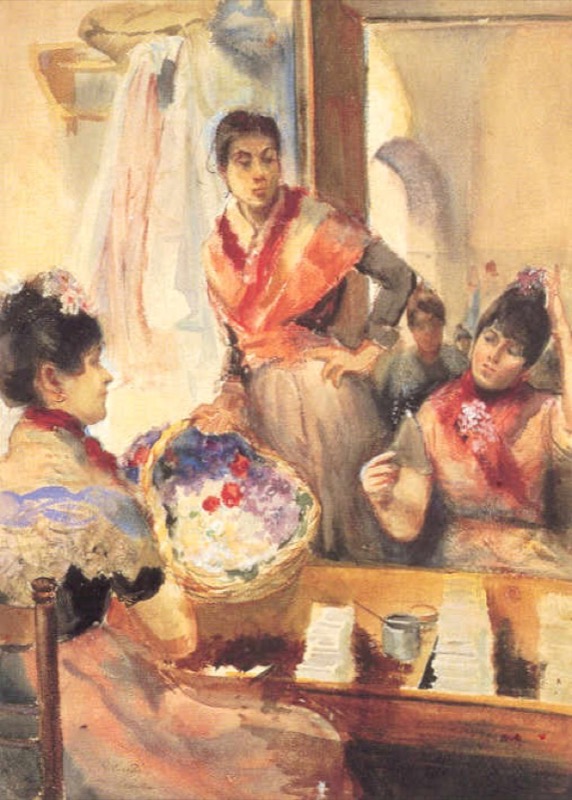
Ralph Curtis: Cigarreras in Seville
Among Tobacco and Rebellion
Life inside the factory must have been rather intense. Hundreds of women worked in confined spaces, surrounded by noise, the scent of tobacco and an almost overwhelming energy. Gonzalo de Bilbao portrayed this strength in his painting Las Cigarreras, providing a look into their daily lives and their social reality.
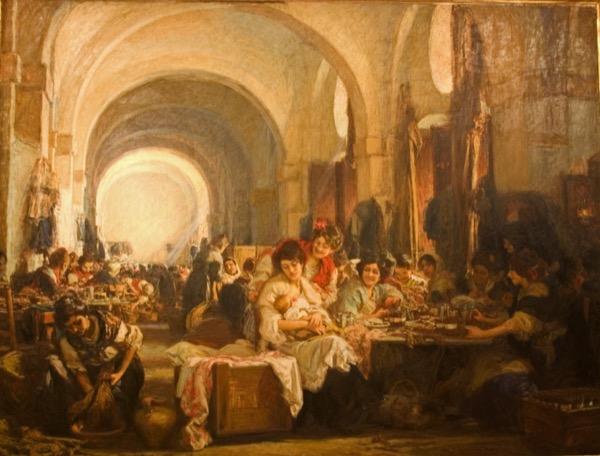
Gonzalo de Bilbao: Las Cigarreras (Museo de Bellas Artes)
In southern Spain, which was fairly underdeveloped in terms of industry, the cigarreras were the main wage earners in their families. These anonymous women struggled to survive but left their mark on the cultural symbols and collective memories of several generations. Every evening, when they left the factory, they were eagerly awaited by workers and onlookers.
Humo evokes their days in the workshop and the internal hierarchies, from apprentices to forewomen. It also evokes their parties, clandestine rituals and black market dealings. Their conflicts, joys and sorrows are shown in a female-led flamenco show.
A Flamenco Innovator
The Spanish flamenco dancer, choreographer, and director Rafaela Carrasco was born in Seville in 1972. She started dancing at the age of six and attended the Flamenco Academy of Matilde Coral. She joined the Mario Maya Company and subsequently joined the Andalusian Dance Company.
Moving to Madrid in 1996, she danced and worked as a choreographer in several flamenco companies and became active as a teacher. Carrasco founded her own dance company in 2002, winning the main awards at the 11th Spanish Dance and Flamenco Choreography Competition. She was also the director of the Andalusia Flamenco Ballet from 2013 to 2016, and she is a professor of Flamenco Dance at the María de Ávila Higher Dance Conservatory.
Known for being one of the great innovators of flamenco dance, she has worked with Rafael Amargo, Antonio Canales, Farruquito, Duquende and Merche Esmeralda. Her shows, Nacida Sombra and Nocturna, Arquitectura del Insomnio won the Critics Award for the Best Dance Show at the Jerez Festival in 2018 and 2023, respectively.
The Women Behind the Legend
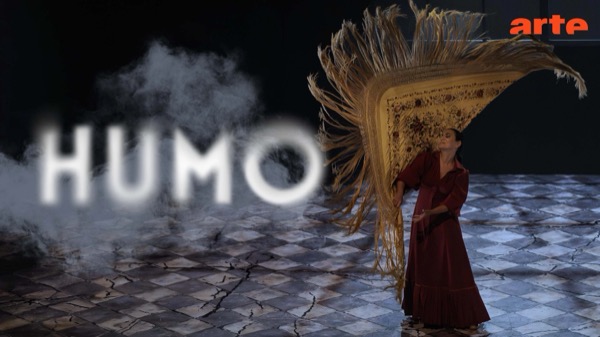
Her latest creation, Humo, was filmed live on 24 May 2026 at the Teatro de la Maestranza in Seville. Her production features two contrasting halves. The opening transports us into the tobacco factory, a working environment with smoke hanging in the air.
Humo
Carrasco uses footwork and repeated gestures to evoke the mechanical labour of rolling cigarettes. In a protest sequence, the women make their demands through a megaphone. This half is about work, solidarity and the struggle for dignity.
Once the women leave the factory in the second half, the emphasis changes. We now encounter their individual personalities, their social lives and the stereotypes surrounding them. Carrasco plays with the familiar imagery of Bizet’s opera, including the Habanera, but she actually challenges the way Carmen has traditionally been portrayed.
The music is not simply built on traditional flamenco accompaniment, but also includes cello and atmospheric electronic sounds, alongside flamenco and lyrical singing. Carrasco gives a fresh perspective on women who challenged the conventions of their time, and she suggests that the real cigarreras were considerably more complex than the seductive stereotype represented by Carmen.
For more of the best in classical music, sign up for our E-Newsletter