‘Hold Onto That Joy of How Much You Love Music’
Georgian pianist Salome Jordania is based these days in London but is highly in demand across Europe, the US and Asia for solo engagements, having performed from Texas to Tokyo, across France, Germany and the UK, and in her native Tbilisi.
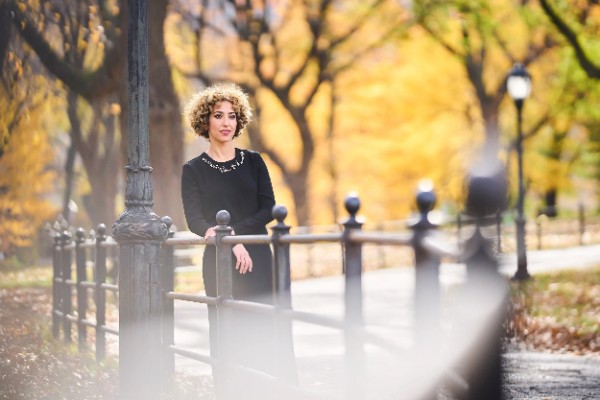
Salome Jordania © David Bantsadze
Studying first in Tbilisi, then moving to the US for studies at Juilliard and Yale before returning to London for an Artist Diploma at the Guildhall School of Music and Drama, Salome has earned a reputation as an insightful and versatile pianist, capable of inhabiting multiple expressive worlds with consummate ease.
This is no more apparent than on her debut solo album, Passage: A Spiritual Odyssey, released on French label La Dolce Volta in October this year, placing the grand Liszt B minor sonata alongside solo works by Scriabin and Saariaho, as well as two of Liszt’s lesser-known works: Les cloches de Genève from his Années de pèlerinage, and the third of his Harmonies poétiques et religieuses: Bénédiction de Dieu dans la solitude.
I call Salome when she is in Paris and catch her during a run of album release interviews. We talk about Passage, and what the pieces on this musical odyssey mean to her.
Salome Jordania / Liszt: “Les Cloches de Genève”
How did you come to choose this repertoire for the album?
I kind of based the album programme around the Liszt sonata. It’s such an all-encompassing piece, and each piece I chose is there because they show different sides of Liszt. I wanted to really explore the extremes of darkness and light, of things that are really heavy and evil and how we get to the other side.
The music really goes through a lot of trials and tribulations and struggles. There is a sense of loss and solitude, but when we get to the other side, all the high moments become even more rewarding, in a way.
The Saariaho Prelude for Solo Piano is a kind of bridge in the middle of the album where you shift from the darkest to the lightest. I wanted to have the Liszt sonata as the last battle, where after that there’s no need to have anything else.
What are the different sides of the Liszt sonata that are explored on the album?
Scriabin’s Poème satanique shows this kind of ironic side to Liszt, and the Black Mass [Scriabin’s Piano Sonata no. 9] is just darkness. Even the first piece, Les cloches de Genève, is very evocative, and I don’t think it’s just a purely sweet piece.
The reason I love Liszt in general is that his music is super dramatic – and it’s not just about the music. There are so many layers of other stuff, of literature, of poetry, of visual art. We know about the Faust reference in the B Minor sonata, for example, but Les cloches de Genève is also a childhood pilgrimage for Liszt.
I thought the whole album would be like a pilgrimage, just kind of questioning if we’re alone in this world and then getting the answer at the end.
Scriabin – ‘Poeme Satanique’ op.36 – Salome Jordania
And what is the answer for you?
I think everyone should make their own answer. I don’t think we’re alone in this world, but I think we all feel that way, and we all seek some comfort or some kind of revelation. I wanted to build something quite programmatic – I wanted a concept album, in a way. These are also pieces I’ve been fascinated by and challenged by, so that’s why I wanted to include them.
Can you talk about some of the repertoire that is perhaps less well-known when compared to Liszt’s monumental B minor sonata?
The Liszt sonata has been recorded so many times, and so it was a bold move on the label’s side to take that chance. The Saariaho has barely been recorded, the Poème satanique is almost never performed, and I wanted to have Liszt’s Bénédiction, a bit less well-known than his other pieces.
The Bénédiction is such a different side of Liszt. He wrote in his letters that no one would hear pieces like the Bénédiction because they weren’t the showpieces that he was known for. I wanted to show a spiritual side of Liszt, which I think is a bit underrated in general.
Scriabin’s Poème satanique is very much influenced by the Liszt B minor sonata. It has melodic motifs that also occur in the Liszt, and I think I read in some letters that Scriabin was very influenced by and fascinated with Liszt, so I wanted to tie it in together.
The Saariaho is a very cosmic piece, I think, and I needed something that really made a bridge from one atmosphere to the other.
It’s kind of otherworldly as well, and maybe the best representation of the whole album is that piece. It doesn’t really end; it kind of shoots into the void, and I wanted that, because to me that’s very much how the Liszt sonata ends. We don’t know what comes after. I don’t think there’s a very clear stamp and ending like with some other pieces.
Every musician has different sides of their personality, and obviously I’m fascinated with deeply emotional and very spiritual stuff, but also at the same time I think I’m quite an extroverted person.
The other album that I pitched was completely different – very fun and virtuosic and uplifting. I thought the label would go for that, but it was actually really nice to start with something like this because I think if you’re coming out with a debut album, I guess you want to show the ‘serious’ side of yourself!
Do you have another project in the pipeline?
I already have everything in my head for the next project. You have to start planning these things in advance. I was already thinking about the first album two years before I pitched it. Once somebody is interested, you have to be ready to give them all of the details, and you don’t want to feel rushed.
Every bit of Passage – the title, the visuals, and everything surrounding it – really mattered to me. I wanted to make sure I delivered the album the way I visualised it in my head.
Tell us more about the more ‘non-musical’ aspects of the project.
We shot the music video for Les cloches de Genève in France, in one of the museums, and I couldn’t have imagined something as cool as that. I think it’s important to show the visual as well when delivering something.
I think especially with something like this, it’s such an evocative kind of programme, you can’t just have a picture of you at the piano for the visuals. Maybe with something else it’s totally fine, but with this I really wanted to capture what the music is saying, and the music is kind of untouchable, in a way, so if you can manage a little glimpse of that in your photos or videos, I think it’s really nice.
Music is the most abstract form of art, so it’s hard to really show it. You have to have good collaborators also.
Can you talk about the other collaborators you worked with on the album?
I worked with a Georgian photographer, George Kolbaia, for the photoshoot and the video was made with a French cinematographer, Marc de Pierrefeu, who was amazing.
It was great to work with the label, and I’m also grateful to the sound engineer, Paul Giroux. It’s a really difficult programme to record in three days. We wanted to capture the feeling of a live performance as much as we could in the recording, but there’s also a physical limit to how you can record music like this.
I had a great piano technician, and we recorded in a giant hall, but I think it really speaks to how good the label is and how Paul and I really connected in the recording sessions.
Paul would challenge me, but it was also very nice to have someone really understand your rhythm and try to make the recording the best. Three days wasn’t a lot of time to record the album, so you have to let go. It doesn’t have to be perfect, and I think that’s ok. Nobody wants over-perfection and something that’s overpolished. Well, I don’t want that!
You are based in London and perform a lot in France. Where else do you find yourself travelling to?
I think France, Georgia and the UK are my three bases. I also spent seven years in the US and got my education there, so that counts, of course, and I still go back for concerts, but I mostly travel within these three countries, and I really enjoy going back to Georgia. It’s where I’m from, and it’s part of my identity for sure.
It’s strange because London feels like home, but Georgia is also home, of course, and all my family is there. We have a long tradition of music in Georgia, so it’s really nice to perform there.
You grew up in a musical family there?
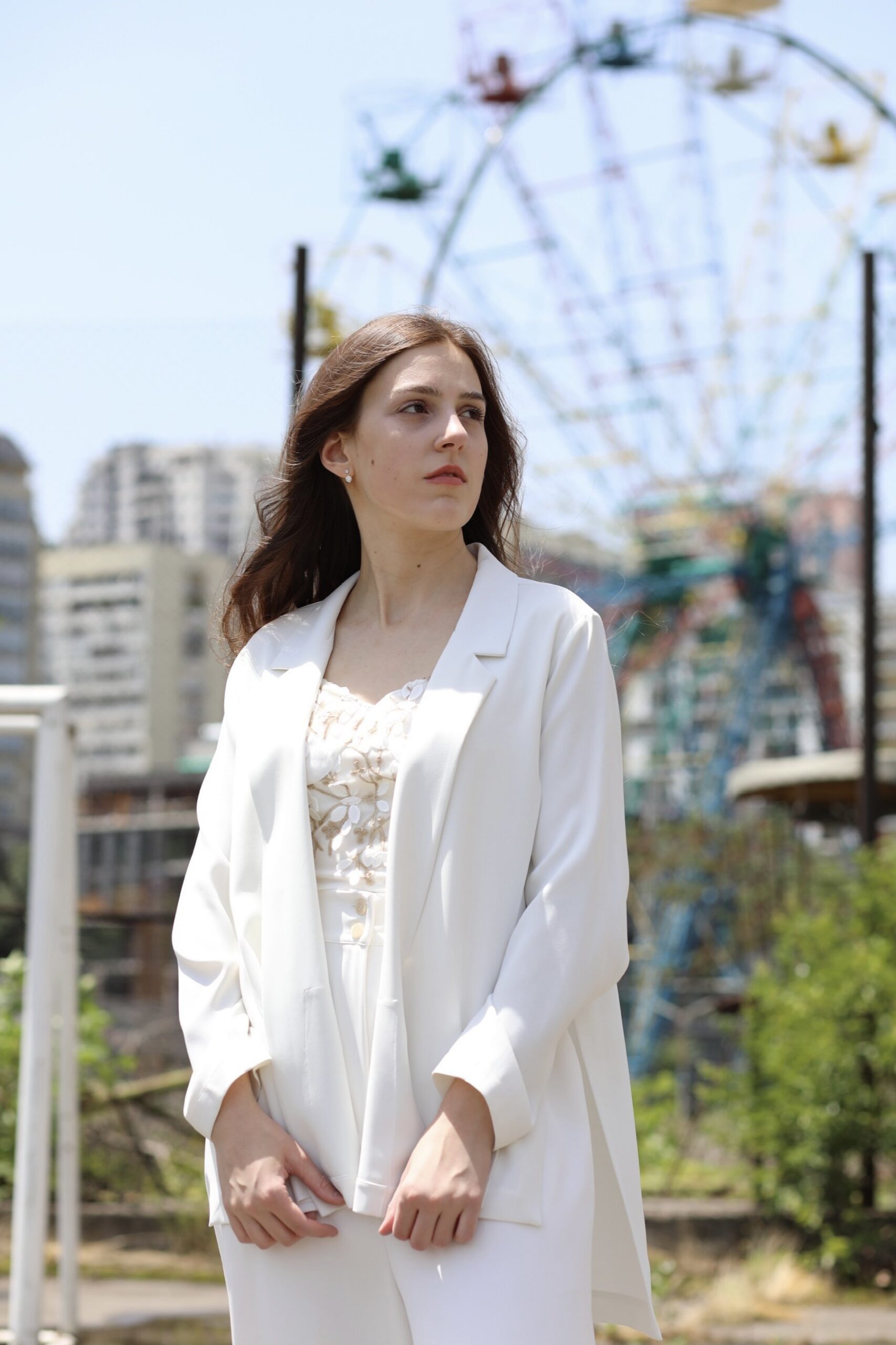
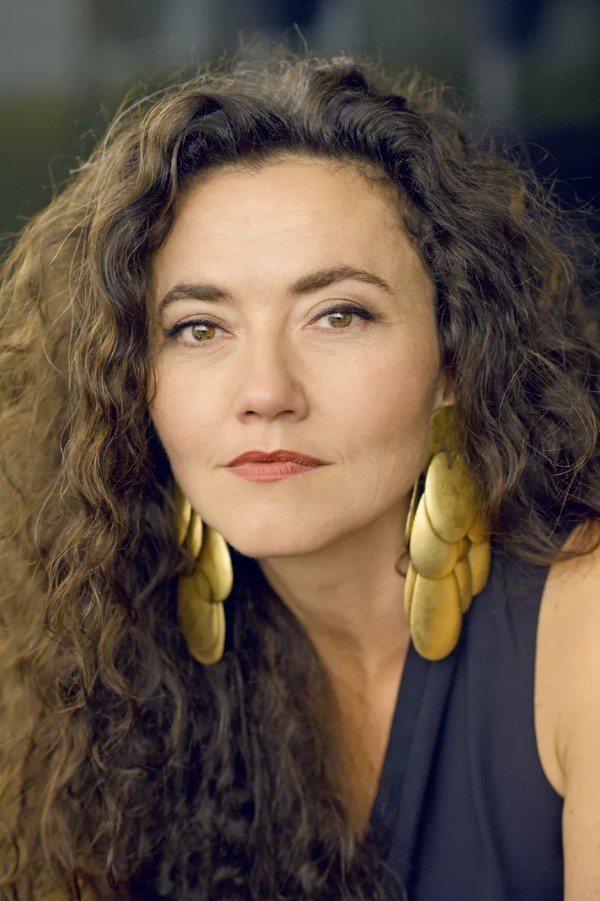
Salome Jordania © David Bantsadze
Yes – my father is a conductor, and my grandfather was also a famous conductor. My mum and aunt are musicians, so I really grew up surrounded by music. As early as I can remember, I was watching operas and symphony orchestra concerts.
Despite that, my family knew how difficult music is as a profession, so they never forced me into it. If anything, they were saying that if I didn’t love it, then don’t do it! I really pushed for it – my parents wanted me to play the violin, but I pushed for the piano because I thought it was the most limitless instrument. Thankfully, I got lucky that I had a really good teacher.
My teacher, Natalia Natsvlishvili, is the one who basically instilled this fascination with connecting other art forms together, and how music is never just about music. It’s also about humanity and other art forms. That’s something I learned from her, and the Liszt sonata is actually something I worked with her on until she passed away a few years ago. I knew I just really wanted to get my interpretation of the Liszt out and recorded, especially while I was still young, in the way I’d envisioned it.
This piece must hold so much for you, then?
That piece is not easy to perform. I think it’s overall a very demanding piece in general, but for me especially it has so many meanings and memories, and it’s like an endless discovery, playing that piece.
How did you come across the piano?
I had one at home. I was going to see operas and symphony orchestra concerts much more than piano recitals, but I really liked that the piano had such a big range. I think my love for it grew when I started to study with Natalia, because to me, honestly, it wasn’t that I had to be a pianist. It was just more that I really loved music.
Luckily, the way the Georgian education system worked was that we played a lot of concerts from a very young age. The stage became very ok and not a scary place, in a way, and Natalia’s mentality was to really prepare you for later in life when you don’t have as much time to prepare for stuff.
How do you feel this prepared you for life later on as a musician?
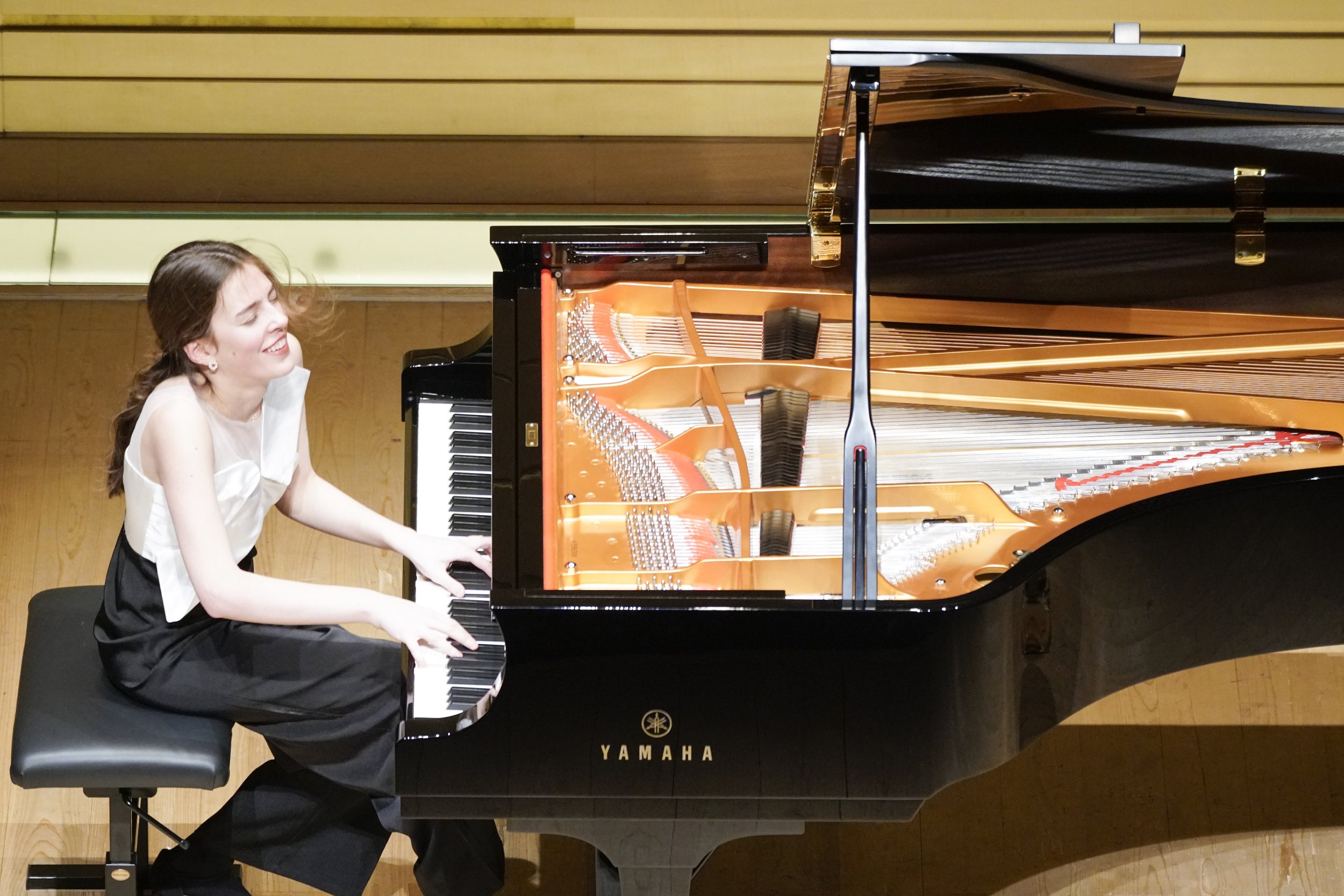
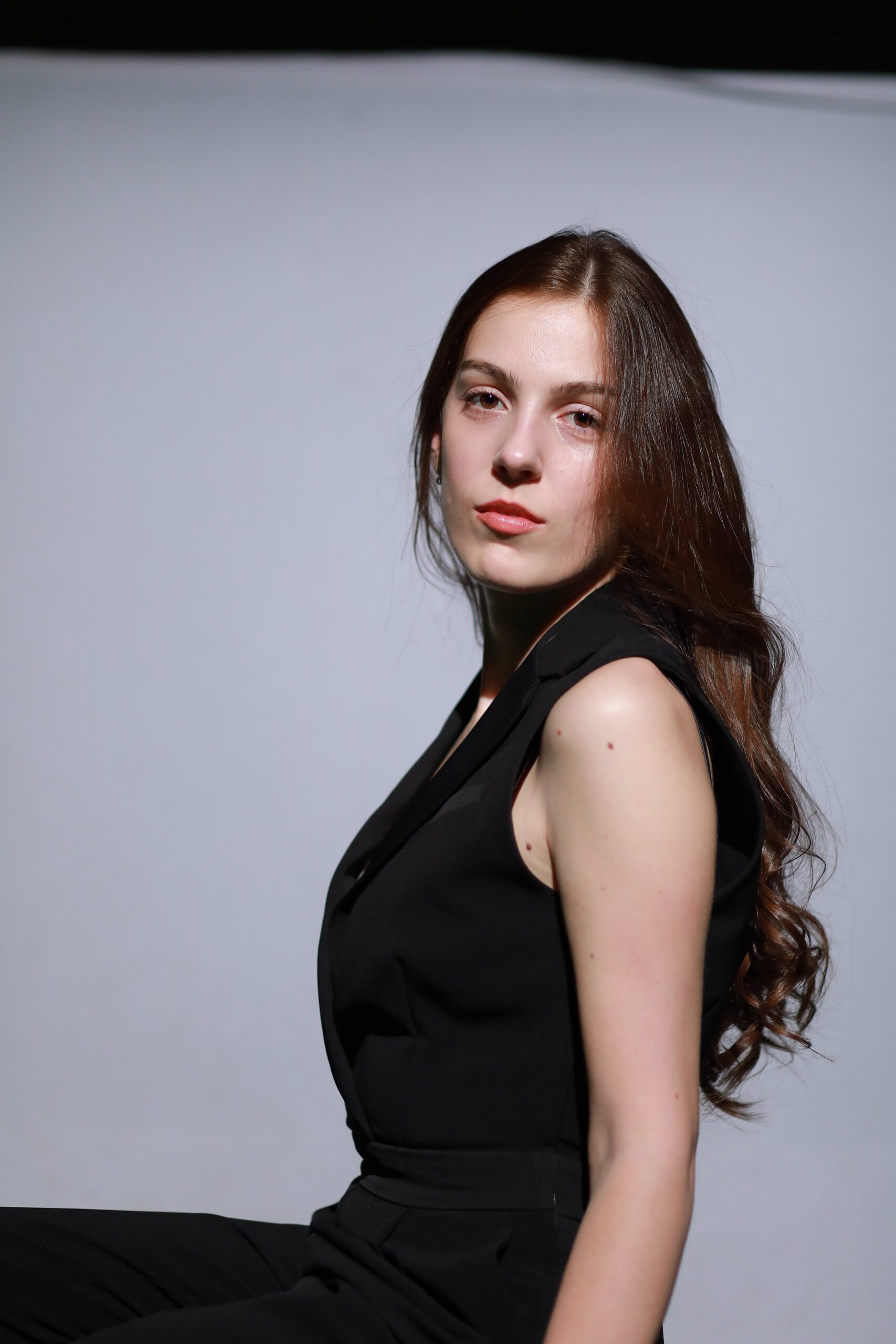
Salome Jordania © Akira Muto
We would go on stage and play pieces when they weren’t maybe fully ready. Of course, when is anything ever ready, but she would really push us to learn stuff quickly and put ourselves out there because we would discover so many things on stage that we wouldn’t in the practice room.
I was basically performing a lot, and every year, at least once, I would play with an orchestra, which is really rare compared to other countries. In that way, Georgia is a really good place to study music, because you’re already exposed to so much at a young age that it becomes natural and joyful.
When you grow older, the responsibility and pressure grow, but as a child it’s fine. What can end up happening is that you hold onto that joy of how much you love music, and that’s what I’ve been trying to do all my life: to just hold onto that.
There’s so much energy and joy that is communicated with the audience in general, and I think if you discover it as a young person, you can always reference back to that. Obviously you grow, and the pressure grows, and you start questioning more things in life, but I’m trying to enjoy things and hold onto that feeling.
Does your relationship to that feeling change as you get older?
The music profession is such a slow process. There’s no instant gratification in any way; there’s not one recipe for figuring out a piece or a passage or anything, so it’s really hard not to lose motivation.
I think if you don’t enjoy the process of figuring out stuff and really working, then it’s not worth it for just 90 minutes on stage. It’s such a big imbalance. That’s something you learn with age, I think: that you need to enjoy the journey, not the destination.
Were there any other non-musical influences on the album?
One of the influences on the album was Stanley Kubrick’s 2001: A Space Odyssey. Some of the artwork and photos were influenced by it, and some of the music even more.
I really liked the otherworldly quality of the film, and I liked how the characters are going outwards to explore the universe, but in my case, you’re going inwards to explore your inner universe.
The more I thought about it, the more I realised how modern that film is, because of the way we’re turning to AI and looking away from humanity. I wanted something that was a ‘human’ album. There’s so much of the spirituality in the repertoire, but there’s also humanness in it. I didn’t plan it that way, but something I was influenced by became relevant, which then helped with some of the visuals as well.
Have the changes in society – including the question of AI – changed your relationship to music?
Even to us musicians, because our attention spans have become so short, it’s much more difficult to concentrate during performances. It’s something I train intensely for.
I sometimes have thoughts of ‘we’re all doomed’ – we all do – but I think actually the arts will become more valuable. I grew up with a lot of friends who weren’t musicians, and I was always fascinated by how much they could understand and be invested in music, and something I’ve noticed these days is that people actually seek to be at concerts to detox and detach.
You don’t have your phone out, there’s no real visual stimulation, it’s all abstract, and there’s no rest. You don’t know when it’s going to end – there’s such uncertainty and ambiguity in classical music, and I think in a way maybe this is the antidote, along with theatre and all artworks that are live, with less stimulation.
I think that’s maybe what will save us, with the growth of AI and everything that’s happening.
We want direct answers to everything, but not everything has to be over-explained. Even when we watch films, we want the review, the analysis. People are becoming less comfortable with there not being just one answer – including me!
Life is so unpredictable and so uncertain. You can’t really explain it, and so maybe art, especially classical music, really does a good job of showing that.
My favourite films are ones where we don’t have the ‘happily ever after’ – not in a depressing way, just in the sense of, ‘Who knows?’ Let’s leave it up to the person who’s watching to figure out what their answer is.
Do you watch many movies in your spare time?
I like cinema, and theatre is my favourite thing. I like travelling, and I’m also fascinated by learning languages. I always liked that as a child. I’m learning some languages now, and I like travelling, which is useful for my profession! I like connecting with new people, the cuisine, and I just like exploring new places and not sitting in a comfortable space. I like getting out of my comfort zone in general.
Luckily, I also have a profession where, even if you don’t speak the language, you can still share your music with the audience, and they’ll understand.
Which languages are you learning at the moment?
As of now, besides Georgian, I speak English, Russian, and German, and I’m learning French and Italian. It initially started when I was listening to Italian songs and French songs, and I couldn’t understand them. Even if you know a little bit of the language, you can hear the musicality of the words and phrases, and I really wanted to learn that, to be included!
Details of Salome’s album can be found here.
For more of the best in classical music, sign up for our E-Newsletter