What is it about a particular landscape that finds its way into music? Why is Benjamin Britten so closely associated with the wide skies and shifting light of the Suffolk coast, Mendelssohn with Scotland, and Edward Elgar with Worcestershire and the Malvern Hills? And can visiting the places that inspired other composers help a musician rediscover their own creative voice?
These questions lie at the heart of composer and music teacher Luke Ottevanger’s book, The Sound of the Place: How Britain’s musical landscapes helped me to start composing again. Part musical history, part travel writing, and part personal memoir, the book explores the powerful, often mysterious relationship between music, landscape, and creativity through the myths, histories, and backgrounds of nearly thirty composers and roughly seventy specific musical works. Their stories and music are interwoven with the author’s own personal reflections and travel notes.
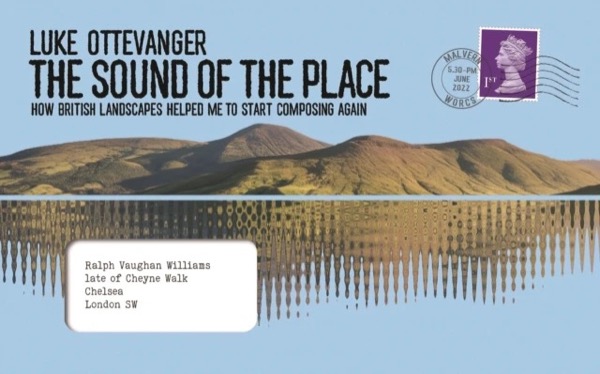
The Sound of the Place
For Ottevanger, the journey began in creative silence. Composition had been an important part of his life since childhood, but for more than a decade he was unable to write music.
“Not being able to compose began as a kind of grieving but developed into a physical pain. The creative urge had nowhere to go.” Luke Ottevanger

Luke Ottevanger
But rather than simply accepting that this part of his creative life had disappeared, he embarked on a series of journeys across Britain, visiting places associated with composers whose music he admired and exploring how landscape, memory, history and a sense of place shaped their work.
Benjamin Britten: Peter Grimes: 4 Sea Interludes, Op. 33a: No. 1. Dawn (Philharmonia Orchestra; Alessandro Crudele, cond.)
The resulting book takes the reader into the musical landscapes of nearly thirty composers and explores the origins and histories of almost seventy works. Inevitably, some of the most familiar associations are here: Britten and the Suffolk coast, Elgar and Worcestershire. But Ottevanger’s travels extend much further, creating a richly varied portrait of Britain as seen – and heard – through the music it has inspired, and continues to inspire in composers such as Judith Weir and James Dillon. Among the composers encountered along the way is Peter Maxwell Davies, whose music became closely associated with the remote landscapes of Orkney.
Judith Weir: Ardnamurchan Point (William Howard, piano; Petra Casen, piano)
Yet The Sound of the Place is more than a musical gazetteer. Ottevanger is interested not only in where composers lived and worked, but also in what those places meant to them. He investigates the stories, myths and legends behind particular works, setting them within the physical landscapes from which they emerged. In doing so, he invites us to listen differently: to hear music not as something created in isolation, but as an art shaped by surroundings, memory and lived experience.
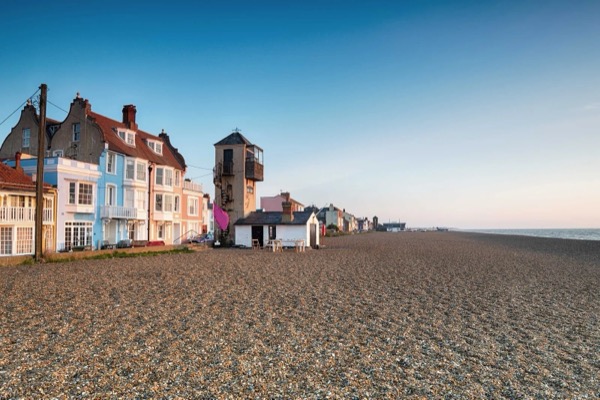
Aldeburgh Beach (Shutterstock)
Running alongside this exploration is a more intimate story. These journeys are part of Ottevanger’s attempt to understand his own loss of creative confidence. As he explores landscapes that have released something in other composers, he reflects on his relationship with composition and on how his own creativity might return. The result is a book as much about creative renewal as about British music, giving The Sound of the Place a resonance beyond its immediate subject. Creativity rarely proceeds in a linear fashion. Inspiration can falter; confidence can disappear; the activity that once seemed essential to one’s identity can suddenly become difficult or impossible. Ottevanger’s response is not to offer a roadmap for overcoming creative block, but something subtler: a journey of curiosity and rediscovery.
For anyone who has sensed that certain places possess their own special atmosphere or resonances – perhaps even their own music – The Sound of the Place offers an intriguing invitation: to travel through Britain with ears as well as eyes open, and to consider how landscape can shape not only the music we make but also the people we become.
John Ireland: London Pieces: I. Chelsea Reach (John Lenehan, piano)
The prose is elegantly crafted, evocative and poetic – and there are references to poetry as well, John Clare and Thomas Hardy amongst others. Ottevanger writes as eloquently and fluently about landscape and nature as he does about music, and the text, which is arranged by season, is interspersed with Ottevanger’s own often atmospheric photographs, which lend the book an even greater sense of a personal odyssey. A must-read for lovers of music and the landscape of Britain alike.
The Sound of the Place: How Britain’s musical landscapes helped me to start composing again by Luke Ottevanger is published in the UK by Envelope Books.
For more of the best in classical music, sign up for our E-Newsletter
Gustav Holst: Egdon Heath (Homage to Hardy), Op. 47 (London Symphony Orchestra; André Previn, cond.)