For many historians and critics, David Oistrakh was one of the preeminent violinists of the 20th century. To be sure, Oistrakh made playing the violin look easy, and many considered him the ideal violinist, combining fingers of steel with a heart of gold.
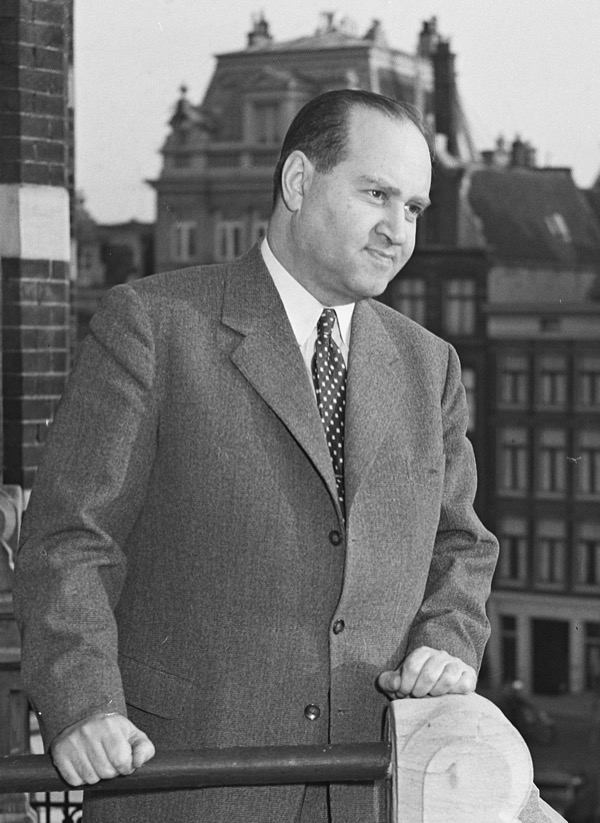
David Oistrakh, 1956
Isaac Stern considered him a giant among violinists, and his recordings continue to be studied and admired for their interpretive depth. Yet he was no aloof virtuoso; his legacy also includes his role as a teacher and mentor to countless young musicians.
To celebrate Oistrakh’s birthday on 30 September, let us look at Oistrakh the pedagogue as he shaped generations of violinists at the Moscow Conservatory, beginning in 1934.
David Oistrakh plays Tchaikovsky: Violin Concerto in D Major, Op. 35 (excerpt)
Teaching the Next Generation
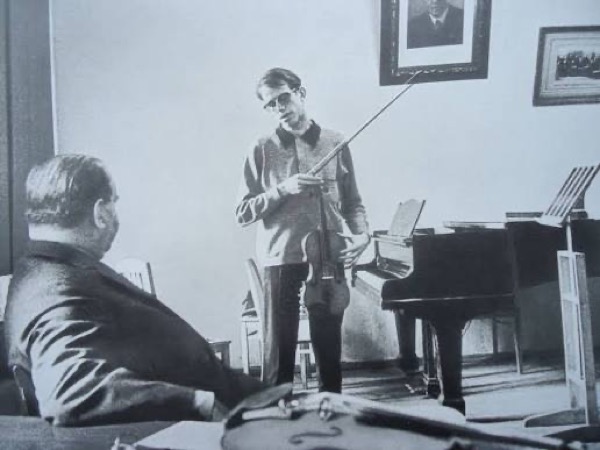
David Oistrakh and Gidon Kremer
At the initiative of the pianist and pedagogue Alexander Goldenweiser, David Oistrakh was invited to teach at the Moscow Conservatory in 1934. At 25, he was already a highly accomplished violinist, but his international breakthrough was still three years away.
By 1939, after winning first prize at the Ysaÿe Competition in Brussels, Oistrakh was appointed professor, and in 1950 he became head of the violin department. Maintaining an active performing career, Oistrakh invited Yulia Brodskaya to assist him in teaching solo and chamber music, and Rosa Fain to assist him with solo students in the 1950s.
His period of employment lasted until 1974, essentially until his death from a heart attack. Oistrakh taught some of the most prominent violinists of the 20th century, including students from outside the Soviet Union, and the Moscow Conservatory still describes his pedagogy as a “fruitful union of intellect and intuition, precise knowledge and freedom of artistic creativity.”
Gidon Kremer plays Bach: Chaconne
Teaching Individuality
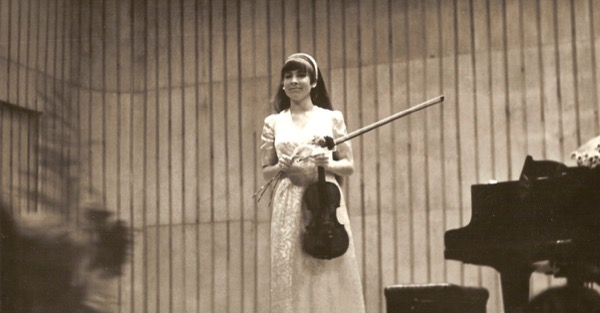
Rimma Sushanskaya
In a 2015 interview with LA Opus, Gidon Kremer was asked directly what it was like to study with Oistrakh, to which he replied: “His main quality towards students was probably generosity; that was literally towards everybody, not so often seen among musicians and especially teachers. David Oistrakh encouraged me a lot to search (for) my own voice.” (Miner, LA Opus, 2015)
It becomes obvious that Oistrakh was not interested in producing “little Oistrakhs,” and that imitation was not his pedagogical ideal. He recognised early that Kremer was a highly individual musician, whose interpretive personality was unlike his own.
Essentially, Oistrakh did not impose a rigid technical teaching system because he wanted to develop the complete musician. In the wonderful Oistrakh documentary by Bruno Monsaingeon, Kremer remembers his teacher telling him, “I would never do what you are doing, but you are right, and you have to go your own way.”
Rimma Sushanskaya plays Beethoven: Romance in G Major
Discipline, Humour, and Humanity
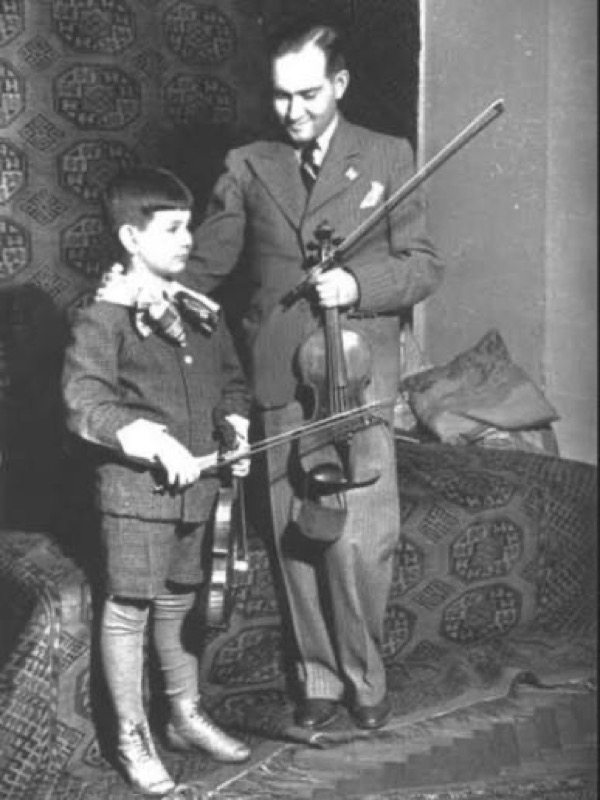
Igor and David Oistrakh
For Gidon Kremer, Oistrakh was one of the greatest violinists of the century, and also a great teacher. He let each student develop in their own way, encouraging their unique talents.
This is not to say that Oistrakh did not have very definite ideas about playing the violin and passing on his knowledge. He was very demanding and firm, and rather than explaining an interpretive problem in words, he picked up the violin and demonstrated it.
His son Igor gave a first-hand account of his father’s teaching. “Father had many different students in his class, not just prize winners. Despite this, the atmosphere never changed. He never got tired of teaching. He was always alert and awake, as were his receptivity and friendly humour, which were occasionally coloured with a touch of friendly irony.” (Yuzefovich, Conversation with Igor Oistrakh, 1979)
David and Igor Oistrakh play Bach: Concerto for Two Violins in D minor, BWV 1043 “Vivace”
Beyond the Violin
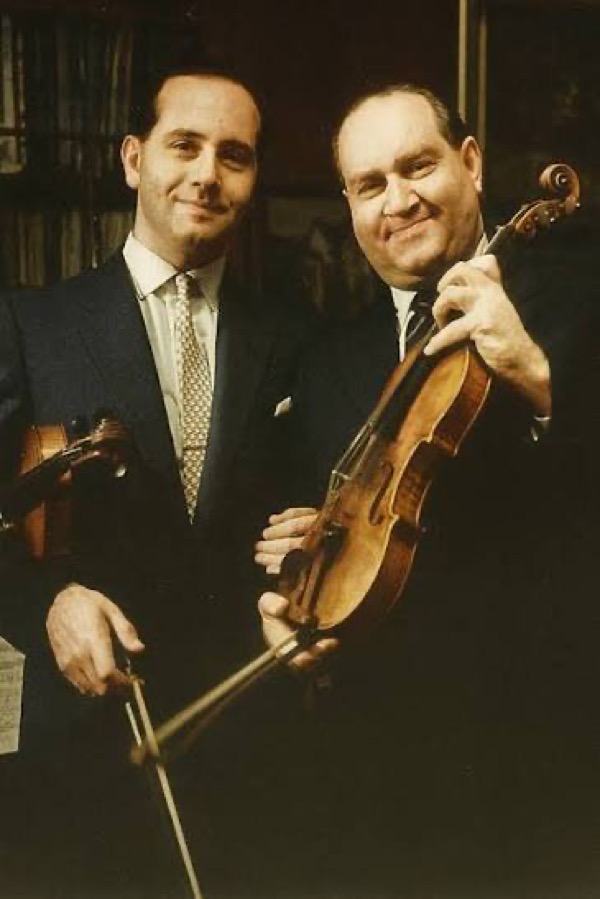
Igor and David Oistrakh
In her Memories of David Oistrakh, his last student, Rimma Sushanskaya recalled that Oistrakh did not teach his students how to play the violin, but how to become better musicians and artists. He worked with her on bowing and fingering, but his greatest happiness was helping young musicians. (Sushanskaya, Memories of David Oistrakh)
As a final thought, Oistrakh would tell his students: “Try to know more. The limitations of one’s horizons, a narrowing of one’s interests lead to a decline, even of a strong talent. Avoid any way of restricting the repertoire.” (Yuzefovich, Conversation with Igor Oistrakh, 1979)
For more of the best in classical music, sign up for our E-Newsletter