Over the course of his life, Claude Debussy (1862-1918) contemplated over 50 theatrical projects, yet in the end, he only completed two: Pelléas et Mélisande occupied him between 1893 and 1902, and the ballet Jeux, for Diaghilev’s Ballets Russes, dates from 1912 to 1913.
We might well ask what happened to the rest of these ambitious theatrical visions? Some were never started, while others exist as sketches at various stages of completion. And once Debussy had started to battle cancer, he left the orchestration of a number of projects to Charles Koechlin and André Caplet.
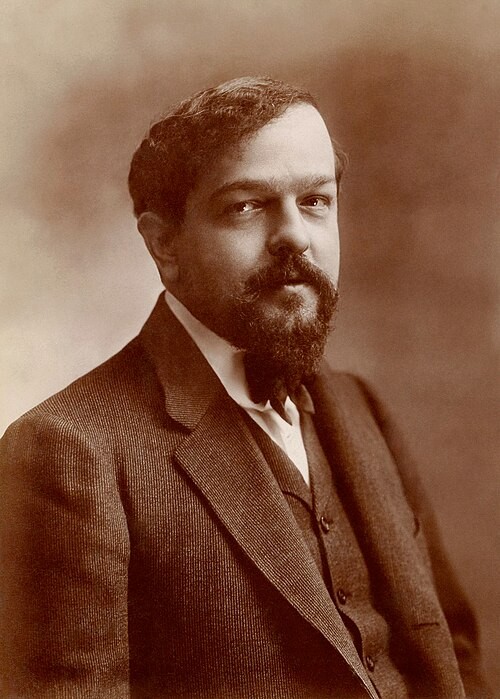
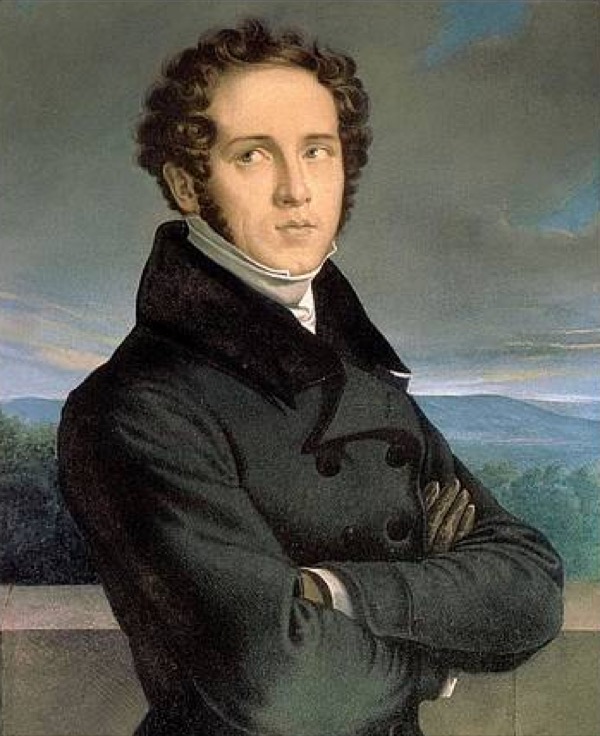
Claude Debussy
Claude Debussy: Toomai des éléphants (reconstructed by R. Orledge, 2006) (new edition) (Nicolas Horvath, piano)
Hidden Treasures Resurrected
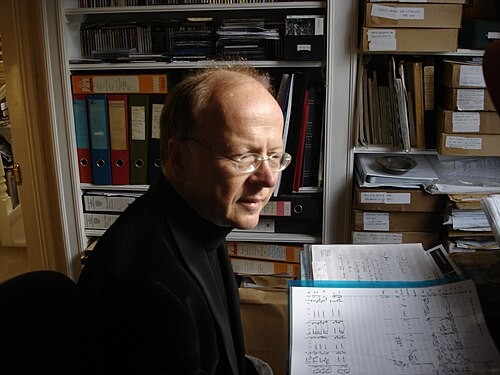
Robert Orledge
Claude Debussy died on 25 March 1918 in Paris, and these fragments remained largely dormant in archives and private collections. That is, until Robert Orledge, a retired Professor of Music at Liverpool University, decided to reconstruct some of Debussy’s lost potential masterpieces.
To commemorate Debussy’s passing, let us resurrect some of Debussy’s hidden treasures from his creative workshop in completions by Robert Orledge and performed by pianist Nicolas Horvath.
Claude Debussy: L’enfant prodigue: Prélude (version for piano) (Nicolas Horvath, piano)
Debussy’s Poe Operas
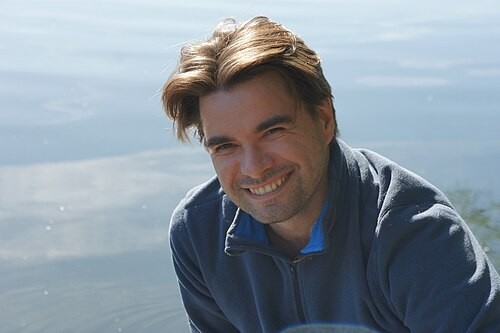
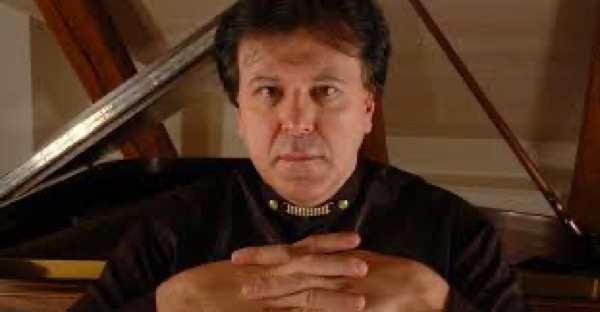
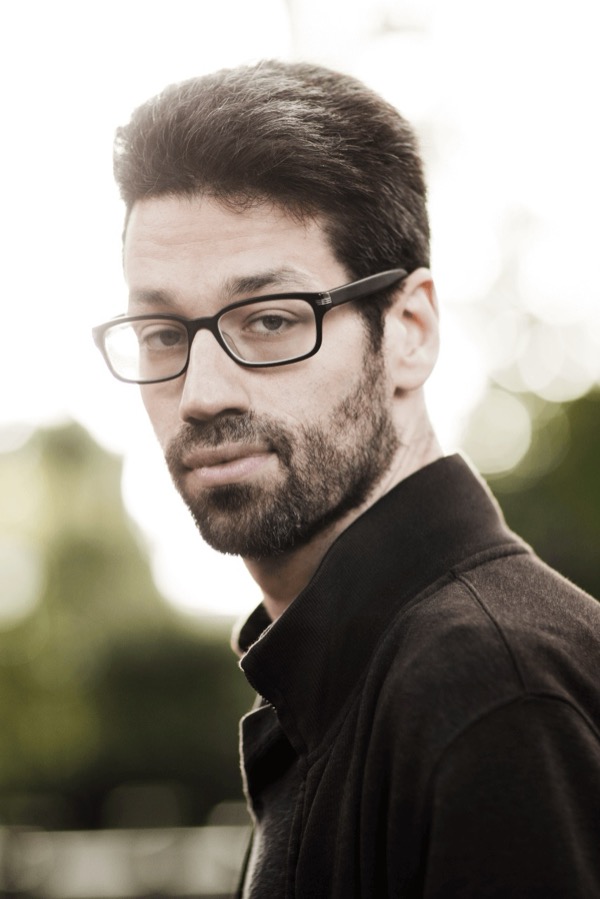
Nicolas Horvath
Orledge began his mission in 2001 with the most promising project, the missing parts of Scene 2 of La Chute de la Maison Usher. He writes, “The sheer joy it gave me at every stage persuaded me to tackle other projects, especially when Debussy experts were unable to identify exactly where I took over from Debussy (and vice versa) in Usher.” (Orledge, Serenade, 2020)
Claude Debussy had a lifelong obsession with Edgar Allan Poe, an obsession that consumed fifteen years and produced two unfinished operas. He did have a contract with the Metropolitan Opera in New York, but no completed scores to show for in the end.
La Chute de la Maison Usher (The Fall of the House of Usher) and Un jour affreux avec le Diable dans le Beffroi (A Dreadful Day with the Devil in the Belfry) represent the twin poles of Debussy’s Poe fixation.
Orledge on Usher
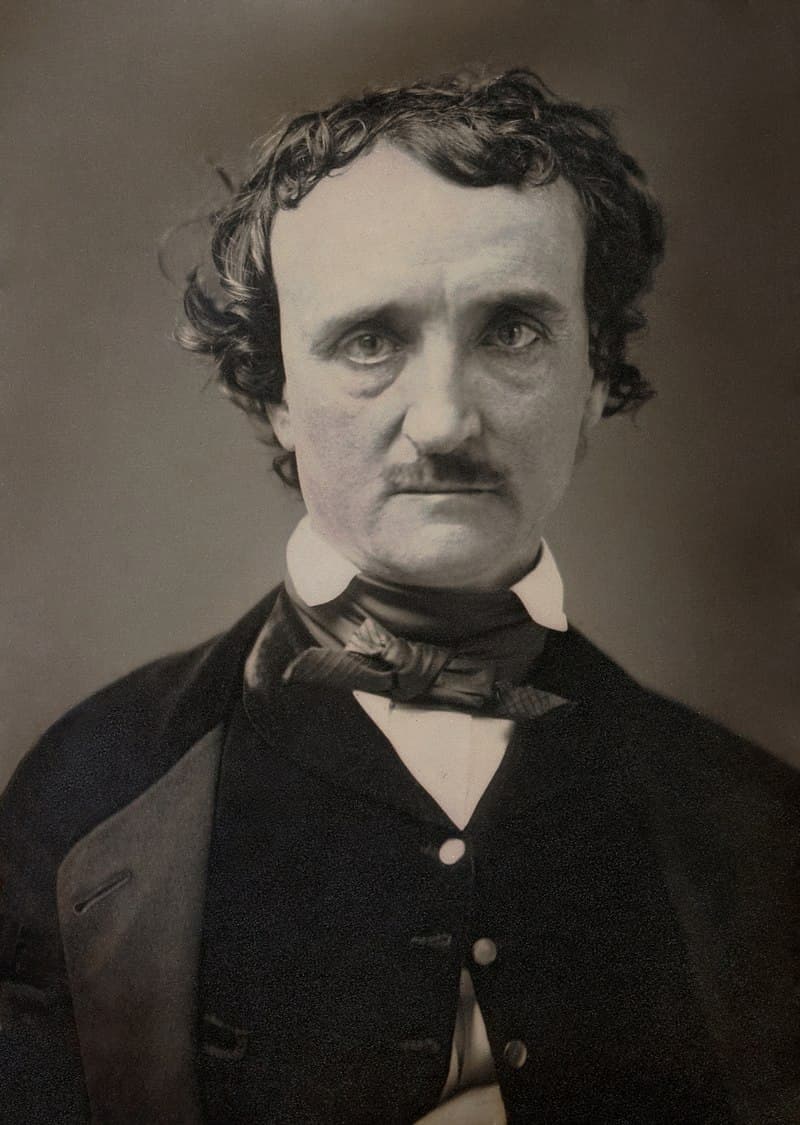
Edgar Allan Poe
The first is a work of suffocating Gothic horror, the other a comic satire about a devil who makes a church clock strike thirteen. It was planned as a double bill for the Met, yet Debussy never delivered.
As he wrote to his publisher Jacques Durand on 21 September 1909, “I have let myself stray and have almost only been working on Roderick Usher and the Devil in the Belfry. I fall asleep with them and find on waking the gloomy melancholy of the one or the derisive laughter of the other.” (Lettres de Claude Debussy)
The Usher story is compelling, yet Debussy made it considerably more interesting. He produced three versions of his own libretto and amplified what Poe had left submerged. Roderick Usher’s incestuous desire for his twin sister Madeleine comes to the forefront, and the doctor, a relatively minor character, is elevated into a sinister rival for her affections.
Debussy Recontextualised
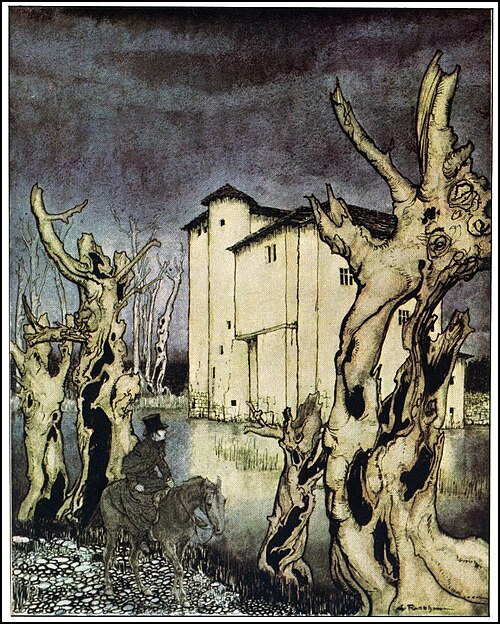
Illustration by Arthur Rackham for “The Fall of the House of Usher” by Edgar Allan Poe, the basis for Debussy’s opera
As Orledge reports, “In the process of completing the missing half of the score, I discovered that by reusing Debussy’s material for similar psychological situations across the opera, and by metamorphosing existing ideas, the only things I really needed to add were linking material and any passages where fast music was required.
So the ‘nightmare scherzo’ and Lady Madeline’s escape from her coffin and her final bloody revenge on her brother are all mine, but most of the rest is existing Debussy in changing contexts.” (Orledge, Naxos Music, 2019)
The complete version of the House of Usher premiered in 2006, and Orledge transcribed some highlights for organ, and subsequently piano, with a focus on the final horrific and macabre melodrama.
Claude Debussy: La Chute de la Maison Usher (completed R. Orledge for piano, 2010, cadanza by N. Horvath) (Nicolas Horvath, piano)
The Belfry Strikes Thirteen
Robert Orledge arranged A Dreadful Day with the Devil in the Belfry specially for Nicolas Horvath as a Lisztian paraphrase-fantasy in 2018. He also introduced a narrator to explain the basic scenes, and after an overture rising from the underworld with an inserted polka and a children’s folksong, a carillon rings out.
After this, the villagers start to count, with the bells of the Belfry / 1, 2, 3, 4, 5, 6, 7, 8, 9, 10, 11, and 12 / It’s good/ 13! / The bell rang 13 times / 13! / The Devil is here where the clock should be! / Damn it! / The cracked bells / The Devil laughs fit to burst / He pulls from the pocket of his coat, a small dancing master’s violin / ‘My God!’ said the devil, and he tunes his violin slowly/
The Devil leads the villagers in a fantastic and remorseless jig/ The Devil directs the villagers towards the canal, where he jumps to the other side, always laughing/ The villagers try to imitate him, but it’s a disaster /
Tarantella Madness
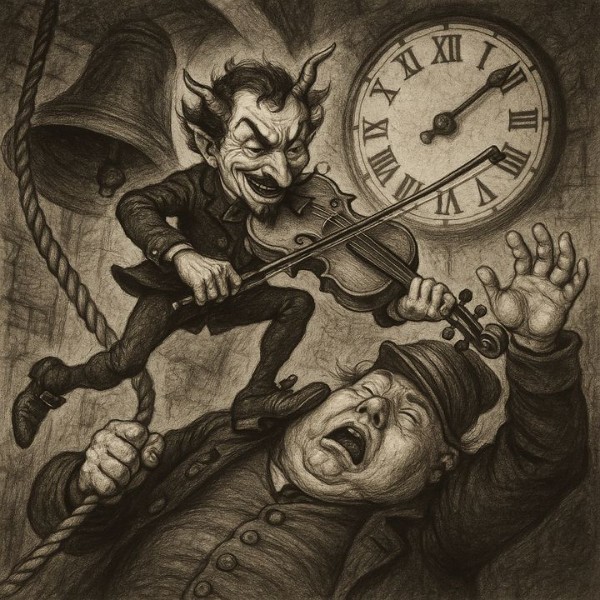
The Devil in the Belfy
The villagers are transported to a hedonistic and lively Italian village. They are similarly transformed. The men have crooked hats, and the women have wide-open bodices! They dance a mad Tarantella / 1, 2, 3, 4, 5, 6, 7 and 13 / shouting ‘Hey there! Hola!/ Jean makes a fervent prayer to God against the Devil / The prayer is a success. The bell rings normally!/
The expression of the Devil changes. In turn, he shudders! / Everything goes black / The devil disappears in a brief red glow … / And the carillon and the bells sound as usual / 1, 2, 3, 4, 5, 6, 7, 8, 9, 10, 11 and 12 / That’s good! / But the Devil’s grinning face appears briefly once again where the clock should be.
Claude Debussy: Un jour affreux avec le Diable dans le Beffroi (arr. R. Orledge for narrator and piano) (Florient Azoulay, narrator; Nicolas Horvath, piano)
The Palace of Silence
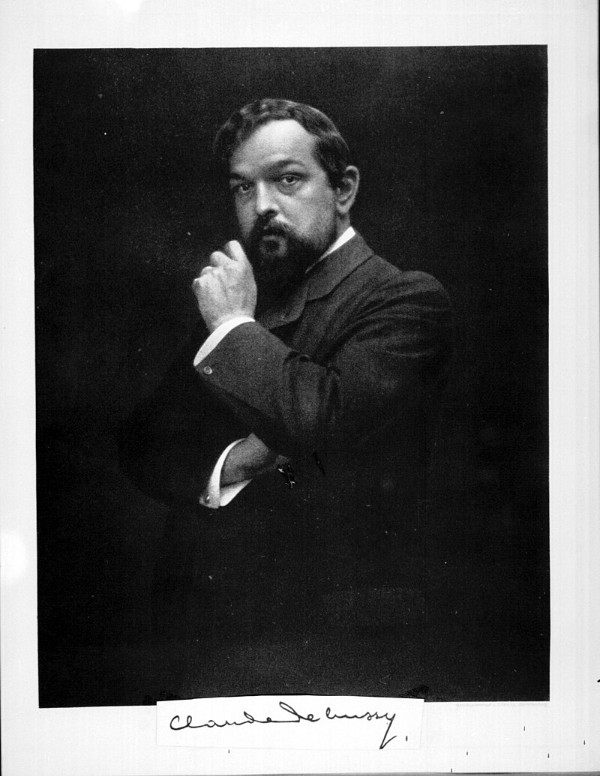
Portrait of Claude Debussy
In 1914, after finishing the second book of “Préludes,” Debussy briefly drafted a few sketches for the play Le palais du silence by Georges de Feure. A painter, theatrical designer, and industrial art designer in the symbolism and Art Nouveau styles, Feure was famous for porcelain work that featured balanced decorations.
Feure, according to contemporaries, had done much to rouse the world out of its lethargy, and he has given it a new style that harmonises with modern thought and culture. As René Puaux writes, “in his play he has acted out his most precious dreams, and given rein to his artistic fancy. We read of stone benches covered by mouse-grey kisses. The persons in the drama move with gestures repellent or seductive, but always with nobleness and grace.” (Puaux, Art of Georges de Feure, Brush and Pencil)
The one-act Chinese-themed ballet scenario dates from 1913 and is set on the ancient island of Formosa. The plot centres on Prince Hong-Lo, a mute ruler, who is tormented by his own silence and, cursing his fate, imposes a tyrannical law of absolute silence in his palace and domains.
Gamelan Liberation
Breaking Hong-Lo’s law is punishable by death, and the court becomes a place of sadness and gloom as all sounds are forbidden. Princess No-ja-li, the central figure in the Debussy-related version, is finally liberated by music. A Malaysian gamelan orchestra, accompanied by dancers, enters the scene, introducing exotic sounds that shatter the silence.
In the end, the power of music triumphs over repression, freeing Princess No-ja-li, the court, and presumably even the prince himself from his self-imposed isolation. This scenario, with its prelude and eight continuous scenes, evokes a dreamlike atmosphere typical of symbolist theatre.
Debussy drafted some piano fragments, eventually completed by Robert Orledge, who also included a narration to convey the spoken explanations. Surely, Debussy was attracted by the idea of transforming some mute landscapes into sound. “It is a space for the perceptible absence of the dead or the unknown, now invaded by surfacing natural sounds.” (Lucia Ronchetti, Le Palais du silence)
Claude Debussy: No-Ja-Li (Le Palais du Silence) (completed R. Orledge for narrator and piano, 2005/2014) (Florient Azoulay, narrator; Nicolas Horvath, piano)
Passion for the Stage
Claude Debussy had a lifelong passion for the theatre. He eagerly followed contemporary developments and befriended many writers. He also attempted collaborations with several playwrights and actors, but only one project came to full fruition, the incidental music for Le Martyre de Saint Sébastien by the eccentric Italian dramatist Gabriele d’Annunzio.
His incidental music for King Lear was intended to consist of seven musical interludes accompanying a new production of Shakespeare’s play in Paris. It was commissioned in 1904 by the actor-impresario André Antoine.
“The composer, who had toyed with writing operas based on the Bard’s Hamlet and As You Like It, was initially enthusiastic. However, his passionate love affair with the singer Emma Bardac distracted him from his work, and he found Antoine increasingly difficult to deal with. “ (Hopkins, LSO French Connections)
Fleas Rubbing Legs
The project was never completed due to Antoine’s frequent postponements and unwillingness to provide the 30 musicians Debussy required. Apparently, Debussy wanted to avoid “a feeble little sound like fleas rubbing their legs together.”
According to Robert Orledge, “Debussy copied out four bars of a “Prélude” for the critic Georges Jean-Aubry, which he recently expanded for this album. Following on from this is a “Fanfare” with timpani effects, which is substantially different from the one published by Roger-Ducasse in 1926. Then comes “Le Sommeil de Lear,” which is the same as the 1926 publication.”
“Then, on the verso of the Fanfare manuscript, I discovered the start of an extremely moving little piece in a modal D minor, which could only be for La Mort de Cordélia in Act 5, Scene 3. I thought this would be best suited to a binary movement in which most of the first half, the striking chromatic introduction and the elegiac theme are all by Debussy.” (Orledge, Naxos Music, 2019)
Claude Debussy: Le Roi Léar (completed R. Orledge for piano, 2004/2018) (Nicolas Horvath, piano)
Creative Musicology
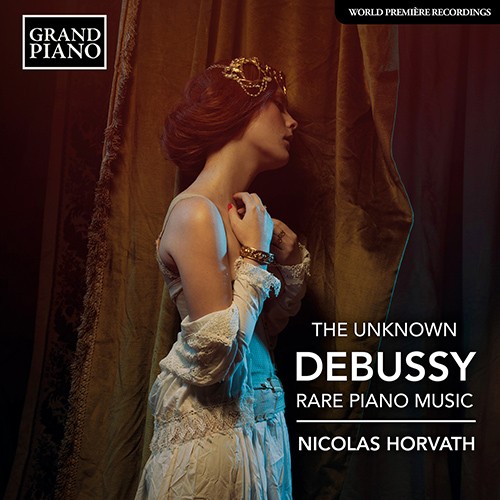
Every track on the Naxos “The Unknown Debussy” album bears the hand of Robert Orledge. He took early retirement from his professorial duties specifically to devote himself to what he calls “creative musicology,” or the “art of completing what the dead left unfinished.”
By now, he has made his way through virtually every abandoned Debussy project that left enough sketches to make reconstruction possible. The results, as you can hear, are uncanny for his efforts are not pastiche but something closer to channelling.
As the pianist Nicolas Horvath noted, Orledge never insisted or tried to impose his own vision. He simply listened to what the sketches were trying to say and helped them finish speaking.
For more of the best in classical music, sign up for our E-Newsletter
Claude Debussy: Fêtes Galantes, Tableau 1: Les Masques (commencement) (completed R. Orledge for piano, 2006) (Nicolas Horvath, piano)