Inspirations Behind Hans Werner Henze’s Los caprichos
Francisco Goya’s disturbing vision of contemporary and supernatural society, Los Caprichos (The Caprices) are a set of 80 aquatints and etchings produced by the artist between 1797 and 1798 and published as a set in 1799. Nothing is exempt from his acidic pen and view: he exposes superstition, religious fanaticism, the Inquisition, religious orders, the ignorance and failings of the various members of the ruling class, pedagogical shortcomings, marital mistakes, and the decline of rationality. The etchings are not given in a logical order, in some cases, to protect him from attack. Goya said, ‘he chose subjects “from the multitude of faults and vices common in every civil society, as well as from the vulgar prejudices and lies authorised by custom, ignorance or self-interest, those that he has thought most suitable matter for ridicule”.’
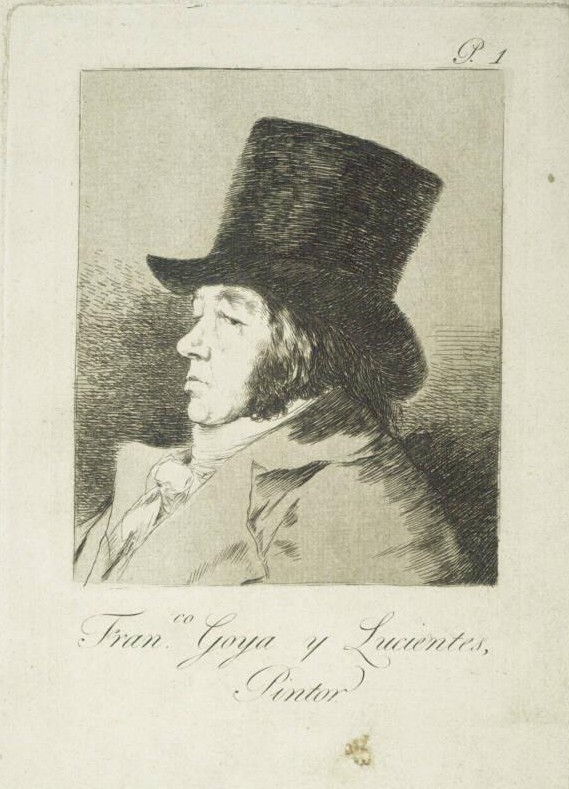
Goya: Los Caprichos, No. 1: Francisco Goya y Lucientes, Pintor
The German composer Hans Werner Henze (1926–2012) took 9 images from Goya’s collection to use as inspiration for his own composition entitled Los Caprichos to create an introduction, a theme, and seven variations. As one writer noted, ‘the strangeness of Goya’s visions is captured in the music’s fleeting quality’. Henze is a long way from an idea of Classical tonality, just as Goya is far away from typical images of Spanish society.
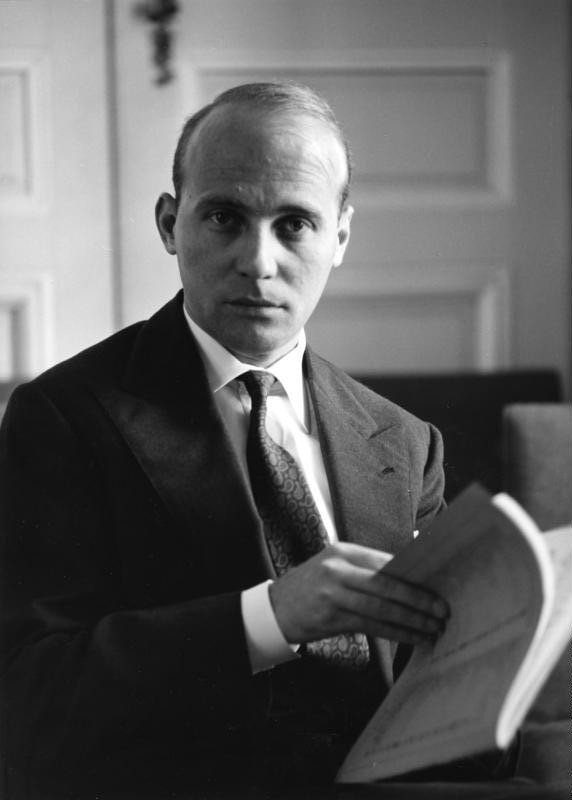
Hans Werner Henze in 1960 (Bundesarchiv, B 145 Bild-F008277-0008)
Henze opens with Keiner kennt sich selbst, from Goya’s image 6, Nadie se conoce (No one Knows Himself). For Goya, ‘the world is a maze: face, costume, and voice are all feigned. Everyone wants to appear what they’re not, everyone deceives themselves, and no one knows anyone. The figures in the image are all masked and costumed, looking out at the world while the world guesses about them and their intentions.
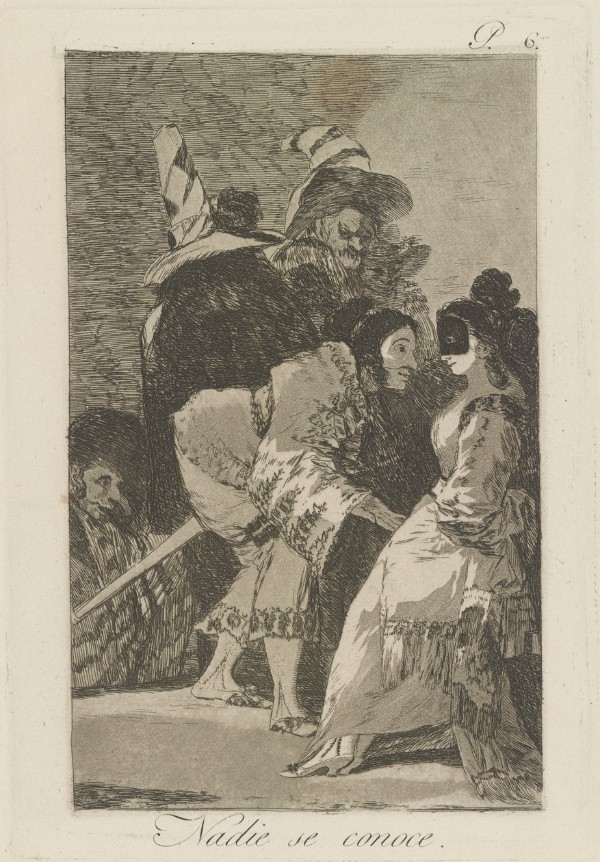
Goya: Los Caprichos, No. 6. Nadie se conoce. – Niemand kennt sich
Henze’s work starts very delicately. His introduction to Goya’s shadow world builds up slowly, tentatively, with little flashes of sound here and there.
Hans Werner Henze: Los caprichos – I. Keiner kennt sich selbst – (Vienna Radio Symphony Orchestra; Marin Alsop, cond.)
Image No. 5, Tal para qual (Two of a kind) shows men and women being equally full of vice. Goya attributes this to bad education. In an argument about who’s worse, men or women, Goya comes down firmly in the middle: ‘wherever men are perverse, women are also perverse’, and then he goes on to say about the two old women in the back of the picture: ‘the one is as vile as the other’.
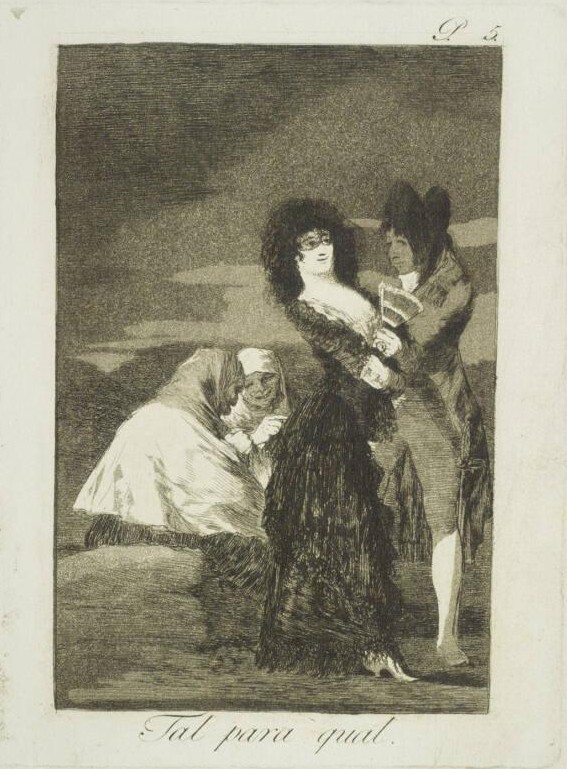
Goya: Los Caprichos, No. 5. Tal para qual. – Gleich und gleich gesellt sich gern
The second movement is our theme, after the first movement’s introduction. This will be the basis for the variation set and, if we’re looking for a clear-cut motif, it’s not here. We have hints of colour, rhythmic ideas raising their heads, and more darkness.
Hans Werner Henze: Los caprichos – II. Gleich und gleich gesellt sich gern – (Vienna Radio Symphony Orchestra; Marin Alsop, cond.)
One of the most famous images from the Los caprichos collections is the artist beset by monsters. The title, El sueño de la razón produce monstruos (The sleep of the reason produces monsters), is Goya’s way of talking about inspiration: ‘fantasy abandoned by reason produces monsters; united with it, fantasy is mother of the arts’.
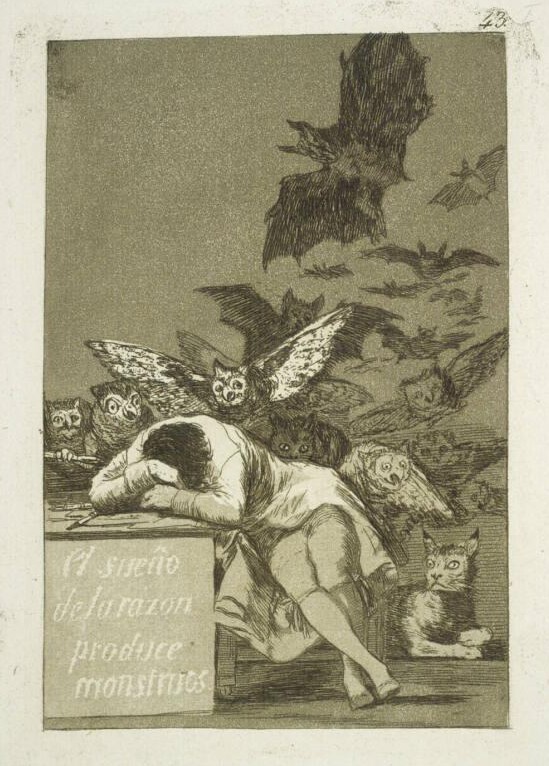
Goya: Los Caprichos, No. 43. El sueño de la razón produce monstruos. – Der Schlaf der Vernunft gebiert Ungeheuer
Henze’s dream is full of darting percussion, whining brass, and a piano active in its low notes.
Hans Werner Henze: Los caprichos – III. Der Schlaf der Vernunft gebiert Ungeheuer (Vienna Radio Symphony Orchestra; Marin Alsop, cond.)
In Image No. 27, Quien mas rendido? – Wer ist Ihnen mehr ergeben?, both lovers are faking it. He’s a charlatan, and she’s trying to figure out how to get away from him…and the five other men she’s made promises to see in the next half hour. Even the little dogs in the foreground look equally bored by the process.
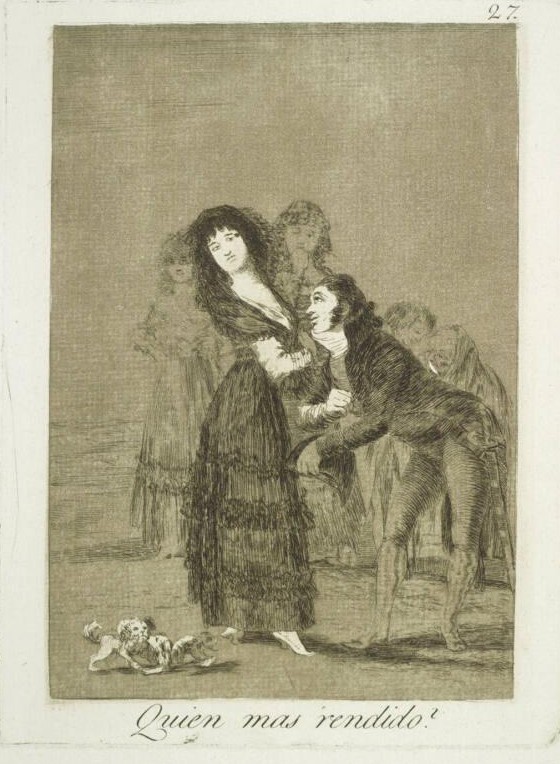
Goya: Los Caprichos, No. 27: Quien mas rendido? – Wer ist Ihnen mehr ergeben?
Henze explores the two lovers’ lack of focus. Their attention, and the music seems to wander.
Hans Werner Henze: Los caprichos – IV. Wer ist mehr ergeben? – (Vienna Radio Symphony Orchestra; Marin Alsop, cond.)
Goya condemns the business of marriage, not marriage itself, but the business of it. The brides dress up to deceive the men that their parents have chosen. She wears a mask, but the back of her hair is yet another face. Foolish people applaud these marriages – see the woman on the far left, but it’s all lies and ministered by another liar who comes to bless the marriage for the church.
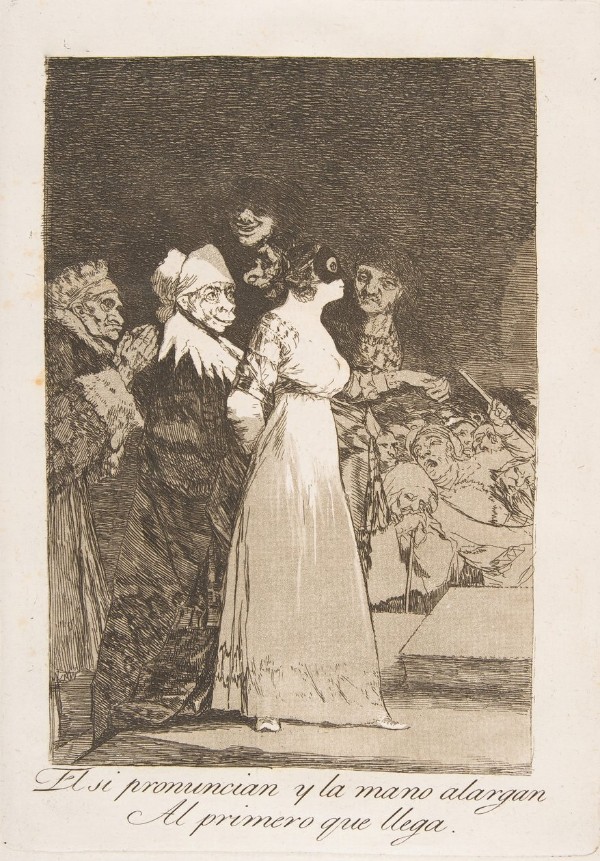
Goya: Los Caprichos, No. 2: El si pronuncian y la mano alargen Al primero que llega. –
Sie geben das Jawort und reichen die Hand dem, der zuerst kommt
Henze’s music is full of stops and starts, with the princess bride wandering where she will find her ‘perfect’ match.
Hans Werner Henze: Los caprichos – V. Sie sagt ja und reicht ihre Hand dem ersten, der kommt – (Vienna Radio Symphony Orchestra; Marin Alsop, cond.)
If a sick man places his trust in an ignorant beast for his doctor, why do we wonder at his death? Throughout Los caprichos, Goya used animals, and many donkeys, to show ignorance or pretended knowledge. In this case, it was fatal.
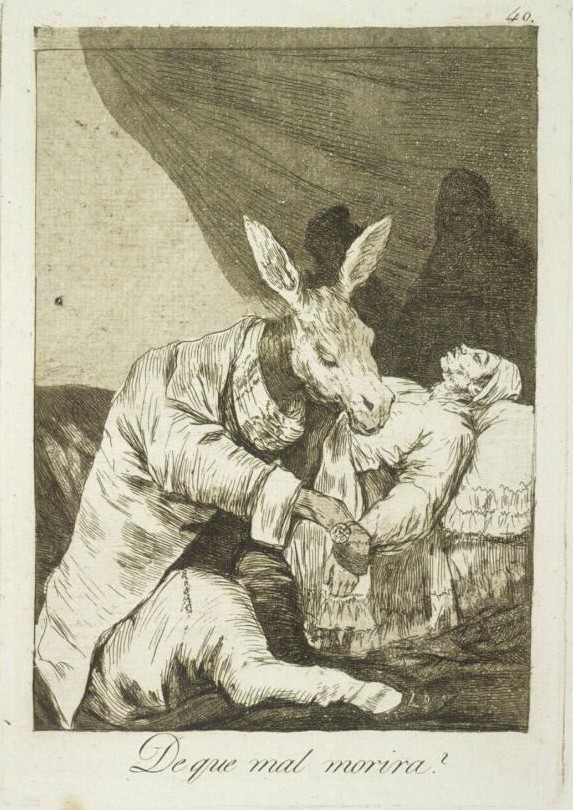
Goya: Los Caprichos, No. 40: De que mal morira? – Woran wird er sterben?
Henze gives us the hee-haw of the doctor, the tick of the watch taking the pulse, and the slow ebbing of life.
Hans Werner Henze: Los caprichos – VI. An welcher Krankheit wird er sterben? – (Vienna Radio Symphony Orchestra; Marin Alsop, cond.)
A woman is exposed on a high stage wearing a fool’s cap. Goya declares, ‘Shame, to treat a woman of honour, who for a trifle served everyone so diligently, so usefully, like this, shame!’
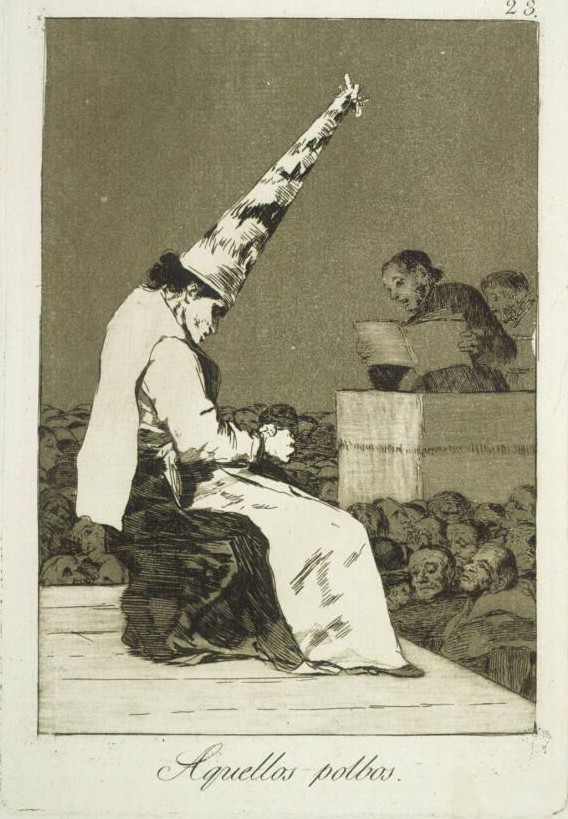
Goya: Los Caprichos, No. 23: Aquellos polbos. – Aus Staub wird Schmutz
The percussion speaks of the military, and the trumpets echo their call.
Hans Werner Henze: Los caprichos – VII. Jener Staub (Vienna Radio Symphony Orchestra; Marin Alsop, cond.)
The woman of the previous picture is hauled off in disgrace, stripped of her shirt, head forcibly held high, hands tied and a caption that just says ‘Nothing could be done about it’.
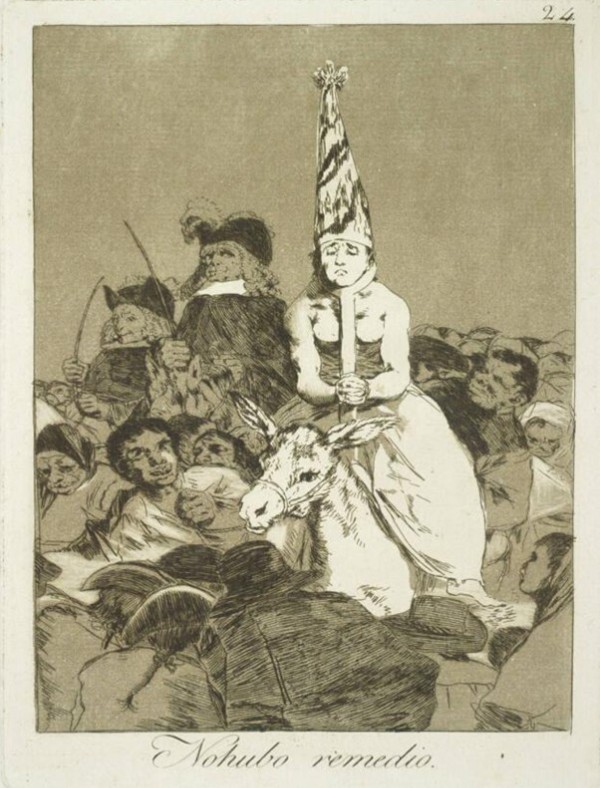
Goya: Los Caprichos, No. 24: Nohubo remedio. – Es gab kein Mittel mehr
Henze brings out the woman’s shame, forced into exposure for something, if we believe the earlier picture, that was positively trivial.
Hans Werner Henze: Los caprichos – VIII. Es gab keinen Ausweg – (Vienna Radio Symphony Orchestra; Marin Alsop, cond.)
But in the end, it’s the old women who control everything. Here, an old hag teaches a younger woman the ways of flight, aided by her broom and her owl.
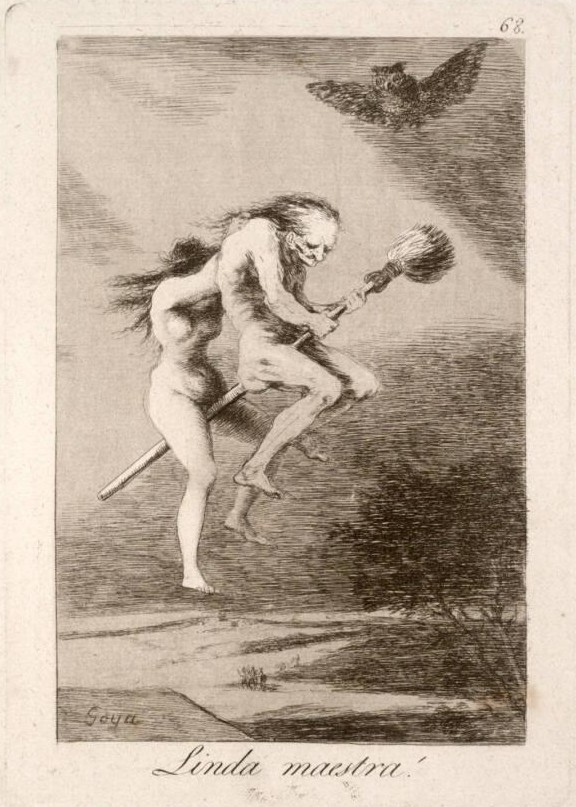
Goya: Los Caprichos, No. 68. Linda maestra! – Hübsche Meisterin!
Henze ends with a wash of colour, looking back into the dark depths of Goya’s nightmare dreams.
Hans Werner Henze: Los caprichos – IX. Schöne Herrin! (Vienna Radio Symphony Orchestra; Marin Alsop, cond.)
Henze did not write programmatic music to accompany Goya’s images, but he did use the names of the images for his movements. The music plays and moves on; little of it is instantly memorable, unlike Goya’s images.
For more of the best in classical music, sign up for our E-Newsletter