Raised by his mother in London, Samuel Coleridge-Taylor (1875–1912) started his studies at the Royal College of Music at age 15 as a violin student in 1890. However, the composition bug bit him, and by 1892, he’d abandoned the violin for study with Charles Villiers Stanford. He joined composition students Gustav Holst, Ralph Vaughan Williams, and John Ireland, all of whom went on to great things.
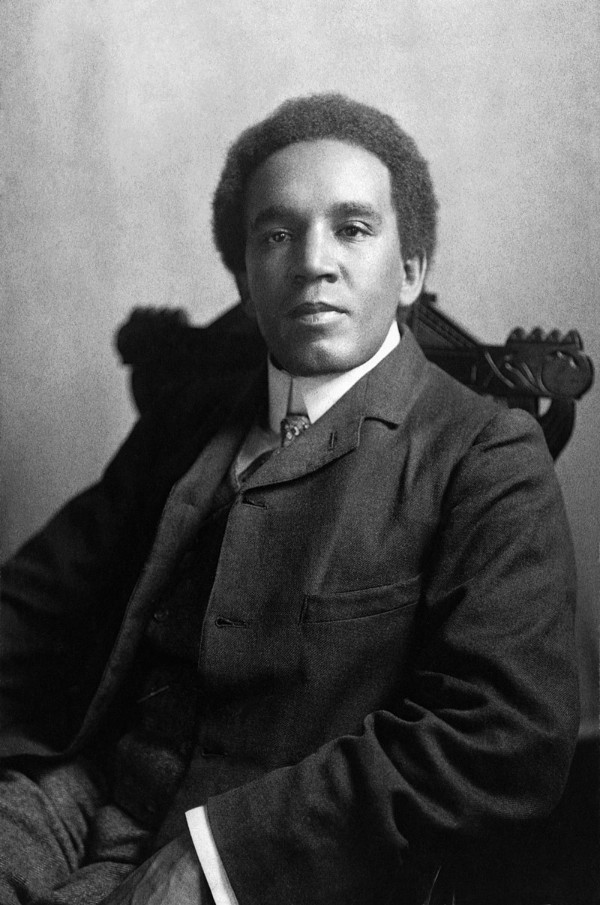
Adam Cuerden: Samuel Coleridge-Taylor, 1905 (Library of Congress, cph.3c22324)
This new recording by the Ulster Orchestra, led by Charles Peebles, brings us seven orchestral works by Coleridge-Taylor, five of which are first recordings.
The earliest work is his rhapsody, Zara’s Earrings, Op. 7, for soprano and orchestra. Written around the end of 1894, this may have been Samuel Coleridge-Taylor’s first writing for orchestra. Less a rhapsody than a dramatic scena, in the text, Zara laments her lost earrings, dropped into the well. What will her lover think? In the end, she resolves to tell him, and it all closes in a nice E major.
Dating from much the same time, his Ballade in D minor, Op.4, for violin and orchestra, was first published in an arrangement for violin and piano in 1895. Samuel Coleridge-Taylor’s previous experience as a violinist comes to the fore here and exhibits a knowledge of the contemporary composer Dvořák in its use of modal (or pseudo-modal) lines.
After hearing Brahms’ Clarinet Quintet in 1895, Samuel Coleridge-Taylor spent the summer writing his own Clarinet Quintet. This work received praise from Stanford, and the critics who wrote about its first performance at the Royal College of Music in July 1895 also praised its assuredness for a student work. The second movement, Largo affettuoso, was split off separately as a Romance in B major for string orchestra, and that is given its first recording here.
The other works on the recording, Solemn Prelude, Op. 40; Idyll, Op. 44, and the first Entr’acte from his Incidental Music to Nero, Op. 62, must all stand aside before his American Civil War march, Ethiopia Saluting the Colours, Op. 51.
Samuel Coleridge-Taylor: Ethiopia Saluting the Colours, Op. 51
Mistakenly styled in one concert as a ‘coronation march’, because all of England was caught up in coronation fever with the coronation of Edward VII and Alexandra in 1902, the work is actually based on a poem of the same name by Walt Whitman about General Sherman’s March to the Sea and the story of an ancient slave woman named Ethiopia who speaks to the Union soldiers and salutes the regiments going by. Samuel Coleridge-Taylor’s opulent work missed its audience, overshadowed both by Elgar’s Pomp and Circumstance marches from 1901 and by its own rarity in the composer’s works.
Samuel Coleridge-Taylor died at age 37 of pneumonia, leaving his wife and two children, who also had careers in music.
In many ways, these pieces by Samuel Coleridge-Taylor are not his great works. He made his name first on Hiawatha’s Wedding Feast in 1898, part of his three cantatas based on the 1855 poem by Henry Wadsworth Longfellow, The Song of Hiawatha. The Wedding Feast was enormously popular, rivalled in its day only by Handel’s Messiah and Mendelssohn’s Elijah. These performances by the Ulster Orchestra bring us back to the early 20th century and the changing aspects of music at that time: nationalism was active through the music of Dvořák and many of the British composers, and Coleridge-Taylor could use their experiments in other tuning systems in his work. These works show Samuel Coleridge-Taylor’s musical expertise and are a welcome addition to the standard orchestral repertoire.
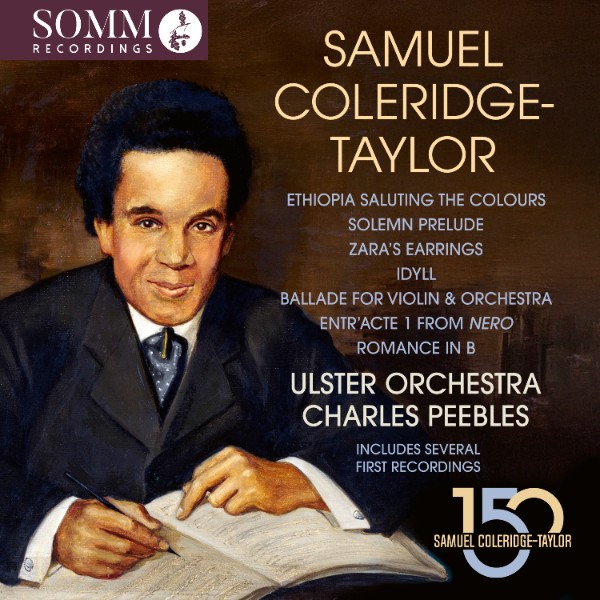
Samuel Coleridge-Taylor: Orchestral Works
Rebecca Murphy, Soprano; Ioana Petcu-Colan, Violin; Ulster Orchestra; Charles Peebles, cond.
SOMM Recordings SOMMCD 0713
Official Website
For more of the best in classical music, sign up for our E-Newsletter