In a recent recording, the four Fantasias Brasileiras by Francisco Mignone are presented by the São Paulo Symphony Orchestra, conducted by Giancarlo Guerrero, with Fabio Martino as piano soloist. These four works, written between 1929 and 1936, are fascinating piano works that encapsulate both a nationalist sound and, at the same time, place Brazilian music on the international stage.
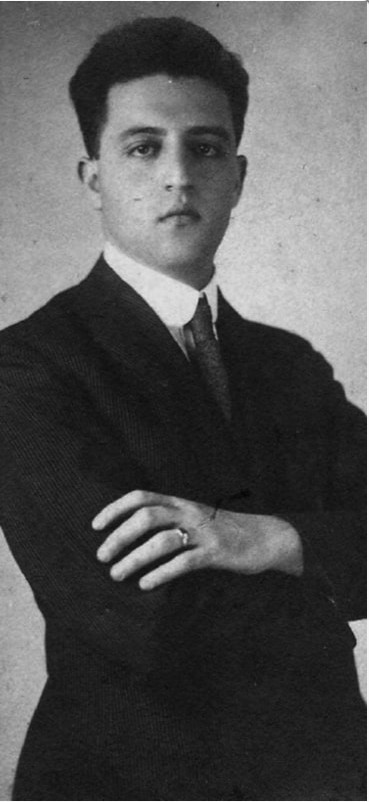
Francisco Mignone
Francisco Mignone (1897–1986) first studied flute with his father before attending the São Paulo Conservatory, studying piano and conducting. At the same time, he was active in popular local bands as a flautist and pianist, which is thought to have freed his facility for improvisation, which became a key part of his music. He continued his music study in Europe from 1920 through 1929, working with Vincenzo Ferroni in Italy. While he was away, a fierce argument about modernism was raging in Brazil between the poets, musicians, and visual artists – being in Italy, he was out of the fray, but when one of his early works gained attention in Brazil, he was thrust into the argument.
In his opera O contratador de diamantes (The Diamond Contractor) of 1921, he had set a dance using a melody gathered by two 19th-century explorers. The dance, a congada, became popular as a work separate from the opera. In 1923, the Congada was performed by the Vienna Philharmonic, under the baton of Richard Strauss, in concerts held in São Paulo and Rio de Janeiro. Critics saw this as a positive step towards bringing Brazilian music into the modern world.
When Mignone returned to Brazil in 1929, he split his time between São Paulo, where most of his significant works received their premieres, and Rio de Janeiro, then the country’s capital. In Rio de Janeiro, he taught at the National School of Music and served in key positions at the Brazilian Academy of Music and the Theatro Municipal.
His four Fantasias Brasileiras, written for piano and orchestra, were all part of his nationalistic phase, which started in the late 1920s. What’s interesting is his choice of the fantasia as his vehicle. This genre, which began in the 16th century, provided Mignone with the perfect base for his work. Always filled with contrasting tempos and with an improvisatory quality, the fantasia provided Mignone with a showcase for his own skills as a pianist and as an orchestrator. By bringing them into the 20th century and using them to showcase a Brazilian sound, he was opening the way for other Brazilian composers to have a place on the international stage. His contemporary, Heitor Villa-Lobos (1887–1959), had contacts with European composers before Mignone, so their works reinforced each other.
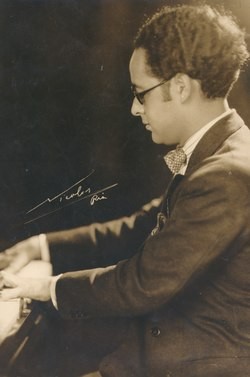
Souza Lima, 1932
The first Fantasia Brasileira was written in 1929 for the pianist Souza Lima, who had requested a ‘work of Brazilian flavour’ for piano and orchestra when he ran into Mignone in Milan. Composed in two weeks, the work received its premiere with Lima as soloist, performing with the Sociedade Sinfônica de São Paulo conducted by Lamberto Baldi. You’ll notice a theme at the beginning that also sounds very much like the opening theme in Darius Milhaud’s surrealist ballet Le Bœuf sur le toit, Op. 58, written in 1919 and 1920. Although other themes in Milhaud’s work were taken from already extant Brazilian tunes, the opening motif was created by Milhaud. Was Mignone following Milhaud’s model, or was this part of the improvisational nature of the work?
Francisco Mignone: Fantasia Brasileira No. 1 (Fabio Martino, piano; São Paulo Symphony Orchestra; Giancarlo Guerrero, cond.)
The Fantasia Brasileira No. 2 was composed in 1931 and received its Rio de Janeiro premiere in 1934, again with Souza Lima at the keyboard. This time, however, Heitor Villa-Lobos was the conductor. Villa-Lobos had spent his time in Europe from 1923 to 1924 and again from 1927 to 1930, when he was already a successful composer and performer. He spent his time in Paris, whereas Mignone was generally in Italy, but the European influence was important to both composers.
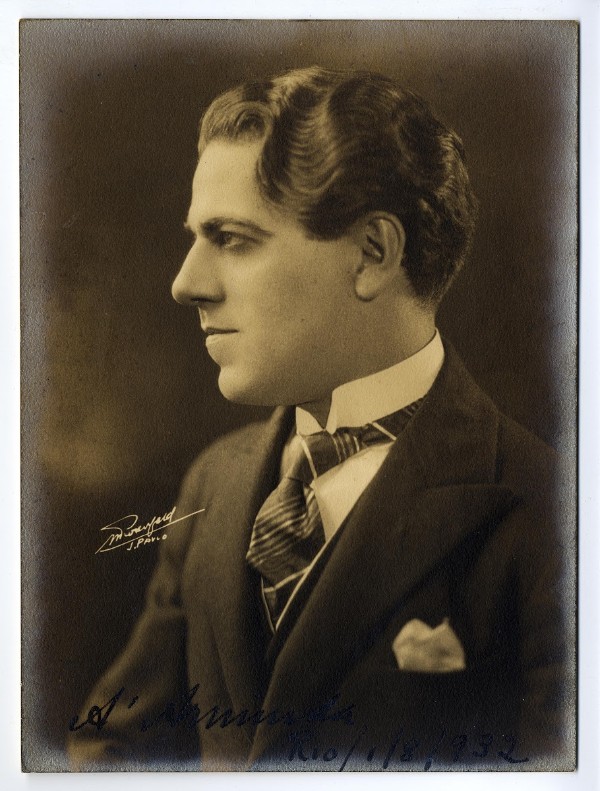
Heitor Villa-Lobos, 1932
In this fantasia, Mignone relies ever more on strong rhythms, bringing out the unique Brazilian sound.
Francisco Mignone: Fantasia Brasileira No. 2 (Fabio Martino, piano; São Paulo Symphony Orchestra; Giancarlo Guerrero, cond.)
The third Brazilian fantasia was written in 1934 and dedicated to the Spanish pianist Tomás Terán. Terán was a close friend of Villa-Lobos and moved from Spain to Brazil in 1930, where he became one of the leading promoters and performers of Villa-Lobos’ music. Nonetheless, the premiere was again played by Souza Lima. It was given in São Paulo on 10 May 1934 with Lima as pianist with the Orquestra do Centro Musical de São Paulo, conducted by Ernst Mehlich. Terán gave his Rio de Janeiro premiere in 1939 and was also the performer on the premiere recording with Mignone conducting. The work formed part of the program on Brazilian music at the 1939 New York World’s Fair.
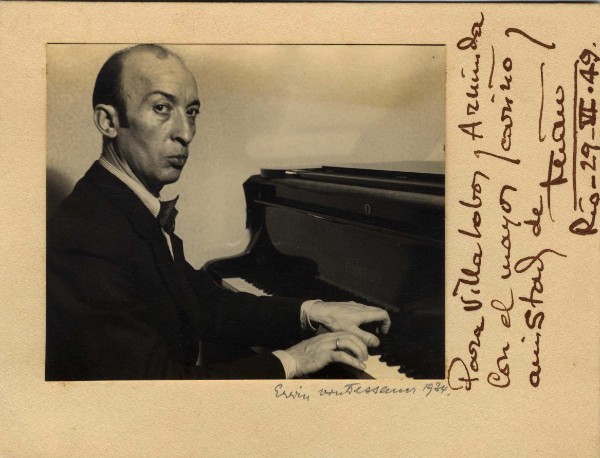
Tomás Terán, 1934 (Museu Villa Lobos)
Francisco Mignone: Fantasia Brasileira No. 3 (Fabio Martino, piano; São Paulo Symphony Orchestra; Giancarlo Guerrero, cond.)
The final Brazilian fantasia was composed in 1936 and given its premiere in São Paulo’s Theatro Municipal, with Souza Lima again at the piano and the composer conducting. The composer said ‘The Fourth Fantasia is based on Brazilian themes of African origin. The first and second themes come from the people of Rio and were sung in the streets during the 1936 Carnival. The entire central section is the composer’s own invention. At the heart of the piece is a portrait of a Carnival rancho [band of musicians], with the kind of rhythmical whistling accompaniment often provided by the children of Rio during the parades. For added colour, the solo piano here plays dissonant chords whose capering leaps seem to imitate those of the rancho’s leader. In the final section, the piano imitates percussion instruments in runs of splendid virtuosity.
Francisco Mignone: Fantasia Brasileira No. 4 (Fabio Martino, piano; São Paulo Symphony Orchestra; Giancarlo Guerrero, cond.)
In his review of the premiere of the First Fantasia, his friend the Brazilian poet, musicologist, art historian, and critic Mário de Andrade commented on Mignone’s new aesthetic, writing, ‘I believe that it is by pursuing this conceptual orientation, in which nationality is not distorted by a concern for the universal, that Francisco Mignone will be able to compose important works and nurture his artistic personality.’
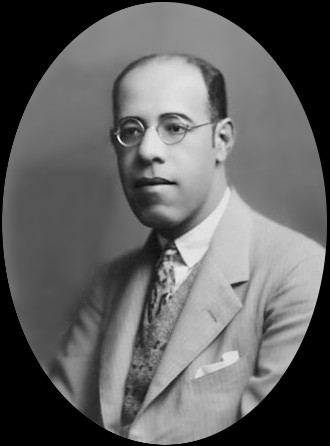
Mário de Andrade, 1928
Each succeeding Fantasia builds on the one before, slowly melding the Brazilian theme and the European fantasia framework to create works that are distinctly Brazilian yet at the same time, international in their outlook.
For more of the best in classical music, sign up for our E-Newsletter