Pyotr Tchaikovsky never had children. He was a gay man, and his only marriage fell apart within weeks.
His wife would go on to have children with other men that legally he could have claimed as his own, but he chose not to.
However, despite this, he did die with an heir: the illegitimate son of his niece, Tatyana.
The fascinating story of Georgy Tchaikovsky isn’t well-known, so we’re telling it today!
Life as Tchaikovsky’s Niece
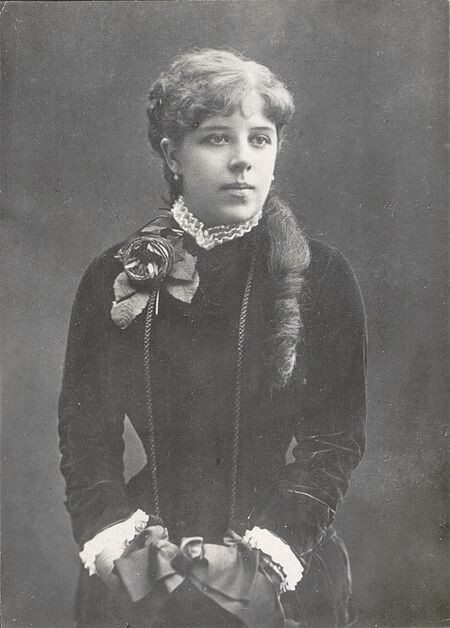
Tatyana Davydova
Tatyana Davydova was born in 1861 in Kam’yanka, Ukraine, a town three hundred kilometers southeast of Kiev.
Her father Lev came from a landowning family, and her mother Aleksandra was the nineteen-year-old little sister of composer Pyotr Ilyich Tchaikovsky.
Tchaikovsky felt close to his nieces and nephews. He adored Tatyana and dedicated his Six Duets, Op. 46 to her. These works date from the summer of 1880, when he was visiting Lev, Aleksandra, and Tatyana in Kam’yanka.
Tchaikovsky’s Six Duets, Op. 46
Ten letters survive from Tchaikovsky to Tatyana.
One was written in 1878, the year she turned seventeen. It refers to the quarrels that Tatyana was having with her uncle Anatole.
I do not like it that, having reason to be in a huff with him, you do not engage with him directly. You are upsetting him very much…
Speaking about the misunderstanding that occurred between you, you say that he doesn’t miss an opportunity to tell everyone about your moral depravity. Talking with your sister about your shortcomings does not mean he is a slanderer.
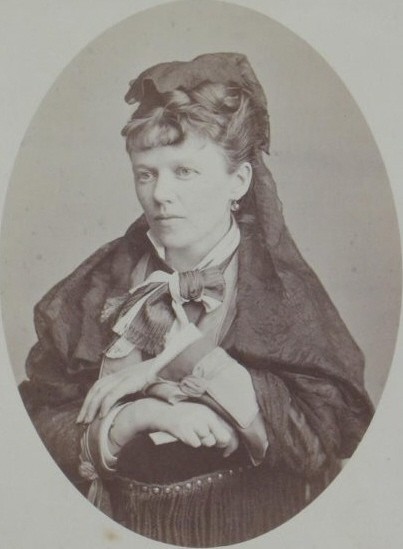
Aleksandra Davydova
Tchaikovsky tried to mediate between his brother and his niece:
Nobody loves you as much as Tolya… If he, when talking about you, exaggerates your shortcomings, then this does not mean that he wishes you ill.
We don’t know exactly what these references to “moral depravity” and “shortcomings” mean, or what Tatyana’s reaction to his letter was.
But she must not have been too offended, because her and Pyotr’s affectionate correspondence continued.
Another letter dates from the spring of 1881, when Tatyana was nineteen. Tchaikovsky was in Italy at the time and discussing his travel plans:
I think that I’ll make it to Kamenka during Holy Week. I’m staying here for another 5 days, then going to Nice for a short time as a guest of Madame Kondratyeva, thence to Paris, and thus via Petersburg and Moscow to Kamenka.
He also makes an intriguing reference to a potential wedding:
What I wouldn’t give so that we could celebrate your wedding this summer!
But if any marriage was scheduled that summer, it was called off.
The Pregnancy
Sometime in the early 1880s, the Davydov family hired a piano teacher for their children named Stanislav Mikhaylovich Blumenfeld.
Stanislav and Tatyana were attracted to each other, and sometime in August 1882, she became pregnant with his baby.
If they ever discussed marriage, they ultimately decided against it. Instead, Blumenfeld left to teach piano at the Kiev Institute for Girls of the Nobility, while a pregnant Tatyana traveled to St. Petersburg, seeking help from her uncle Modest.
Modest was one of Tchaikovsky’s closest confidants, and it wasn’t long before Pyotr also found out about the pregnancy. Modest sent Tatyana to Paris to stay with Tchaikovsky, who was in the city composing his opera Mazepa.
Tchaikovsky’s Mazeppa
In between composing sessions, Tchaikovsky arranged to pay for Tatyana’s medical care. He also kept her secret, telling friends and family that she was in Paris having her morphine addiction treated.
He set her up in separate living quarters and also found a wet nurse for her baby, as well as a French family to take care of the child while they planned the next steps. Soon, his entire life became devoted to composing and looking after Tatyana and the baby.
Georgy’s Delivery
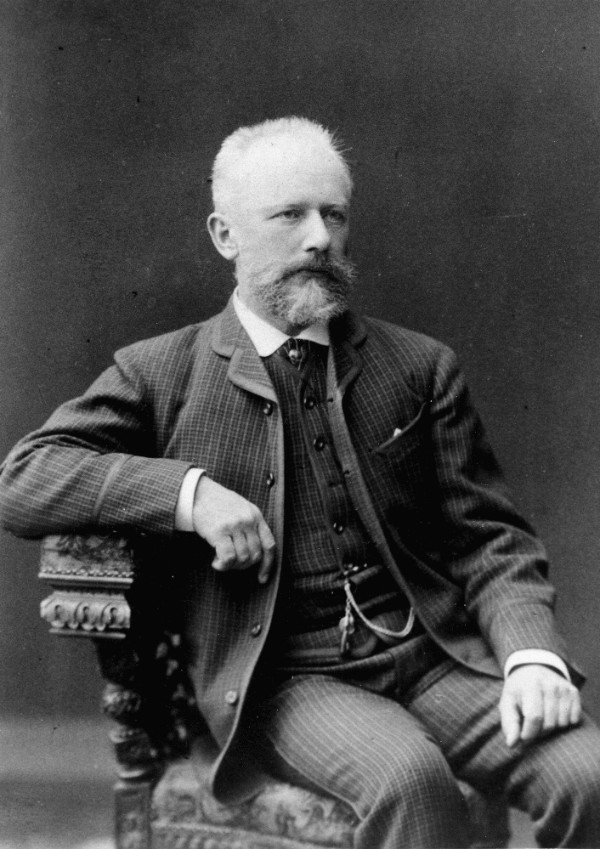
Pyotr Ilyich Tchaikovsky
On Tchaikovsky’s 43rd birthday in May 1883, Tatyana began having contractions.
Tchaikovsky wrote in a letter to his brother Modest:
Tanya felt splendid in herself, but said that she was starting with some sort of pain in her stomach. However, she spent the night without pain, but this morning she started having genuine small contractions.
They sent immediately for Madame Gilbert, who had come to me yesterday, and was astonished that it had not yet started. This most agreeable lady arrived at once…
At that moment, Sasha came to summon me to Tanya. She lay on the bed as usual, said that in the morning she felt pain every 3-4 minutes, and asked to go to [Doctor] Tarnier. Then suddenly she said curtly: “Go away, go away!”, and started moaning.
He continued the letter the following day with more news.
Yesterday, after dinner, I couldn’t think of anything else but to go to Tanya again, because it was still so grievous and frightening. It would have been better not to go.
Dearest Lizaveta Mikhaylovna [Tchaikovsky’s stepmother], hearing my steps, ran out to warn me, but I was already on the stairs, and heard such awful screams as I had never heard before.
Having been told by the grandmother that everything was going well and that Tarnier had been sent for, I left, and you can imagine what an evening and night I spent.
Tchaikovsky’s Berceuse (Lullaby in a Storm), Op. 54, No.10, composed in 1883
George’s Birth
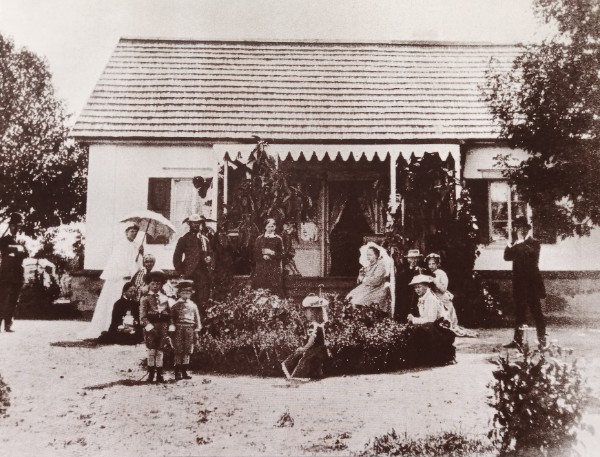
Tchaikovsky at the Davydov estate
Tchaikovsky continued:
I went there at 9 o’clock today. It’s all over, and in the best possible way.
The baby was born at 1 o’clock in the morning. Lizaveta Mikhaylovna has written to you with all the details.
I’m simply in awe of the straightforwardness with which she’s heroically endured this whole awful affair. She didn’t leave Tanya for a moment and witnessed the whole birth process.
Tchaikovsky recorded these observations about the baby:
The child (a boy) lay next to her and was sleeping peacefully. I was amazed by his size.
Ever since yesterday, I began to feel for this child, who brought us so much disquiet, a sort of tenderness, and a desire to be his protector.
Then I experienced this force tenfold, and told Tanya that so long as I was alive, she could be at peace on his account.
He also noted:
After lunch, I’ll go again to talk to Ferré regarding the details of how to register and generally formalise the birth of a child.
Tatyana’s Recovery
The following day, Tchaikovsky described the baby to Modest.
Now I’ll talk about George-Léon. He was unusually large at birth and, as it were, even slightly overripe, for his nails were so long that they had to be cut…
Everything about him is surprisingly well developed. The hands are astonishingly beautiful, and Tanya is especially pleased with this. Indeed, I’ve never seen a child with such beautiful fingers and nails.
He is full of life, and unfortunately, too much. He hardly sleeps at all, and only when he sucks the nurse’s breast, which he does as if he’d taken lessons in this art, does he completely calm down for a few moments. Ferré and Gilbert put his insomnia and restlessness down to the cessation of the morphine he’d become used to.
He was also shocked by his niece’s blase attitude toward the situation she found herself in.
Her mood is splendid. She shows little grief at the thought of separation from her child and even admits that she would like him to leave sooner.
She has thoroughly reconciled herself to the idea that he will be living in a poor environment, saying that he wouldn’t be aware of it…
In general, the thought of home, parents, and the fact that she is condemned to live in a whole swamp of lies when she returns home doesn’t bother her at all. An unfathomable creature!
On the other hand, of course, we should be glad that she is so calm and cheerful.
Despite his disapproval of her pregnancy and his surprise at her emotions surrounding it, Tchaikovsky’s affection for Tatyana remained undimmed.
What Happened to Georges and Tatyana After the Birth?
Tchaikovsky continued his involvement with Georges for a long time to come.
He left Paris a month after George’s birth, but made provisions for his care that Tatyana couldn’t.
He gave Tatyana 3000 francs to pay for the wet nurse and arranged to leave the baby with a foster family, the Auclairs. He would go on to pay 250 francs a month to them.
(It’s interesting to note that during this time, his patroness Nadezhda von Meck was contributing to his income, which he was in turn using to help little Georges.)
He also began thinking of the child as his heir. In the early spring of 1884, he wrote to Modest:
I have now decided to start saving in earnest — after all, I now have an heir.
For more of the best in classical music, sign up for our E-Newsletter