On 6 September 2025, Paul Huang, the Taiwanese-American violinist, will mark his 35th birthday as a celebrated figure in the classical music world, known for his captivating artistry and effortless virtuosity.
Born in Taipei in 1990, Huang’s journey from a young prodigy to a global sensation has been defined by his “stunningly beautiful tone” and a rare ability to convey profound emotion through every note.
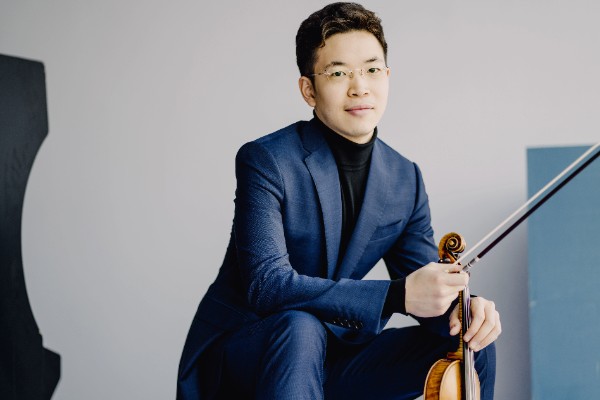
Paul Huang
A recipient of the 2015 Avery Fisher Career Grant and the 2017 Lincoln Center Award for Emerging Artists, Huang has enchanted audiences at prestigious venues. Beyond his technical mastery, he is admired for his humility and commitment to nurturing young musicians, often sharing stages with emerging talents.
On the occasion of his birthday on 6 September, let us sample some of his most iconic recordings and performances.
Paul Huang performs Ysaÿe: Sonata No. 3 in D minor, “Ballade”
Poetic Triumph
Paul Huang’s rendition of Frédéric Chopin’s Nocturne in E-flat Major, Op. 9, No. 2 from his 2023 Naïve Records album Kaleidoscope, is a spellbinding reimagining of the beloved piano work, transcribed for violin and piano with an intimacy that feels both timeless and revelatory.
Recorded alongside pianist Helen Huang in a pristine acoustic setting, Huang’s performance on his 1742 “ex-Wieniawski” Guarneri del Gesù radiates a luminous and vocal quality, with his bow drawing out each phrase with a “heart-wrenchingly tender resonance.”
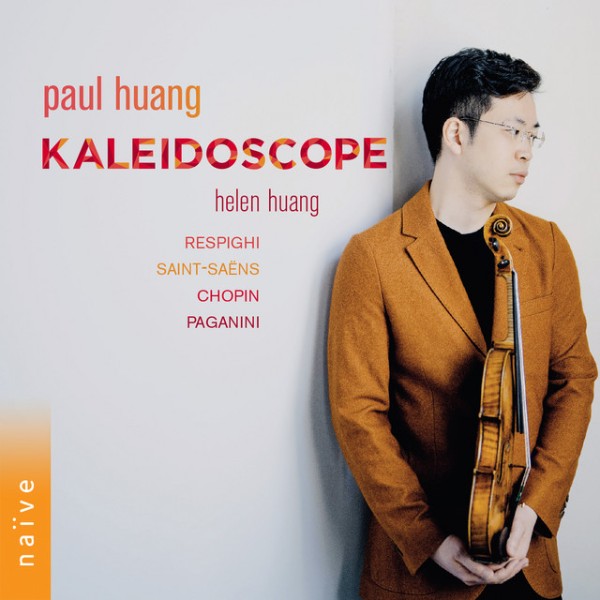
Critics have hailed the recording for its “exquisite balance of passion and restraint,” with Huang’s silken tone and meticulously controlled vibrato lending the nocturne’s melancholic melody a haunting, almost confessional depth. Huang’s interpretation not only honours Chopin’s introspective lyricism but also elevates it through the violin’s expressive range.
Paul Huang performs Chopin: Nocturne in E-flat Major, Op. 9, No. 2
Genesis in Sound
Paul Huang’s interpretation of Hosokawa’s Violin Concerto “Genesis” feels less like a performance than a profound birthing ritual in sound. From the opening washes of orchestral motion resembling amniotic fluid, Huang’s violin emerges with breathtaking clarity, as though making its first tentative but certain movement.
In this world-premiere recording, Huang inhabits the dual worlds of human drama and cosmic abstraction with extraordinary poise. In fact, Huang transforms the solo violin into the “human protagonist in a universal drama of finding harmony through conflict.”
What emerges from Huang’s performance is not just a concerto, but a meditative journey that culminates in a transcendent union between voice and environment. His interpretation invites reflection rather than applause, “creating an immersive sonic metaphor for communion with something greater than oneself.”
Toshio Hosokawa: Violin Concerto, “Genesis” (Paul Huang, violin; The Hague Residentie Orkest; Jun Märkl, cond.)
Solitary Songs
In his recording of John Harbison’s Four Songs of Solitude, Paul Huang brings a quietly compelling eloquence to a work that, by the composer’s own description, is both personal and introspective. It is “a set of songs, not sonatas or fugues,” composed as a gift for his wife and deeply rooted in the solitary experience of the performer.
Huang’s warm, focused, and expressive tone imbues each song with a sense of narrative integrity, conveying both the solitude and company of self-reflection in equal measure. Huang’s achievement in this recording, released by Harmonia Mundi in 2014, lies in his capacity to inhabit the emotional contours of the music.
His playing neither overwhelms with bravura nor retreats into reticence. Instead, it captures the meditative stillness and inner dialogue at the heart of Harbison’s vision. The playing is both technically assured and intuitively responsive, ranging from the refrained lyricism of the opening to the precarious motion of the finale.
John Harbison: 4 Songs of Solitude (Paul Huang, violin)
Expressive Dialogue
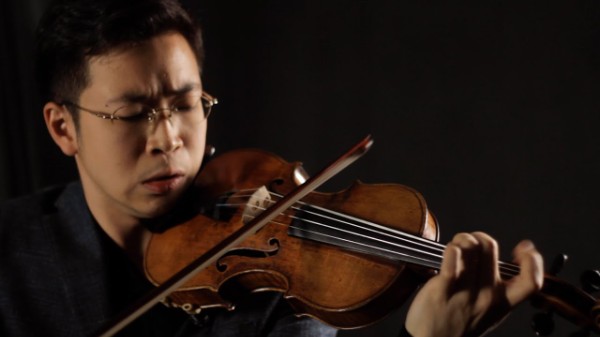
Paul Huang
In his interpretation of César Franck’s Violin Sonata in A major, Paul Huang reveals himself as not merely a technician of the violin but a storyteller of uncommon sensitivity and poise. His performance radiates an expressive intensity that balances lyricism with architectural control, allowing the sonata’s cyclical form to unfold with a natural, almost organic coherence.
Critics have noted the emotional immediacy of Huang’s approach, describing it as playing “with a depth seldom heard in contemporary violinists.” Rather than presenting the piece as a mere showcase of Romantic virtuosity, Huang approaches it as a dialogue between past and present, between intention and spontaneity.
Paul Huang is a violinist of exceptional artistry, known for his golden-hued tone, expressive depth, and refined musical intelligence. With a commanding stage presence and a repertoire that spans both Romantic masterpieces and contemporary works, Huang has established himself as one of the leading violinists of his generation.
For more of the best in classical music, sign up for our E-Newsletter