Reynaldo Hahn (1874–1947) is widely known for his French mélodies, beautiful art songs that capture emotion with elegance and subtlety. Yet Hahn’s piano music, though less famous, is equally revealing of his artistry.
Across solo pieces, cycles, waltzes, and sonatinas, Hahn developed a distinctive pianistic voice that focused on nuance and intimacy rather than virtuoso display.
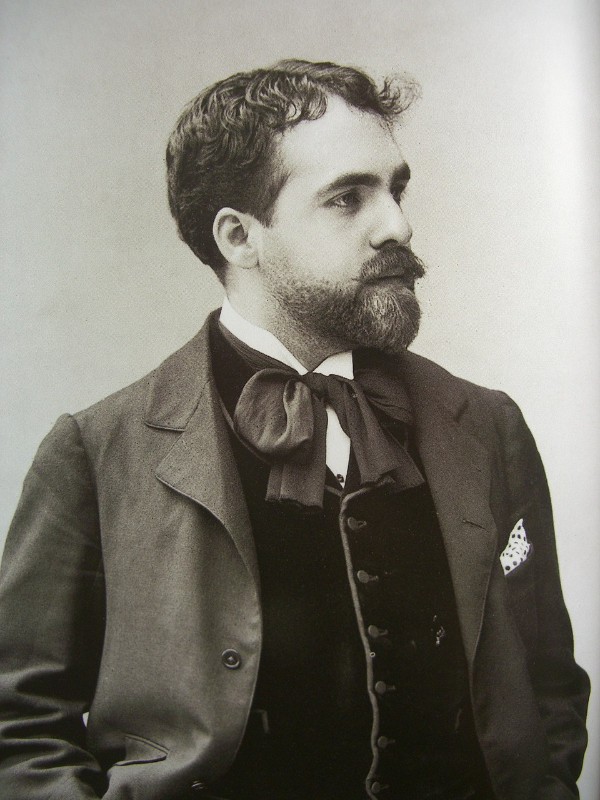
Reynaldo Hahn
While he never sought to compete with the grand piano tradition of Liszt or Rachmaninoff, Hahn’s keyboard works offer a different kind of brilliance. They are precise, lyrical, and often poetic.
To commemorate Hahn’s passing on 28 January 1947, let us explore music that reflects the Belle Époque salons of Paris, spaces that valued elegance, charm, and subtle expression. These piano pieces have the power to communicate directly with the listener, opening up a world of melody and colour.
Reynaldo Hahn: 7 Chansons grises, “L’Heure exquise”
The Birth of Hahn’s Pianistic Style
Born in Caracas, Venezuela, Hahn moved to Paris as a child and was soon immersed in French musical life. He entered the Paris Conservatoire at a young age and came under the influence of teachers such as Jules Massenet and Camille Saint-Saëns. Hahn’s musical identity was shaped in this milieu, where an appreciation of refined lyricism and elegant form prevailed.
Hahn began composing piano music as a teenager. His early pieces include works such as Portrait, La Promenade, Demi-sommeil, Feuillage, Phœbé, and Les Regards amoureux. These short character pieces are not designed to impress with technical fireworks. Instead, they reveal Hahn’s earliest strengths, featuring clear melodic lines, refined harmonies, and expressive nuance.
Even at this young age, Hahn treated the piano with care, crafting textures that are transparent yet complete, avoiding excess. In Demi-sommeil, for example, the music evokes a quiet, dreamlike atmosphere, using pedal and subtle harmonic shifts to create a floating, almost ethereal sound. In Portrait, the melodic line dominates, with the accompaniment serving to support and enhance the voice-like quality of the music.
These early pieces are significant because they set the foundation for Hahn’s lifelong approach. Melody came first, and clarity and elegance prevailed. The piano, in Hahn’s hands, becomes a medium for reflection and intimate storytelling.
Reynaldo Hahn: Juvenila (Alessandro Deljavan, piano)
Classical Form and Personal Voice
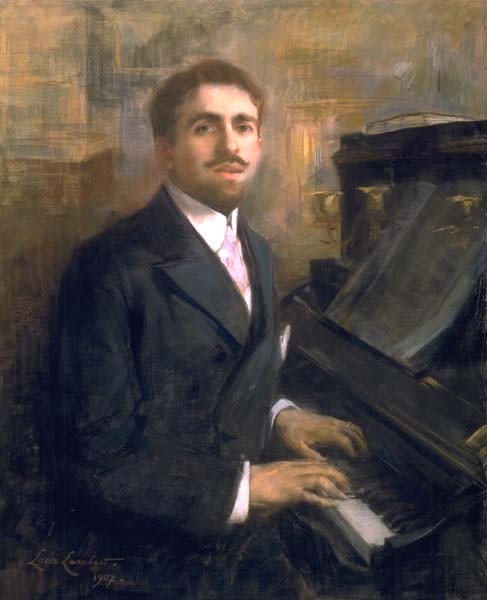
Reynaldo Hahn
One of Hahn’s most ambitious piano works is the Sonatine in C Major (1907), composed during a period when he was establishing himself as a versatile figure in French musical life. By this time, Hahn had already gained recognition for his elegant mélodies and his salon pieces, and he was increasingly drawn to writing piano music.
The Sonatine is dedicated to the distinguished pianist Louis Diémer, and demonstrates Hahn’s ability to move beyond short miniatures into a more extended, structured work. The Sonatine is written in three movements, each reflecting different aspects of Hahn’s style.
Hahn’s Sonatine in C Major unfolds with elegance and lyricism across three movements. The first presents a poised, clear, and classically balanced theme, showcasing his training and respect for formal clarity. The second is songlike and expressive, reflecting his gift for vocal-inspired phrasing and intimate nuance, and the final movement presents sparkling melodies in a manner that captures the charm and refinement of Belle Époque salon culture.
Unlike the grand Romantic sonatas of the 19th century, the Sonatine is not a platform for dramatic gestures or technical bravado. Instead, it fully embodies Hahn’s aesthetic principles. The work occupies an important place in Hahn’s piano repertoire, bridging his early miniatures with the more expansive cycles to follow.
Reynaldo Hahn: Sonatine in C Major
A Cycle of Intimate Worlds
Hahn’s most significant contribution to piano literature is undoubtedly Le Rossignol éperdu (The Distraught Nightingale), a remarkable cycle of 53 short piano pieces composed between 1902 and 1911. Written during a period when Hahn was already a celebrated composer of French mélodies and a prominent figure in Parisian musical life, the cycle reflects both his artistic maturity and the salon culture in which much of his music was performed.
Drawing on the traditions of French character pieces and the miniature piano forms popularised by composers like Fauré and Mendelssohn, Le Rossignol éperdu bears Hahn’s distinctive musical voice, featuring refined melodies full of subtle harmonic colour.
The pieces range widely in mood and character. Some are playful and light, like Éros caché dans les bois, fluttering with whimsy and delicate motion. Others are nostalgic or introspective, such as Le Jardin de Pétrarque, which evokes a quiet and poetic reflection.
Some adopt a more ceremonial or stately tone, like Les Noces du Duc de Joyeuse, with measured rhythms and clear harmonic architecture. Across all 53 miniatures, Hahn demonstrates his gift for concise and expressive writing by packing emotion, imagery, and narrative into just a few measures.
Le Rossignol éperdu reveals the depth of Hahn’s artistry. The piano is treated as a vehicle for melody, colour, and character rather than as a platform for technical fireworks. These pieces are intimate yet highly engaging, demanding sensitivity from the performer and offering listeners a direct line into Hahn’s musical imagination.
Reynaldo Hahn: Le Rossignol éperdu, “Hivernale”
Waltzes, Miniatures, and Musical Character
In addition to the Sonatine and Le Rossignol éperdu, Hahn composed a wide range of other piano works, including waltzes, variations, and standalone character pieces. His waltzes, in particular, exemplify his elegant approach. They are graceful and polished rather than rhythmically flamboyant, often capturing the charm and sophistication of the Parisian salon.
Each waltz has its own distinct personality, sometimes light and playful, sometimes quietly nostalgic, revealing Hahn’s gift for creating miniature narratives and moods within concise musical forms. Beyond waltzes, his character pieces explore a variety of expressive colours, from whimsical and delicate sketches to reflective, poetic studies, offering performers ample opportunity to highlight subtle phrasing, tone, and nuance.
Hahn also participated in collaborative projects, such as the Thème varié sur le nom de Haydn (1909), which brought together composers including Debussy, Ravel, and others in a tribute to the classical master.
In his contribution, Hahn retained his signature clarity, elegance, and melodic fluency, integrating seamlessly into the larger ensemble of voices while still asserting his own distinct musical personality. Such collaborations demonstrate his ability to balance individuality with collegiality, contributing to collective artistic expression without sacrificing the qualities that define his solo piano writing.
Reynaldo Hahn: Thème varié sur le nom de Haydn
Shared Voices and Pianistic Craft
Hahn explored the piano not only through solo works but also in duets and pieces for four hands, a medium well suited to the sociable music-making of the Belle Époque. Works such as À deux and Premières valses for piano four hands reflect his interest in shared musical dialogue, where melodic material passes naturally between players and textures become richer without losing transparency.
These pieces are not designed for bravura display but emphasise balance, interplay, and expressive refinement that allow performers to shape phrasing collaboratively and to savour Hahn’s gift for lyrical exchange.
In the later years of his career, Hahn also turned his attention to more explicitly technical writing with his Deux Études (1927). While modest in scale compared to the virtuoso études of the Romantic tradition, these works nonetheless address specific pianistic challenges.
They focus on clarity of articulation, control of texture, and expressive voicing, but even here, technical demands are always placed in the service of musical expression, never overwhelming Hahn’s fundamental concern with melody and elegance.
Reynaldo Hahn: 2 Études (Alessandro Deljavan, piano)
A Quiet Legacy
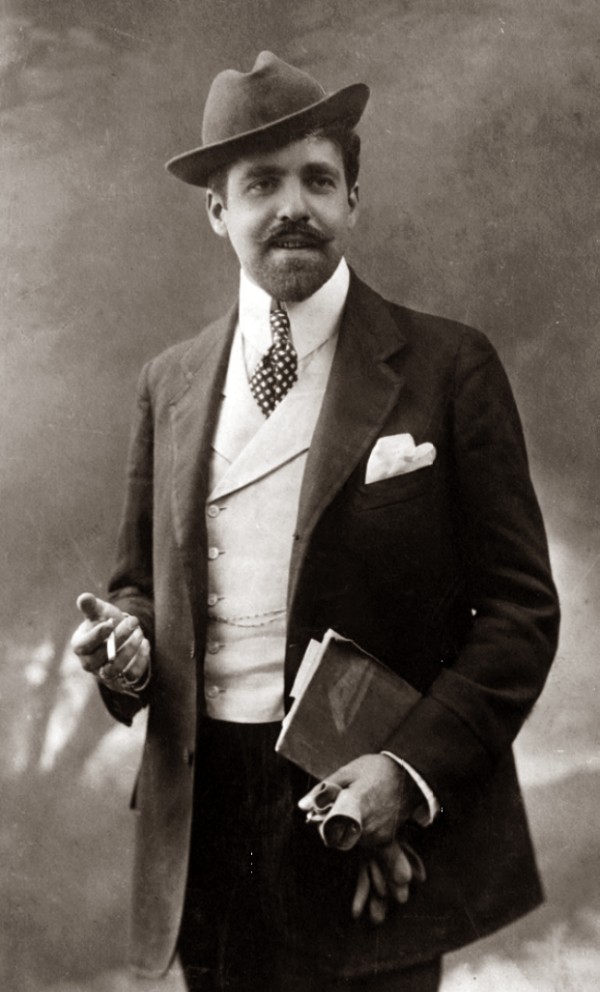
Reynaldo Hahn
Today, Reynaldo Hahn’s piano music remains something of a quiet discovery, yet it is increasingly valued by pianists and scholars for its refinement and expressive depth. Hahn’s keyboard works form a coherent and distinctive body of music that reveals a composer committed to melody, balance, and expressive subtlety.
The enduring appeal of Hahn’s piano music lies in its clarity of expression and poetic restraint. It does not seek to overwhelm or impress through virtuosity but invites close listening and thoughtful performance.
Each piece unfolds like a conversation, shaped by elegance, wit, and emotional honesty. For pianists, this repertoire offers a valuable opportunity to refine touch, phrasing, and tonal colour, qualities central to the French piano tradition.
In an era that often favours scale and spectacle, Hahn’s piano music offers a compelling alternative. Modest in dimensions yet rich in detail, simple in surface yet sophisticated in craft, these works remind us that musical depth need not announce itself loudly.
For more of the best in classical music, sign up for our E-Newsletter