Sometimes musical compositions aren’t the only creative works that composers leave behind.
Some wrote memoirs (or works such as letters or diaries that can be collected and read as memoirs).
These pieces of writing often provide fascinating insights into composers’ characters, personalities, and priorities.
Today we’re looking at four autobiographical documents by five composers, and exploring what music-lovers can expect to find in each of them.
Joseph Haydn (1732–1809)
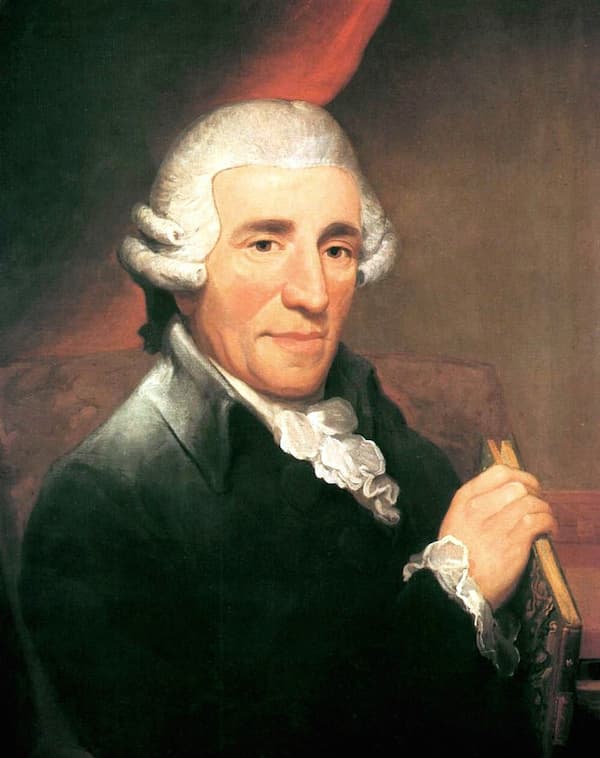
Thomas Hardy: Franz Joseph Haydn, ca. 1791 (London: Royal College of Music Museum of Instruments)
In the 1770s, lawyer and writer Ignaz de Lucca embarked on a multi-volume project titled Das gelehrte Oesterreich (or Learned Austria).
Learned Austria was a little like a modern-day Who’s Who, containing biographical sketches about various important Austrian personalities.
In 1776, Joseph Haydn, then 44 years old, provided Lucca with an autobiographical sketch, sending it to mutual friends to pass along.
Haydn’s first cello concerto
In the sketch, Haydn describes his childhood, his musical training, a list of his large works to date, and more.
I was born on the last day of March 1733 in the market town of Rohrau, Lower Austria, near Bruck-an-der-Leitha.
My late father was a wheelwright by trade, served Count Harrach, and was by instinct a great lover of music.
He played the harp without knowing a note of music, and as a boy of five, I correctly sang all his simple little pieces; this led my father to entrust me to the care of my relative, the schoolmaster in Hainburg, in order that I might learn the foundations of music as well as other youthful necessities.
Almighty God (to whom alone I owe the most profound gratitude) endowed me, especially in music, with such proficiency that even in my sixth year I was able to sing some masses with the choir, and to play a little on the harpsichord and violin.
In my seventh year, the late Kapellmeister von Reutter passed through Hainburg and quite accidentally heard my weak but pleasant voice.
He immediately took me to the Capellhaus where, apart from my studies, I learnt the art of singing, the harpsichord and the violin from very good masters.
Until my eighteenth year, I sang soprano with great success, not only at St Stephen’s but also at court.
Finally I lost my voice, and then had to eke out a wretched existence for eight whole years, by teaching young pupils (NB: many geniuses are ruined by having to earn their daily bread because they have no time to study): I experienced this, unfortunately, and would have never learnt what little I did had I not, in my zeal for composition, composed well into the night; I wrote diligently but not quite correctly until, finally, I had the good fortune to learn the true fundamentals of composition from the celebrated Herr Porpora (who was at that time in Vienna); eventually, by the recommendation of the late Herr von Fürnberg (from whom I received many marks of favour), I was engaged as Director at Herr Count von Morzin’s, and from there as Kapellmeister of His Highness the Prince, in whose service I wish to live and die.
This autobiography may be short, but it grants invaluable insight into Haydn’s self-deprecating sense of humour and the gracious (and grateful) attitude with which he approached his career.
Why Listen to Haydn? His Life and Music
Hector Berlioz (1803–1869)
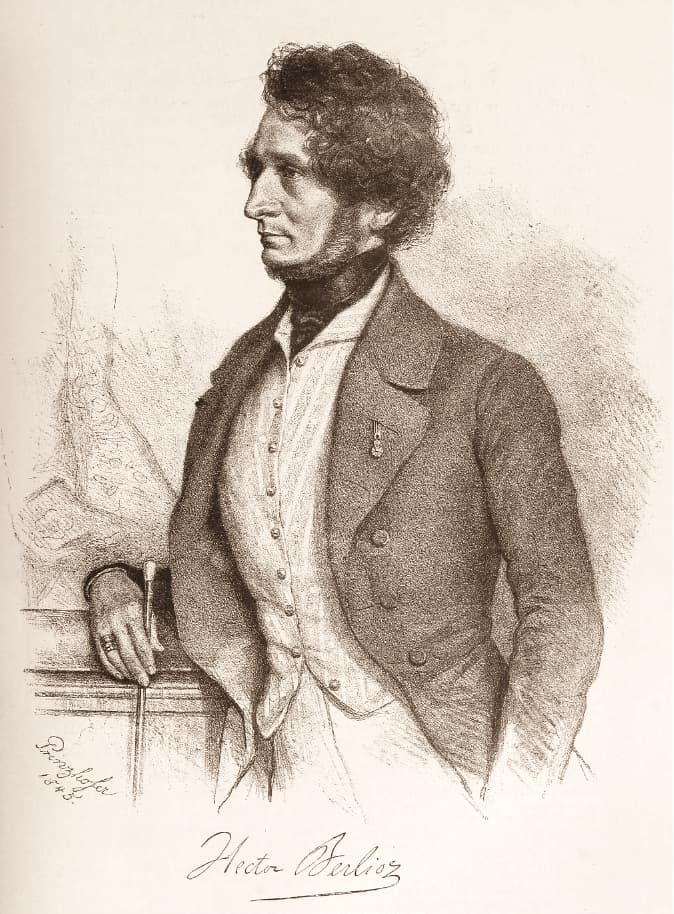
August Prinzhofer: Hector Berlioz, 1845
Hector Berlioz came of age at the beginning of the Romantic Era, a time when artists, authors, and musicians were preoccupied with ideas about synthesising the arts.
Several great composers of this generation, including Berlioz, Robert Schumann, and Franz Liszt, viewed themselves as thinkers and writers and critics, as well as musicians.
It was also an age of great individuality. Accordingly, these men were fascinated by the idea of crafting public personas. Berlioz actually devoted his entire first symphony, the Symphonie Fantastique, to portraying himself as a brilliant (albeit doomed) artist.
Berlioz’s Symphonie Fantastique
Always in search of new income streams, in the 1840s and 1850s, Berlioz serialised his memoirs in different journals.
The benefits were twofold: he got paid for writing about himself, and he got the chance to disseminate his own narrative about his life.
These shorter autobiographical pieces were published together as a single volume, Mémoires, in 1865. They were remarkably immediate and witty: a disarming mixture of self-deprecating and self-obsessed, as the opening paragraph illustrates.
I was born on the 11th of December 1803 at la Côte-Saint-André, a very small town in France in the department of Isère, between Vienne, Grenoble and Lyon. During the months preceding my birth, my mother, unlike Virgil’s, did not dream that she was about to give birth to a laurel branch. Painful as this admission may be for my self-esteem, I must add that she did not believe either, as did Olympias, Alexander’s mother, that she was bearing a firebrand in her womb. This is quite remarkable, I admit, but it is true. I came into this world in a perfectly ordinary manner, without any of the usual portents that were current in poetic times to proclaim the arrival of those predestined to glory. Could it be that our age is lacking in poetry?
The book goes on from there. Berlioz’s Memoirs is often cited as one of the best composer autobiographies ever written.
Robert Schumann (1810-1856) and Clara Schumann (1819-1896)
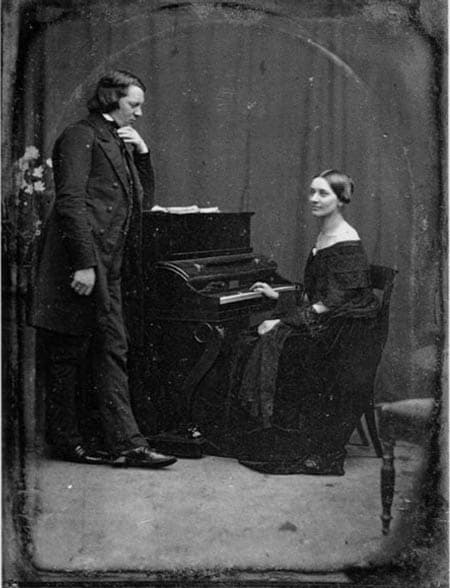
Clara and Robert Schumann
Neither Clara nor Robert Schumann wrote a traditional autobiography, but their letters and diaries provide a literary record of their lives, both individually and as a married couple.
After a long courtship (marred by the interference of Clara’s domineering and abusive father), Robert and Clara were married in September 1840, the day before Clara’s twenty-first birthday.
Robert Schumann’s Arabeske in C Major, Op. 18
The day after the wedding, they began a joint marriage diary, which begins in Robert’s hand:
My dearly beloved young wife,
First of all, let me kiss you most tenderly on this day, your first day as a wife, the first of your 22nd year.
This little book, which I inaugurate today, has a very intimate meaning; it shall be a diary about everything that touches us mutually in our household and marriage; our wishes, our hopes shall be recorded therein; it should also be a little book of requests that we direct toward one another whenever words are insufficient; also one of mediation and reconciliation whenever we have had a misunderstanding; in short, it shall be our good, true friend, to whom we entrust everything, to whom we open our hearts.
If you agree with that, dear wife, then promise me to hold strictly to the statutes of our secret marriage vows, as I hereby promise you.
The two would go on to continue the diary for several years.
Clara Schumann’s piano trio
Peter Ostwald writes in the foreword to a 1980s edition of the marriage diaries:
What makes the Schumann marriage diaries so moving and informative is that they show in graphic detail the essential, deeper, spiritual aspects of marriage – a couple’s mutual love, loyalty, and devotion – in juxtaposition to the often mundane, uninspiring, and irritating realities of cohabitation between two musicians who were equally determined to follow their individual destinies and pursue independent careers.
The tension and excitement of this marriage almost typifies the two-income family of today: two gifted, productive, and successful people struggling to maintain a household, achieve sexual happiness, raise children, and preserve their sanity in the face of unrelenting social, psychological, and, in this case, artistic demands.
So, although they weren’t memoirs strictly speaking, the marriage diaries provide insights to modern readers that would be similar to a hypothetical joint memoir.
Richard Wagner (1813–1883)
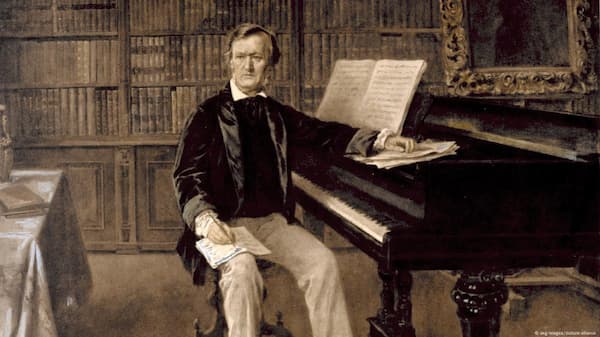
Richard Wagner at the piano
As you might expect from his massive operas, Richard Wagner’s autobiography is a veritable tome. It’s called Mein Leben (My Life) and is hundreds of pages long.
The seed of the project was planted in May 1865, when Wagner received a letter that read, in part, “You would cause me inexpressible happiness if you were to give me an account of your intellectual and spiritual development and of the external events of your life as well.”
This was no ordinary request. It came from the obsessive and extravagantly eccentric King Ludwig II of Bavaria, who was obsessed with Wagner’s work and Wagner personally.
Wagner’s overture to the opera Die Meistersinger, finished in 1867
Seeing dollar signs, Wagner was more than happy to oblige with the king’s request. He began dictating his life story to his mistress, Franz Liszt’s (already married) daughter, Cosima von Bülow, whom he would marry in 1870.
The book came out in pieces over a period of years. (Interestingly, Friedrich Nietzsche was one of the proofreaders.) The final portion wasn’t finished until 1880, just a few years before Wagner’s death.
Originally, the book wasn’t meant for a broad audience. Initially, Cosima encouraged Wagner to be frank, and he sanded down the rough edges of his love life and political beliefs. But over time, Cosima grew increasingly uncomfortable with his bluntness. The project kept growing in scope, and she felt that it didn’t always reflect well on her now-husband.
After Richard died in 1883, Cosima became the Wagner in charge of tending to his reputation: a role that she played for decades, given that she was twenty-four years his junior. She began purchasing copies of the memoirs and burning them.
In 1892, when an American collector got a hold of an early copy, it was so different from the more widely distributed versions that the collector suspected it was a forgery!
In My Life, Wagner portrays himself with a steely self-confidence (some might say a blinding narcissism). That can put some readers off.
However, it’s undeniable that the book also offers insight into the ambition and self-regard that fueled Wagner’s inexhaustible and revolutionary creative output.
For more of the best in classical music, sign up for our E-Newsletter