Musicians aren’t exactly famous for their marital fidelity. Many well-known composers have had children out of wedlock, and many others have been suspected of having children outside of wedlock.
Today, we’re looking at the secret love lives of four composers and revealing the evidence that the historical record has left us about their love children…or at least potential love children.
Joseph Haydn (1732-1809)
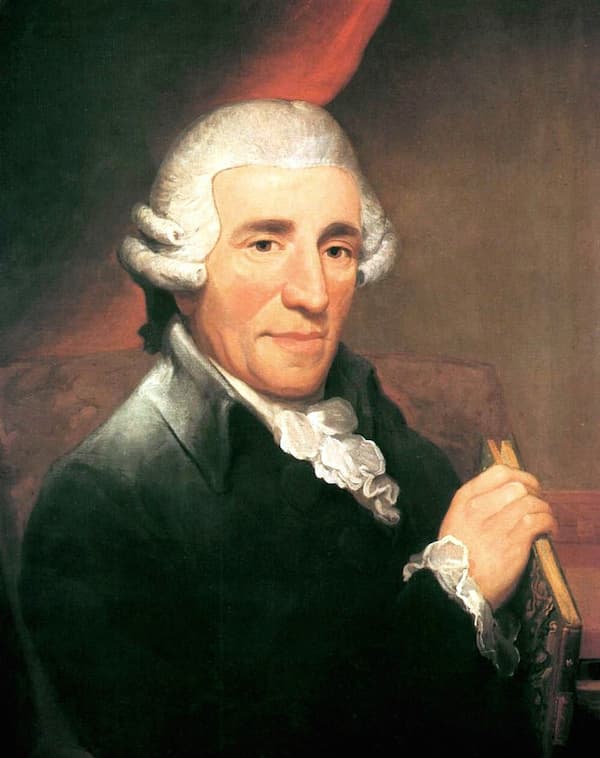
Thomas Hardy: Franz Joseph Haydn, ca. 1791 (London: Royal College of Music Museum of Instruments)
Joseph Haydn married his wife Maria Anna Aloysia Keller in Vienna in 1760. Unfortunately, they were ill-matched, and they quickly came to loathe each other.
In 1761, Haydn was hired by the aristocratic Esterházy family. When he moved to the family palace in rural Hungary, Haydn left his wife in Vienna.
Fast forward two decades to 1779, when an Italian violinist named Antonio Polzelli, Sr., and his singer wife Luigia also moved to the Esterházy palace.
Neither Polzelli was a particularly successful musician: Antonio, Sr. was chronically ill with tuberculosis, and Luigia was not a very talented vocalist.
The following year, Prince Nikolaus Esterházy contemplated firing the couple, but then it came out that Joseph Haydn and Luigia had become lovers. Esterházy liked Haydn, so he agreed to let the Polzellis stay.
Haydn and Luigia were together for ten years, and wanted to get married to each other after their respective spouses died.
In 1777, before their arrival at the Esterházy palace, the Polzellis had a son named Pietro. Later, in 1783, she had a second son whom she named Antonio, Jr. Despite his name, and although Haydn never officially recognised him as such, it is widely believed that baby Antonio was Haydn’s son.
Haydn cared deeply about both Pietro and Antonio and gave them extensive music lessons. He even became their official guardian after Antonio Sr. died.
In the 1790s, Haydn invited Pietro to live and study with him in his Vienna home, then found him a steady job as a piano teacher for aristocrats.
As for Antonio, Jr., he became a violinist, and Haydn hired him to play in the Esterházy orchestra.
Haydn died a few years later, in 1809. At the time of his death, Haydn was seventy-seven and Antonio was twenty-six.
Haydn: 1. Cellokonzert C-Dur ∙ hr-Sinfonieorchester ∙ Bruno Philippe ∙ Christoph Eschenbach
Ludwig van Beethoven (1770-1827)
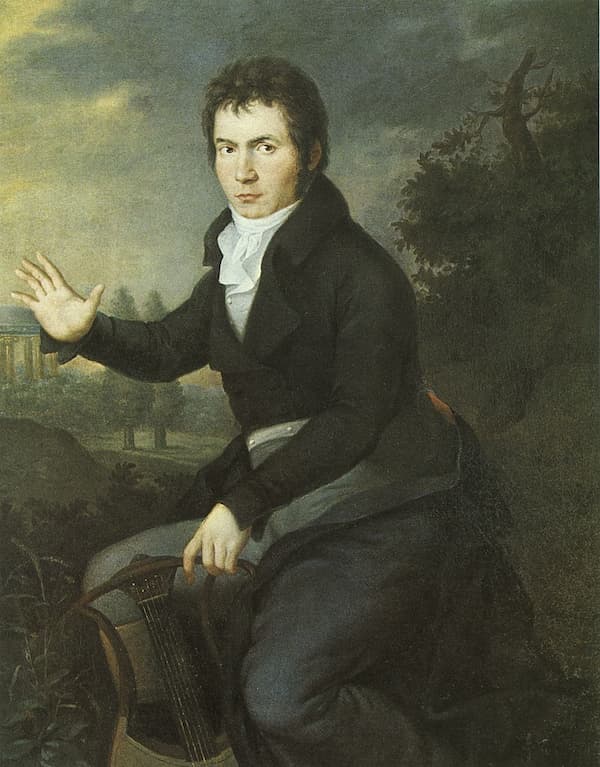
Joseph Willibrord Mähler: Ludwig van Beethoven, ca 1804–1805 (Vienna Museum)
In July 1812, Ludwig van Beethoven drafted a famous love letter to an unnamed recipient he addressed as his Immortal Beloved.
This love letter was only discovered among his papers after he died in 1827.
The letter set off a multi-generational search to ascertain the identity of the Immortal Beloved. Nowadays, many historians believe that the intended recipient was Josephine Brunsvik, a countess who had been a Beethoven piano student.
Josephine’s love life was truly tragic. Her first marriage in 1799, when she was twenty, was to a much older man named Joseph Count Deym. She had three children by him and was pregnant with a fourth when he died in 1804.
In 1808, she met her next husband, a caddish baron named Christoph von Stackelberg. The couple married in 1810, but the marriage was unhappy from the beginning, and Stackelberg left her in June 1812.
This matches up with the time frame of the writing of the letter to the Immortal Beloved. And interestingly, Josephine had plans to go to Prague in July of 1812…the same month that Beethoven wrote his famous letter in the town of Teplice, which was just ninety kilometers away from Prague.
And, most noteworthy of all, Josephine conceived a daughter in mid-July 1812, giving birth in April of the following year.
She named her daughter Maria Theresia Selma Arria Cornelia Minona von Stackelberg.
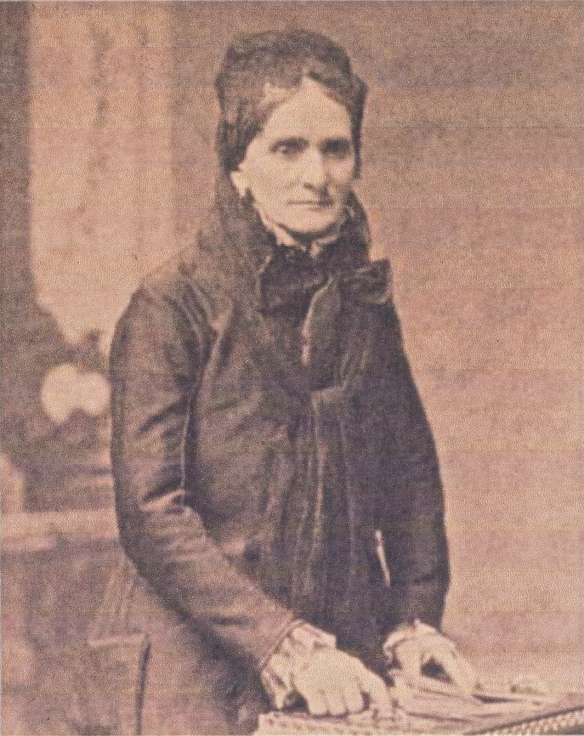
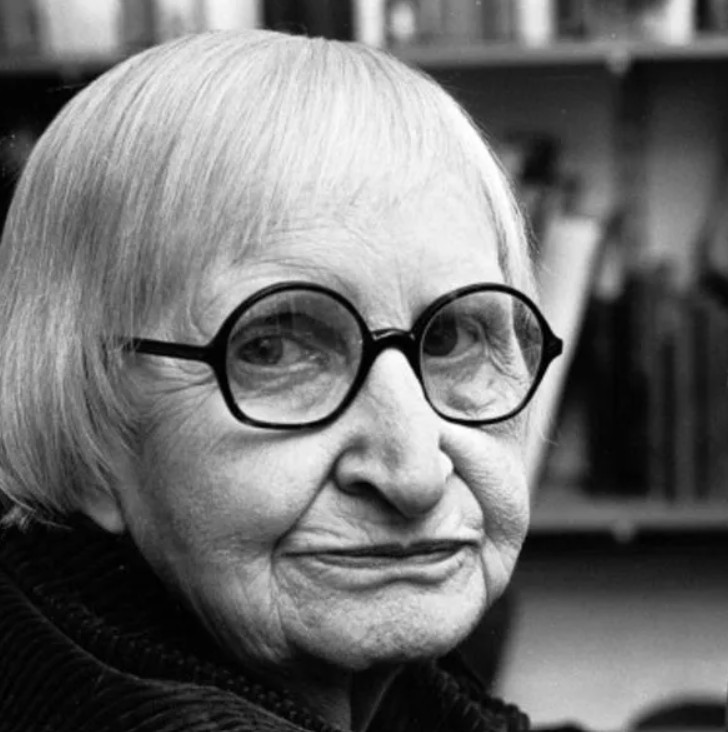
Minona von Stackelberg in her old age
Historians have noted that if you read the name Minona backward, it reads Anomim, or Anonymous. Does this suggest an anonymous father, and if so, could the father be Beethoven?
Josephine was so depressed after she gave birth to the child that she barely paid any attention to her. Stackelberg kidnapped Minona and her siblings, and she spent most of her childhood in Estonia.
Rumour has it she was musically talented, and a photograph seems to suggest a physical resemblance to Beethoven.
After Stackelberg’s death, Minona moved to Vienna to work as a lady’s companion. She died in 1897.
In 2020, we interviewed Estonian composer Jüri Reinvere, who wrote an opera about this intriguing story: Beethoven and Minona.
Beethoven: Sonata No.14 in C-sharp minor (Moonlight) – Boris Giltburg | Beethoven 32 project
Johann Strauss I (1804-1849)
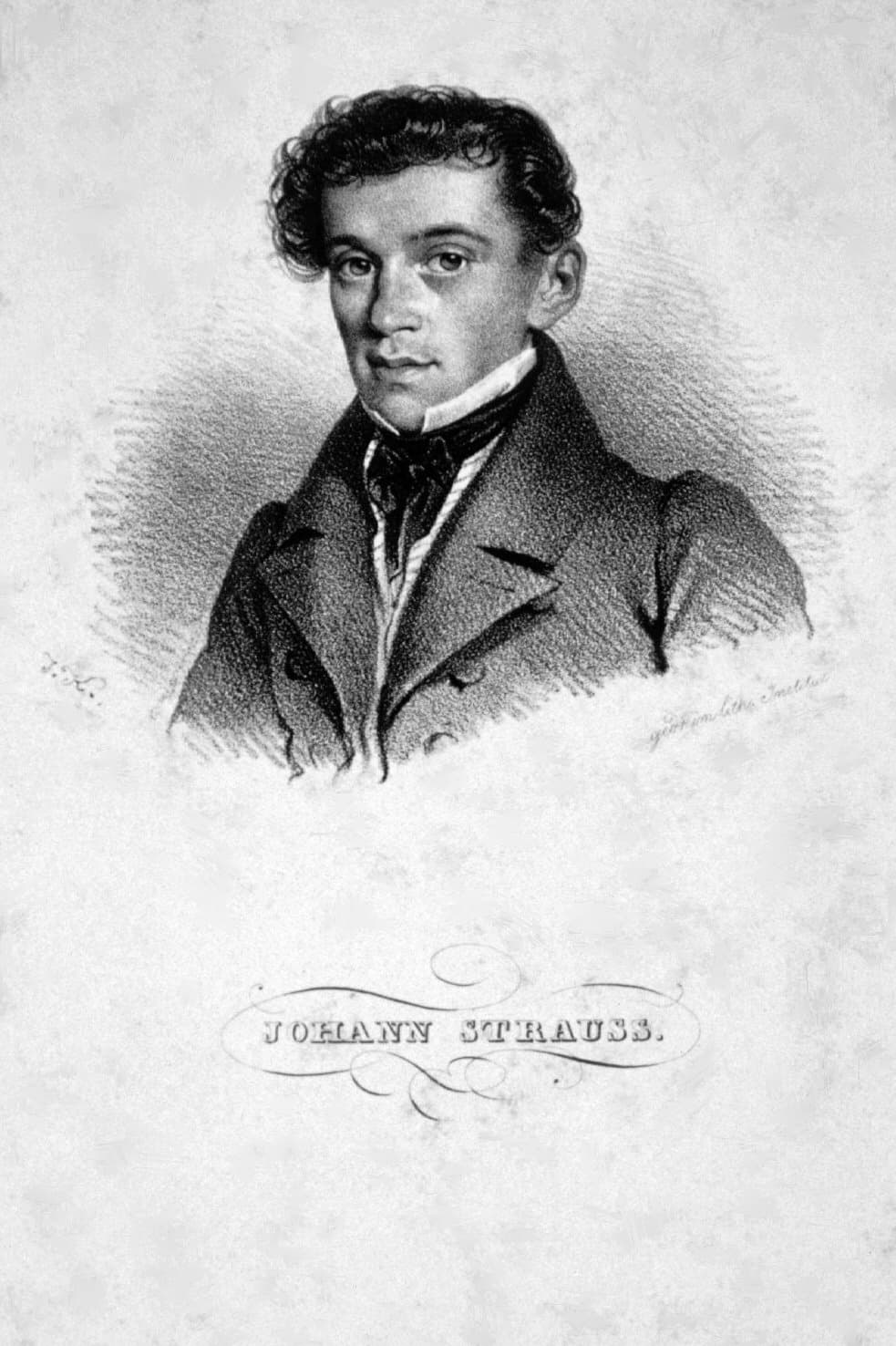
Johann Strauss I
Johann Strauss I was one of the great cads of classical music history.
As a young, ambitious violinist, he married a woman named Maria Anna Streim in early 1825. She was pregnant at their wedding with Johann Strauss II, the future Waltz King.
The couple had a number of talented children, including Johann, Josef (born in 1827), Anna (born in 1829), Therese (born in 1831), Ferdinand (born in 1834), and Eduard (born in 1835).
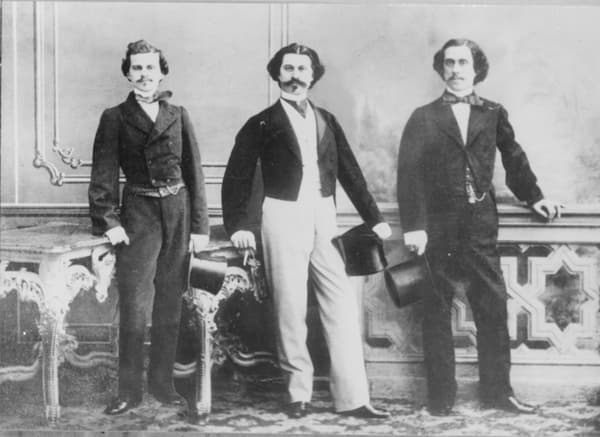
The Strauss brothers
Unfortunately, Strauss’s work was demanding, and he was unable to resist romantic temptation when it presented itself. In 1834, he took a mistress named Emilie Trampusch…and ultimately had eight illegitimate children with her.
It was one thing for a famous, wealthy, attractive husband to have a mistress in nineteenth-century Vienna. However, it was another thing when Strauss bought his second family a home near his first.
Tensions simmered for years. In 1844, Strauss acknowledged Emilie Trampusch’s daughter as his own. Maria Anna was humiliated and responded by suing for divorce.
Her ex-husband didn’t want his sons going into music, but unfortunately for him, his eldest son Johann Strauss II had inherited his talent.
Maria Anna then used her considerable cunning to help her son begin his career, and her other sons to support their brother. But that’s another story for another day.
Johann Strauss I – Radetzky-Marsch – Wiener Johann Strauss Orchester / Johannes Wildner
Robert Schumann (1810-1856)
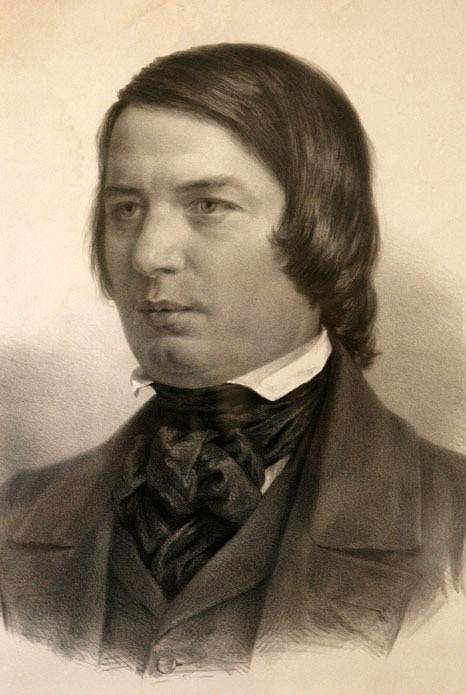
Portrait of Robert Schumann
At the beginning of his musical career, Robert Schumann moved in with Leipzig piano teacher Friedrich Wieck and his prodigy pianist daughter Clara Wieck, nine years Robert’s junior.
In 1831, when Friedrich and Clara left Leipzig to tour in Paris, Robert sowed his wild oats and began dating a woman who appears in his diary only as “Christel” or “Charitas.”
Historians aren’t sure who this woman was (they’ve theorised that she may have been a servant or even a fellow student of Wieck’s).
But whoever she was, Schumann kept detailed – very detailed – notes about their energetic sexual encounters, and the consequences of those encounters.
He returned to Charitas in 1836 before he began officially dating Clara Wieck, whom he would ultimately marry. Later in his life, he wrote about this period of time:
Troubled year 1836: Sought out Charitas and consequences thereof in January 1837.
His diary mentions Charitas again in October 1836 (“Visited Charitas in the evening”) and then, strikingly, in January 1837: “A little girl (on the 5th, I think).”
Charitas’s final appearance in Schumann’s diary occurs in December 1837, when he sends her a small Christmas present of two thalers.
Historians disagree on what these enigmatic notes mean: whether the “consequences” refer to some kind of disease or perhaps a pregnancy. The identity of Charitas has never been firmly established, so the matter of Robert Schumann’s potential illegitimate child may always remain a mystery.
For more of the best in classical music, sign up for our E-Newsletter