Today we’re looking at one of the most interesting and adaptable instruments in the brass family: the flugelhorn.
Flugelhorns have appeared in diverse settings for generations, from Stravinsky and Vaughan Williams to classic 1970s pop records.
Its warm and mellow tone makes it an intriguing relative to the trumpet, endearing it to musicians and listeners alike for two hundred years.
The question: Is the flugelhorn one of the most underrated brass instruments?
Let’s dig into its history, its best players, and what sets it apart from the rest of the brass family.
What is a flugelhorn, anyway?
Adagio from J. Rodrigo’s Concierto de Aranjuez, transcribed for flugelhorn
The flugelhorn is a brass instrument similar to a trumpet, but with a wider bore (i.e., interior chamber).
Like a trumpet, it has three valves to change the pitch and is most commonly pitched in B-flat.
The name translates as “wing horn” or “flank horn,” referring to its history as an instrument used on the hunt and, later, for signalling flank movements in military contexts.
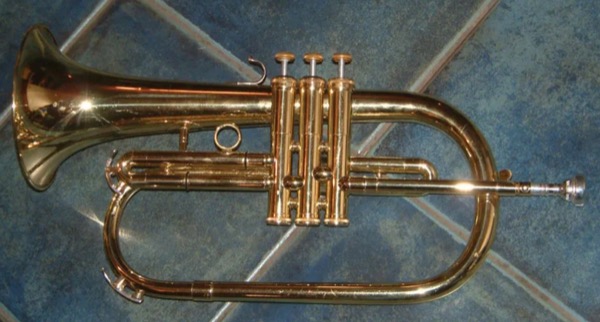
Flugelhorn
When was the flugelhorn invented?
To fully appreciate the flugelhorn, you have to understand what brass instruments were like in the early nineteenth century.
At the time, horns lacked valves, making them more difficult and unreliable to play, especially when changing keys or performing chromatic passages.
German horn player and innovator Heinrich Stölzel (1777–1844) invented and built the first valved horns around 1814.
Another German horn player, Friedrich Blühmel (born in 1777; death date unknown), invented the same advancement around the same time, independently of Stölzel.
Instead of bickering about who came up with the idea first, Stölzel and Blühmel ended up registering a joint patent for a two-valved horn in 1818.
It was during this era of technological breakthroughs that the valved flugelhorn – and other reliable, flexible, modern brass instruments – popped up in the early-to-mid 1800s.
What makes the flugelhorn different from a trumpet?
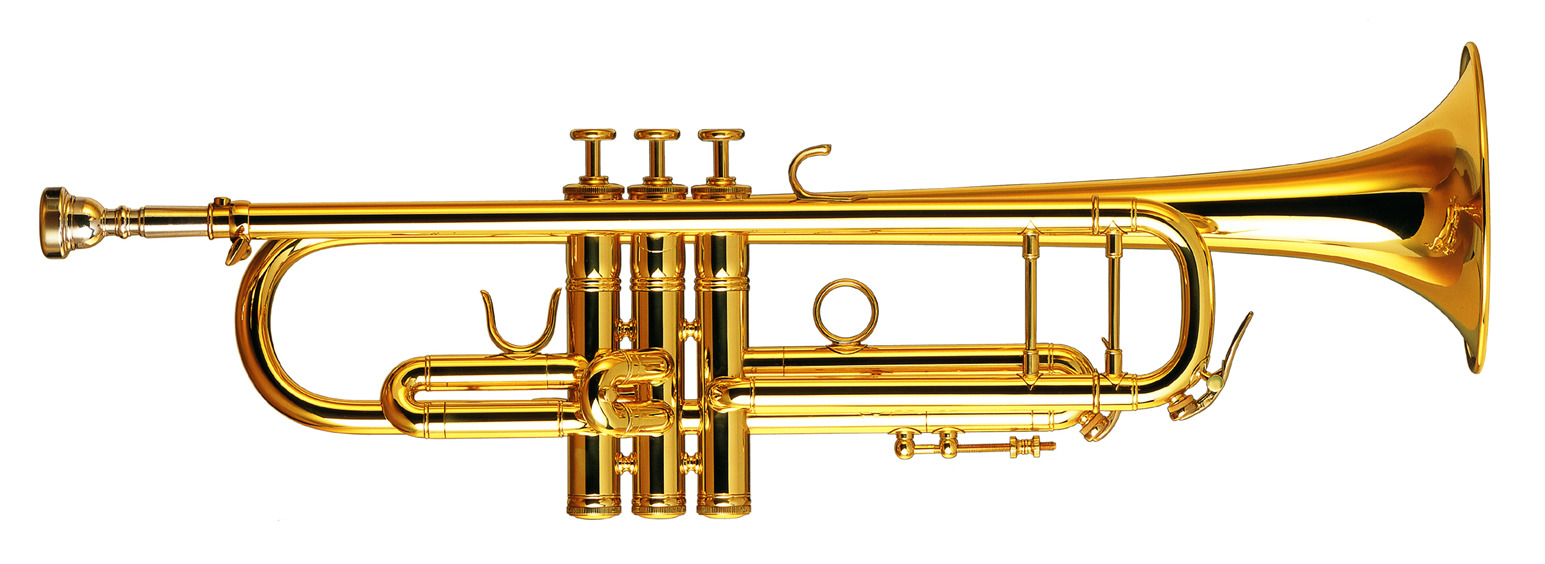
Modern trumpet
A flugelhorn has a wider bore. Because of that wider bore, flugelhorns boast darker, richer tones than a trumpet.
The sound it makes is somewhere between the arresting blast of a trumpet and the mellower nobility of a French horn. This unique timbre makes it welcome in a wide variety of genres, from classical to jazz to pop.
Flugelhorns are also harder to play and control in higher registers than trumpets are.
This video demonstrates the difference.
TRUMPET VS FLUGELHORN – Which is a Better Solo Instrument??? W.A.Mozart – Alleluia
When, where, and how are flugelhorns used?
Composers from the classical music world, attracted to the instrument’s warm and mellow tone, have written a variety of orchestral parts for the flugelhorn.
Here are some of the most famous examples:
– Igor Stravinsky used the flugelhorn in Threni, his 1958 setting of the Biblical book of Lamentations.
– Ralph Vaughan Williams used the flugelhorn in his ninth symphony, also premiered in 1958. This would be his final symphony, written in his mid-80s.
– Michael Tippett used the flugelhorn in his third symphony, written in the early 1970s.
Flugelhorns are also used in brass bands, drum and bugle corps, pop music, and jazz.
They are also the bedrock of the fanfare orchestra, a type of brass ensemble especially common in Brussels and the Netherlands that includes trumpets, trombones, euphoniums, horns, saxophones, and percussion. A single fanfare orchestra might field ten or twenty flugelhorns.
A performance by the fanfare orchestra Bereden Wapens
Who are some of the most famous flugelhorn players?
Joe Bishop (1907-1976) was the first musician to play the flugelhorn in a jazz context. He played professionally in the 1920s, 1930s, and 1940s in American jazz groups.
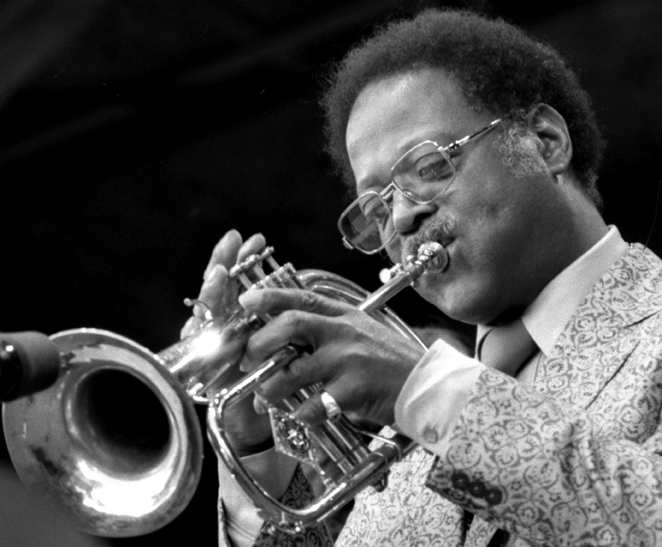
Clark Terry at Monterey Jazz Festival, 1981
Clark Terry (1920-2015) spent his early career in the legendary bands of Duke Ellington and Count Basie. In the early 1960s, he joined the Tonight Show Band, becoming the first regular Black member of a late-night television band. After a decade, he left the position and turned his focus to the flugelhorn.
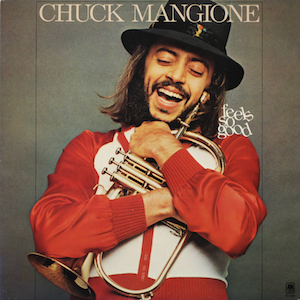
Chuck Mangione (1940–2025) was an American flugelhorn player, composer, and bandleader. His 1977 hit “Feels So Good” brought the flugelhorn into the mainstream pop spotlight.
Chuck Mangione’s “Feels So Good”
Conclusion
From its origins in hunting ensembles and military bands to its later prominence in classical, jazz, and pop, the flugelhorn has captivated audiences with its warm, mellow tone.
After two hundred years, the flugelhorn has earned its place in music – not as a novelty or a substitute for the trumpet or French horn, but as an underrated instrument with a voice entirely its own.
For more of the best in classical music, sign up for our E-Newsletter