
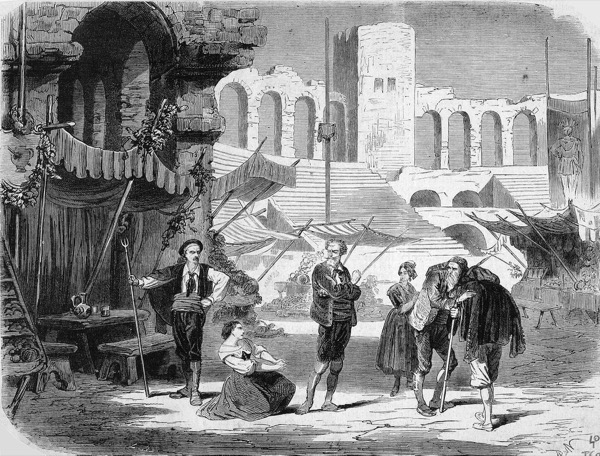
Charles Gounod, born on 17 June 1818, composed twelve operas, with Faust and Roméo et Juliette being his most popular. Between these blockbusters, we find Mireille, an 1864 opera in five acts to a libretto by Michel Carré after Frédéric
Gounod
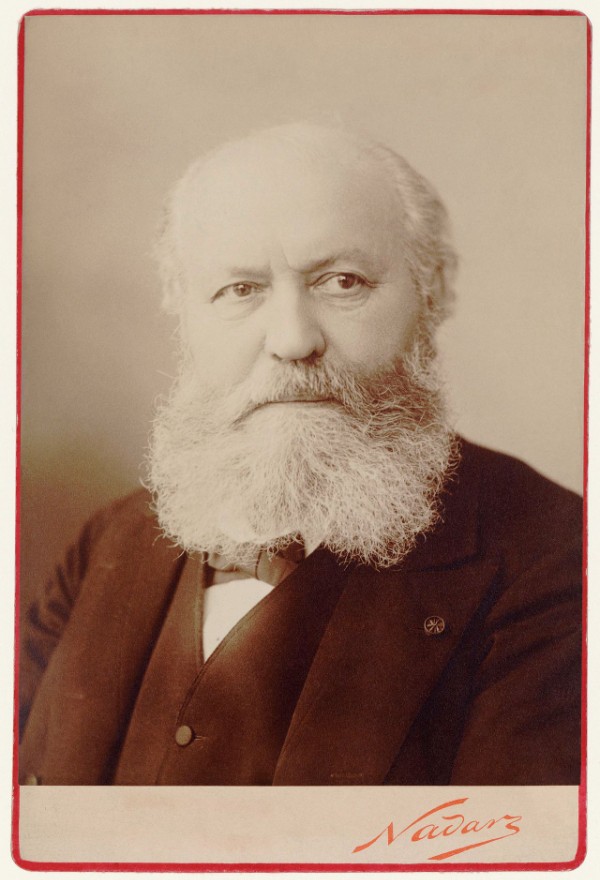
The prominent French composer Charles Gounod (1818–1893) is best known for his operas and his lyrical vocal works. However, his sacred choral music represents a significant yet often underappreciated facet of his oeuvre. Gounod’s choral works range from large-scale oratorios
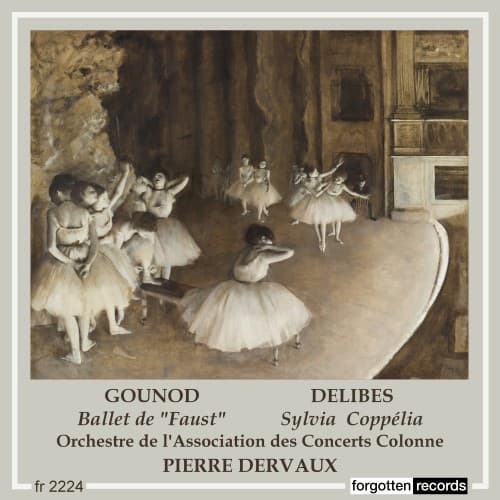
The story of Faust has captured composers’ imaginations for centuries. There was a historical figure, Johann Georg Faust (c. 1480–1540), who made the original deal with the devil at the crossroads when he exchanged his soul for unlimited knowledge and worldly
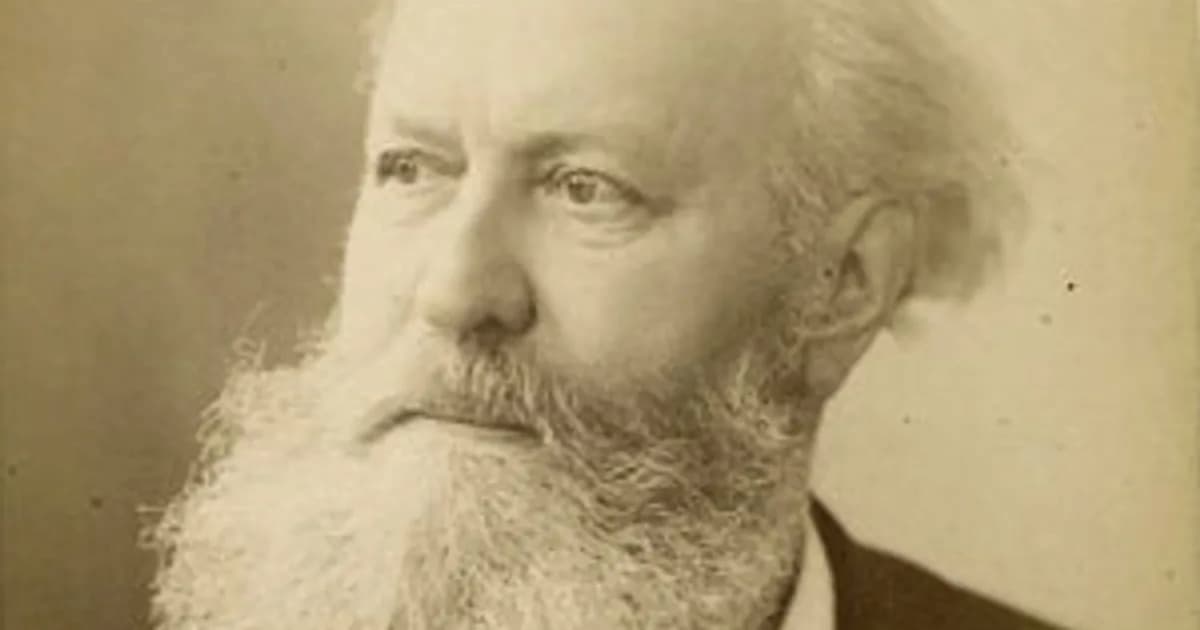
After winning the prestigious Prix de Rome, the young Charles Gounod (1818-1893) arrived in the Eternal City of Rome in 1840. After experiencing a spell of melancholy and homesickness, which he described “this kind of shroud in which I was
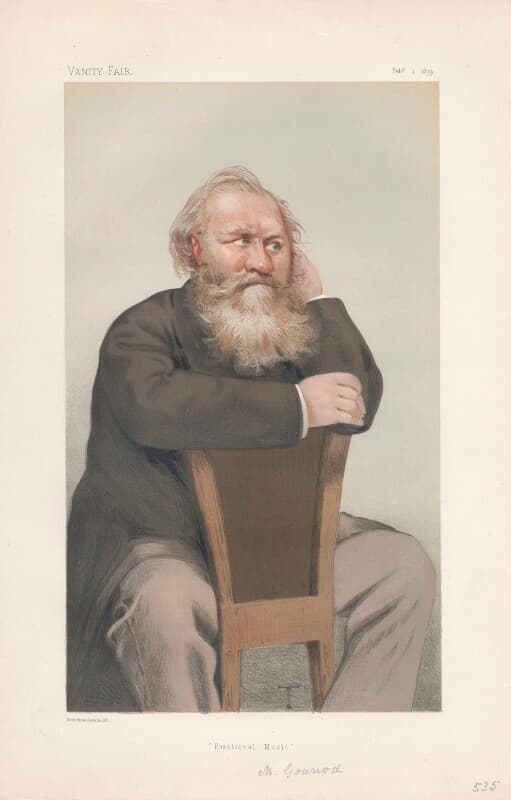
Charles Gounod kept working during the final year of his life. He suffered a variety of afflictions and ills but composed sacred music and penned his memoirs and essays. When he returned home from playing the organ for Mass at
Set in Bohemia in the 11th century, The Bloody Nun is full of feuding families, escaping lovers, accidental eloping by the hero with the ghost of the title, and the real bride’s father revealed as the ghost’s kills, in short,
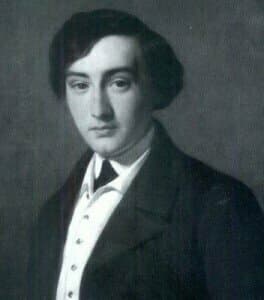
Charles Gounod, born on 17 June 1818 in Paris, is primarily remembered as the composer of the opera Faust and an Ave Maria descant to the first prelude of J.S. Bach’s C-major prelude from the WTC. Yet in his day,
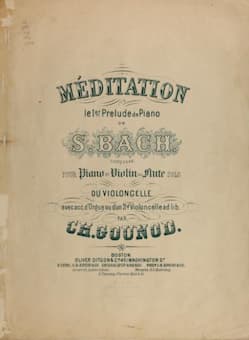
Charles Gounod took the first prelude of Bach’s Well-Tempered Klavier and started noodling around on it, and his piano teacher, Pierre Zimmerman, with whom he was studying at the Paris Conservatoire, took note of it. J.S. Bach: The Well-Tempered Clavier,