Gustav Mahler’s most famous love interest was his wife Alma.
However, he was in his early forties when they met, and he’d spent the previous twenty years embroiled in a series of passionate – but usually short-lived – affairs.
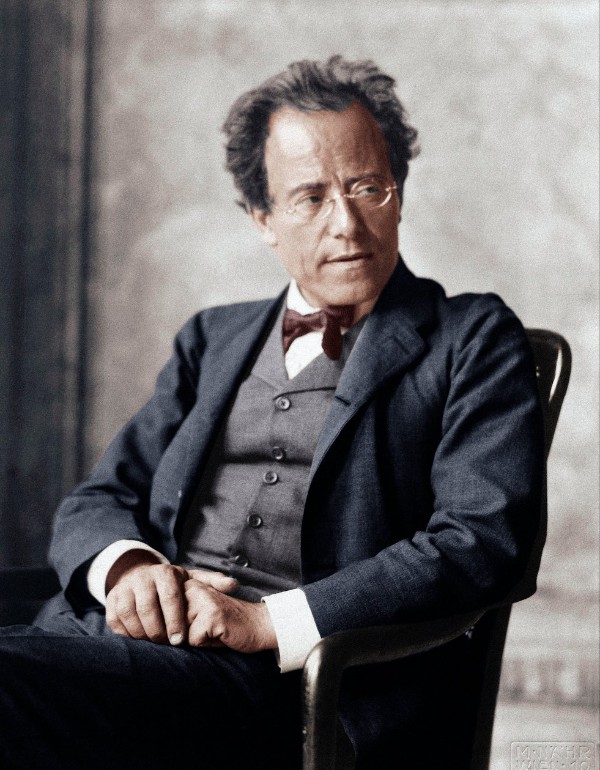
Gustav Mahler
Many of these women were accomplished musicians in their own right, and many inspired Mahler’s work.
Today, we’re taking a look at seven of them.
Josephine Poisl (1860-after 1880)
Mahler spent most of his boyhood in the town of Jihlava (Iglau in German) in the present-day Czech Republic.
In December 1879, at the age of nineteen, he finished his schooling in Vienna and returned home to Jihlava.
There he began teaching piano to Josephine and Anna Poisl, the two daughters of the postmaster or telegraph master (sources differ as to Herr Poisl’s exact job title).
Josephine was Mahler’s age, and soon Mahler fell in love with her.
“Im Lenz” from Mahler’s Lieder fur Tenor
In early 1880, he wrote three songs for her that became the Lieder fur Tenor, which are the first complete surviving works of Mahler’s that we have.
The first was dated February 19th, and included texts that he wrote himself. By March, he was writing a letter addressing her as “passionately beloved Josephine.”
Her father was alarmed and forbade Mahler from contacting their family again.
Eventually, Josephine married a man named Julius Wallner, who was twenty years her senior. We don’t know what happened to her afterwards.
Johanna Richter (1858-1943)
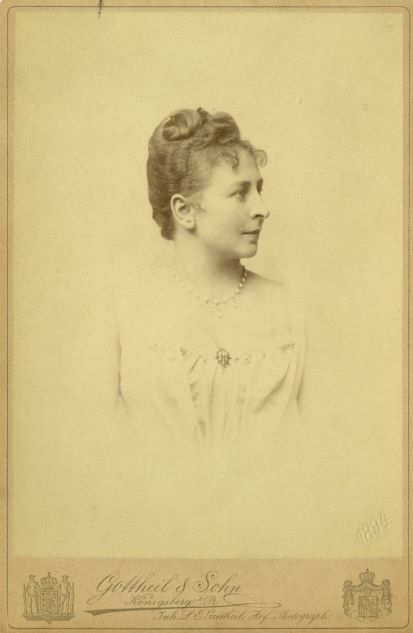
Johanna Richter © mugi.hfmt-hamburg.de
In August 1883, the 23-year-old Mahler began working at the opera in the town of Kassel in present-day Germany.
While there, he met 25-year-old Johanna Richter, a locally beloved coloratura soprano.
Mahler quickly fell in love with her, but unfortunately, it was a tumultuous relationship.
He tried to break it off, but after returning from summer break in 1884, he regretfully reported to a friend that he was “in thrall to the terrible old spell” again.
The two spent New Year’s Eve of 1885 together. He wrote a dramatic account of the holiday:
“I spent yesterday evening alone with her, both of us silently awaiting the arrival of the new year. Her thoughts did not linger over the present, and when the clock struck midnight, and tears gushed from her eyes, I felt terrible that I was not allowed to dry them. She went into the adjacent room and stood for a moment in silence at the window, and when she returned, silently weeping, a sense of inexpressible anguish had arisen between us like an everlasting partition wall, and there was nothing I could do but press her hand and leave. As I came outside, the bells were ringing, and the solemn chorale could be heard from the tower.”
The situation had turned untenable. Although she cared about him, he was more in love with her than she was with him. It appears they never consummated their relationship.
He soon submitted his resignation letter to the opera house in Kassel, explaining that his “heart [was] bleeding from many wounds.”
Marion von Weber-Schwabe (1856-1931)
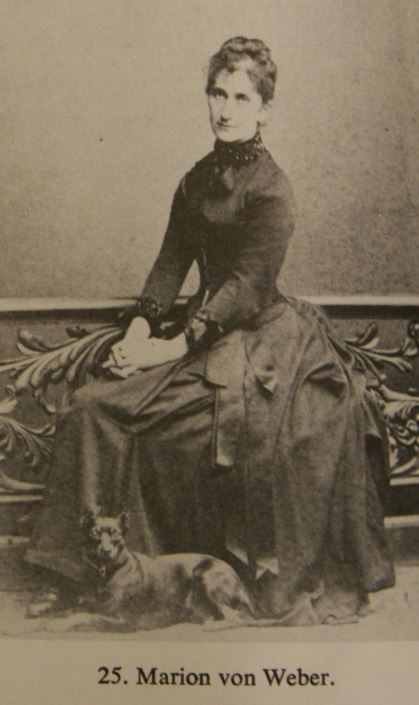
Marion von Weber
By the start of 1888, Mahler was working as a junior conductor at the Leipzig opera house.
While there, he met the grandson of composer Carl Maria von Weber. Inspired, he began completing Weber’s unfinished opera Die Drei Pintos.
Unfortunately for Mahler, he fell in love with the grandson’s wife, a beautiful woman named Marion von Weber-Schwabe, who was four years older than him and the mother of three children.
However, the fact that she had a family didn’t stop Mahler. He begged her to elope with him and to leave her children behind.
Legend goes that at one point he bought a pair of train tickets for them to flee town together, but word reached him at the station that she had chosen her husband over him.
It was during this time that he wrote his first symphony with its motifs of ambition, tragedy, and funeral marches. It was finished in March 1888. Weeks after the symphony’s completion, he finalised his departure from Leipzig.
Gustav Mahler: Symphony No. 1
Natalie Bauer-Lechner (1858-1921)
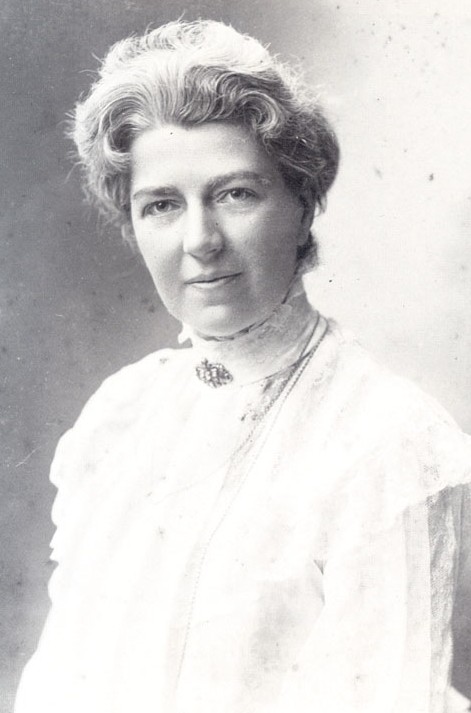
Natalie Bauer-Lechner
Mahler went in and out of Natalie Bauer-Lechner’s life for years.
They first met in the late 1870s in Vienna, when he was just a student, and she was a precocious conservatory graduate.
Eventually, she made her living as a professional musician, becoming the violist in one of the first all-women quartets in Europe.
Bauer-Lechner recognised Mahler’s genius long before others did. She began writing down things that he said about his work and creative process, a ritual that would come to annoy and flatter Mahler in equal measure.
She also fell in love with him. Maybe he fell in love with her, too.
Long story short, their feelings were complicated, and their on-and-off relationship continued for thirteen years. According to Bauer-Lechner, they slept together for the first time in the late summer of 1892.
Snippet from the docudrama “My Time Will Come” dramatising their relationship
She took notes and wrote about the conception of several of his symphonies, and was present at various important premieres (experiences that, of course, she meticulously recorded for posterity).
Despite her own international career, she helped to keep a peaceful environment for him during his summer vacations, and even nursed him after surgeries and during health crises.
According to her account, they slept together for the last time in the summer of 1901.
A few months later, back in Vienna, he and the 21-year-old Alma Schindler began a flirtation that became serious very quickly. They announced a surprise engagement by late December, and Alma got pregnant in February. Bauer-Lechner and Mahler’s on-and-off relationship was now permanently off.
She thought about publishing her memoirs after Mahler’s death, but many people in their social circle protested. A truncated version of those memoirs only came out after her own death in 1921.
In the early 2010s, a long letter written by Bauer-Lechner resurfaced. In it, she discusses all that Mahler had told her about his love life pre-Alma.
For many decades, Alma had controlled the narrative surrounding her husband’s life and work. Bauer-Lechner’s account rewrote – and arguably, rebalanced – Mahlerian history.
Anna Bahr von Mildenburg (1872-1947)
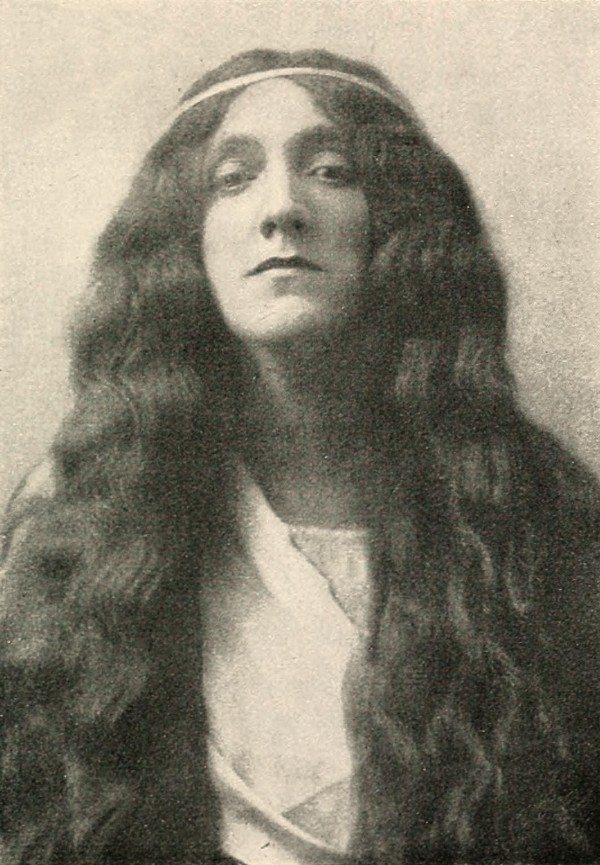
Anna Bahr von Mildenburg
When his affair with Bauer-Lechner was first heating up, Mahler was working at the Hamburg opera house. While there, he met an artistic soulmate in singer Anna Bahr-von Mildenburg.
Mildenburg was born in Vienna and was an electric performer. She made her Hamburg debut in 1895 as Brünnhilde, with Mahler on the podium.
Anna Bahr von Mildenburg singing “Ozean, du Ungeheuer” from Oberon by Carl Maria von Weber
When Mahler left Hamburg after winning the prestigious top job at the Vienna Opera, he asked Mildenburg to come with him. She arrived in Vienna in 1898 and became a star.
Bauer-Lechner claimed that Mildenburg said their romantic relationship had stayed platonic, but it’s still unclear whether either woman was telling the truth.
Mildenburg got married in 1909 and had a long and successful career.
Selma Kurz (1874-1933)
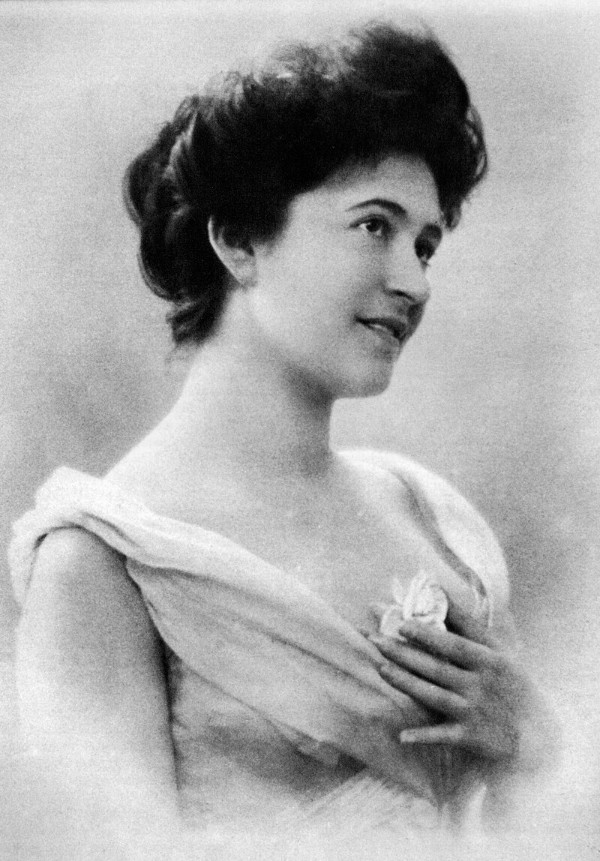
Selma Kurz
Selma Kurz was born in Biala in present-day Poland to a poor Jewish family.
As a girl, she was sent to a convent to be trained as a seamstress. However, her musical talent was so obvious that the staff at the convent connected her with voice teachers.
When Mahler heard her perform in Frankfurt in 1898, he urged her to audition for him; he believed she could have a great career in Vienna.
He was correct, and she made her Viennese debut in September 1899. She became famous for her effortless extended trills.
Selma Kurz singing “Caro Nome” from Rigoletto by Verdi
Mahler fell in love with her, and they had a brief dalliance in early 1900.
Unfortunately for them, it was forbidden for Opera employees to marry one another, and neither one was willing to give up their careers. Eventually, they split.
In 1910, she married a gynaecologist and professor at Vienna University. She had two children with him, a girl and a boy.
Her daughter Dési Halban grew up to be a singer, and years later made a recording of Mahler’s Fourth Symphony, which had been composed between 1899 and 1900, around the time of her mother and Mahler’s relationship.
Kurz was diagnosed with cancer in 1929 and died in 1933.
Dési Halban singing in Mahler’s Symphony No. 4
Alma Schindler Mahler (1879-1964)
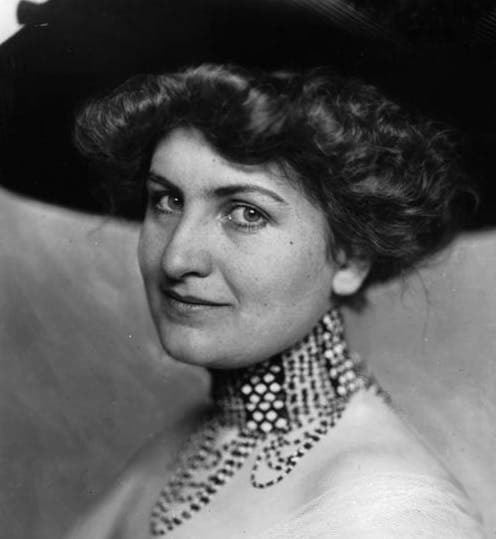
Alma Mahler
This brings us to Alma Mahler, who, for context, was born the same year that Mahler fell in love with Josephine Poisl.
We’ve already written extensively about Alma Mahler. Read and learn about the immortal mythology of Alma Mahler, how she helped inspire the tenth symphony, and why a life-sized doll of her was commissioned after Mahler’s death.
Gustav Mahler’s fascinating love life was deeply felt and influenced his art in profound ways that we’re still learning about today.
The next time you hear a piece by Mahler, remember the extraordinarily accomplished women who not only inspired him but also worked alongside him.
For more of the best in classical music, sign up for our E-Newsletter