Franz Liszt, arguably the greatest pianist who ever lived, wasn’t keen on giving formal music lessons. He preferred to work with pianists one-on-one in mentor relationships instead.
One of the rare exceptions was Polish pianist Karl Tausig, an outrageously talented teenager who lived in Liszt’s home, took formal lessons from him…and stole the manuscript to Liszt’s Faust Symphony. Despite his tendency toward petty crime, he was also one of Liszt’s favourite pupils.
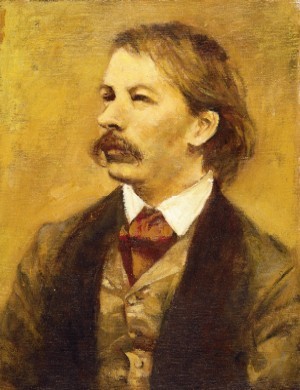
Karl Tausig
However, he died young and suddenly. Despite his close relationships with figures like Liszt, Brahms, and Wagner, as well as his revolutionary piano music, he isn’t remembered very often today.
Today, we’re looking at the life and music of forgotten pianist Karl Tausig.
Karl Tausig’s Background
Karl Tausig was born in Warsaw on 4 November 1841.
His father, Aloys, was a 21-year-old pianist and composer who had an impressive musical pedigree of his own: he’d studied under Liszt’s rival Sigismond Thalberg.
Aloys made a respectable musical career for himself in Poland, but his greatest professional achievement would be training his son Karl.
Karl Tausig Meets Liszt
In July 1856, when Karl was thirteen, Aloys arranged for his son to meet Franz Liszt. At that point, he’d had no other teacher besides Aloys.
Liszt, a former child prodigy himself, didn’t like promoting young pianists, believing they were too often taken advantage of. He told Aloys he wasn’t interested in hearing from his son.
However, Karl ignored Liszt’s dismissal and sat down at the piano to play Chopin’s Heroic Polonaise.
Seong-Jin Cho Plays Chopin’s Polonaise in A flat major Op. 53
Liszt was immediately impressed. The teenager sounded strikingly similar to Chopin, who had been a friend of Liszt’s before his death in 1849.
Both Aloys and Karl asked Liszt to consider giving him lessons. Liszt was initially reluctant about the idea, but eventually offered to teach Karl and have him move into his home.
Living and Traveling With Liszt
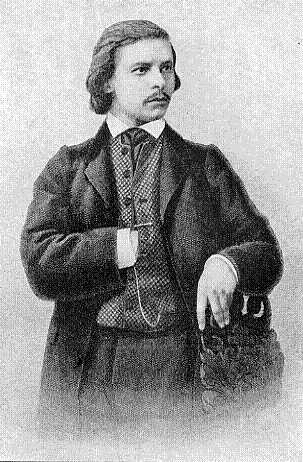
Karl Tausig
Liszt began giving Karl lessons in composition as well as piano playing. He even invited him on his concert tours.
Unfortunately, there were times when Karl took Liszt’s kindness for granted.
Composer Alexander Wilhelm Gottschalg reported that during his time with Liszt, Karl committed some petty crimes that Liszt discreetly swept under the rug.
Gottschalg also claimed that Karl once sold a manuscript of Liszt’s Faust Symphony, which Gottschalg had to track down and return to the composer.
Liszt: A Faust Symphony
Meeting Wagner
When Karl was sixteen, he was introduced to Richard Wagner and quickly became a Wagner acolyte.
The admiration was mutual. Wagner wrote of Karl:
…as a musician, he is enormously talented, and his furious piano playing makes me tremble… Of course, the youth pleases me immensely in other ways, and although he acts like a naughty boy, he talks like an old man with a pronounced character.
Not surprisingly, during the mid-century War of the Romantics, Karl joined the wild, rebellious revolutionary forces, siding with figures like Liszt, Berlioz, and Wagner.
His compositions from this period include “The Ghost Ship”, based on a poem by Moritz von Strachwitz, which chronicles the battle between a ship full of humans and a ship full of ghost Vikings.
Carl Tausig: The Ghost Ship
There is a striking similarity here to Liszt’s Mephisto Waltz No. 1. When the manuscript was published in 1862, Liszt dedicated his Mephisto Waltz to his prize pupil.
Liszt: Mephisto Waltz No. 1, S. 514
Beginning His Career in Berlin
Tausig made his debut in Berlin in 1858 under the baton of Hans von Bülow.
Reviews were mixed. Critics praised his effortless technique, but also questioned whether his playing was too showy or eccentric.
In 1859 and 1860, Tausig toured through Germany. In 1862, when he was twenty-one, he moved to Vienna.
He began presenting concerts of his own music, but again, critical response was mixed.
Karl Tausig: Nocturne varié, Op. 3
Befriending Brahms
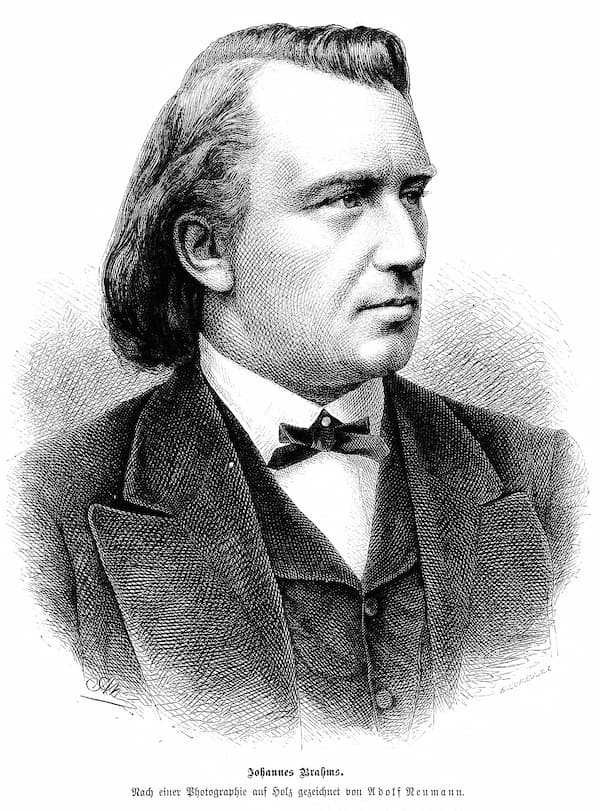
Johannes Brahms, 1880
While in Vienna, Tausig befriended Johannes Brahms.
Although Brahms was the head of the anti-Wagnerian forces in the War of the Romantics, the two young men still became friends.
They especially enjoyed talking about Wagner. At one of their meetings, after he found out that Brahms enjoyed collecting manuscripts, Tausig gave him a manuscript of Wagner’s opera Tannhäuser.
Richard Wagner: Tannhäuser
However, apparently Wagner had never intended for Tausig to keep that manuscript, let alone give it away to their rival Johannes Brahms.
(Interestingly, negotiating ownership of the manuscript would be the last contact Brahms and Wagner would ever have.)
A Brief Mysterious Marriage and Move to Berlin

Stephanie & Seraphine Vrabély
In the spring of 1864, Tausig met a woman named Seraphine von Vrabély. Seraphine and her sister Stephanie were both professional pianists. The couple married in November 1864, with Brahms serving as witness.
In 1866, Tausig was offered a job in Berlin as a chamber virtuoso by Prussian King Wilhelm I. Karl and Seraphine moved to Berlin, and his public performances were received rapturously.
Around this time, Karl and Seraphine split. However, they never divorced, and Seraphine continued to use the last name Tausig or Vrabély-Tausig. We don’t know what caused their separation.
Founding the School of Advanced Piano Playing
In 1866, while he was in Berlin, Tausig founded a piano school he called the “Schule des Höheren Klavierspiels”, or “School of Advanced Piano Playing.”
Carl Tausig: Reverie Op. 5
He taught a number of students there. Among the most famous was American author Amy Fay, who wrote about him in her book Music-Study in Germany, which inspired many American women to travel to Europe to study.
When she first arrived in late 1869, Fay described how she auditioned and was accepted to the school, but initially had to study under Tausig’s partner, Louis Ehlert, because Tausig was on tour.
When Fay finally did get to meet and work with Tausig, she described him like this:
Tausig has a charming face, full of expression and very sensitive. He is extremely sharp-sighted and has eyes in the back of his head, I believe. He is far too small and too despotic to be fascinating, however, though he has a sort of captivating way with him when he is in a good humour.
A Demanding Teacher Struggles at the School
However, Tausig’s frequent absences, combined with his temperament, grated on students.
In August 1870, Fay wrote:
Until yesterday, I had had no holiday, for I got into Tausig’s class finally, so I had to practice very hard.
He was as amiable to me as he ever can be to anybody, but he is the most trying and exasperating master you can possibly imagine.
It is his principle to rough you and snub you as much as he can, even when there is no occasion for it, and you can think yourself fortunate if he does not hold you up to the ridicule of the whole class…
You can imagine what an ordeal my first lesson was to me. I brought him a long and difficult Scherzo by Chopin that I had practised carefully for a month and knew well.
Fancy how easy it was for me to play, when he stood over me and kept calling out all through it in German, “Terrible! Shocking! Dreadful! O Gott! O Gott!”
I was really playing it well, too, and I kept on in spite of him, but my nerves were all rasped and excited to the highest point, and when I got through and he gave me my music, and said, “Not at all bad” (very complimentary for him), I rushed out of the room and burst out crying.
He followed me immediately and coolly said, “What are you crying for, child? Your playing was not at all bad.” I told him that it was “impossible for me to help it when he talked in such a way,” but he did not seem to be aware that he had said anything.
Shutting Down the Music School
Tausig’s heart wasn’t in teaching, and he shut down his conservatory in October 1870 (to a blindsided Fay’s annoyance).
Fay’s final judgment on Tausig’s character was:
The fact is, he is a capricious genius, entirely spoiled and unregulated, and the conservatory is a mere plaything to him. He amused himself with it for a while, and now he is tired of it, and doesn’t like to be bound down to it, and so he throws it up. Money is no consideration to him.
Carl Tausig: Ungarische Zigeunerweisen
Tausig’s Death
During the 1870-1871 season, after closing his school, he concertized across Europe. The traveling impacted his health. He became deeply depressed. Soon his travels turned aimless, with no animating professional goals to motivate him.
In June 1871, aristocratic musical benefactress and former Chopin student Maria Kalergis began taking care of an increasingly sick Tausig. He died of typhoid in Leipzig on 17 July 1871. He was only twenty-nine years old.
Fay – and the musical world generally – was shocked. She processed by writing to her family her thoughts on her death and his legacy:
He was a strange little soul – a perfect misanthrope. Nobody knew him intimately. He lived all the last part of his life in the strictest retirement, a prey to deep melancholy.
He was taken ill at Leipzig, whither he had gone to meet Liszt. Until the ninth day, they had hopes of his recovery, but in the night, he had a relapse and died the tenth day, very easily at the last.
His remains were brought to Berlin, and he was buried here. Everything was done to save him, and he had the most celebrated physicians, but it was useless…
I never expected to hear such piano-playing again. It was as impossible for him to strike one false note as it is for other people to strike right ones. He was absolutely infallible.
Tausig’s Insane Piano Piece Explained
For more of the best in classical music, sign up for our E-Newsletter