The Polish-Canadian pianist Jan Lisiecki, born on 23 March 1995 in Calgary, Canada, has built an international career since his early teens. Primarily recording for Deutsche Grammophon, he has shown an affinity with Chopin’s music from childhood.
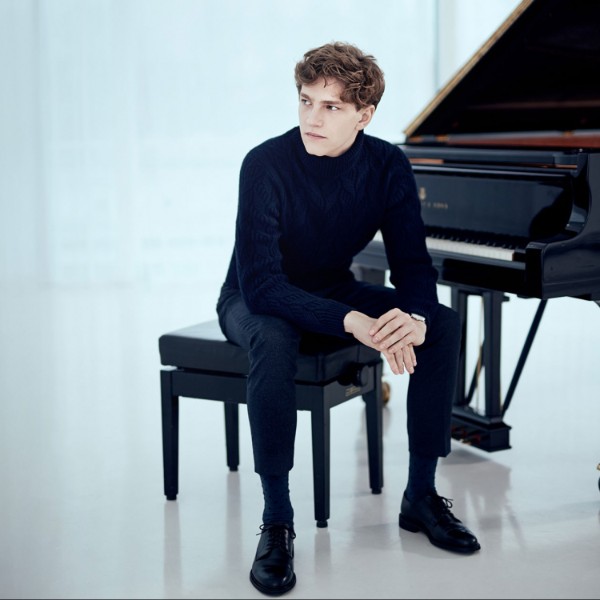
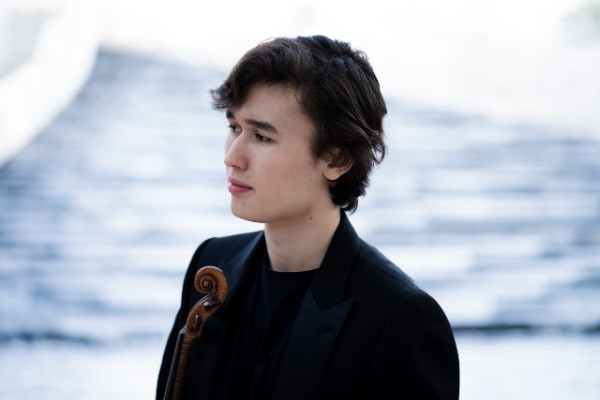
Jan Lisiecki © Christoph Köstlin
Feeling intimately connected with Chopin, he “somehow had a feeling of how I wanted to play Chopin and what I wanted to say. Somehow it was different with Bach, Mozart or Beethoven.” (Lisiecki, On Chopin, 2021)
His Chopin solo recordings, including the Études Op. 10 and 25 in 2013, and the complete Nocturnes in 2021. More recently, he has added a Preludes album. Critics have highlighted his introspective style that values musical subtlety over virtuosity or drama.
Lisiecki describes his Chopin interpretations as “Not too bombastic, not too virtuosic, not too audacious.” (J.S. Marcus, Piano’s Doogie Howser, NYT 2021) On the occasion of his birthday on 23 March, let us compare his uniquely personal style with that of legends such as Arthur Rubinstein, Maurizio Pollini, and Martha Argerich.
Jan Lisiecki plays Chopin: Nocturne in E minor, Op. posth.
Lyrical Understatement
Lisiecki often questions performance traditions by returning to the score. As such, he avoids clichés often associated with well-known Chopin pieces. He manages to convey a wide range of emotions, delving into the poetic essence of Chopin’s music.
Critics suggest that “His crystalline tone and elegance of phrasing make him an ideal interpreter of Chopin.” (Hall, Bachtrack, 2019) Lisiecki treats the Chopin Études as tone poems that emphasise fluidity over athletic brilliance.
Lisiecki plays with a light and fluid touch, akin to descriptions of Chopin’s playing reported by his contemporaries. Classics Today finds “measured tempos, lyrical understatement, and overall sensitivity, not to mention his penchant for coaxing out both real and implied inner voices.” (Distler, Classics Today)
As you can tell, not all assessments are enthusiastic, as he has been described as sensitive to a fault. His poetic and unobtrusive approach, like elongating upbeats, is sometimes considered underwhelming and bland. In any event, Lisiecki’s Chopin is certainly comforting and reassuring.
Jan Lisiecki plays Chopin: Étude No.4 in C-sharp Minor, Op. 10
The Gold Standard
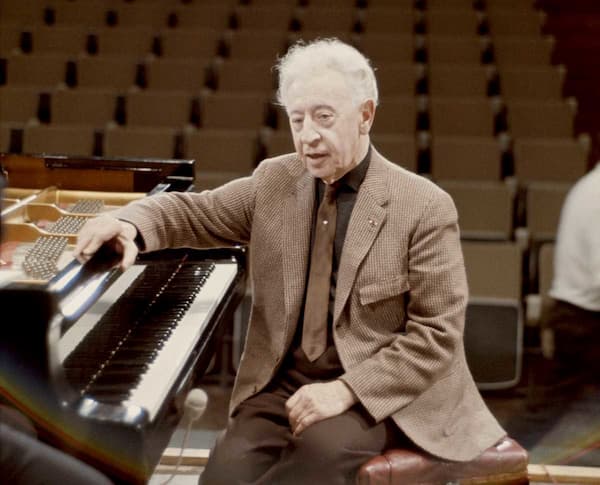
Arthur Rubinstein
Arthur Rubinstein was one of the greatest Chopin interpreters of the 20th century. For many commentators and critics, he was the definitive Chopin pianist of his era. His performances and recordings exude a sense of aristocratic poise that combines elegance and refined passion. One can only marvel at his wonderful rubato that made the music feel spontaneous and alive.
Rubinstein’s beautiful tone and subtlety of phrasing were seen as benchmarks, with the music achieving a balance between intimacy and dramatic sweep. Full of devotion but without mannerism, Rubinstein’s Chopin is public in its communication but still deeply personal.
Rubinstein’s Chopin, often described as effortless and spontaneous, contrasts with Lisiecki’s more measured and youthful approach. The real difference probably lies in the differing temperaments in approaching the composition and in the playing style. Rubinstein’s consistency provides lyrical intensity and elegance, while Lisiecki offers hypnotic consolation and emotional simplicity.
Arthur Rubinstein plays Chopin: Polonaise in A-flat Major, Op. 53
Precision and Power
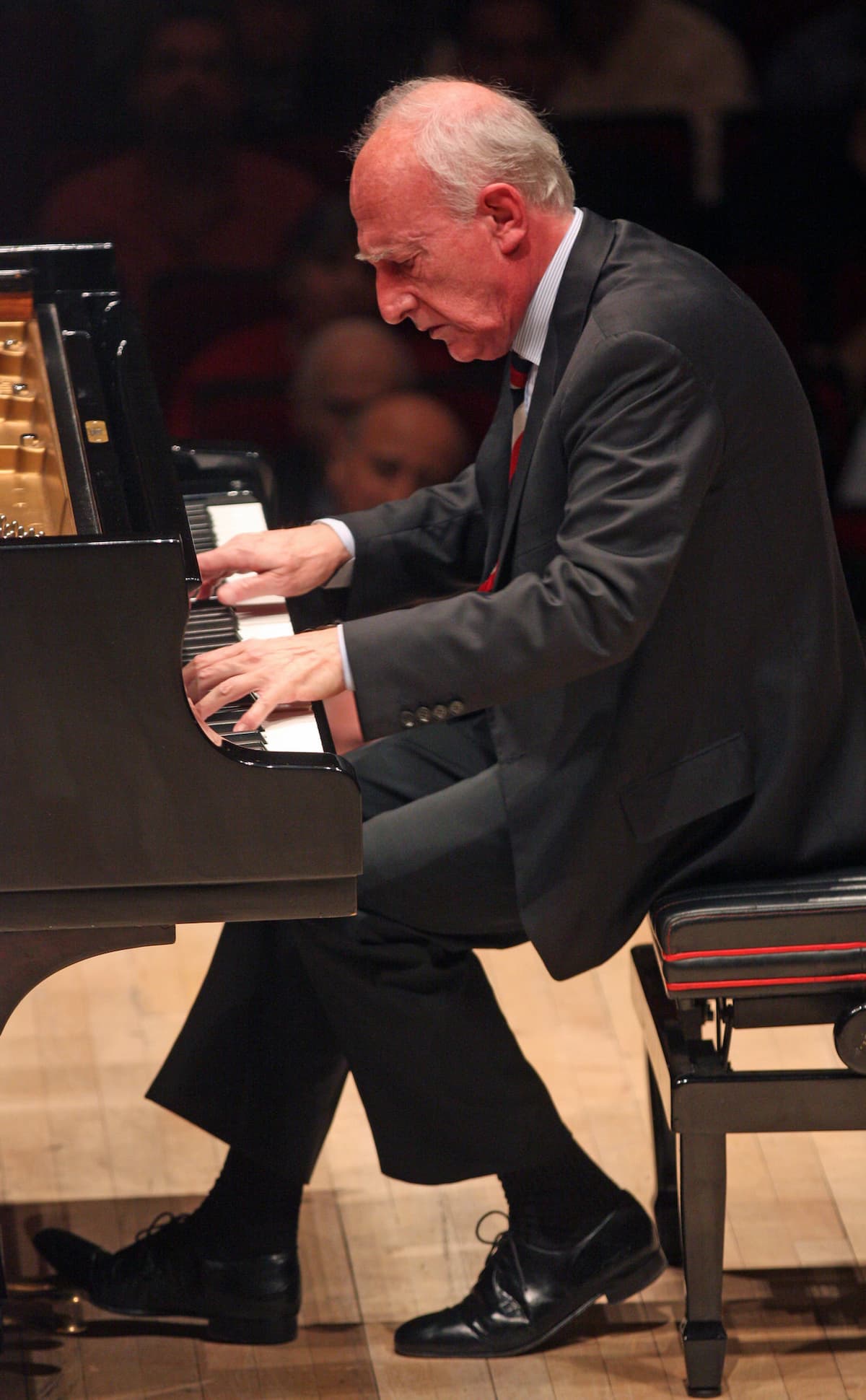
Maurizio Pollini
Maurizio Pollini won the 1960 International Chopin Piano Competition at the age of 18. The youngest of the 89 entrants, he impressed judges including Nadia Boulanger and chairman
Arthur Rubinstein, who declared that the boy played better than any of us jurors.
For Pollini, Rubinstein was always an ideal, as he learned by listening to simple advice on technical issues. Pollini acknowledged that winning the Chopin competition should have been a path to play concert after concert. Yet, he wasn’t willing to become a Chopin specialist, but the idea of Pollini as a recluse has always been overstated.
Pollini’s Chopin recordings are often informed by intellectual precision and crisp articulation. His 1972 recording of the Études are often described as a mix of athleticism and expression. To be sure, Pollini’s versions offer great volatility and drive, while Lisiecki’s interpretations are more tender and introspective.
Maurizio Pollini plays Chopin: 24 Preludes, Op. 28
Fire and Volatility
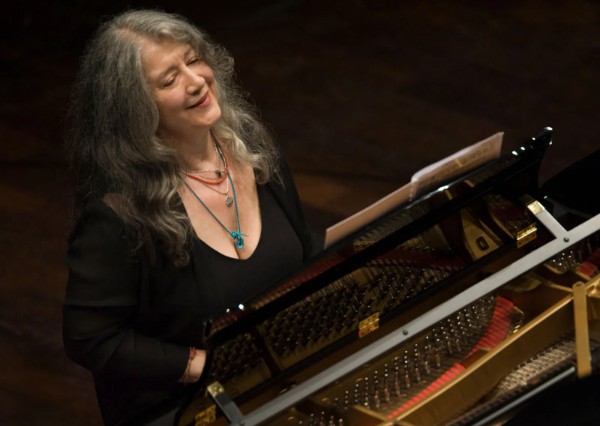
Martha Argerich
Martha Argerich is a pianist of unparalleled intensity and virtuosity. Her playing is electrifying yet never merely showy. In terms of technical brilliance and heartfelt expression, she is, in many minds, the ideal interpreter of Chopin’s music.
Argerich’s interpretations align with the composer’s own improvisatory style as the music feels spontaneous and inevitable. Her Chopin becomes a narrative journey, with the music breathing naturally. Yet, it never loses forward momentum.
In addition, Argerich has a fearless approach to virtuosity that feels distinctly modern. She certainly is not afraid to take risks, pushing tempos to their limits or exploring unconventional phrasing.
Argerich’s Chopin is passionate and volatile, while Lisiecki looks for personal consolation. To some, Argerich sets the piano on fire, while Lisiecki lets the music breathe quietly.
Every sampled pianist reveals a different facet of Chopin’s genius, ranging from fiery passion to introspective objectivity. Within this long tradition of Chopin interpretations, Jan Lisiecki offers listeners a modern and quietly consoling approach.
For more of the best in classical music, sign up for our E-Newsletter