Franz Xaver Mozart, the son of the great composer Wolfgang Amadeus Mozart, had a long-term love affair with a wealthy married woman named Josephine von Baroni-Cavalcabò.
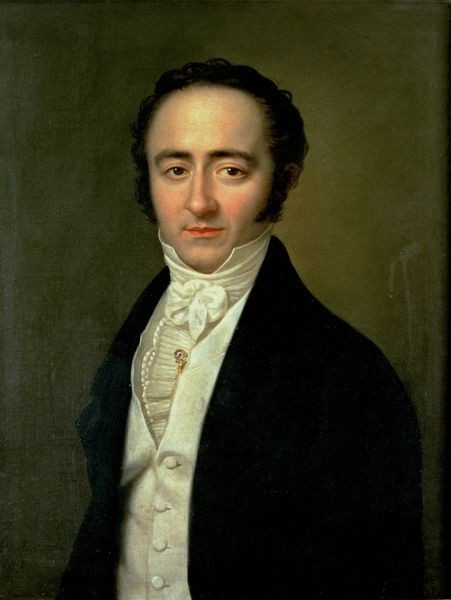
Franz Mozart
Josephine was a talented musician, and Franz taught her daughter Julie. Julie went on to become a talented composer respected by Robert Schumann.
Later, Julie’s granddaughter would follow in her grandmother’s footsteps and become a composer, too.
Today, we’re looking at Franz Mozart’s doomed love affair and all the talented women in his mistress’s family.
Josephine von Baroni-Cavalcabò’s Loveless Marriage
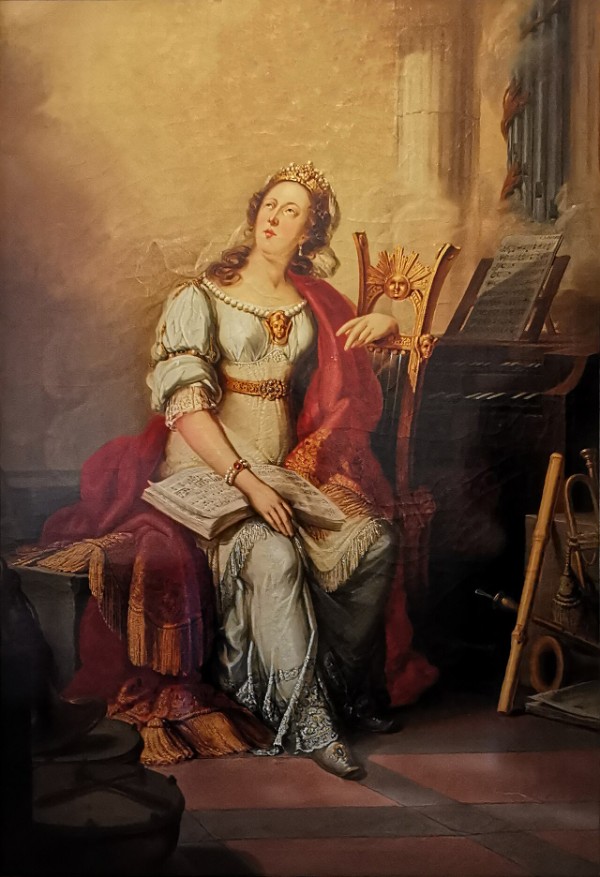
Josephine Baroni-Cavalcabo as St.Cecilia
Countess Josephine von Castiglioni was born in 1788. On 18th November 1802, she married Ludwig Cajetan von Baroni-Cavalcabò, making her Josephine von Baroni-Cavalcabò.
When they married, Josephine was about twenty years old and Ludwig about fifty. Unsurprisingly, it was not a love match, and done for economic and social reasons only.
Josephine had three children with Ludwig: Adolf in 1809, Laura in 1810, and Julie in 1813.
The couple made their home in present-day Lviv. Nowadays, the city is on the western side of Ukraine, near the border with Poland.
When the von Baroni-Cavalcabò family lived there, it had taken on an Austrian character, as it had been a part of the Habsburg Empire since the 1770s.
Josephine was an amateur singer and pianist. Consequently, she wanted to make sure her children studied music, too.
It was common among wealthy members of the European aristocracy to hire private tutors for their children, and the family hired Franz Xaver Mozart to teach theirs.
Franz Xaver Mozart Joins the Household
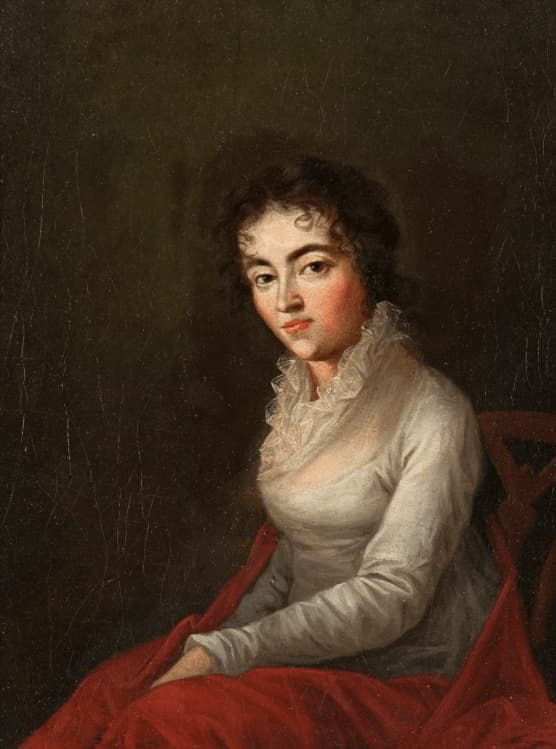
Constanze Mozart as portrayed in 1782 by her brother-in-law Joseph Lange © Wikipedia
Franz Xaver Mozart was perpetually haunted by his paternity. He was four months old in 1791 when his father, Wolfgang Amadeus Mozart, died. He would never be able to escape his shadow.
Wolfgang Mozart had not left money to his family, and there was no such thing as a governmental safety net in eighteenth-century Vienna.
Franz’s mother, Constanze, understood that the family’s best hope for economic security was to make careers and income streams out of Wolfgang’s legacy.
So she encouraged Franz to go into music…and even called him Wolfgang, ignoring his baptized name.
He studied under Salieri and Hummel, and made his debut at the Theater an der Wien at the age of thirteen.
However, he lacked his father’s innate talent (everyone did!), and failed to make the sensation he’d been hoping for.
In 1808, at the age of seventeen, he began his adult career by moving to Lviv to teach music to aristocrats’ children. While there, he played concerts of his father’s music, along with some of his own.
Franz Mozart Teaching the Daughters of Ludwig and Josephine von Baroni-Cavalcabò
In 1813, Mozart became a music teacher of the family, teaching the daughters of Ludwig and Josephine. At the time, he was 22; Josephine was around 25; and Ludwig was around 55.
Josephine was a pianist and singer. Given the state of her marriage, it’s no surprise that Josephine and Franz fell deeply in love.
They performed together at musical evenings given at the house, and spent a great deal of time by themselves rehearsing.
It is unclear how much her husband knew about their relationship.
Over the following decades, Mozart went on a few concert tours, hoping to break through and make his fortune. However, his big break never happened. Mozart would keep returning to Lviv until 1838, when he finally made a break from the family and returned to Vienna.
Sadly, he wouldn’t live long enough to make much of his fresh start. When he became terminally ill with stomach cancer a few years later, he asked for Josephine, who came to his side. She also became the executor of his will.
Julie von Baroni-Cavalcabò Makes Her Name as a Composer
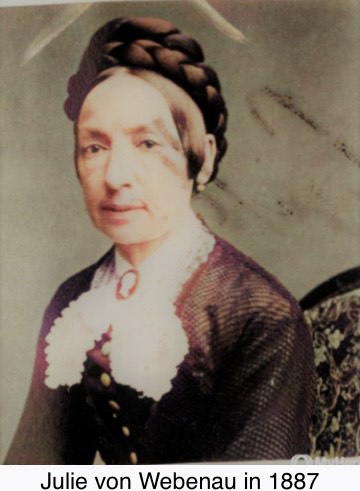
Josephine’s daughter Julie was hugely musically talented. She was born on 13 October 1813 and studied under Franz Mozart, ultimately becoming a composer herself.
Her first published piece, Fantasie in G-minor, came out in 1830, when she was seventeen. She dedicated the dramatic, stormy work to her teacher.
Julie Baroni-Cavalcabò, Fantasie g-Moll op. 4 – Katarzyna Drogosz (Gerstlhaus Schenkenfelden)
In 1835, when she was twenty-two, she traveled through Leipzig, one of the great hubs of nineteenth-century German music.
While in Leipzig, she met composer Robert Schumann. They crossed paths again in Vienna in 1839.
Schumann clearly respected her and even dedicated his Humoreske, Op. 20 to her.
Robert Schumann: Humoreske Op. 20 (1839)
In response, she dedicated her piano pieces L’Adieu et le Retour (The Farewell and the Return) and Morceaux de Fantaisie pour Pianoforte (Fantasy Pieces for Pianoforte) to Schumann.
She enjoyed setting German words to song. Here is one example, “Warum?” (“Why?”):
Julie Baroni Cavalcabó – Warum?, Op. 22
Here is a song from her op. 6, Die Grabesrose (The Grave Rose):
Julie von Webenau (Baroni-Cavalcabò) – The grave rose | Antonii Baryshevskyi, Andrei Bondarenko
And here is Die Elfenkönigin (The Elf Queen) from 3 Deutsche Lieder:
Julie von Webenau: Die Elfenkönigin, Op. 10 No. 3 (1836)
Julie von Baroni-Cavalcabò’s Marriages
In 1838, in Lviv, Julie married lawyer Wilhelm Weber Edler von Webenau, changing her name to Julie von Webenau. He was 42 and she was 25.
He was a member of the legislative court commission in Vienna, and the couple moved to Vienna for his work.
They had a son together named Arthur. However, tragedy struck the family in 1841, when Wilhelm died, leaving Julie a widow.
Less than a year after Wilhelm’s death, she remarried. Her second husband was the Brazilian Legation Secretary, Dr. Johann Alois Ritter von Britto. She had three children with him.
In 1877, Dr. Britto died, leaving Julie a widow again. She moved in with her sister and lived with her until she died in 1887.
Vilma von Webenau
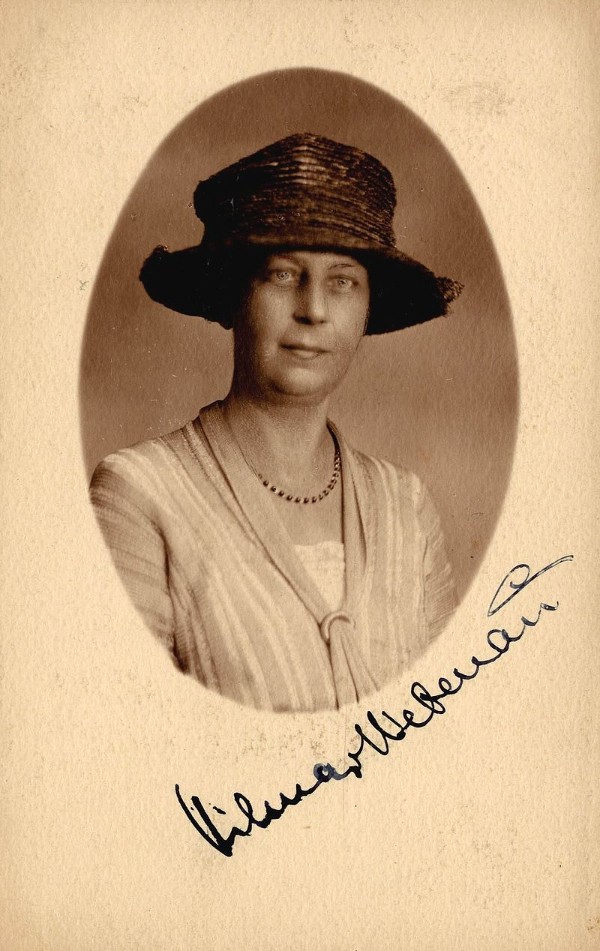
Vilma von Webenau
Julie passed along her musical talent. Her granddaughter Vilma von Webenau (1875-1953) became an early student of Arnold Schoenberg.
Here’s Vilma’s lovely Sommerlieder für Streichquartett (Summer Songs for String Quartet).
Vilma von Webenau (1875-1953): Sommerlieder für Streichquartett und Rezitation
Conclusion
There may still be a lot to learn about these three generations of women, but their musical talent manifested through the decades. Their music is worth rediscovering today…and a fascinating part of the Mozart family history that isn’t widely known.
For more of the best in classical music, sign up for our E-Newsletter