‘Music should be for joy – not just for the listeners but also for those who make it’
Young Russian-Armenian pianist Eva Gevorgyan made headlines as the youngest ever finalist in the 2021 Chopin International Piano Competition, and has since gone on to perform with orchestras and in recital across Europe and America, with concerto appearances including the Warsaw Philharmonic, Dallas Symphony, Malta Philharmonic and Lucerne Symphony.
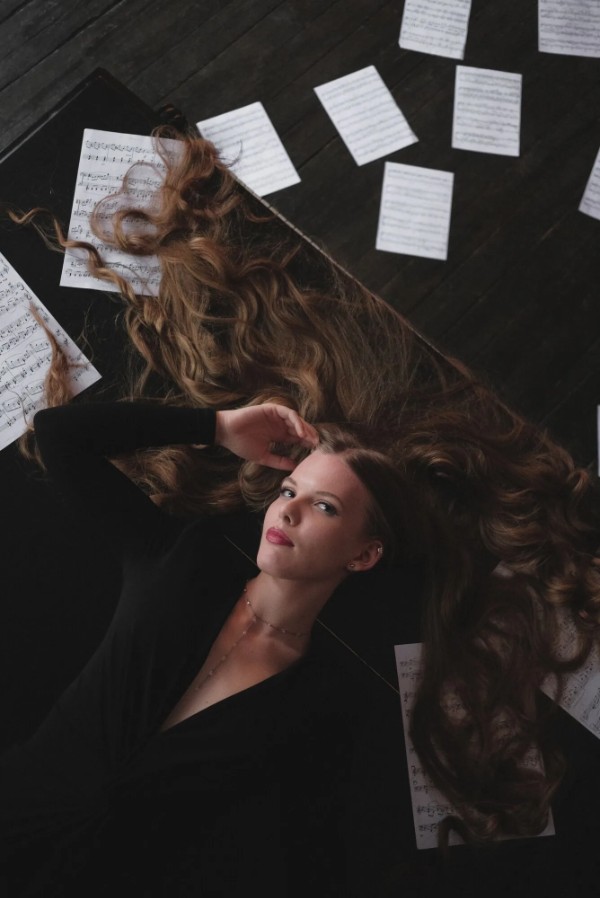
Eva Gevorgyan © evagevorgyan.com
Eva has won prizes in a large number of competitions including the Cleveland International Piano Competition for Young Artists, the Van Cliburn Young Artist Competition, and the Prix de Bern in Switzerland; competitions made up a large part of Eva’s early musical life, starting on the circuit aged six and continuing regularly until her appearance in Warsaw at the Chopin Competition some 15 years later.
Certainly no stranger to the world of competitions and the unique preparations that are undertaken for such events, she guides us through her method of preparation and talks of the shift in her musical perspective that has followed as competitions have given way to concert engagements, accompanied by a newfound artistic freedom.
Eva Gevorgyan plays Chopin Prelude no 16 op. 28
What repertoire haven’t you played yet that you’d like to in the future?
The piano repertoire is huge and it’s impossible to play everything in your life. I’ve never performed the Brahms concertos because I think we should first grow up musically for this epic music. Of course I can learn them now, but I really want to find my way in Brahms’ music more deeply, so it’s one of my dreams.
I’ve performed Schnittke’s concerto for piano and strings and I found deep edges and layers in his music. One day I would love to play Bartók, Ligeti and something unusual, maybe modern music.
Do you have a particular favourite style of repertoire or composer to play?
In almost every concert I include some romantic repertoire, like Chopin or Rachmaninoff. These two brilliant composers are my most favourite, and after the Chopin competition, where I participated in 2021, many people would love to hear me playing Chopin. I myself love Chopin so much, so I play a lot of his music, I think it’s already in my blood. Rachmaninoff’s music is also very close to my spirit with its enormous emotionality and drama, where sounds convey deep feelings.
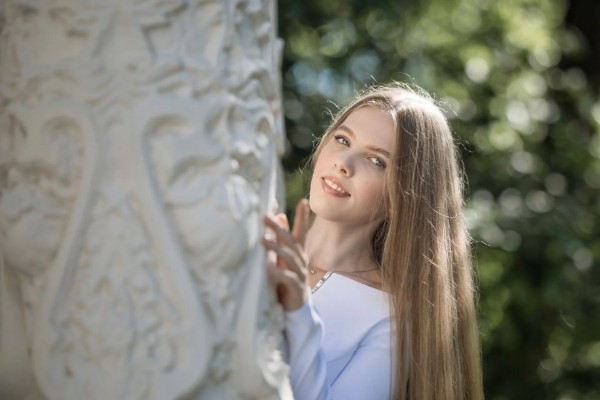
Eva Gevorgyan © evagevorgyan.com
Also I want to develop myself, not only in romanticism of course. I play pieces by Mozart, Beethoven, music from this classical epoch, and Bach of course. Bach is the beginning of everything, our Bible – it’s very important. Many young people play romantic music very organically because they feel this energy in this kind of music. But you cannot grow up without playing Beethoven sonatas or Bach preludes and fugues. They’re not exercises – they’re the basis of all music, and without this you can’t understand romantic stuff.
I think it’s also important to play modern music, because we should understand how music develops now, and how composers see our world today. For example, in Madrid [on 7th April], I will play Sofia Gubaidulina’s Chaconne. I find her music very fresh and interesting. You maybe can’t understand it fully from the first listening – it doesn’t have the harmonies that the ear is accustomed to. But if you listen to it without expectations and comparisons with the classical repertoire, this music will put you in a certain state. And this state will depends on people’s imagination. Gubaidulina’s Chaconne is a modern interpretation of the baroque form with rhythm as the main building element.
Eva Gevorgyan – Rachmaninoff Rhapsody on a theme of Paganini
Is the opposite true: when you study romantic or modern music, does it feed back into your Mozart, your Beethoven, your Bach?
Musical masterpieces written 200 or 300 years ago continue to be relevant and in demand among listeners to this day. It’s so unbelievable that this music is so popular and everybody still can find out something new in it. It’s really eternal music. We have different instruments now – in concert halls we usually play on Steinway, Yamaha, Kawai or Fazioli grand pianos, so it sounds very different from the sound that the composer would’ve written for.
Bach created his works for harpsichord or clavichord whose sound production had little in common with the modern piano. Chopin performed his music at Pleyel pianos, which were produced very delicate, velvety tone compared to modern pianos.
I think it would be very interesting if these composers were alive today and were to go to the concert halls and hear their pieces, because I think we have a totally different mind and sound today.
As I grow I also change my own interpretation in many pieces. For example, I’ve played Chopin’s études quite a lot, since my childhood. There is a recording of me playing them when I was 12, and then there’s the new recording from the last year when I was 20, so of course there is a difference. Music is not about how we press keys, music starts from inside, from our hearts and souls and personality of the musician influences on the performance.
You do a lot of chamber music alongside your solo work. Does your approach to the two differ?
I find it one of the most important things. It’s totally different when you play chamber music from solo recitals or performances with orchestra. When you play with orchestra it’s also a kind of chamber music but still you have your own part, you’re a soloist and the orchestra is a different organism, a different group which supports you or make a contrast with your part.
In chamber music you should breathe together and it helps you to understand music lots better, because you hear not only what you yourself are doing but also that of your colleagues, and it develops your listening so much.
I think many musicians would say that after playing lots of chamber music it also helps you to grow in your solo repertoire.
Our instrument is quite different from strings or winds, because the sound of the piano doesn’t last – but we should make it last, despite the fact that the piano is a percussion instrument. When we listen to strings we can kind of make it the same, so the sound lasts longer. Playing piano can be easy for beginners, but to master it takes a lot of effort, patience and time.
My mum is a viola player, and I wanted to be a violinist in my early childhood. But when I got the violin the next day I broke it into pieces. My grandmother had an upright piano at her house. When I started with the piano I realised I wanted to do it. My whole childhood I was listening to how my mum was practicing the viola and maybe it somehow helped me, I’m not sure. There are things where I really try, especially in lyrical parts, to use the same sound as the viola or violin, because they can sing. A piano cannot sing by itself – we should make it sing.
Do you have any particularly memorable performance memories?
I have many. Every concert I try to make it like it’s the last time I’m performing, because I believe that even if you’re not in a good mood or don’t want to play sometimes (it happens, of course!), you should give one hundred percent of yourself.
My Professor Natalia Trull always said that it’s our profession. It doesn’t matter how we’re feeling – if there’s a concert we should give everything. It’s the only way that the music will work, so that people will feel something. You can’t be automatic.
I have many stories, some funny and some memorable, but perhaps the most memorable is the Chopin competition. After this I met a lot of new people and it was a huge step in my musical career. I was the youngest finalist and so it was also maybe a little bit more pressure, but it helped me to grow a lot. To play in this historic hall with the Warsaw Philharmonic was really unforgettable.
Eva Gevorgyan – Liszt La Campanella
What’s your method for preparing for competitions? Does it adapt or do you have a set recipe?
I participated in competitions since I was about 6 years old. My first competition was the Amadeus competition in the Czech Republic, and each year I did around 8 competitions for young musicians.
The Chopin competition was the first big one, and I cannot say it was mentally something different. I was prepared for it, and I’d participated in many competitions, so I think for young musicians who want to perform, who want to show themselves to a bigger audience, it’s a very good way to promote yourself, which is also important. You can’t just study in your classroom and then go directly to a big stage. You must show up and represent yourself a big audience, show the world, what you can do – if you want to and are prepared, of course.
I really wanted to participate in all of these competitions and it helped me a lot, but now I’ve stopped and I’m happy about it, because of course it takes a lot of energy and nerves and the competition system is different to playing concerts.
You cannot be as free as in a concert, so you should perform the variant that everybody will like, that every member of the jury will like. In a competition it’s usually better if you play every note very cleanly, very fast and with a common average interpretation that everybody is used to. If you do something totally different it doesn’t work sometimes.
Has your approach to performance changed since you stopped doing competitions, now that there is no jury to play to?
When you are on your own, without doing competitions, you start analysing and find out things that you don’t know what to do with. I was used to playing competitions, and each time when I did a competition I knew exactly what I needed to do, what to practice, how to practice, and which interpretation I was going to play, which was usually the ‘normal’ one on which everybody could agree.
Now, since I’m doing concerts myself, I have to find my voice, which I think is the most difficult part of our lives as musicians. I’m still searching of course – it’s a long, I would say life-time process. You live all your life and you are still searching, everyday makes you different, you gain new experience, new emotions and all this impact on your personality and on your performances at the end.
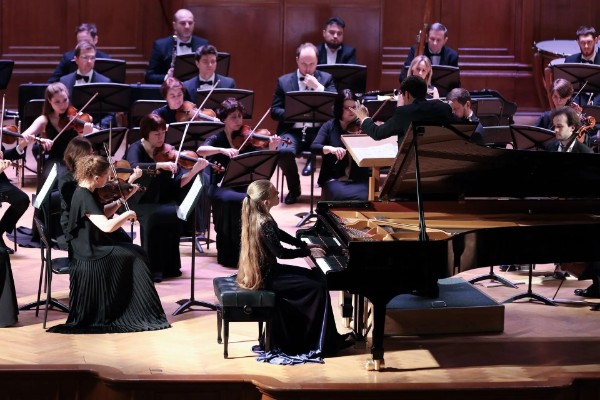
Eva Gevorgyan © evagevorgyan.com
What would your advice be to younger people just starting out on the path of competitions and auditions?
I think I’m not experienced enough to give advice because of my age. First of all I would ask young people whether or not they really want to do this. I see many children who study under a big pressure of parents or teachers, and I am a little worried about how this will affect them in the future.
Music should be for joy – not just for the listeners but also for those who make it. Kids should feel whether they want to continue on this path or just to do it for themselves, as a hobby or for the soul.
After that, they should also realise that competitions don’t guarantee you anything. Even with big ones, especially now, there are so many competitions and the system is changing a lot. I see many people get a big prize and after some years they don’t play anywhere. Another example is people who don’t advance to the next round but who are found by managers and make huge careers. Yuja Wang, for example, participated I think just once or twice but made a huge career.
It’s unpredictable. You cannot say, ‘Go to this competition and you will have a career.’ It’s impossible.
What is important to you and your career away from the world of competitions?
I think musicians should improve in every aspect nowadays. It’s maybe even more important how you talk with people, your discussions with managers, concert programmes, communication with the public. Of course the most important how you play, but it’s not the only one thing that you have to be good at. You need to be an interesting, versatile personality, you must have something to say to the world.
What do you do in your spare time?
I don’t have that much spare time, but when I have it, I do conducting. I think all my life goes with music, so my everyday routine connected to music anyway. I like to improvise when I have time and listen to a lot of good music.
For more of the best in classical music, sign up for our E-Newsletter