Elsa Olivieri Respighi was more than just the wife of the famous Italian composer Ottorino Respighi. She was also an accomplished musician, composer, and author in her own right.
Elsa’s marriage to Respighi resulted in a productive creative partnership, with her influence evident in many of his works.
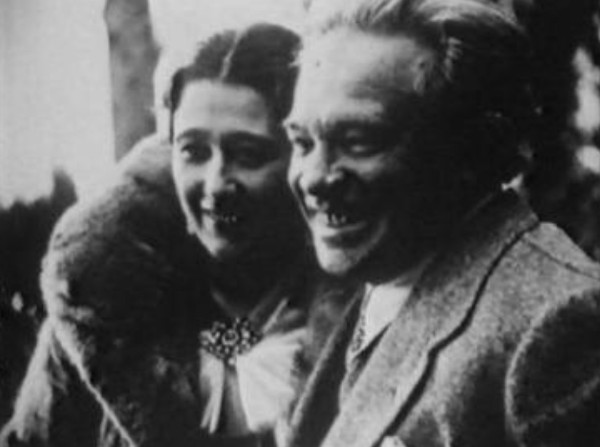
Elsa and Ottorino Respighi
Today, we’re exploring the life and career of Elsa Respighi, examining her biography, her compositions, and her vital role in the creation of her husband’s music and her promotion of his legacy.
I’ll be drawing on a 2017 dissertation by Dr. Penny Brandt entitled “A Marriage and its Music: The Work of Elsa Olivieri Sangiacomo Respighi in Fascist Italy.” If you’re interested in reading more about her, the entire dissertation is free to read here.
Elsa’s Musical Childhood
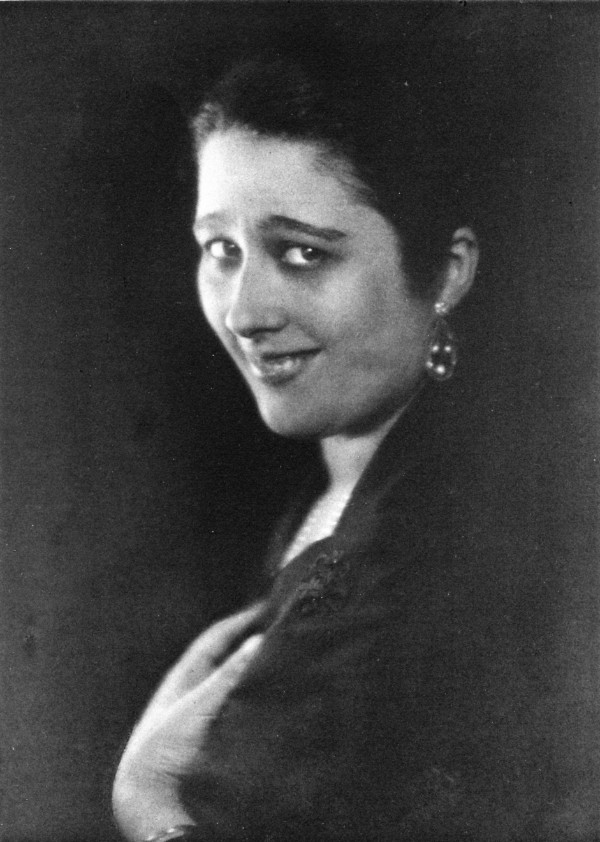
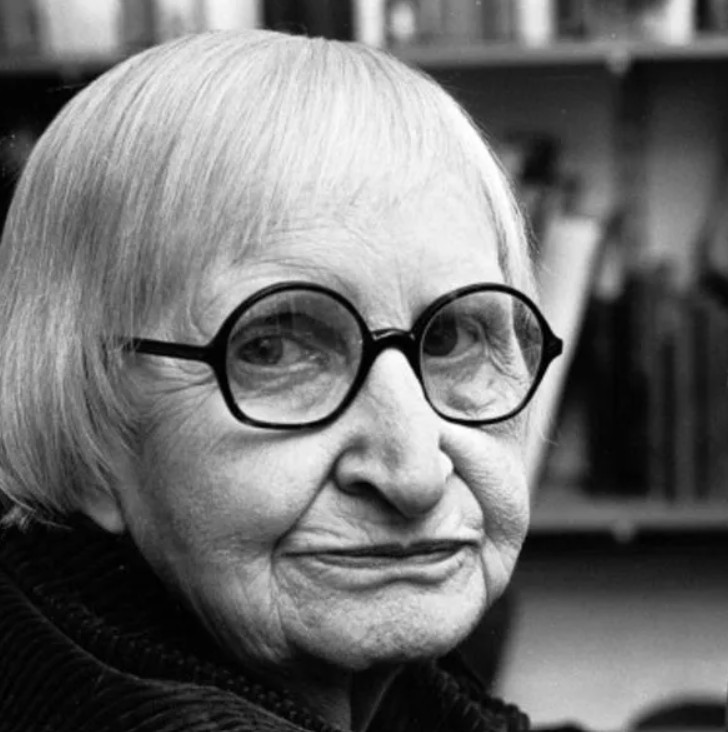
Elsa Olivieri Respighi
Elsa Olivieri was born on 24 March 1894 in Rome and named after the female protagonist of Wagner’s opera Lohengrin.
She was baptised at the Archbasilica of Saint John Lateran, the oldest church in Rome. Later in life, she was especially proud of this fact, as it signaled her family’s social prominence.
Her father was a former army officer working as a journalist, and her mother was a nineteen-year-old immigrant from Mexico who enjoyed playing guitar and singing Spanish-language folk songs for her family.
Elsa inherited her parents’ artistic abilities. She began playing piano at six and composing at nine.
Tragically, her father died before she turned ten.
Elsa’s Musical Training – And Meeting Her Husband
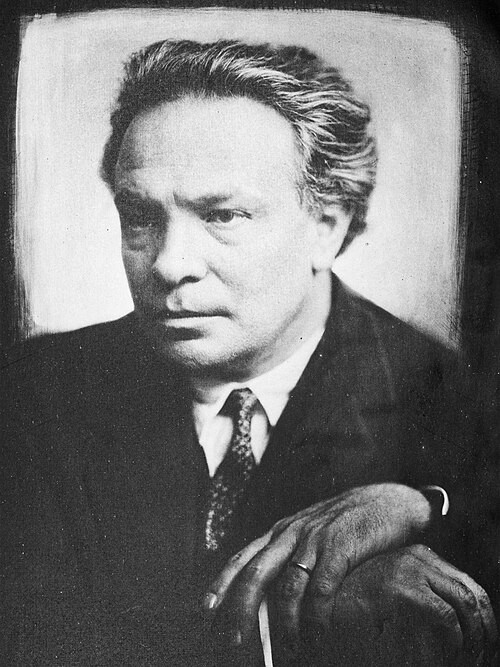
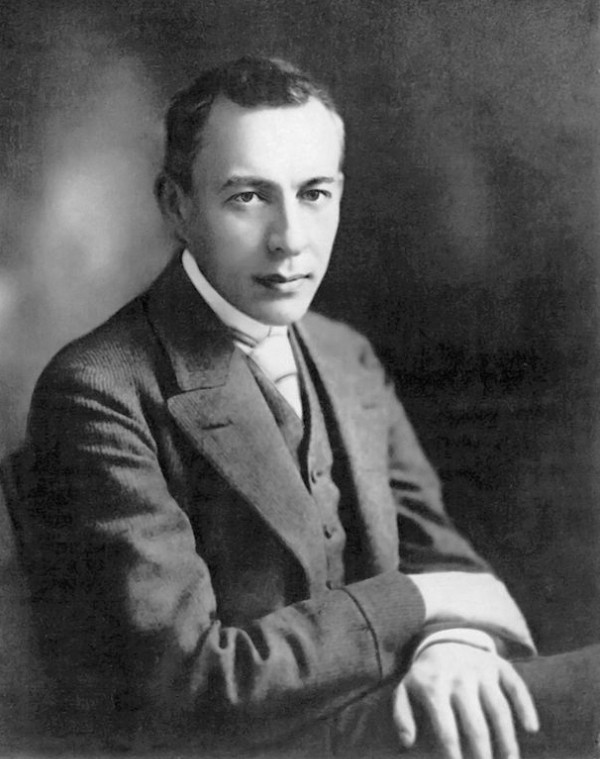
Ottorino Respighi, 1927
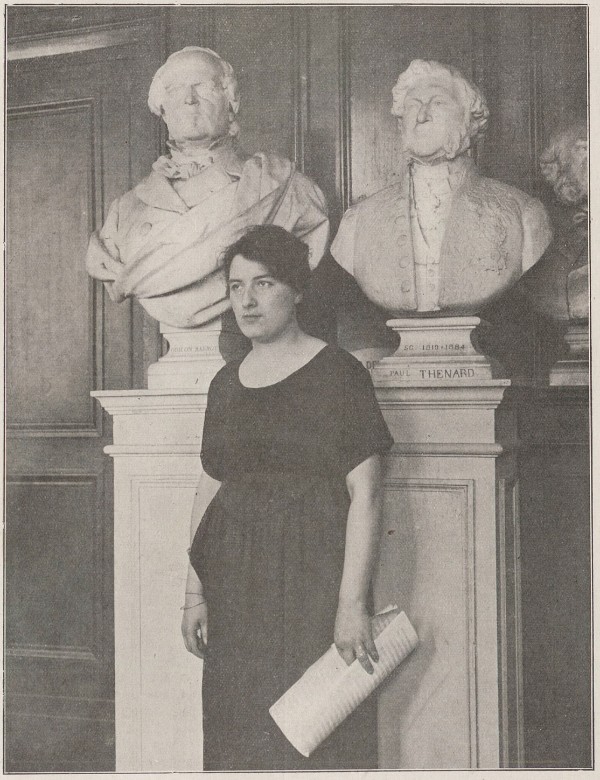
When she was fifteen, she enrolled at the Accademia di Santa Cecilia in Rome.
Neuritis necessitated that she abandon her dreams of becoming a professional pianist. She chose to study voice instead. While at the Accademia, she took a special interest in Catholic choral music and Gregorian chant.
In 1915, she applied to study counterpoint with Professor Ottorino Respighi. She was the only girl in a class of sixteen pupils. Elsa was twenty-one; Ottorino was thirty-six.
Ottorino was so impressed by her student works, Tre canzoni spagnole (Three Spanish Songs) and tone poem Serenata di maschere (Serenade of Masks), that he sent both of them to his publisher Ricordi in Milan.
Ottorino also encouraged her to orchestrate her Three Spanish Songs, which she did, conducting them at a conservatory performance in the summer of 1917.
Historians are unsure when the relationship turned romantic, but the couple married in January 1919.
Elsa Olivieri Respighi: Berceuse bretonne (1919)
Elsa Renounces Music
Elsa came into her marriage believing that the only way she could be a good wife was by renouncing or suppressing elements of her own artistic identity.
Decades later, she wrote about this time:
…Only when I was absolutely convinced that I could renounce my family, the life I had led until then, and my work itself, and dedicate myself entirely to his life and his work – only then did I, without any reservation, accept his [marriage] proposal.
After publishing one final group of compositions, she turned all of her attention to promoting her husband’s music instead.
Two Italian folksongs featuring Ottorino on piano and Elsa singing
The Respighis and Mussolini
After they married, the Respighis performed across Europe and networked together. Meanwhile, at home, she served as Ottorino’s primary artistic advisor, assistant, and copyist.
In 1922, their lives changed forever when Mussolini came to power. They now had to decide how to react to new political realities and how to manage Ottorino’s musical career in the face of a fascist takeover.
In the decades since, Respighi has been criticised for what others see as his complicity with Mussolini’s government.
The country’s embrace of fascism also had consequences for Elsa. For one, it made it increasingly obvious that she would never be able to pursue her own musical career in any serious way. Italian officials ignored women composers, discouraging them from pursuing professional lives and encouraging them to become mothers instead.
Consequently, being intimately involved in Ottorino’s career became one of the few ways that she could be involved in music in any kind of professional capacity.
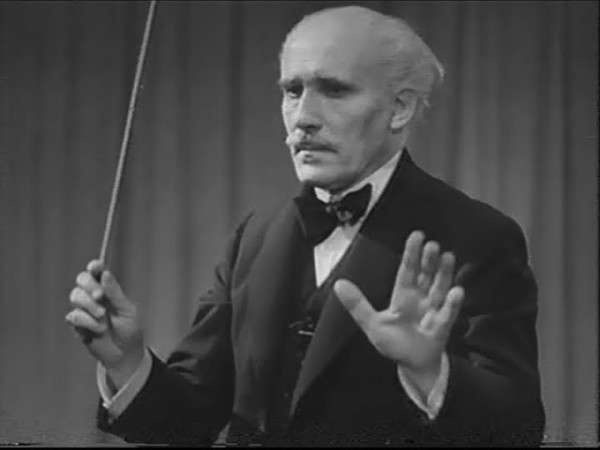
Arturo Toscanini
Their friend Arturo Toscanini took a stronger stance against the government, refusing to lead national anthems while political figures ostentatiously took their seats at various performances.
At one 1931 concert, Toscanini was physically assaulted by a Mussolini supporter. After the attack, the Respighis went to Toscanini’s hotel room, then helped him to dress his wounds and leave the city before dawn.
Elsa reminisces about Toscanini, 1960s
The Respighis’ International Travels
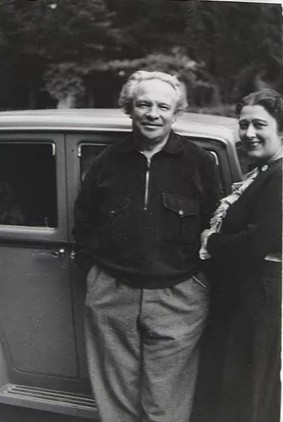
Elsa and Ottorino Respighi
The couple spent a lot of time traveling internationally in the decade between 1925 and 1935.
Ottorino performed at Carnegie Hall on New Year’s Eve, 1925. In 1927 and 1928, they traveled to Brazil together.
In late 1928, over the course of nine days, Ottorino wrote his tone poem Roman Festivals, and it was premiered by the New York Philharmonic the following February.
Respighi’s “Roman Festivals”
In 1932, Ottorino was named to the prestigious Reale Accademia d’Italia, a Mussolini-era academy of artists and scientists, sixty members strong. Members swore loyalty to the Italian fascist government, and in return received exclusive perks, like a generous monthly stipend and free train travel.
Ottorino’s Death
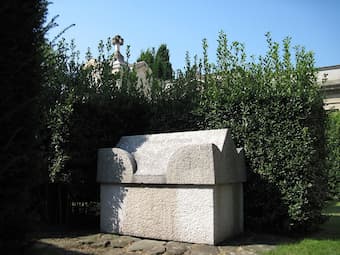
Ottorino Respighi’s tomb
By 1935, Ottorino found himself fighting off both fever and fatigue. In January 1936, he was diagnosed with subacute bacterial endocarditis, a heart infection that was untreatable at the time. It is believed he may have caught this infection after undergoing oral surgery.
Elsa decided that the severity of his condition should be kept private. She also ensured that all of his visitors remained in high spirits, believing that would make his inevitable physical decline easier.
Ottorino died in April 1936, his wife at his side. He was fifty-six years old. Elsa had just turned forty-two.
Elsa Finishes “Lucrezia”
Soon after her husband’s death, despite the fact that she hadn’t composed on her own for years, she returned to work, completing Ottorino’s nearly-finished opera Lucrezia.
She later wrote about the project:
I knew the opera by heart, because in the afternoon, Respighi would always let me hear what he had composed in the morning.
When the work was premiered, musicians and audiences alike were unable to tell which parts of the opera he had composed and which she had finished. That accomplishment gave her tremendous pride.
An excerpt from Lucrezia
Elsa’s Musical Widowhood
The project eased her into composing her own works again.
Early in her widowhood, she wrote two cantatas and two operas. Her opera Il dono di Alcesti was even booked to be performed in Rome in 1942, but the performance was ultimately canceled, likely due to a combination of politics, war, and old-fashioned sexism.
Around this time, she began realising that she didn’t have a professional support network to advocate for her work and for her as a person. There was no figure in her life to play the same role that she’d once played for Ottorino.
So she renounced composition for a second time. She claimed this later break was even more heartbreaking than the first had been.
Elsa Respighi: Invocazione!, 1943
She stopped composing and focused the rest of her career on advocating for her husband’s works.
She wrote several books about Ottorino and served as a clearinghouse for information for musicians, historians, and scholars. She’s a major reason why his works are still played with regularity today.
She died in 1996, shortly before turning 102.
Elsa’s Legacy
Elsa’s aunt wrote of her niece’s marriage:
One thing is for sure. The union of Ottorino and Elsa was a masterpiece.
To the happy association Ottorino brought his great talent as an artist, and Elsa all the rest.
Without Elsa to cheer him on, Respighi would have left fewer beautiful operas to the world. Without Respighi, Elsa would probably have had a less splendid life, but she would still have amounted to something.
Thanks to the work of historians like Dr. Brandt, today we have a wider view of how the Respighis worked together to create the music that audiences still love today.
Hopefully, a day is coming when the contributions of all composers’ talented spouses are cherished and celebrated.
For more of the best in classical music, sign up for our E-Newsletter