Every year, when National Clarinet Day rolls around on November 16, clarinettists everywhere polish their keys, warm their reeds, and raise their instruments in toast to one of the most expressive voices in music.
But what if we thought of the clarinet not just as an instrument, but as a culinary masterpiece? After all, the clarinet is the soufflé of the woodwind world, highly temperamental, delicate, yet capable of transcendence when treated with patience and skill.
For National Clarinet Day, let’s set the table for a musical banquet where the clarinet takes centre stage. And let’s dive into an aromatic stew of jazz, symphony, and soul.
Johannes Brahms: Clarinet Sonata No. 2 in E-flat Major, Op. 120
Gourmet Makeover
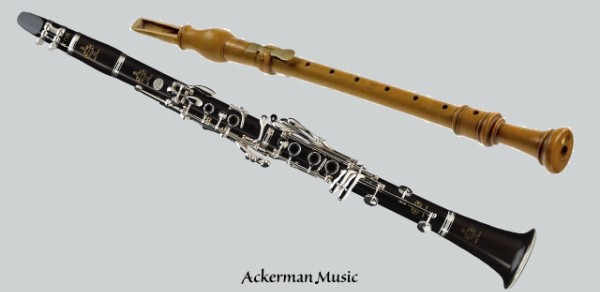
The early clarinet vs the modern clarinet
Our clarinet feast begins, fittingly, with a light amuse-bouche of history. The clarinet was born in early 18th-century Germany, when instrument maker Johann Christoph Denner took a rustic folk pipe and refined it into something infinitely more sophisticated.
By adding a register key and improving its shape, he transformed the clarinet into a layered musical dish, sounding crisp in the upper registers, rich and creamy in the lower.
By the time Mozart heard the clarinet, he was smitten. In his Clarinet Concerto, he wrote lines that melted and shimmered like honey. The clarinet could sigh like a soufflé collapsing in slow motion, or sing like caramel bubbling on the stove. Mozart even wrote to a friend that he had “never heard the like of it.”
Wolfgang Amadeus Mozart: Clarinet Concerto in A Major, “Adagio”
From Chamber Stew to Jazz Gumbo
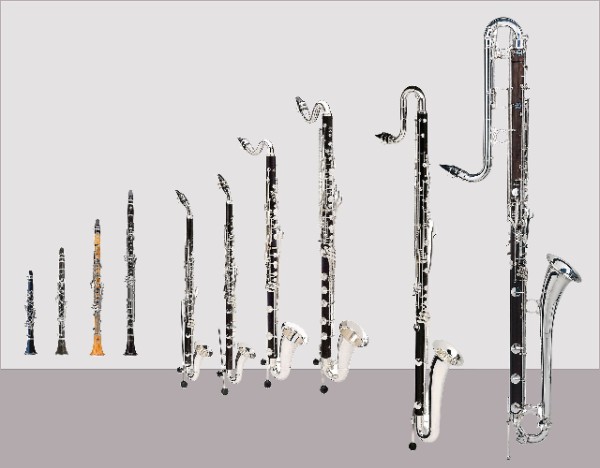
Different kinds of clarinets
From then on, composers couldn’t get enough. Beethoven sprinkled clarinet lines through his symphonies, and Brahms, in his later years, cooked entire chamber works around its voice, as if rediscovering the warmth of a good stew on a winter night.
If classical composers treated the clarinet like fine dining, jazz musicians turned it into street food, vibrant and sizzling, and served it hot and fast. Benny Goodman, “The King of Swing,” turned the clarinet into a trumpet of joy.
His solos at Carnegie Hall in 1938 were the musical equivalent of a five-course tasting menu. Goodman showed the world that the clarinet could swing, strut, and swagger. But he wasn’t alone as Artie Shaw cooked up solos of smoky sophistication, more like espresso and dark chocolate.
Artie Shaw: Clarinet Concerto
Orchestral Umami
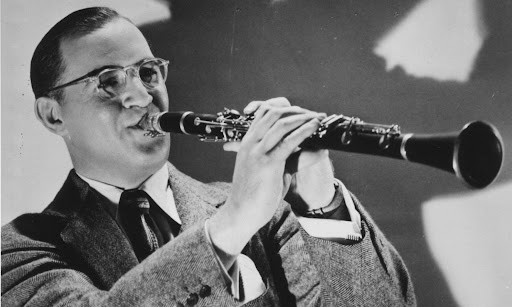
Benny Goodman
And even today, the clarinet finds its place in new mediums, including klezmer, Balkan folk, avant-garde, and film scores. Just listen to the swirling clarinet lines in John Williams’ film music and those savoury undercurrents that give depth to orchestral texture.
Of course, no feast is complete without accompaniments. The clarinet’s extended family add layers to the musical menu.
The bass clarinet, with its chocolate-dark tone, is the dessert wine of the family. It is rich, mysterious, and slightly intoxicating. You can hear it in The Rite of Spring, or the smoky undercurrent in jazz ensembles. The E-flat clarinet, on the other hand, is pure spice. It’s like fiery paprika or a shot of wasabi cutting through orchestral textures with brilliance.
Alec Wilder: “A Child is Born”
The Secret Recipe
A good clarinet tone doesn’t come easy. It requires the patience of a pastry chef and the lung power of a barista steaming milk. One too many drops of tension, and the tone curdles. Too little air, and it falls flat like a pancake on a cold griddle.
But when everything comes together and when the reed vibrates freely, the fingers dance lightly, and the air flows like warm butter, it’s simply sublime.
National Clarinet Day isn’t just a niche holiday for band geeks. It’s a day to savour the clarinet’s contributions to every genre, from Mozart to Miles Davis, from klezmer to contemporary.
Göran Fröst: Klezmer Dances
Bon Appétit, the Music Is Served
Like good cuisine, the clarinet inspires affection because it connects us to something essential. It’s both communal and personal, and it speaks the language of breath, of human warmth.
So on National Clarinet Day, let’s raise a glass, or a bell, to the musicians who keep stirring the pot. Let’s celebrate the reed-makers, the teachers, the orchestras, the jazz cats in smoky bars, and the students squeaking their way through Ode to Joy.
As Benny Goodman once said, “The clarinet is a wonderful instrument because you can play jazz on it, you can play classical, you can play anything.” And like the best meals, it nourishes the soul. Bon appétit, the music is served.
For more of the best in classical music, sign up for our E-Newsletter