Californian saxophonist Christopher Greco went back in time to create a new set of works for the soprano saxophone by updating works from the Baroque period. It’s an ideal combination, with flute, oboe, and cello concertos rewritten for the singing soprano saxophone.
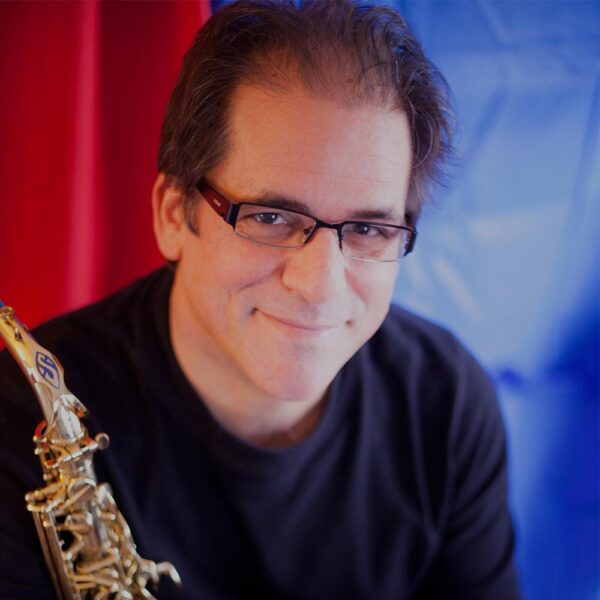
Christopher Greco
The soprano sax is one of the highest members of the saxophone family (topped only by the rare soprillo and sopranino). The saxophone family dates from its invention in the 1840s by Belgian inventor Adolphe Sax. As the highest common member, the soprano sax is known for its warm tone, and with its high range, it has had a large repertoire written for it by composers from around the world. In classical music, it has been used in Vincent d’Indy’s opera Fervaal (1889–1895) and has been featured in Richard Strauss’ Sinfonia Domestica (1904) and Ravel’s Boléro (1928). It, of course, also has a long life in jazz in the hands of Sidney Bechet, John Coltrane, Jan Gabarek, and Kenny G.
Two instruments it’s often used to imitate are the oboe and the B-flat clarinet, but the contrast between its metal construction and the other two instruments’ wood bodies can lead to noticeable differences in timbre, the saxophone being a bit more nasal.
The recording opens with Benedetto Marcello’s Oboe concerto, dropped in pitch from its original D minor to C minor, as a work that is both somewhat familiar and not Bach. He adds his own decorations to the melodic line, bringing it back to the idea of the virtuosic player.
Track 1. Benedetto Marcello: Oboe Concerto in C minor, I. Andante.
Next is a bit of Bach, with his Flute Sonata in E flat major, BWV 1031. Greco’s lightness of touch comes through here, as does his effective use of trills and other interpretive additions.
Telemann’s Oboe Sonata in A minor, TWV 41:a3, from his Der getreue Musik-meister (The True Music Master) series, was written for the musical amateur but interesting enough for the musical professional. This sound generally works well, but the held notes in the slow Andante movement expose the sometimes-nasal saxophone tone.
Returning to Bach with a transcription of his Flute Sonata in C major, BWV 1033, the beauty of Bach’s lines comes through beautifully.
A surprising addition is two movements from Bach’s Cello Suite No. 1 in G major, BWV 1007. The cello suites have been transcribed for numerous other instruments, although for saxophone, it’s generally been done as a transcription for the baritone saxophone. The transfer of this to the soprano saxophone brings out the singing melody much more than do the transcriptions for lower-voice saxophones.
The album closes with another surprise, the Rondeau from François Couperin’s Pieces de clavecin, Book 3: 15th Ordre in A Minor-Major: Le dodo, ou L’amour au berçeau. As a performance, this is somewhat of a puzzle, as he moves the trills from the first note to the second note of the opening musical line. Where long notes should be trilled, he ignores this until the note ends.
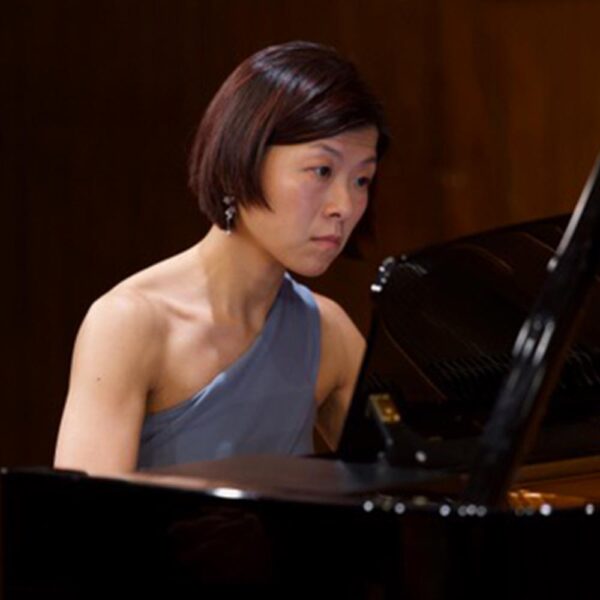
Pianist Po Sim Head
Supporting Mr. Greco is pianist Po Sim Head, an advocate for the championing of lesser-known works. In her work on this album, Dr. Head extends from her previous explorations of the music of Peru and Ecuador to jump back to the Baroque period. Her touch is both sure and delicate, and beautifully dancelike where it should be. It would be an interesting experience to hear her play the part on the harpsichord and to see how that would blend with the metallic sound of the soprano saxophone.
Greco and Head do an admirable job at extending the Baroque repertoire into an instrument that seems ideally suited for it.
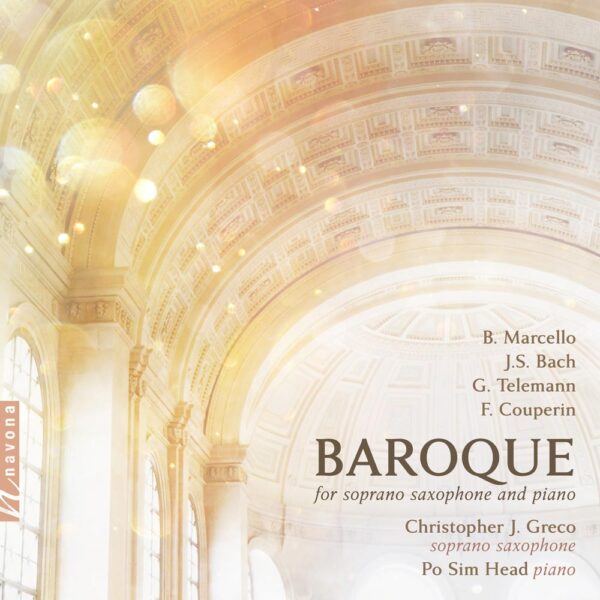
Baroque: For Solo Soprano Saxophone and Piano
Christopher J. Greco soprano saxophone; Po Sim Head piano
Navona Records NV6745
Release Date: July 25, 2025
For more of the best in classical music, sign up for our E-Newsletter