In his memoir An Enduring Grace, the French organist and composer of Lebanese birth, Naji Subhy Paul Irénée Hakim, recounts his extraordinary musical, spiritual, and deeply human journey. As a composer, organist, pedagogue, and engineer, he takes us from his childhood in Lebanon to the organ loft of La Trinité in Paris, and from the silence of churches to the lights of the international stage.
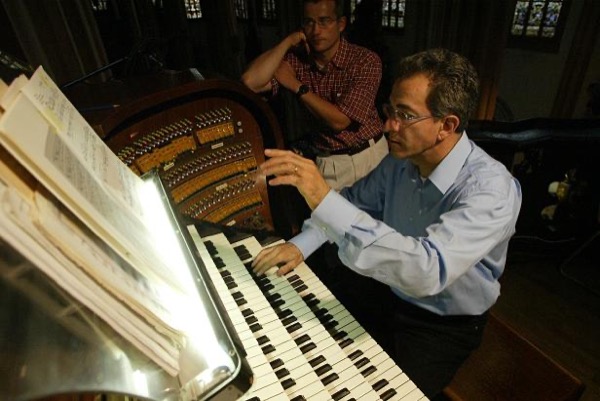
Naji Hakim
Naji Hakim is a significant figure in contemporary classical and sacred music, particularly well known for his organ compositions. His catalogue is large and varied and belongs to the French school of his teachers Langlais and Falcinelli, with some music reflecting Arab influences, which gives his style a distinctive colour.
Naji Hakim: Suite francaise
Lebanese Roots
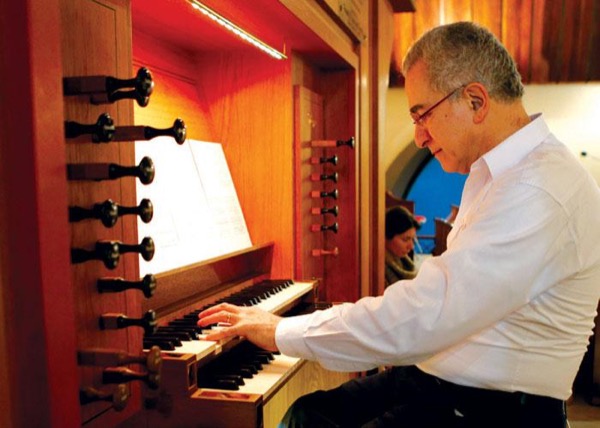
Naji Hakim
Naji Hakim was born into a Catholic and highly musical family in Beirut on 31 October 1955. His father played the mandolin and sang, his mother was an amateur pianist, and all his siblings studied instruments. He discovered the organ during his early studies at the Collège du Sacré-Cœur in Beirut and gave his first recital as a teenager.
The Lebanese Civil War forced him to flee to Paris at the age of 20, and he pursued his musical studies with Jean Langlais (organ) and Evelyne Aïello (conducting) at the Paris Conservatoire, where he gained premiers prix in harmony, counterpoint, fugue, orchestration, analysis, organ, and improvisation.
As an organist, he won competitions at Beauvais (1981), Haarlem (1982), Lyon, Nuremberg, and St Albans (1983), and Chartres (1984), and as a composer he was awarded prizes of the Amis de l’Orgue for his Symphony in Three Movements (1984), the Anton Heiller Prize for The Embrace of Fire (1986), and the André Caplet Composition Prize from the Académie des Beaux-Arts (1991).
Concerto III for organ and strings – Naji Hakim
Titular Organist at Sacré-Cœur and La Trinité
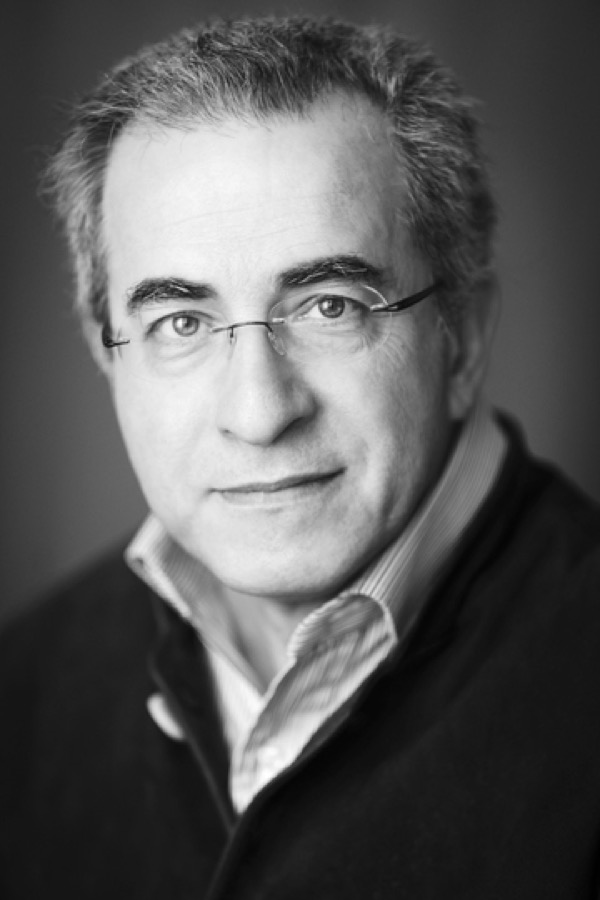
Naji Hakim (photo by Aleksey Vylegzhanin)
From 1985 to 1993, he served as titular organist of the Basilica of the Sacré-Cœur in Montmartre before succeeding Olivier Messiaen at the church of La Trinité in Paris (1993–2008).
As an educator, he taught musical analysis at the Conservatoire National de Région de Boulogne-Billancourt (1988–2019) and is currently a Visiting Professor at the Royal Academy of Music in London. A graduate engineer of the École Nationale Supérieure des Télécommunications in Paris, he is a member of the Consociatio Internationalis Musicæ Sacræ in Rome and Doctor honoris causa of the Holy Spirit University of Kaslik, Lebanon.
In 2007, His Holiness Pope Benedict XVI awarded him the Augustae Crucis Insigne pro Ecclesia et Pontifice in recognition of his service to the Church and to the Holy Father.
Naji Hakim: Ouverture Libanaise
Shaped by Langlais
Hakim’s compositions are strongly influenced by his apprenticeship with Jean Langlais, his faithfulness to his roots, and his steadfastness in his religious calling.
Hakim moved to Paris in 1975 amid the Lebanese Civil War, and initially struggled to enter the Paris Conservatoire. As a result, he began to take private lessons with the blind Jean Langlais, the organist at Sainte-Clotilde.
Langlais composed and improvised in the French symphonic organ tradition with influences from his own Breton heritage. Hakim’s improvisation style and approach to chant-based works show a clear influence from Langlais, as do his colourful registration, virtuosity, and the integration of Gregorian chant.
Naji Hakim: Mariales (Naji Hakim, organ)
Music as Worship
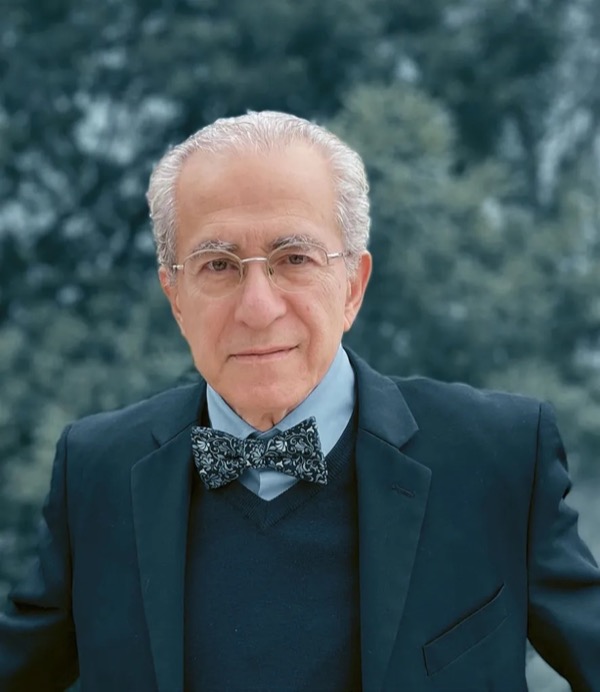
Naji Hakim
Hakim also fused the French symphonic tradition with Middle Eastern elements, including modal scales, folk-inspired patterns, and specific Lebanese/Maronite folk tunes and melodic material. Reviewers frequently note that his music blends Eastern and Western elements, specifically the clarity and colouring of the French organ tradition with ornamentation, rhythmic energy, and Arab modalism.
His music and faith are deeply intertwined, as his Catholic faith lies at the heart of his artistic identity. For Hakim, music is fundamentally an act of worship and a way of expressing the ineffable. He does not separate sacred from secular music. “For me everything is religious… As Psalm 150 says: All that breathes should worship the Lord. The church is not just a building, it’s all the Earth. All the Earth is a big church.”
For more of the best in classical music, sign up for our E-Newsletter