The string quartets by Antonín Dvořák are a treasure trove of Bohemian spirit and deeply felt universal emotion. What started as eighteen love songs under the title Cypresses in 1865 became a string quartet cycle of twelve miniature movements twenty-two years later.
Composed during a period of youthful infatuation and romantic longing, Dvořák’s musical imagination gained new depth and tenderness in his arrangement for strings, sometimes referred to as The Echo of Songs.
Melodies once sung by a solitary voice suddenly bloom into animated conversations. Shall we have a listen?
Antonín Dvořák: Cypresses, “I know that in sweet hope”
Where Longing Began
The origins of Cypresses date back to Dvořák’s student days in Prague. During his studies at the organ school, he met the composer, conductor, and choirmaster Karel Bendl. They struck up a close friendship, and young Dvořák was a frequent guest at the home of the wealthy Bendl family during the early 1860s.
Dvořák had free access to the Bendl household piano and to a considerable archive of sheet music. Giving piano lessons to supplement his income, he fell in love with his student Josefína Čermáková, the elder sister of his later wife Anna.
Josefína wasn’t much interested, and Dvořák eventually dedicated his first song cycle Cypresses, to “my good friend Karel Bendl, as a token of our friendship.”
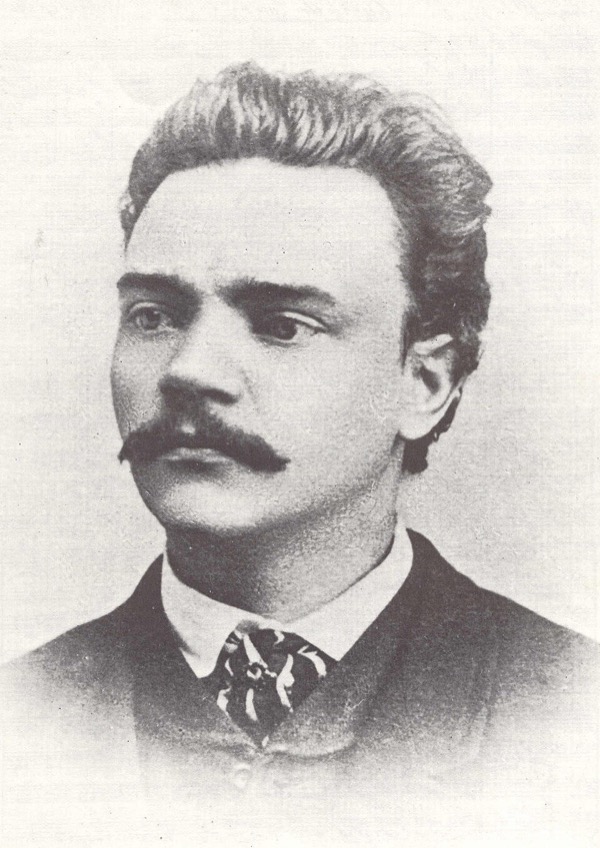
Antonín Dvořák, 1868
Antonín Dvořák: Cypresses, “So many a heart is as though deaf”
The Poet Behind Cypresses
The initial collection of lyrical and epic poems emerged from Dvořák’s attempt to find his voice as a composer. And for his love song, Cypresses, he drew on the poetry of Gustav Pfleger Moravský.
Moravský grew up in Prague and received a German-language education. However, during the Revolutions of 1848 in the Austrian Empire, he became more aware of his Czech nationality.
Eventually, Moravský was conversant in six languages, but a lung disease forced him to abandon regular studies. He found employment as a bank clerk, but found his work so monotonous and boring that he started travelling throughout Germany.
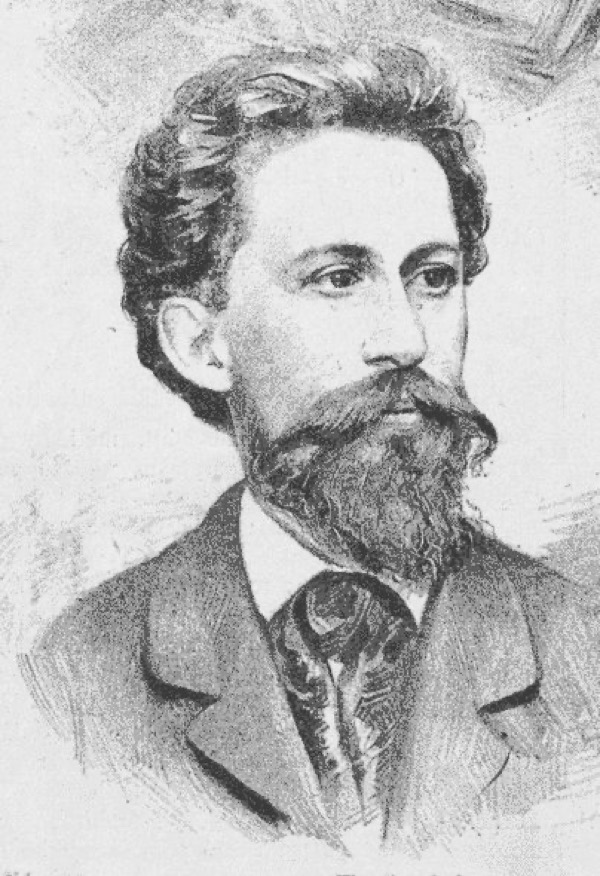
Gustav Pfleger Moravský, poet
Antonín Dvořák: Cypresses, “Nature lies peaceful in slumber and dreaming”
Poems of Love and Longing
He had actually started to write poetry during his time at the bank, and he published his first collection of poetry titled Dumky in 1857. This collection was not very successful, but things changed with Cypresses in 1861.
It soon became a well-regarded book within the Czech National Revival, as the cypress tree carries a number of associations ranging from mourning and melancholy to death.
In fact, it is a larger collection of lyric and narrative verse, and Dvořák selected his texts from a subsection called “Songs.” The poetry features a young lover caught between rapture and despair.
Antonín Dvořák: Cypresses, “I know that My Love to Thee”
The Language of Longing
In these poems, we find one of the most important genres of 19th-century song, the “Liebesbotschaft” (Love Message). These poems unfold as intimate monologues to an absent beloved.
Invariably, the poems deal with unrequited love, longing, and emotional distance, and nature as a mirror of emotions. We also find dreams and distant memories dealing with idealised femininity.
And a good number turn to landscapes, like nightly forests, mountains, and twilight imagery, as emotional extensions of the self. They present sentimental but deeply sincere emotions.
Antonín Dvořák: Cypresses, “You are asking why”
Echoes Across Time
When Bendl looked over the original Dvořák setting, he wasn’t particularly excited. Apparently, he told the budding composer that the declamation was poor in many places. Within a year, Dvořák conceded with delight that Bendl’s statement was right on the money.
In 1887, Antonín wrote to his publishers, “These little compositions were originally 18 songs, four of which were published as Op. 2. I wrote them in 1865 and now, after 22 years, I have arranged them for string quartet under the title The Echo of Songs.”
Dvořák tellingly added, “Just imagine a young boy who is in love—that is the content of Cypresses.”
Antonín Dvořák: Cypresses, “Here I gaze at that dear letter”
A Second Life for First Love
Let’s not forget that Dvořák was at the height of his powers in 1887. He had completed his oratorio Saint Ludmila, commissioned by the Leeds Festival, just one year earlier. He also worked on a private commission for a Mass and the Terzetto, with the Piano Quintet also taking shape.
The early love songs had always been on Dvořák’s mind, as he revised four of them and published them in 1882. Eight other songs appeared in Berlin in January 1889 under the title Love Songs.
These twelve songs served as the basis for the string quartet version. Dvořák in no way altered their vocal essence, as the melodic expression is taken by the violins. The viola and cello, in turn, share the keyboard part.
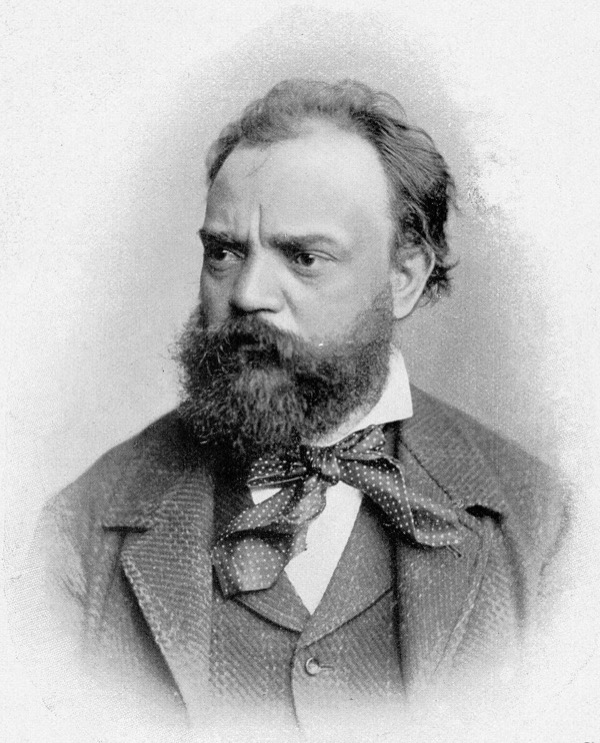
Antonín Dvořák, 1882
Antonín Dvořák: Cypresses, No. 9 “Thou Only, Dear One”
The Music of Remembering
The original songs are clearly recognizable in these string quartet arrangements, with melody lines, rhythm, and harmony basically unchanged. Dvořák changed some keys, and half of the songs are extended by repetition resulting from interchanges of materials to different instruments.
The twelve Cypresses for string quartet, as we know them today, were not published until 1957. Dvořák’s son-in-law had published ten of them in 1912. This set musically goes from contemplation of the fleeting nature of human love to increasingly ardent declarations of love.
It ends with a feeling of urgent questioning that alternates with answers of greater serenity.
It is a youthful collection of love letters preserved long after they had originally been written. In their string quartet version, they came back to life by combining simplicity of utterance with the accomplished technique of a mature composer.
In Cypresses, the mature composer looks back tenderly on the passions of youth. These melodies are still filled with nostalgia and longing, but they are now illuminated by memory and by experience. People say that you never forget your first love. You may leave your first love, but it never truly leaves you.
For more of the best in classical music, sign up for our E-Newsletter