Following his First Prize triumph at the 2018 Queen Elisabeth Competition, baritone Samuel Hasselhorn has established himself as one of the most versatile artists of his generation. He is equally at home on the operatic stage, in art song, and as a concert performer.
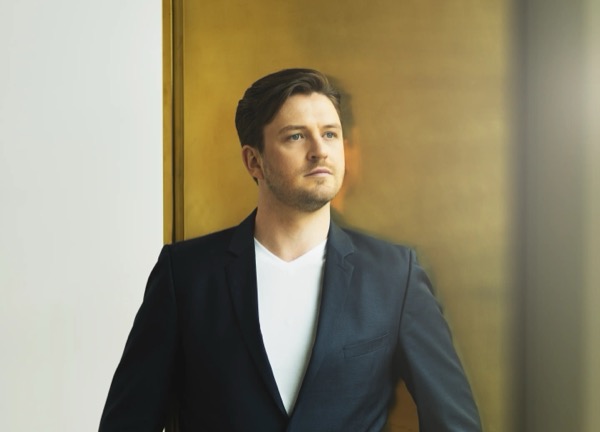
Samuel Hasselhorn
Hasselhorn started in a children’s choir, but in time his voice grew into a seasoned baritone. He quickly realised his dream when he became a permanent member of the Vienna State Opera ensemble. In 2020, however, he left because the constant rehearsals and relentless demands of performing opera roles left him with no time for his great love, art song.
He currently pursues both, and to celebrate his birthday on 15 May, let us feature a 2024 Harmonia Mundi release. Titled “Urlicht: Songs of Death and Resurrection,” it features Samuel Hasselhorn, conductor Łukasz Borowicz, and the Poznań Philharmonic Orchestra.
Samuel Hasselhorn performs Mahler: Revelge
Decline and Transformation
The programme designed by Hasselhorn features stand-alone lieder, operatic arias and ballads for voice and orchestra, all reflecting the strains of central Europe during the Fin-de-siècle period.
Even though the composers belong to different generations, they share a common attitude toward a disillusioned world, one affected by political and ethnic divisions and marked by fear of rapid urbanisation and industrialisation.
This particular period in history, a time of great instability, was darkened by international tensions that would lead up to the First World War. In this album, and on a personal level, Hasselhorn draws parallels between the turn of the 20th century and the current social and political tensions.
Erich Wolfgang Korngold: Die tote Stadt, Op. 12, Act II: Mein Sehnen, mein Wähnen (Samuel Hasselhorn, baritone; Poznań Philharmonic Orchestra; Łukasz Borowicz, cond.)
Songs of Death and Disappearance
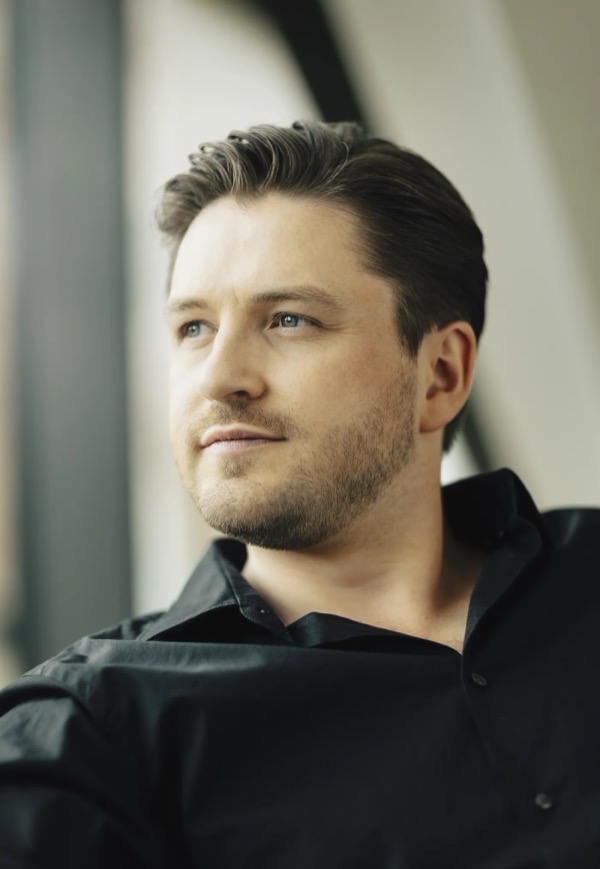
Samuel Hasselhorn (© Nikolaj Lund)
All of the texts presented deal with death. We find the death of children whose royal lineage is revealed in the finale of Humperdinck’s Königskinder, and of a fiancé on the eve of his wedding in Pfitzner’s Herr Oluf.
Soldiers die in their teens in Mahler’s Revelge and Braunfels’ “Auf ein Soldatengrab,” and the impossibility of finding closure after losing a loved one is expressed in Korngold’s Die tote Stadt and Zemlinsky’s Zwei Gesänge.
The poems frequently lend themselves to more than one interpretation, and may also focus on the figure of the artist, depicting his or her withdrawal from the world and the powerlessness to redeem society.
Alexander Zemlinsky: Der alte Garten (Samuel Hasselhorn, baritone; Poznań Philharmonic Orchestra; Łukasz Borowicz, cond.)
Despair to Transcendence
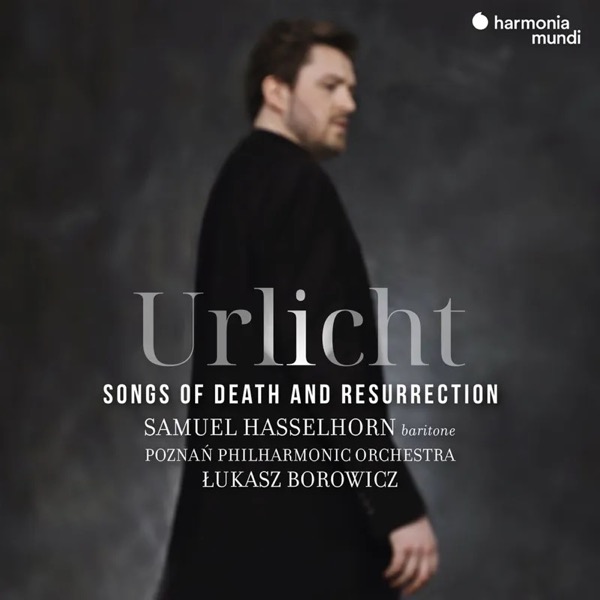
Samuel Hasselhorn: Urlicht — Songs of Death and Resurrection (Harmonia Mundi, 2024)
The title of the album, “Urlicht,” is a setting of a poem from Des Knaben Wunderhorn that Mahler reused in his Second Symphony. “Urlicht,” or Primal Light, is at the centre of it all, with death always present.
In its entirety, the album presents a programme that explores mortality, consolation, and transcendence. Not particularly uplifting in sentiment, but it all fits into the overall narrative.
This is not elevator music; the album calls for attentive listening. And it is this focus on introspection and seriousness that is widely considered its strength. It also plays to Hasselhorn’s strengths, combining his literary sensitivity with his nuanced phrasing and clear diction.
Engelbert Humperdinck: Königskinder, Act III: Verdorben! Gestorben! (Samuel Hasselhorn, baritone; Poznań Philharmonic Orchestra; Łukasz Borowicz, cond.)
Living Tradition
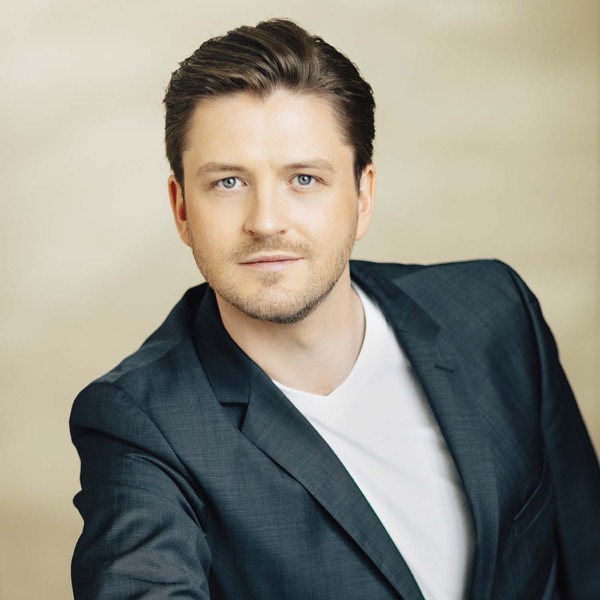
Samuel Hasselhorn (© Nikolaj Lund)
Hasselhorn presents a carefully constructed artistic vision. And while the emotional world is consistently dark, he avoids monotony and stasis by selecting a variety of composers and different orchestral colours. In the featured selections, the lied, after all, was part of the operatic fibre of the time.
Hasselhorn emerges as a thoughtful artist whose interpretations are concerned with meaning and structural coherence. As such, he follows in the traditions of the great Lied interpreters of the German-Austrian school, for whom text and musical architecture are inseparable.
For more of the best in classical music, sign up for our E-Newsletter
Gustav Mahler: Rückert-Lieder: No. 3. Ich bin der Welt abhanden gekommen (Samuel Hasselhorn, baritone; Poznań Philharmonic Orchestra; Łukasz Borowicz, cond.)