Felix Mendelssohn (1809–1847) traveled to England and Scotland in 1829, and that visit was important for his musical writing, as it was the source for not only his Third Symphony but also for The Hebrides Overture, despite them being written nearly a decade apart.
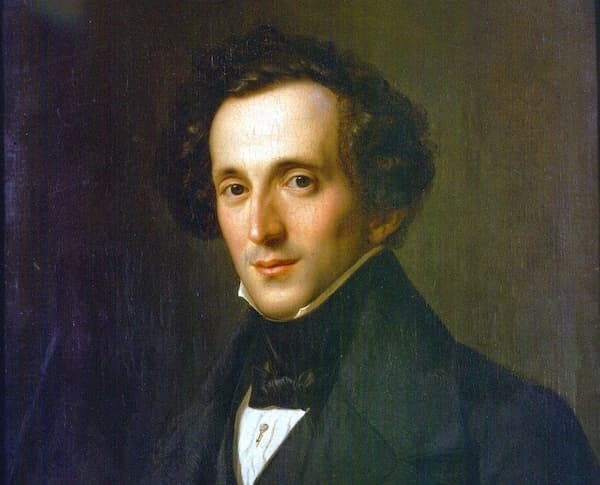
Theodor Hildebrandt: Felix Mendelssohn Bartholdy, 1834 (Leipzig: Mendelssohn Haus)
Upon arriving in Scotland in 1829, he visited Holyrood Palace, home to Mary, Queen of Scots (1542–1587), in Edinburgh and was immediately inspired to begin writing his symphony.
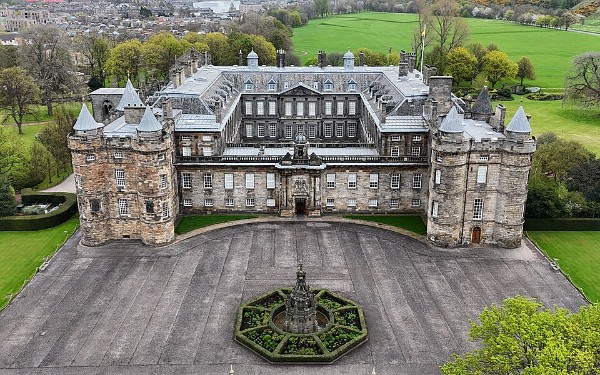
Holyrood Palace today (photo by 瑞麗江的河水)
In a letter to his family, he described the site as ‘…where Queen Mary lived and loved’ and goes on to describe it: ‘The chapel below is now roofless. Grass and ivy thrive there and at the broken altar where Mary was crowned Queen of Scotland. Everything is ruined, decayed, and the clear heavens pour in. I think I have found there the beginning of my “Scottish” Symphony’. With the letter, he sent some bars of what would become the opening theme.

The Ruins of Holyrood Abbey (photo by XtoF)
He also visited the site of the murder of David Rizzio, secretary to Mary, who was killed in 1566, presumably because of his closeness to the queen, inspiring him to put him in the symphony as the love interest.
On his tour, Mendelssohn visited western Scotland and the island of Staffa, which inspired The Hebrides. He completed The Hebrides in 1830, revised it in 1832, and published it in 1833. Described as a concert overture, the work is considered by some to be an early tone poem, a genre generally thought to have begun in the 1840s.

The Island of Staffa
To return to the Scottish Symphony, as the Third is known, Mendelssohn continued to work on it for another decade. He worked on the initial sketches during his 1831 Italian tour, but then he seems to have set it aside for a while. He resumed the work in earnest in 1841 and completed it in Berlin in January 1842.
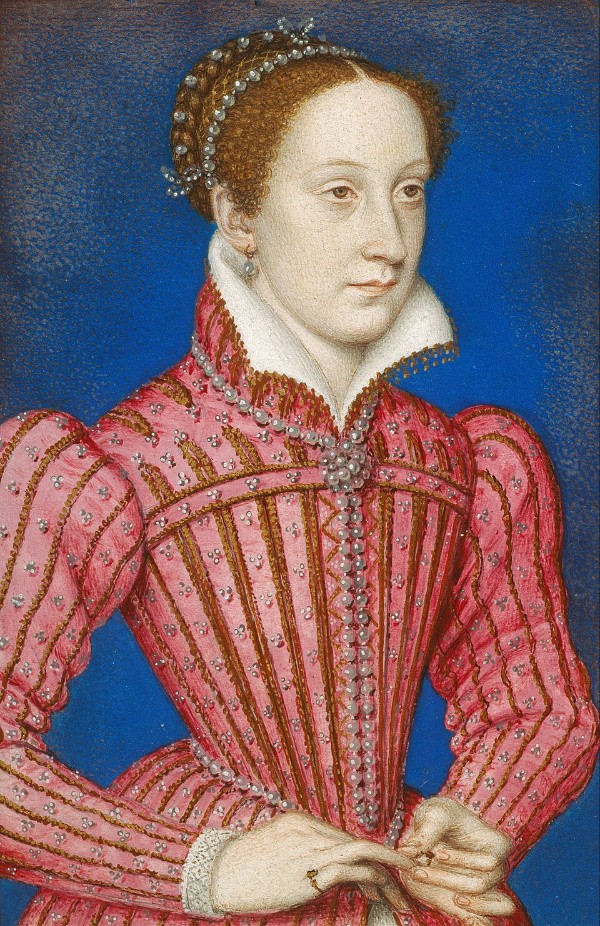
François Clouet: Mary Queen of Scots, age 17, ca 1560 (Royal Collection)
Nomenclature is a problem. Although the work was the fifth (and final) symphony by Mendelssohn, it was the third to be published and has always been known as Symphony No. 3. The ‘Scottish’ name was never given to the work by the composer (except in that 1829 letter to his family), and it was only after Mendelssohn’s death when the Scottish link became known that the name was attached. Audiences focus on the picturesque details of the work, hearing it as presenting the wild Romantic landscapes of Scotland, which often leads them to overlook its musical qualities.
Mendelssohn intended the whole symphony to be performed without a break between movements, and to support this, he based all of the symphony’s themes on his original musical idea, which he’d sent to his family so long ago.
This version is based on the one prepared for the symphony’s London premiere in 1842, after which he dedicated the work to Queen Victoria.
The work starts with a dark and stormy first movement, continues with a vivacious scherzo, returns to a slow movement described as a ‘struggle between love and fate’, with shades of the ill-fated David Rizzio, and then closes with a final movement that owes much to Scottish folk dance.
One writer described the third symphony as a musical journey ‘into inner awareness, into the collective subconscious, into the “ancient days” of Romantic legend, for which the Scotland of poetry and narrative furnished the ideal backdrop’. As Mendelssohn’s ship approached the island of Staffa, the waves grew worse, and so did Mendelssohn’s sea-sickness. As a traveling companion wrote to the Mendelssohn family, the composer was ‘on better terms with the sea as an artist than as a man, or as a stomach’.
Felix Mendelssohn: Symphony No. 3 in A Minor, Op. 56, MWV N18, “Scottish” – I. Andante con moto – Allegro un poco agitato (Les Ambassadeurs – La Grande Écurie, Ensemble; Alexis Kossenko, cond.)
The second movement, Scherzo, seems to be filled with little Scottish melodies, but no sources have even been discovered, so the melodies and their Scotch snap rhythm remain unknown. The Scotch snap is a syncopated rhythm, with a short, accented note followed by a longer note, reversing the usual pattern of a long note followed by a shorter one to fill out a beat.
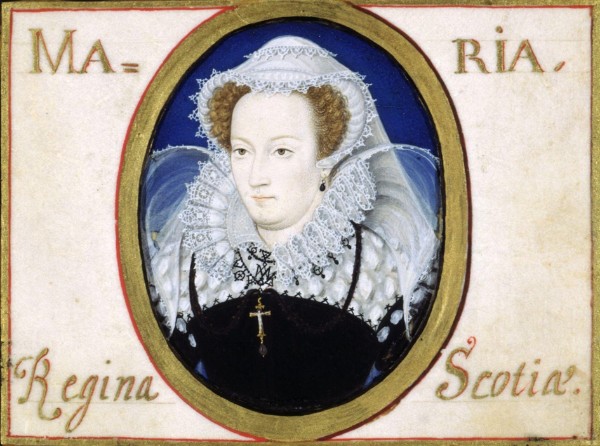
Nicholas Hilliard: Mary Stuart, Queen of Scots, ca 1578 (Victoria and Albert Museum)
Felix Mendelssohn: Symphony No. 3 in A Minor, Op. 56, MWV N18, “Scottish” – II. Scherzo: Vivace non troppo (Les Ambassadeurs – La Grande Écurie, Ensemble; Alexis Kossenko, cond.)
The Adagio, filled with longing and melancholy, could correspond to Mendelssohn’s letter from Edinburgh where he describes the ruins of Queen Mary’s palace: ‘“In the late dusk today we went to the palace where Mary Queen of Scots had lived and loved, where there is a little chamber to be seen, with a spiral staircase to the door; there they climbed up and found David Rizzio in the little chamber, dragged him out, and three rooms from there is the dark corner in which they murdered him. The chapel by it is roofless now, overrun with grass and ivy, and the broken-down altar is the spot where Mary was crowned Queen of Scotland. It all lies in ruins, crumbling and exposed to the open sky’.
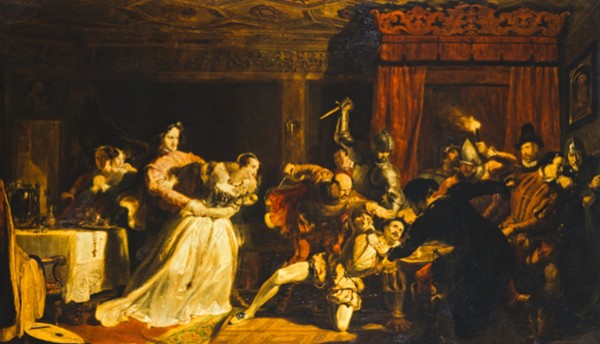
William Allan: The Murder of David Rizzio, 1833 (National Galleries of Scotland)
Felix Mendelssohn: Symphony No. 3 in A Minor, Op. 56, MWV N18, “Scottish” – III. Adagio (Les Ambassadeurs – La Grande Écurie, Ensemble; Alexis Kossenko, cond.)
The final movement returns to the dashing waves and outdoor scenes of Scotland.
Felix Mendelssohn: Symphony No. 3 in A Minor, Op. 56, MWV N18, “Scottish” – IV. Allegro vivacissimo – Allegro maestoso assai (Les Ambassadeurs – La Grande Écurie, Ensemble; Alexis Kossenko, cond.)
Although Mendelssohn didn’t finish the symphony before he travelled onto Italy, he found the blue skies and temperate clime of the south made it impossible to return to his stormy northern work. He set the work aside and only took it up again a decade later. The work remains a favourite of audiences, who despite Mendelssohn’s own dismissal of a program, find their own Scottish story in the music.
Come tour Scotland with one of its most discerning chroniclers!
For more of the best in classical music, sign up for our E-Newsletter