23 January 2020. A day the earth seemed to stand still. A day that will be remembered for generations to come.
Just twenty-four hours before the Chinese New Year’s Eve, when the population of the world’s most populous country was on the move to reunite with loved ones for the year’s most important celebration, an extraordinary announcement was made. Wuhan, the provincial capital of Hubei and a city of more than eleven million people, would enter lockdown.
All transport links in and out of the city were suspended on 23 January. No one could enter or leave. What followed was seventy-six days of strict confinement in the megacity, as documented in 76 Days, a 2020 documentary film. It was the beginning of a crisis that would unfold across the globe. Over the next three years, the Covid-19 pandemic would reach every corner of the world, leaving a lasting scar on all humanity, a calamity of biblical proportions rivalled only in scale by Noah’s flood since the dawn of civilisation.
Watching From Space the Earth Burn
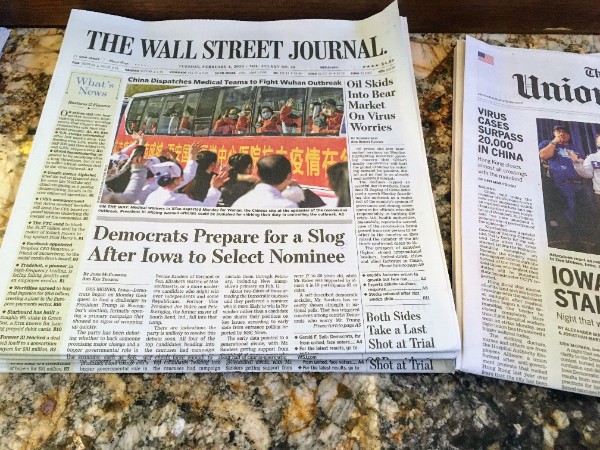
The Wall Street Journal on Coronavirus in Wuhan
News of the lockdown travelled fast and reached the United States within seconds. It was just another quiet and sunny afternoon in Washington, D.C., when I was travelling with two busloads of musicians from the Shanghai Chinese Orchestra as its PR specialist, preparing for the concert that evening at the Kennedy Centre. The programme starred two Grammy Award-winning musicians: conductor Muhai Tang (湯沐海) and erhu master Ma Xiaohui (馬曉輝). It was the first concert of a fortnight-long tour across the United States, from coast to coast.
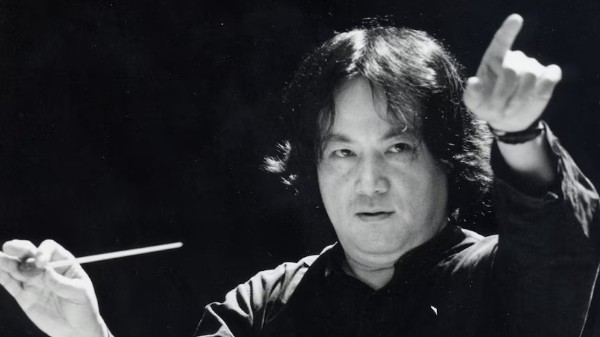
Muhai Tang © Melbourne Symphony Orchestra
That afternoon backstage, it became clear to me that a lockdown of such magnitude and suddenness had stirred a psychological tsunami among the touring musicians, in what had been intended as a concert of celebration for the Chinese New Year. The orchestra leadership soon suggested that musicians record short video messages backstage before the concert, cheering up friends and family back in China and sending prayers and comfort to those in need.
Except for four musicians who were weeping quietly in a corner. An orchestra manager told me they were from Wuhan and had family locked inside the city, battling the coronavirus.
“Leave them alone,” he said. “They’ve had too much.”

Ma Xiaohui © Wikipedia
I had often seen in science fiction and action films how the lives of ordinary people could be changed overnight. Now I realised that I was witnessing the lives of touring musicians, myself included, being changed overnight in real time, in the real world.
It felt surreal, as if I were on board the International Space Station, watching Armageddon unfold across the Earth in front of my eyes through a small window. There was nothing I could do to stop it.
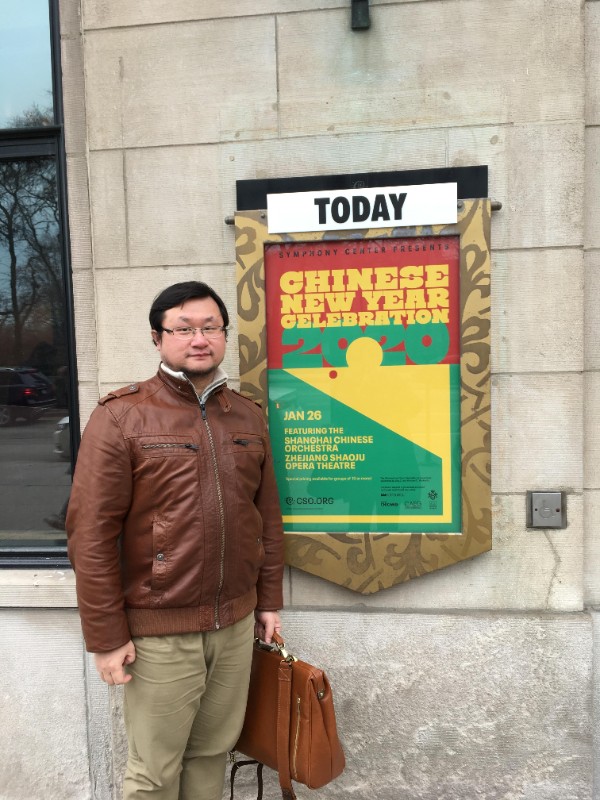
Photo taken at the Chicago Symphony Hall
Struggling to grasp the scale of the crisis and its consequences, I wrote the following on social media when the tour was halfway through:
“When some eighty musicians of the Shanghai Chinese Orchestra boarded the flight from Shanghai to JFK on January 20, the coronavirus was still distant and hazy, some 7,000 miles away from home and believed to be contained. When they finally checked into their hotel in Washington after nearly twenty-four hours of travel, what had seemed a local hazard had turned the country into a war zone: cities locked down, public transport halted, hospitals overcrowded, the prices of daily necessities soaring, and masks sold out everywhere.
Facing this biblical epidemic, as the nation gradually descended into an inevitable downward spiral, musicians worried about their families. On stage across seven American cities, they are virtuoso performers of Chinese instruments celebrating the Lunar New Year. Off stage during the day, they are fathers, mothers, daughters and sons, hunting for survival supplies like masks and hand sanitiser, visiting one Home Depot, lumber yard or CVS after another, even at seven in the morning in the cold rain, trying to assemble a lifeline for the people they love most.
The tour of the Shanghai Chinese Orchestra should have been no different from the countless orchestral tours that pass through the United States every year. But what happened over the past week has already made this journey extraordinary — tragic, yet epic: a struggle for the survival of loved ones back home.”
As a music journalist, I decided to document the social and psychological impact of COVID-19 on musicians and how musicians, particularly composers, chose to respond to this global phenomenon.
Compose for Human Suffering
An article in The New York Times gave me unexpected inspiration and encouragement. The 1918 Pandemic’s Impact on Music? Surprisingly Little, written by William Robin and published on May 6, 2020, raised an intriguing question about the possible musical legacy of Covid-19.
I felt compelled to help fill that gap, if only partially.
In the years that followed, through the places I visited, the concerts I attended, and the composers I spoke with, I began tracing the musical responses to Covid-19 by living composers, many of them Chinese. My approach resembled that of an archaeologist, searching patiently for fragments and clues, leaving no stone unturned. For works written in 2020 and afterwards, I would first study programme notes and read between the lines, then speak directly with composers discreetly to understand their intentions.
Composers do not live in a vacuum. Like novelists, painters, or sculptors, they respond to the world around them. But composers possess a unique medium through which to express the human suffering they witness or experience.
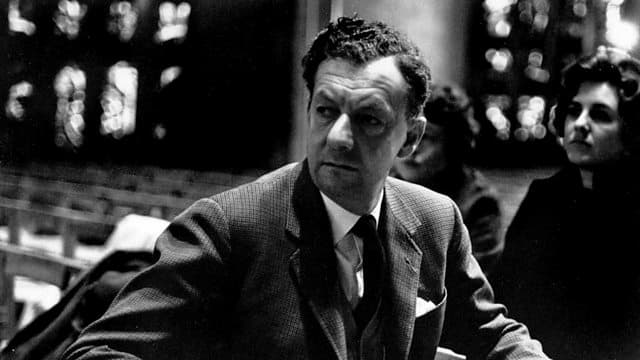
Benjamin Britten
Some responses are explicit. Benjamin Britten’s War Requiem, Op. 66, is widely regarded as a landmark twentieth-century work of pacifist and humanitarian art. Commissioned for the reconsecration of Coventry Cathedral in 1962 after its destruction during the Second World War, the work stands as a memorial “to the dead of all wars,” combining the Latin Requiem Mass with the poetry of Wilfred Owen.
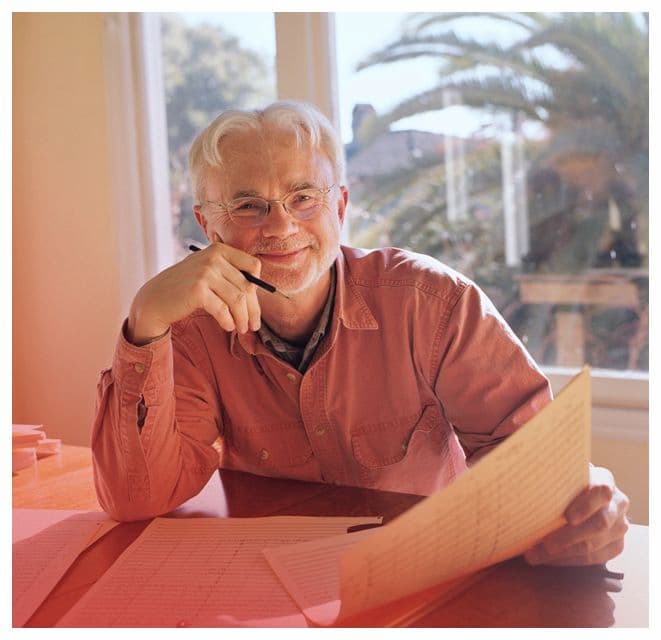
John Adams
John Adams’s On the Transmigration of Souls (2002) was composed in memory of the victims of the September 11 attacks, though the composer emphasised that the piece seeks to evoke a broader human experience beyond that specific tragedy.
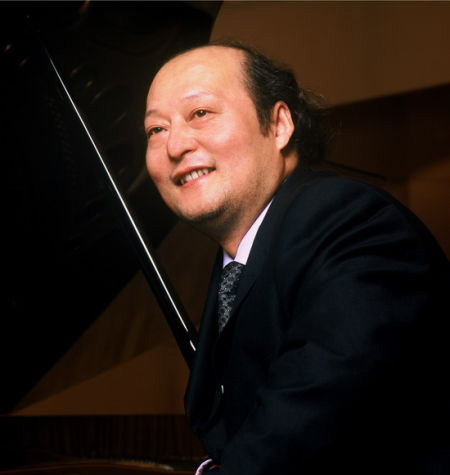
Guan Xia © sin80.com
In China, Guan Xia’s Earth Requiem (2009), the first modern requiem sung in Chinese and structured after the Catholic mass, commemorated the devastating Sichuan earthquake of 2008 that claimed around 80,000 lives. Guo Wenjing’s percussion concerto Rite of Mountains, also written in 2009, belongs to a similar emotional sphere. Ye Xiaogang’s My Faraway Nanjing (2005) for cello and orchestra carries the heavy historical memory of the Nanjing Massacre of 1937.
Ye Xiaogang: My Faraway Nanjing
Other musical responses are more subtle, embedded within the music itself. Richard Strauss’s Metamorphosen (1945) for twenty-three solo strings is widely interpreted as a lament for the destruction of German culture at the end of the Second World War. Toshiro Mayuzumi’s opera Kinkakuji (The Temple of the Golden Pavilion), premiered in 1976, explores the destruction of beauty through the story of a monk who burned down Kyoto’s famous temple, reflecting the deeper trauma of post-war Japan.
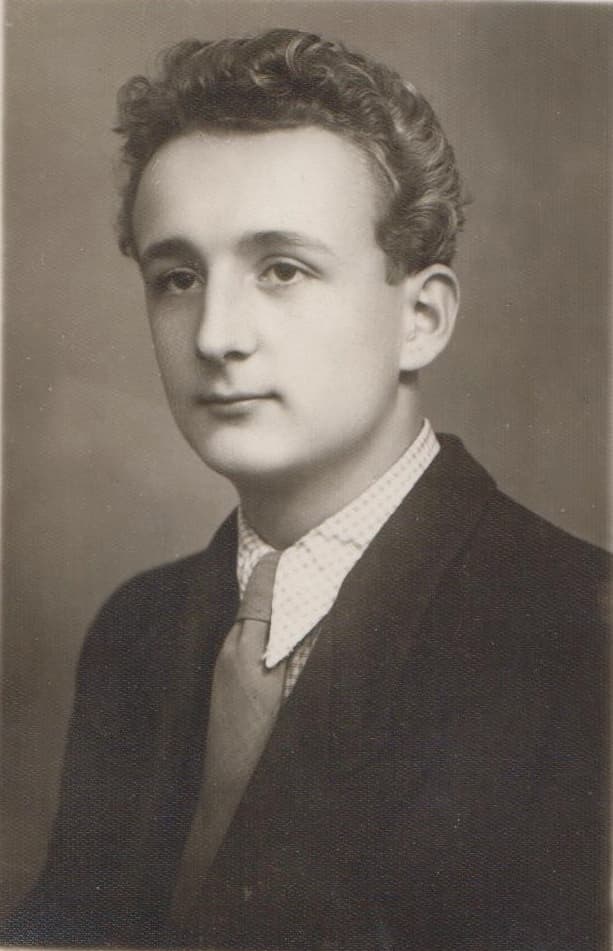
Krzysztof Penderecki, 1950
Krzysztof Penderecki’s Threnody to the Victims of Hiroshima was originally titled 8’37”, referring only to its duration. Composed as an abstract exploration of sound, the work acquired its dedication only after the composer heard its devastating sonic impact.
Within the riddles and rhythms of music, composers weave the threads of melody through which we perceive the world. As they lived through the shadow of COVID-19, what music would they create in response?
From Wuhan, the Ground Zero
As the first city to enter lockdown during the pandemic, Wuhan became the symbolic ground zero. Its distinctive musical culture quickly became a source of inspiration for the creative minds.
Within the global percussion community, Wuhan is famous for producing some of the world’s finest gongs and cymbals. Using centuries-old forging techniques and high-quality B20 bronze, local artisans create instruments known for their complex, breathy and explosive sonic character.
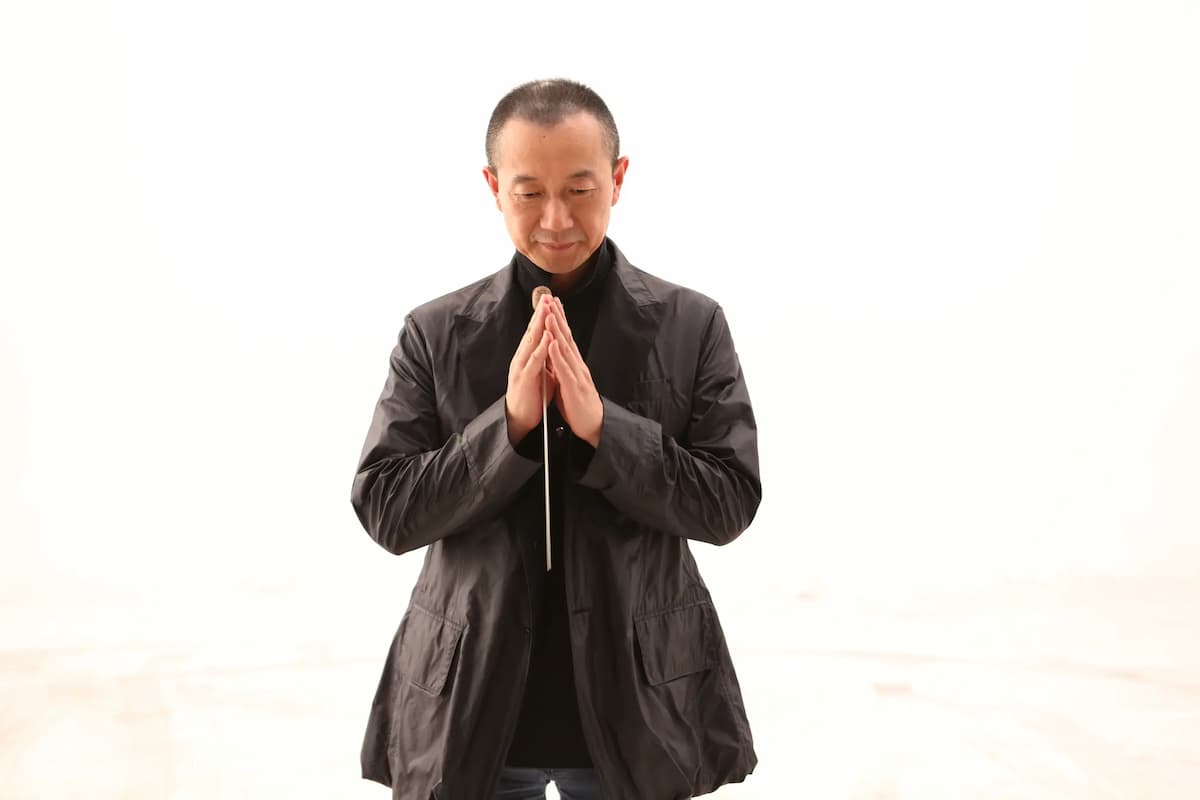
Tan Dun
It was therefore fitting that Tan Dun chose these instruments as the centrepiece of his response. His work Sound Pagoda – The 12 Sounds of Wuhan was premiered by the Antwerp Symphony Orchestra at the Queen Elisabeth Hall in Antwerp on 15 February 2020, with the composer conducting.
The work carries Tan Dun’s signature theatrical style, incorporating unconventional percussion elements such as bowls of water. The opening clashes of gongs and the swelling crescendos seem almost to echo the cry of an “innocent victim,” the people of Wuhan to whom the work was dedicated.
According to Xinhua News Agency, the piece was written to honour Wuhan’s percussion instruments, and the concert became one of the first gestures by the international music community to express solidarity with the city at the centre of the outbreak.
World premiere «Sound Pagoda – Twelve Sounds of Wuhan» by conductor/composer Tan Dun
Tan Dun may have been among the first composers to respond musically to the crisis, but he was not alone.
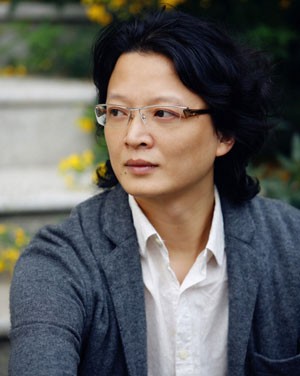
Zhao Xi © sin80.com
Around the same time that Tan’s work was premiered, Zhao Xi (趙曦) was developing a composition of his own — one that also placed Wuhan’s gongs at its centre.
Zhao Xi, a Wuhan-based composer and dean of the composition department at the Wuhan Conservatory of Music, received a voice message on 20 February 2020, the twenty-eighth day of the lockdown. The message came from Li Bo, a cellist with the Baltimore Symphony Orchestra and a fellow alumnus living in the United States.
Li proposed a new work — not only for himself, but also for the five “Wuhan gongs” owned by the Baltimore Symphony.
For Li, who had grown up in Wuhan but was separated from his family by an ocean during its darkest hour, music became a way to send blessings and longing across distance. For Zhao, who had lived in the city for more than thirty years and was experiencing the lockdown firsthand, the impulse to respond was immediate.
The result was Silence… In Between the Paper and Ink, a concerto for cello and orchestra composed during the Wuhan lockdown and premiered on 22 May 2021 by the Baltimore Symphony Orchestra at the Joseph Meyerhoff Symphony Hall.
The emotional core of the work was shaped by images from the lockdown: letters written by children to mothers serving on the medical frontlines; petitions bearing rows of red thumbprints from the “warriors in white,” the healthcare workers fighting the virus; and the final words of first responders who died in the line of duty.
As the seventy-six days of lockdown passed, Zhao witnessed the extraordinary resilience of the city. His music seeks to capture that collective spirit — the feeling of spring arriving in the dead of winter — affirming the belief that love and hope can spread faster than any virus.
According to Zhao, the work is anchored by three symbolic sound worlds: the five Wuhan gongs, the traditions of Han Opera, and the cultural heritage of the ancient Chu region.
“The work is a tribute to Wuhan and its people,” he said. “It is a musical testament to the millions of medical workers, volunteers, and ordinary citizens who endured the crisis together while waiting for the city to reopen. It is a story of mourning, struggle, and ultimately of hope.”
A chamber version of the piece was later premiered in Shanghai during the Shanghai Contemporary Music Festival in 2022, a performance preserved today in an amateur recording online.
ZHAO Xi: Silence…In Between The Paper and Ink
To be continued…
For more of the best in classical music, sign up for our E-Newsletter