Felix Mendelssohn (1809-1847) is often painted as the polite and well-mannered Romantic. We certainly know him as the composer of fairy wings, sparkling scherzos, and elegant melodies. But as soon as you spend a little time at the piano with him, another side quietly reveals itself.
Beneath the clarity and balance lies a deep pool of emotions and feelings. We find longing, tenderness, melancholy, and even moments of real storm.
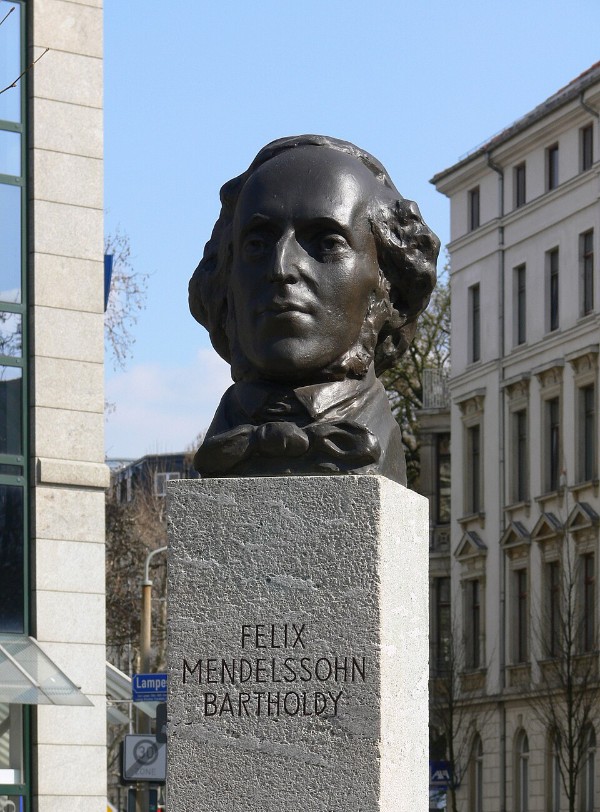
Felix Mendelssohn
Mendelssohn’s piano music doesn’t shout its emotions, but rather whispers and sings them. They naturally unfold under the fingers. A simple melody can ache with nostalgia, or a flowing accompaniment can feel like a gentle memory.
To celebrate Felix Mendelssohn’s birthday on 3 February, let’s take a tour of ten of his most emotionally resonant works for the piano.
Felix Mendelssohn: “Venetian Boat Song “in F-sharp minor, Op. 30 No. 6
Venetian Boat Song I
What I love about these works is how naturally the emotions unfold. Nothing is forced. Just listen to how this “Venetian Boat Song” sets you gently adrift from the very first rocking motion.
Nothing dramatic happens, and that’s really the point. The left hand sways like water under a gondola, while the melody seems to float just above it. It’s almost hypnotic, like watching reflections dissolve on the waters of the Canale Grande.
Did you notice that the melody sounds as if it’s coming from far away? It’s not a place but nostalgia, actually a feeling that you can’t quite return to.
There is gentle melancholy, but Mendelssohn never lets the emotion spill over. It just hovers and stays unresolved. To me, this is Mendelssohn at his most honest, sharing a quiet moment of longing.
Felix Mendelssohn: Variations sérieuses in D minor, Op. 54
Variations sérieuses
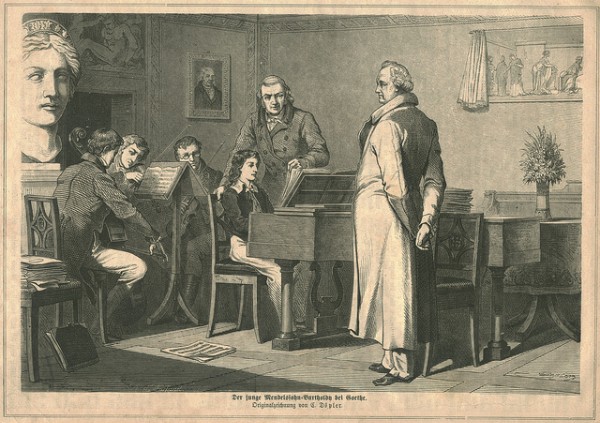
Mendelssohn playing for Goethe
In his Variations sérieuses, Mendelssohn is speaking with real weight. What strikes me is the almost startling seriousness. There is no ornamental charm, no polite smile, just a sense of resolve and inner tension.
Already in the opening theme, you get the sense that something is being worked out rather than simply presented.
As the variations unfold, the emotion tightens and deepens. Some passages feel stormy and driven, pushing forward with a kind of suppressed urgency. Others briefly open into lyricism, offering moments of breathing space.
But even in those calmer sections, the gravity never fully lifts. It all feels like Mendelssohn allows himself some fleeting tenderness, then quickly pulls it back under control. The emotions are powerful, but passion is held firmly in check.
Felix Mendelssohn: Rondo Capriccioso, Op. 14
Rondo Capriccioso
The Rondo Capriccioso is a wonderful piece, with the composer seemingly caught between fire and lyricism. Yet, Mendelssohn never quite chooses one over the other.
The opening “Andante” already carries a sense of restlessness. It feels thoughtful, slightly uneasy, as if something is stirring beneath the surface. It’s full of introspection and even vulnerable before the famous “Presto” bursts in.
This changes the emotional temperature completely, as the energy is electrifying. Besides brilliance and sparkle, there is also urgency and breathless intensity.
There are sharp contrasts as fiery passagework suddenly gives way to singing moments, only to be swept back in motion again. It’s like lyricism trying to keep reasserting itself amid the storm. It’s touchingly beautiful how Mendelssohn can’t resist moment of warmth and song.
Felix Mendelssohn: “Venetian Boat Song” in G minor, No. 6
Venetian Boat Song II
You didn’t really think I would forget Mendelssohn’s most beloved Venetian Boat Song, did you? Op. 19, No. 6 in G minor is surely one of Mendelssohn’s purest expressions of yearning.
From the first gentle rocking of the accompaniment, it feels like being carried forward while emotionally staying in place. The motion never stops, yet nothing truly arrives.
The sense of longing here is personal rather than dramatic. It is something unspoken and carefully guarded. It’s not nostalgia from a distance, but yearning felt in the present moment.
The emotional intensity is constant but subdued, wrapped in a rocking rhythm. The piece simply drifts, carrying quiet desire, until it fades without resolution. It is pure genius!
Felix Mendelssohn: Piano Sonata in G Minor, Op. 105, MWV U30 – II. Adagio (Sontraud Speidel, piano)
Piano Sonata 2 “Adagio”

Felix Mendelssohn
The 2nd Mendelssohn Piano Sonata is a dark and emotionally complex affair, and I really like the “Adagio.” It feels like slipping into a quiet room where the composer is sharing something deeply personal.
It’s like a sigh or a half-remembered memory, incredibly fragile, yet impossibly expressive. You can almost hear the composer thinking aloud as he explores his own heart.
There is a darkness here, but it’s not harsh or violent. It’s a kind of shadow that invites reflection as the music moves gently between introspection and subtle drama.
As with other pieces, the “Adagio” doesn’t give closure. It lingers gently suspended in the air, leaving you in that intimate emotional space with Mendelssohn himself.
Felix Mendelssohn: “Duetto,” Op. 38, No. 6
Duetto

Felix and Fanny Mendelssohn
If you ever wanted to musically eavesdrop on a quiet and heartfelt conversation between two voices, have a listen to the “Duetto” from the “Songs without Words” collection. It’s delicate, intimate, and entirely sincere.
The music moves with a gentle ebb and flow, each line responding to the other as if sharing secrets, confessions, or unspoken emotions. To me, the tenderness here is almost tangible.
Just listen to the balance between melancholy and warmth. Here is a quiet intimacy, a sense of companionship that is both comforting and bittersweet.
The voices converse, intertwine, and occasionally drift apart, yet there’s always a sense of connection holding them together. The “Duetto” doesn’t conclude with a flourish, but simply settles, leaving the listener in the middle of that gentle exchange.
Felix Mendelssohn: “Spring Song”
Spring Song
Do you feel like stepping into the first warm day of spring after a long and icy winter? If so, then the “Frühlingslied” is the ticket for you. There is lightness and freshness in every note, trust me.
That gentle optimism you hear will surely lift your heart. The melody is simple, almost like a bird’s song or the laughter of sunlight on leaves.
It’s delicate, yet surprisingly poignant, carrying a quiet sense of nostalgia beneath its cheerfulness.
Isn’t it amazing how Mendelssohn manages to make something so seemingly simple feel so intimate? There is a great sense of happiness and optimism, and in the end, this wonderful Song without Words leaves you smiling softly.
Felix Mendelssohn: Piano Sonata in E Major, Op. 6, MWV U54 – I. Allegretto con espressione (Lydia Artymiw, piano)
Piano Sonata I “Allegretto”
From the early days of Mendelssohn’s career comes a piano sonata in E Major. The opening “Allegretto” feels like stepping into a sunlit room filled with gentle motion and quiet optimism.
Everything moves with a natural ease, all bright and cheerful, but with a hint of introspection beneath the surface. It feels like an early morning reflection, full of curiosity and subtle joy.
And there is conversation everywhere as themes appear, transform, and respond to one another. Occasionally, there is a touch of longing or hesitation, with the melody pausing or uttering a gentle sigh.
Overall, the “Allegretto” is playful, lyrical, and full of personality. It is a youthful yet deeply expressive glimpse into Mendelssohn’s early piano voice.
Felix Mendelssohn: “Song Without Words” in G minor, Op. 53, No. 3
Song Without Words
And now for some restless energy and unspoken tension. From the very first note of the “Song Without Words,” Op. 53, No. 3, it feels like a storm is brewing beneath the surface. The left hand is racing with urgency while the melody twists and turns with nervous intensity.
There is a great sense of agitation, of a longing that can’t sit still. It is as if the music itself is struggling to find release.
Despite its restlessness, there’s beauty in the way Mendelssohn balances drive with lyricism. Moments of melodic sweetness are softening the turbulence, but they are fleeting.
By the end, the agitation never fully resolves. The music leaves you on edge, charged with emotion and suspense, as if the storm has passed but the tension lingers.
Felix Mendelssohn: Perpetuum mobile in C Major, Op. 119, MWV U58 (Roberto Prosseda, piano)
Perpetuum Mobile
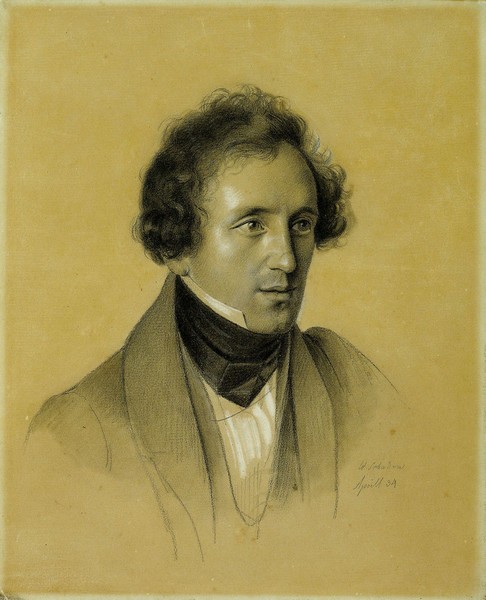
Felix Mendelssohn
As the name implies, the “Perpetuum Mobile” feels like stepping into a whirlwind of motion that never stops. Yet, it remains exhilarating rather than exhausting.
Just listen to how the music propels itself forward in a dazzling cascade of repeated figures that gives the sense of an unstoppable energy. To be honest, the playfulness here is irresistible.
There is beautiful harmonic shading below that darting and sparkling melody, and at the same time, you can sense the precision and control beneath the surface. Mendelssohn could have let the piece run wild, but in the end, he didn’t.
Instead, the “Perpetuum Mobile” leaves you breathless, smiling, and enchanted. It is a whirlwind of energy and joy that lingers long after the last note.
Bonus Track
After the emotional journey we’ve taken through storm, longing, lyricism, playfulness, and contemplation, the Andante con variazioni feels like a peaceful exhale. It brings together many of the emotional threads we have explored.
This work isn’t flashy or fast. Instead, it unfolds like a heartfelt thought that is being slowly revealed. The theme is calm, lyrical, and tender, and each variation feels like that musical thought is explored from a slightly different angle.
Mendelssohn doesn’t seek grand finales or dramatic gestures. Instead, he offers quiet and lyrical meditation that lingers.
As we come to the end of this musical journey, Mendelssohn leaves us with a sense of calm wonder. He offers gentle and contemplative spaces, where music invites inward reflection rather than outward display.
For more of the best in classical music, sign up for our E-Newsletter