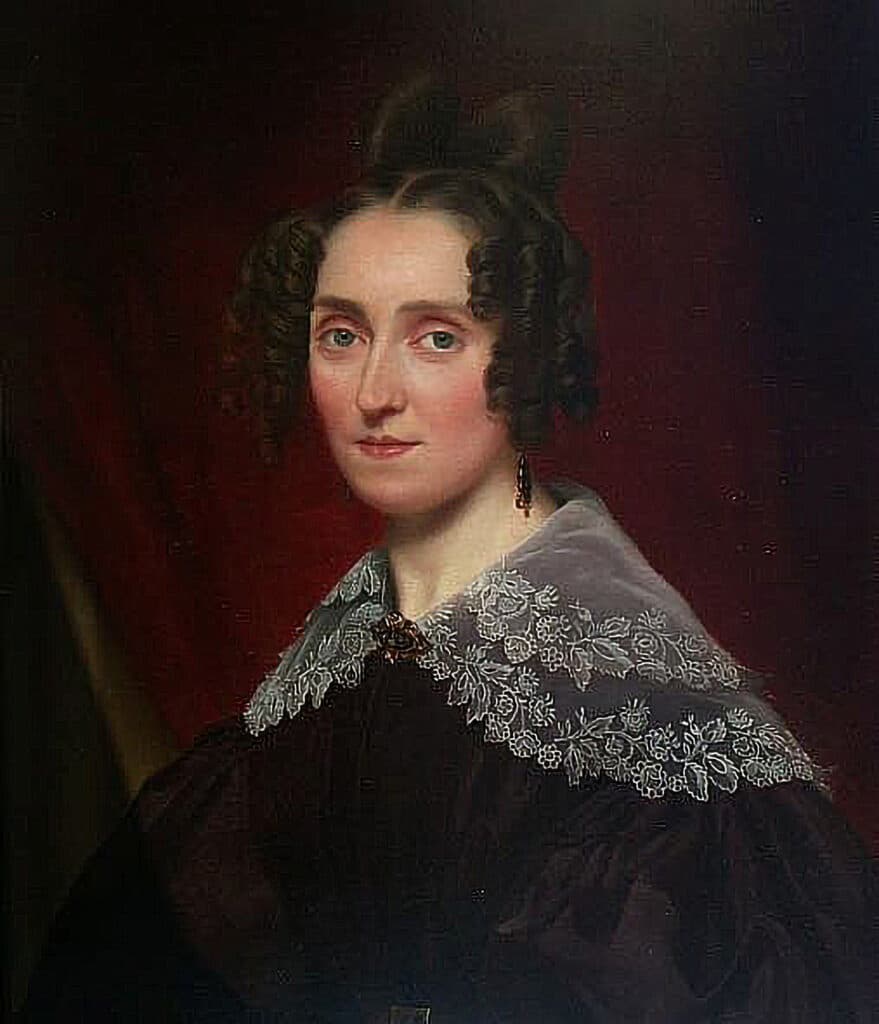
Described as a rare phenomenon in 1878 by the Neue Berliner Zeitung, composer Emilie Mayer (1812-1883) was dubbed the “Female Beethoven” and became one of the most prolific female composers of the 19th century.
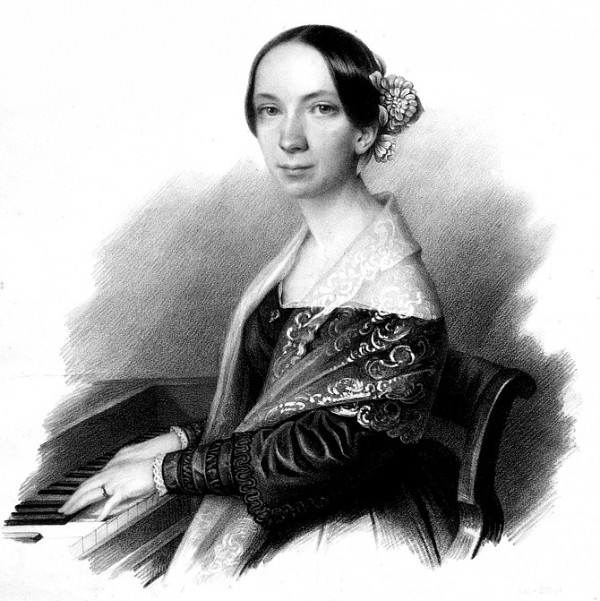
Emilie Mayer
Hailing from Friedland, Germany, she composed an astonishing eight symphonies, seven overtures, piano sonatas, several lieder and numerous chamber works, including seven string quartets, eleven cello sonatas, and eight piano trios, which we know about (although in her letters she does refer to 12 trios). These are lovely works from the mid 1800s and received acclaim in her day. After listening to them and the extraordinary trios in B minor Op. 16, and Op. 12 in E minor from 1861, I believe they deserve to be featured in their own article. I hope you’ll agree.
Despite the tragic death of her mother when she was three, Mayer began piano lessons at age five with the organist Heinrich Ernst Driver. Soon, she was also dabbling in composing. At a time when women were discouraged from pursuing a career, Mayer was encouraged at first by her family and later by her teachers. But life as an artist could never have been realised had her circumstances not changed suddenly. Sadly, her father took his own life, but this left her with an unexpected and large inheritance. Mayer, newly independent, decided to continue her music lessons. She moved to Stettin to study with the well-known composer Carl Lowe. Her first symphonies, the string quartet and piano concerto were composed and performed during this period.
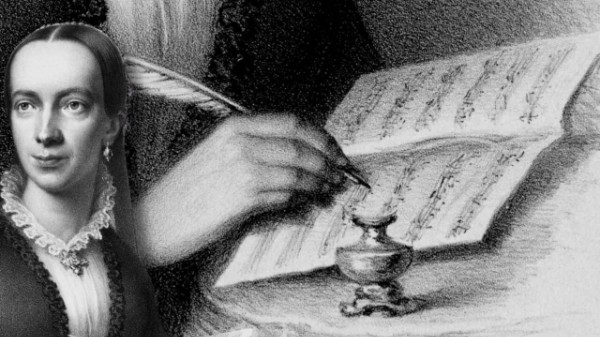
Emilie Mayer
Lowe pushed her to move to Berlin to pursue further studies. Within a short amount of time, her music was performed in Berlin. Her success led to the position of Co-Director of Opera Academy, regular performances of her works in Germany and Austria, and being honoured by prestigious institutions, even royalty.
As a woman, though, she was still at a disadvantage. Male composers often received remuneration from their publishers, but Mayer had to pay for her works to be published out of her own pocket and to stage her own concerts. Despite being the most renowned German woman composer of the age, little of her music was put to print, and after her death in 1883, it was rarely performed.
Three trios for piano, violin and cello by Emilie Mayer—in D minor, E-flat major from 1845-55 and 1859 in A minor—were rediscovered by The Hanover Piano Trio and performed for the first time on November 25, 2021, in cooperation with NDR. Working from the manuscripts while editing them, the trios were published by Furore Verlag with the release of their recordings.
According to the liner notes of the album, the premiere in Vienna in 1856 at the imperial court, “was presided over by Archduchess Sophie – the mother of Emperor Franz Joseph I and mother-in- law of the legendary “Sissi.”” Sadly, there wasn’t a public performance. Mayer would have had to assume all the related performance costs herself.
The Trio in D minor is especially interesting to me as one of my favourite works is Mendelssohn’s Trio in the same key from 1839.
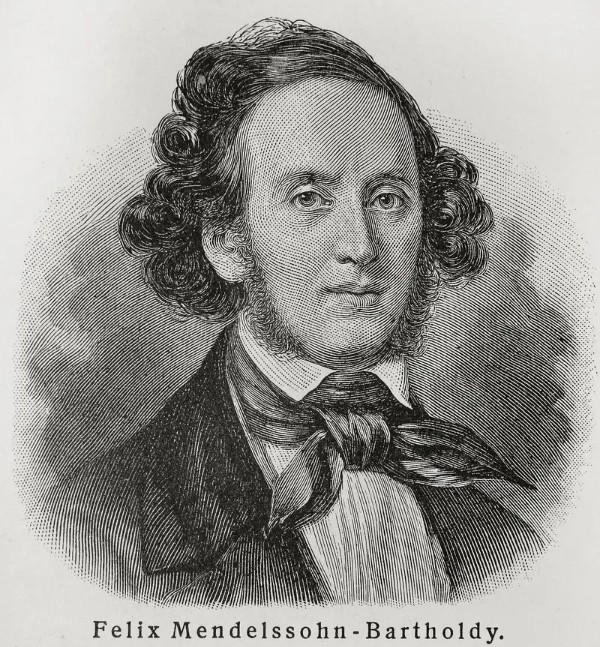
Felix Mendelssohn
The opening movement begins with a solo cadenza in the piano, after which the theme enters with both the violin and cello playing unison— the same lines an octave apart—mysterious and breathless. The mystery of the minor key is dispelled when the cello introduces the light and sunny second theme in the major key. Like Mendelssohn’s Trio, the piano lines are virtuosic and idiomatic for the piano. Mayer continues the pattern of the violin and cello playing in unison until the middle section, where the cello takes on the melody and the violin answers in fancy passagework. The intensity and the tempo increase towards the end of the movement, and it ends brilliantly.
The Finale: Allegro is an infectious, upbeat movement. The violin begins with a rhythmic motif, a triplet to quarter:
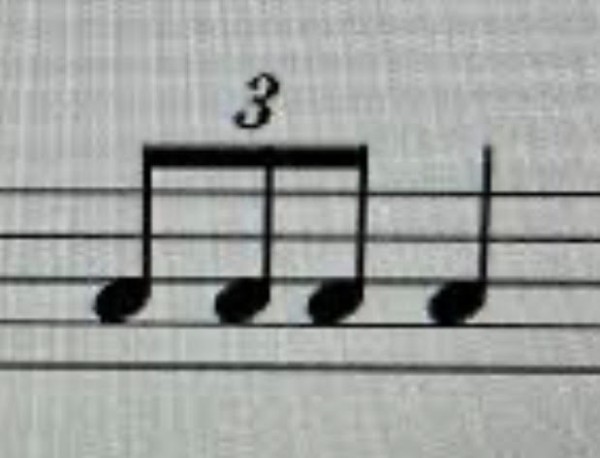
A triplet to quarter note
and the flourishes and quick triplet passagework are adopted in the piano, answered by competing rhythms in the strings— frequently a series of acciaccaturas (a small grace note tied to the main note and played quickly).
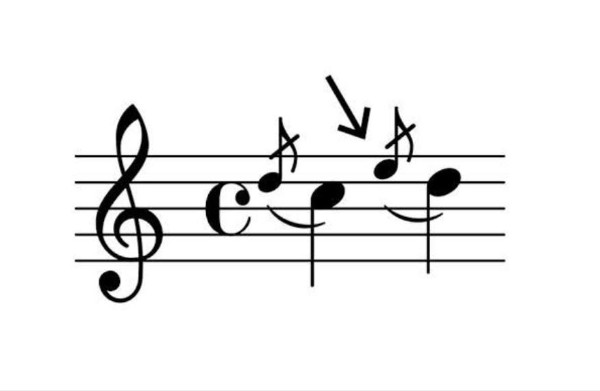
Acciaccatura
The trio ends resolutely with the triplet to quarter rhythmic figure. Written in the classical tradition, the trio is full of captivating melodies and would be a delightful opener to any trio concert program.
Emilie Mayer: Piano Trio in D Minor (2nd version) – I. Allegro (Klaviertrio Hannover, Ensemble)
Emilie Mayer: Piano Trio in D Minor (2nd version) – IV. Finale: Allegro (Klaviertrio Hannover, Ensemble)
The key of E-Flat is often associated with heroic or majestic music, and many great works have been written in this key. Think Beethoven’s Eroica Symphony, written in 1803, his early Piano Trio and the famous Op. 70. No. 2 The Archduke from 1811. Schubert’s monumental Piano Trio No. 2 is in E-flat; Mozart’s trio for clarinet, viola and piano K. 498, the Kegelstatt, published in 1788, is in E-flat, and Felix Mendelssohn’s wonderful Octet Op. 20 from 1825 is also in E-Flat Major. No doubt Mayer might have been familiar with these works. The first movement of Mayer’s Trio No. 3 in E-Flat Major is indeed marked “maestoso.”
The first movement reminds me of some of the above-mentioned classical works and is very much in that tradition. The mood of the first movement is stately and sparkling. The strings play a bit more independently in this trio, often playing motifs that answer each other. The last movement Finale: Allegro non tanto is spirited and enchanting.
Emilie Mayer: Piano Trio No. 3 in E-Flat Major – I. Allegro maestoso (Klaviertrio Hannover, Ensemble)
The following years were characterised by numerous chamber works, including the Trio in A minor—another four-movement work. The scherzo third movement is impressive, beginning in the minor with an impish feel, and a second or “trio” middle section that, through longer notes, rhythmically has breadth, and is a lilting and lovely contrast in the major key.
Emilie Mayer: Piano Trio in A Minor – III. Scherzo – Allegro (Klaviertrio Hannover, Ensemble)
The Trio Vivente from Germany released an album in 2017 of Emilie Mayer’s Trio in B minor Op. 16, the Trio in D major Op. 13, both from 1861, and a six-minute Notturno in D minor for trio Op. 48 from 1883, which may have been her last work.
To give you a taste of the D major trio, as it’s over thirty minutes in length, listen to the Larghetto second movement. It begins in a contemplative mood and a lilting tempo. Halfway through the movement, it becomes more agitated, but the gentle undulating dolce soon returns. It’s lovely.
Emilie Mayer: Piano Trio in D Major, Op. 13 – II. Larghetto (Trio Vivente, Ensemble)
Let’s conclude with two masterful trios. The Ensemble Le Beau recorded the Trio Op. 12 in E minor from 1861 in 2022. About time. This trio is a major composition, and the opening of this trio lets us know it will be a dramatic and powerful journey.
Going back in time slightly, the Sturm und Drang period in music from the late 1760s -1780s centred in Germany, during which composers expressed intense emotions and passion, especially using the minor key, tempo changes, and dynamic shifts. I think this work, although later, reflects this style. It is fervent, full of drama, richly expressive, and commanding as you can hear right from the opening.
Mayer places her formidable scherzo as the second movement, perhaps because the slow movement, Un Poco Adagio, a full nine minutes, is, I feel, the centrepiece of the trio. This slow movement begins with a solo chordal passage in the piano, but the cello then enters with a low E, then D to the open C, the lowest note, introducing depth and mystery. All three instrumentalists have dominant roles in this ardent movement. The finale Allegro Assai, unlike some last movements, is not light-hearted but full and forceful, and the piece ends breathlessly.
Emilie Mayer: Klaviertrio Op. 12 e-moll (1861) Piano trio
The captivating Trio in B minor Op. 16 is also more romantic in style, inventive compositionally, and dramatic. The first movement, marked Allegro di molto e con brio—very quickly and with fire, utilises the strings in a more imaginative and independent way than the previous trios, and it’s increasingly challenging to play. The cello, now liberated, is given responsibility as a full partner. The secondary themes unfold in a wonderful contrast, lighter and in the major key, but the fervour of the opening returns. This movement is virtually symphonic!
Mayer’s slow movements often begin in a chordal fashion. This trio’s second movement un poco adagio does too and is beautifully lyrical. The cello asserts its independence here and is higher in register, no longer tagging along with the violin line.
The scherzo marked allegro assai is over in a mere four minutes, but don’t let its brevity fool you. Mayer alternates between the opening dramatic and mysterious theme to an entirely different character. Suddenly interrupted by a few dissonant held notes, she thrusts us back to the first mysterious theme.
The finale movements of Emilie Mayer’s other chamber works are typically allegro or allegretto in a somewhat lighter tone. But this final movement has a great deal of substance. Mayer uses the triplet to quarter rhythmic figure, which we saw in the other trios, but here I feel they have extra weight, and the harmony is multifaceted. I found it fascinating that the piece ends the same way the D minor trio ends with the triplet to quarter figure, but with even more decisiveness and passion.
Emilie Mayer: Piano Trio in B Minor, Op. 16 (Trio Vivente, Ensemble)
For me, these two trios deserve to be considered among the great trios we know and love, and ought to be performed as frequently. I hope you agree.
For more of the best in classical music, sign up for our E-Newsletter