When one thinks of classical orchestral conducting, a specific image often surfaces. We tend to see a tall, authoritative male figure wielding a baton, commanding an ensemble of dozens in a symphonic ritual.
Into this traditionally male-dominated picture, Elim Chan enters not as an exception but as a sign of change. She is a conductor whose very existence challenges that old model, and whose career heralds a broader transformation in classical music.
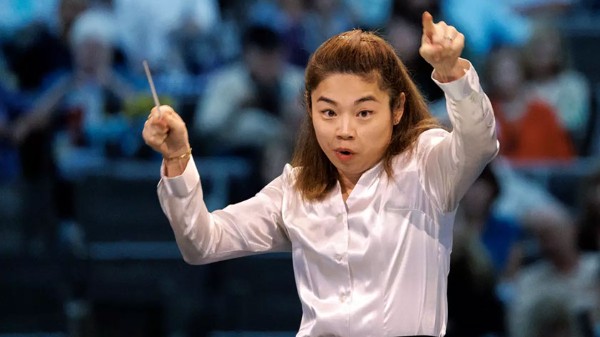
Elim Chan
To celebrate her birthday on 18 November 1986, let’s explore how Chan’s trajectory, achievements, and identity contribute to a feminine revolution in conducting.
Elim Chan conducts Rimsky-Korsakov: Scheherazade (Excerpt)
Breaking Batons and Boundaries
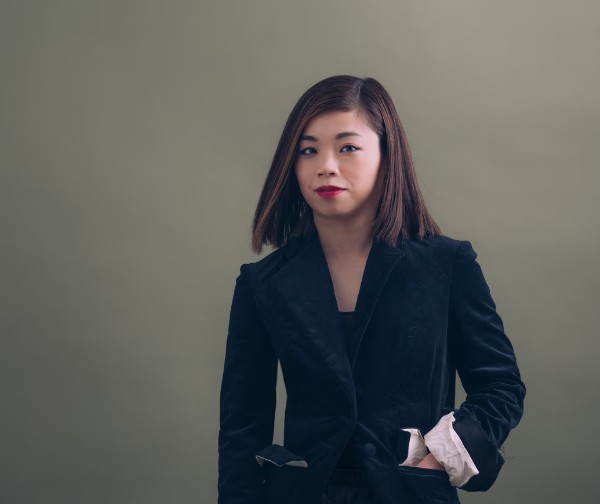
Elim Chan
From Hong Kong-born beginnings, Elim Chan’s rapid ascent is itself noteworthy.
In 2014, she became the first female winner of the prestigious Donatella Flick Conducting Competition, conducting the London Symphony Orchestra in works by Beethoven, Stravinsky and Rimsky-Korsakov.
As a reward, she served as assistant conductor with the LSO in 2015–16. Subsequently, she was appointed chief conductor of the Antwerp Symphony Orchestra for the 2019-20 season, and served as principal guest conductor of the Royal Scottish National Orchestra from 2018 to 2023.
These milestones are significant, not only because she is a woman, but also because she is young, Asian-born, and stepping into roles that were rarely, if ever, held by women before.
Elim Chan conducts Tchaikovsky: Swan Lake, Suite Op. 20a
Shattering the Baton Ceiling
The world of orchestral conducting has for decades been dominated by men. Women conductors were few and often seen as exceptions or novelties rather than the norm.
Chan’s presence disrupts that pattern in multiple ways. Her appointment and visibility challenge the implicit assumption that the podium is an exclusively “male” domain.
Beyond symbolic significance, Chan has earned wide respect for her craft. Reviewers describe her as “a rare example of a young conductor at once brilliant and not in the least showing off.”
Elizabeth Ogonek: All These Lighted Things (Antwerp Symphony Orchestra; Elim Chan, cond.)
Beyond the Spotlight

Elim Chan
Chan has acknowledged the dual pressure of visibility and scrutiny faced by women in conducting. And while the opportunities are increasing, “just one mistake, and, look, she’s not ready.”
Chan’s contribution goes beyond symbolism. Her conducting style has been praised for elegance, precision and emotional insight. Her approach, including clear beat, economical gestures, and sensitivity, draws favourable comparison to great conductors of past generations.
Her presence is not just a novelty. It is grounded in serious artistic merit. In so doing, she helps shift perceptions about what a woman conductor can do, not just who she is.
Elim Chan conducts Shostakovich: Waltz
Progress and Persistence
Chan herself recalls being inspired by female conductors in her early life in Hong Kong, and she has now become a role model for young female musicians and conductors. She has emphasised that women must “find their own way of leading, of being true to themselves, whether you wear a dress, or pants, have short or long hair. Authenticity is very powerful.”
While much progress has been made, Chan’s story also highlights that work still needs to be done. She commented that “not all orchestras are ready for someone like me,” as entrenched resistance remains.
Women are still under-represented in chief conductor roles, and mistakes or criticism can impose extra pressure. With novelty comes expectation, and Chan will continue to make bold artistic choices without being boxed in by identity.
Frédéric Chopin: Piano Concerto No. 2 in F Minor, Op. 21 (Benjamin Grosvenor, piano; Royal Scottish National Orchestra; Elim Chan, cond.)
The Sound of Chance
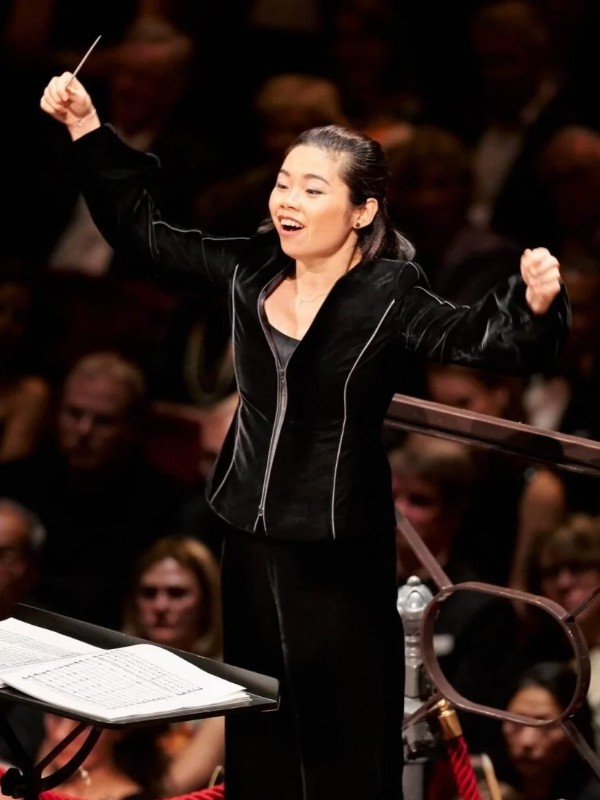
Elim Chan
We could actually call Elim Chan a harbinger of change. Her presence at the top levels of orchestral conducting signals a rupture of the old model.
By excelling artistically, embracing her background and identity, and leading major orchestras, she proves that a feminine revolution in conducting is not just about gender, but about expanding what leadership in classical music can look like and who it can come from.
Celebrating Chan’s journey, we find a broader transformation where young musicians of all backgrounds can imagine themselves standing at the front. Her very existence on the podium is a bold statement, as the stereotype has been broken and a new agreement is being written.
For more of the best in classical music, sign up for our E-Newsletter