On 9 August 1975, the world lost one of the 20th century’s most enigmatic and profound musical voices, Dmitry Dmitriyevich Shostakovich. Fifty years later, as we commemorate the anniversary of his death, his legacy endures as a testament to the resilience of the human spirit, the power of art under oppression, and the complexity of navigating a turbulent socio-political landscape through music.
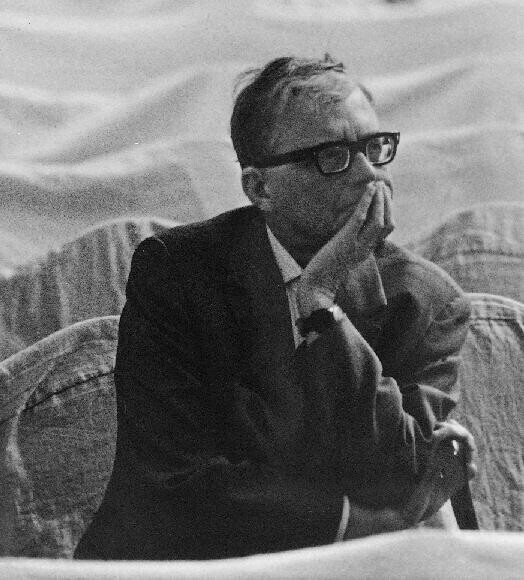
Dmitry Shostakovich
Shostakovich’s compositions, which include symphonies, string quartets, operas, and film scores, continue to captivate audiences with their emotional depth, intellectual exactness, and haunting ambiguity. His reputation has grown steadily since his death, and according to scholars, he has “become the most popular composer of serious art music in the middle years of the 20th century.”
Dmitry Shostakovich: Piano Trio No. 1 in C minor, Op. 8
Irony and Dissonance
Born on September 25, 1906, in St. Petersburg, Shostakovich came of age in a Russia convulsed by revolution and transformation. The Bolshevik Revolution of 1917 and the subsequent establishment of the Soviet Union profoundly shaped his world. As a young prodigy, Shostakovich displayed extraordinary talent, entering the Petrograd Conservatory at 13 and composing his First Symphony by 19. This work, premiered in 1926, announced his arrival as a bold new voice, blending modernist influences with a distinctly Russian lyricism.
However, Shostakovich’s career unfolded under the shadow of Stalin’s regime, where art was subordinated to ideological demands. The Soviet state’s doctrine of Socialist Realism required artists to produce accessible, optimistic works that glorified the proletariat and the state. Shostakovich, with his penchant for irony, dissonance, and emotional complexity, often found himself at odds with these expectations.
Dmitry Shostakovich: Symphony No. 1 in F Minor, Op. 10 – I. Allegretto – Allegro non troppo (Royal Liverpool Philharmonic Orchestra; Vasily Petrenko, cond.)
Conformity or Defiance
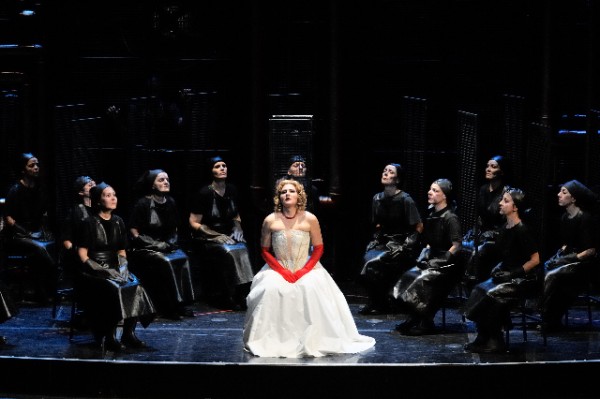
Shostakovich’s Lady Macbeth of the Mtsensk District
His opera Lady Macbeth of the Mtsensk District of 1934 initially enjoyed success but was famously denounced in a 1936 Pravda editorial titled “Muddle Instead of Music.” The article, widely believed to reflect Stalin’s disapproval, condemned the opera as “formalist” and “degenerate,” thrusting Shostakovich into a precarious position. As musicologist Laurel E. Fay notes, “the Pravda attack marked a turning point in Shostakovich’s career, forcing him to navigate a treacherous path between artistic integrity and survival.”
The composer withdrew his Fourth Symphony, fearing further reprisals, and responded with his Fifth Symphony of 1937, subtitled “A Soviet Artist’s Reply to Just Criticism.” This work, with its accessible melodies and triumphant finale, was hailed as a model of Socialist Realism, yet its emotional undercurrents of grief, defiance, and ambiguity have fuelled debates about whether it was a capitulation to or a subversion of Soviet demands.
Dmitry Shostakovich: Symphony No. 5 in D minor Op. 47 “Allegro non troppo”
Decoding Shostakovich
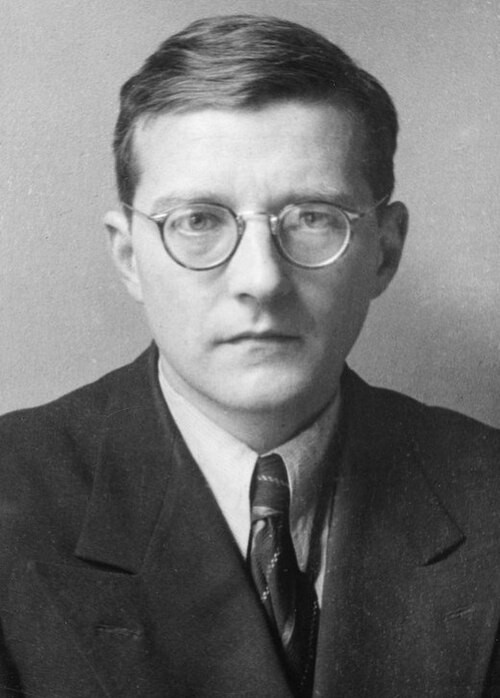
Dmitry Shostakovich, 1942
Shostakovich’s music has always been a battleground for interpreters seeking to decode his intentions. Was he a loyal Soviet citizen or a dissident using music to critique the regime? One thing is sure: the ambiguity of Shostakovich’s music allows for multiple readings. His Seventh Symphony, the “Leningrad”, written during the Nazi siege of Leningrad, for example, is a powerful example.
Its famous “invasion theme” in the first movement, a relentless march that grows from a whisper to a roar, is often interpreted as depicting Nazi aggression. Yet, as musicologist Richard Taruskin argues, “Shostakovich may have intended it to represent broader themes of oppression. This Symphony is not just about the war but about the total experience of Soviet life.”
Dmitry Shostakovich: Symphony No.7 in C Major, Op. 60 “Allegretto”
D-S-C-H
It is this duality of specific historical references layered with universal human struggle that makes Shostakovich’s music timeless. His string quartets, particularly the Eighth (1960), further exemplify this complexity. Dedicated “to the victims of fascism and war,” the Eighth Quartet is deeply personal, quoting Shostakovich’s musical monogram (D-S-C-H) and themes from his earlier works.
Its anguished tone suggests a meditation on suffering, and as Ian Mac Donald writes, “it is the composer’s musical autobiography, a cry of pain from a man who lived through a nightmare.”
Whether one accepts this interpretation or sees the quartet as a more universal lament, its raw emotional power is undeniable.
Dmitry Shostakovich: String quartet No. 8 in C minor, Op. 110
From Exuberance to Elegy
Shostakovich’s music defies easy categorisation, blending tonal and atonal elements, folk influences, and modernist techniques. His symphonies, numbering 15, range from the youthful exuberance of the First to the bleak introspection of the Fourteenth (1969), a song cycle for soprano, bass, and chamber orchestra meditating on death. His orchestration is vivid, often employing stark contrasts, with lyrical passages interrupted by grotesque marches or sardonic dance.
This juxtaposition, as musicologist David Fanning observes, creates “a musical language that speaks simultaneously of public celebration and private despair.” Humour and irony are central to Shostakovich’s style, serving as both a shield and a weapon. This subversive streak, whether intentional or not, still resonates with audiences who sense the tension between surface and subtext in his music.
Dmitry Shostakovich: Symphony No. 14, Op. 135 – I. De profundis: Adagio (Nikita Storojev, bass; I Musici di Montreal, Ensemble; Yuli Turovsky, cond.)
Intimate Whispers
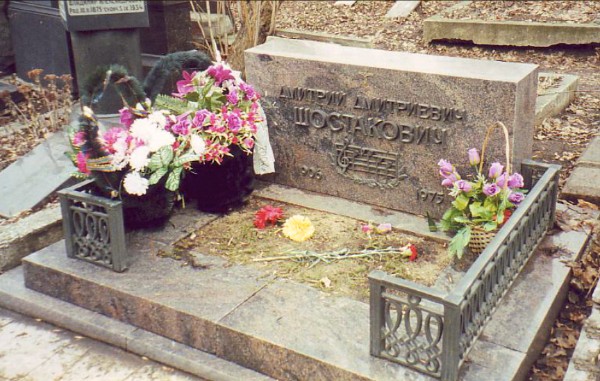
Shostakovich’s grave
Shostakovich’s chamber music, particularly his 15 string quartets, reveals a more intimate side. Unlike the public stage of his symphonies, the quartets allowed him to explore personal themes with greater freedom.
The Fifteenth Quartet (1974), composed near the end of his life as he battled motor neuron disease, is a stark meditation on mortality, its six slow movements unfolding with a sense of inevitability. As musicologist Wendy Lesser notes, “Shostakovich’s quartets are his most honest works, where he could speak without fear of being overheard.”
Dmitry Shostakovich: String Quartet No. 10 in A -flat Major, Op. 118 “Allegretto Furioso”
Enduring Impact and Legacy
50 years after his death, Shostakovich’s music remains a touchstone for performers, scholars, and audiences. His works are regularly programmed in concert halls worldwide, from the majestic Fifth Symphony to the introspective Thirteenth, Babi Yar (1962).
The debate over Shostakovich’s intentions persists, reflecting broader questions about art’s role in society. Was he a hero, a victim, or a pragmatist? As Fay cautions, “To reduce Shostakovich to a single narrative of either dissident or conformist diminishes the complexity of his life and art.” To be sure, his music resists such simplifications, inviting listeners to grapple with its contradictions.
Shostakovich’s ability to encode dissent within compliance feels strikingly relevant in 2025. Moreover, his influence extends beyond classical music. Composers like Alfred Schnittke and Sofia Gubaidulina, who emerged from the Soviet tradition, owe a debt to Shostakovich’s fearless experimentation. His film scores, such as those for The Gadfly (1955) and Hamlet (1964), have inspired contemporary soundtrack composers, while his blending of high and low art prefigures postmodern aesthetics.
Dmitry Shostakovich: The Gadfly, Op. 97 “Romance”
Celebrating a Universal Voice
Shostakovich’s music is a mirror reflecting the tumult of his time and the enduring human struggle for expression. On the 50th anniversary of his death, we celebrate a composer who transformed personal and collective pain into art of universal resonance. His symphonies and quartets, with their interplay of irony, grief, and defiance, continue to challenge and move us.
As Richard Taruskin summarises, “Shostakovich’s music is a testament to the power of art to bear witness, even in the darkest of times. Shostakovich had the ability to speak truths that transcend words, reaching across decades to touch our hearts and minds. His legacy is not only in the notes he wrote but in the questions he leaves us, and these questions about art, morality, and the courage to create in the face of adversity resonate deeply in a world once again grappling with division and chaos.
For more of the best in classical music, sign up for our E-Newsletter