The love story between Robert Schumann and Clara Wieck is surely the best-known love story in classical music history.
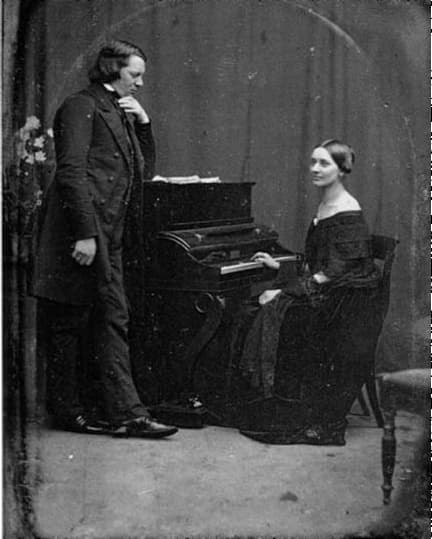
Robert and Clara Schumann
According to legend, the young composer and the young pianist fell in love, but her cruel father kept the lovers apart, battling them in court until they were finally free to marry.
However, the reasons why Clara’s father, Friedrich, had objections to Robert aren’t as well-known as the legend.
It is absolutely true that Friedrich Wieck was often a cruel and selfish man. However, some of his concerns about his daughter’s marriage were reasonable.
Understanding those concerns adds some shades of grey to what is oftentimes portrayed as a black and white situation.
Today, we’re looking at eight reasons why Friedrich Wieck was so furiously opposed to Robert Schumann marrying his daughter.
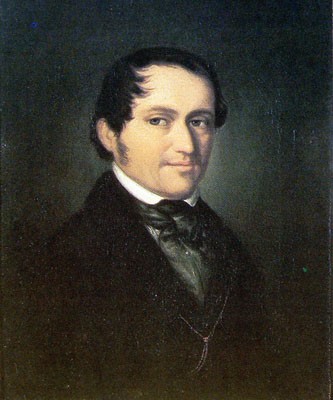
Friedrich Wieck
Friedrich felt an intense sense of control and ownership over both Clara and her career.
Friedrich Wieck often treated his daughter as a living advertisement for his teaching methods and music business.
Even before she was born, he was thinking about how to promote her and his methods. He named her Clara because the name means “bright” and “famous”, and he thought it would be a fitting name for a piano prodigy.
(Ironically, Robert Schumann himself became one of the pupils whose playing attracted Clara. He first heard her play when she was eight years old and was so dazzled by her that he signed up to take lessons with Wieck, too.)
During her childhood, Friedrich controlled Clara’s life completely. He dictated what she played, how she played it, where she played it, who she met, and what she learned, musically or otherwise.
He even kept a joint diary, going so far as to write entries from her perspective.
He truly felt that she was his creation. The moment that Clara dared to begin asserting any kind of autonomy, he was always going to react badly.
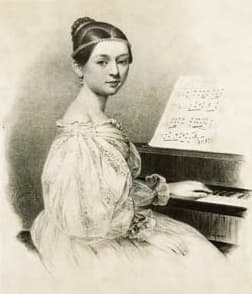
Clara Wieck at 15 years old
Friedrich was upset that his financial investment in Clara might not pay off.
Over the course of Clara’s musical education, aside from some very early instruction from her mother, Friedrich was her sole teacher.
She received lessons daily. Friedrich later argued that if he’d known Clara was going to abandon him, he could have spent this time teaching other pupils or his other children.
He also had taken financial risks by traveling internationally with her, hiring out halls, paying for her wardrobe, etc.
Apparently, he did this with the expectation that she would continue providing income for him well into her adulthood.
The idea that a composer like Robert Schumann, who had never made any comparable financial sacrifices for her, would legally control the money she’d earn as an adult was unacceptable to him.
Clara Schumann: Piano Concerto in A minor, Op.7
Friedrich was worried that Robert would not be able to support Clara financially.
Friedrich also had worries about Robert’s ability to earn money.
It must be remembered that before the advent of reliable birth control, it was common for married women to give birth five, ten, or even fifteen times.
As newlyweds, the Schumanns wouldn’t just need to support themselves financially; they also needed to be prepared to support several children in short order.
Robert was nearly ten years older than Clara, but injury had kept him from developing into a full-fledged piano virtuoso. Therefore, he had to focus on music journalism and composing, neither of which was particularly lucrative occupations.
In fact, despite the fact that she was younger and a woman, Clara was better positioned to out-earn Robert.
This introduced a dynamic that was uncomfortable for everyone, given the unyielding gender roles of mid-nineteenth-century Germany.
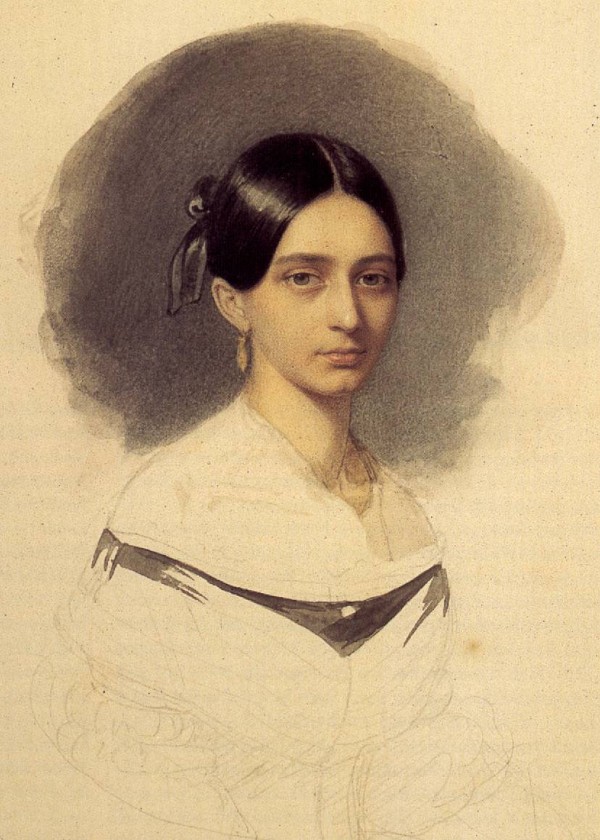
Clara Wieck
Clara was very young.
When they first met, Clara was eight years old and Robert was seventeen.
When Robert actually came to study with Friedrich and moved into the Wieck household, Clara was eleven years old, and Robert was twenty.
Robert had been an integral part of Clara’s childhood. In fact, he ended up being one of the people who taught her how to play common childhood games. He played charades with her and dressed up as a ghost to scare her.
According to Clara, their flirtation began when she was fourteen. In the ensuing years, she flirted with other boys, but she never came close to falling in love. She ended up coming into her relationship with Robert with very little romantic experience.
Robert and Clara got engaged a few weeks before she turned eighteen years old. Trusting a seventeen-year-old to make such a major decision about who they want to spend the rest of their life with is a difficult thing!
Clara Schumann: Trio in g-minor, op.17
Robert had gotten engaged to another Wieck student – then left her.
In the summer of 1834, a seventeen-year-old girl named Ernestine von Frick joined the household for the summer to study piano with Friedrich. While Ernestine was there, her fellow student Robert fell in love with her.
They secretly got engaged in August. However, the fact that she was adopted caused legal issues when they tried to organise the paperwork for the marriage.
One of the issues they ran into was that, for several legal reasons, her future husband would not be able to inherit her money.
Robert’s love for her cooled, and he even started kissing Clara before he officially broke up with Ernestine.
Friedrich may not have known all of the messy details, but he did witness the relationship. He was concerned that Robert’s love for Clara would follow a similar path and that Robert would play the cad again.

Robert Schumann
Friedrich believed that Robert had substance abuse and mental health issues.
Schumann’s wider family had a history of mental illness, and Friedrich knew it. He likely saw glimpses of it in Robert, who had a tendency to depression, anxiety, and manic behaviour.
Robert also drank quite a bit in his student days. He was drinking less by the time he proposed to Clara, but that didn’t keep Friedrich from claiming in court documents that Robert was an alcoholic.
Robert Schumann’s Carnaval, written 1834-35
Friedrich didn’t like Robert’s music and didn’t trust him to be able to make a living as a composer.
In a December 1839 court filing, Friedrich claimed that Robert wrote low-quality music.
When Robert first floated the idea of coming to study with Wieck, Robert’s worried mother had written a letter to Friedrich, asking him to judge Robert’s musical talent.
In that letter, she expressed doubt that Robert had the ability to have a successful career in music. Friedrich never forgot her assessment.
Clara could have married a wealthy man instead.
Clara was well-traveled and had become the musical darling of several musical capitals while still in her teens.
Had she turned down Robert and waited for a wealthy suitor, she could have secured a comparatively easy life for herself…and Friedrich.
Clara Schumann’s Scherzo No.2 in C Minor
So what happened?
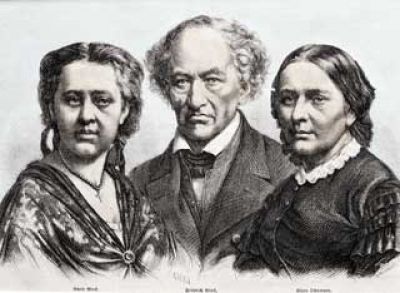
Marie Wieck and Clara Schumann with Friedrich Wieck, c.1880
In the end, after some back and forth between the parties, the court decided that Friedrich Wieck’s concerns were not enough to prevent the marriage.
Robert and Clara married in September 1840, the day before Clara’s twenty-first birthday. The family only started taking their first steps toward reconciliation after Clara gave birth to her first baby.
For more of the best in classical music, sign up for our E-Newsletter