Franz Liszt spent several years creating piano versions of Franz Schubert’s songs. Crafted between 1833 and 1846, he made around fifty-six transcriptions that carefully kept many details of the original music.
By removing the words, these pieces become purely instrumental. However, Liszt remained very aware of the connection between text and music. In fact, he often printed the lyrics above the notes in the piano score.
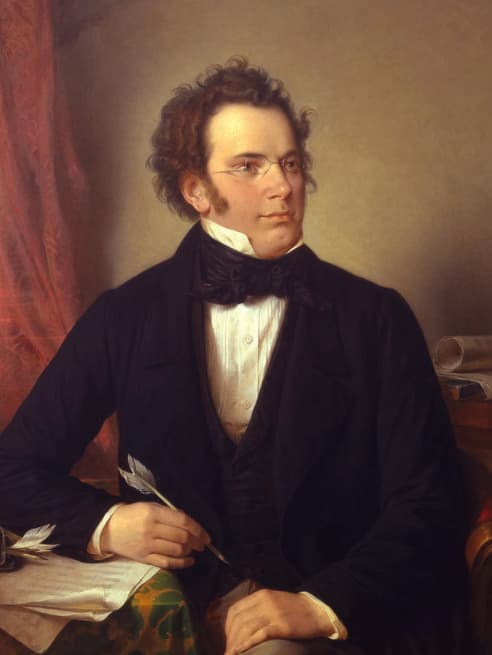
Franz Schubert
In his transcriptions, Liszt added new layers to the music, ranging from subtle changes to dramatic reinterpretations. Some stay close to Schubert’s originals, while others expand on the ideas or even offer a fresh perspective.
To celebrate Franz Schubert’s birthday on 31 January, let’s explore these transcriptions as a way to hear Schubert’s songs through Liszt’s imagination.
Schubert/Liszt: “Auf dem Wasser zu singen”
Virtuosity with a Purpose
Liszt was always a great admirer of Schubert’s melodic genius, and he started transcribing Schubert songs in the early 1830s. But he was also a practical man. As a touring virtuoso, he needed fresh repertoire and a steady income.
Publishers were eager for pieces that combined a famous name with immediately appealing material. A Schubert melody, recast for solo piano by the most celebrated pianist in Europe, was a winning formula.
Artistically, the transcriptions gave Liszt something he cared for deeply. He was looking to fuse poetry and pianism, trying to preserve the atmosphere, the emotional arc and the vocal line of the song.
Schubert-Liszt: “Du bist die Ruh”
Disaster and Discovery
By the late 1830s, Liszt was producing Schubert transcriptions at an astonishing rate. One of the reasons can be found in a natural disaster. When the Danube burst its banks and flooded large parts of Hungary in March 1838, Liszt hurried to Vienna and threw himself into relief efforts.
Between 18 and 25 April 1838, he gave eight benefit concerts for the flood victims. This wasn’t just a charitable event but an important moment in music. He introduced the Viennese audience to several piano transcriptions of Schubert songs, and they were an instant hit.
The pieces were quickly snapped up by publishers, who quickly realised that they were sitting on a goldmine. Liszt was pressed to produce more, and he occasionally complained that the success of these pieces had made him a victim of his own popularity.
Schubert/Liszt: “Der Wanderer”
Out of Circulation
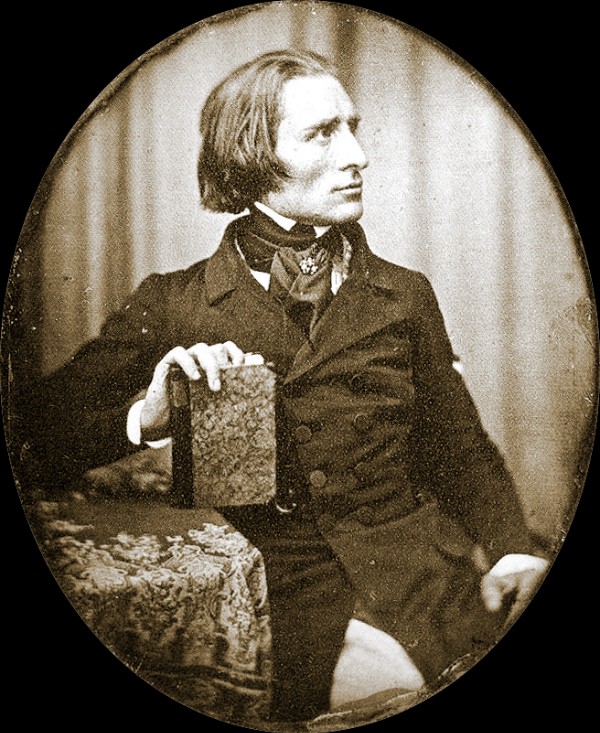
Franz Liszt
The Liszt/Schubert transcriptions were enormously popular with audiences during the pianist’s lifetime. Curiously, after Liszt’s death, however, they quietly slipped out of fashion. The reason was editorial and not musical.
A large collected edition of Liszt’s works was published in the 1930s, but the Schubert song transcriptions were simply left out. Without printed scores in circulation, the pieces became easy to overlook.
For several decades, they remained largely unheard. It was not until the 1980s that a small number of these transcriptions finally appeared on commercial recordings. Without a living performance tradition, today’s performers have to reconstruct these works from written accounts and the scores.
Schubert/Liszt: “Gretchen am Spinnrade”
From Faithful to Fabulous
When Liszt set out to turn Schubert’s songs into piano pieces, he approached each one in different ways. In his literal translation from voice to piano, he stuck very close to the original by keeping the melody and harmony tied to the Schubert original.
Other times, he took the opportunity to enhance the music, adding extra flourishes, richer textures, or more dramatic effects. And in a few cases, he went even further.
He reinterpreted the song entirely, transforming it into something that could only exist on the piano while still capturing the spirit of the original. This wide range, from faithful to imaginative, gives the transcriptions their unique charm and makes them fascinating to play and hear.
Schubert/Liszt: “Frühlingsglaube”
Shimmering Fidelity
For example, in “Auf dem Wasser zu singen,” Liszt stays very close to Schubert’s original song. The flowing melody and gentle accompaniment are preserved almost exactly. Even without the words, the calm and lyrical beauty comes through clearly.
At the same time, Liszt can’t resist adding a little extra magic. He sprinkles in soft arpeggios, delicate flourishes, and shimmering textures that give the piece a more sparkling sound.
These enhancements don’t change the character of the song, but bring out the colour that a solo piano can provide. The result is a transcription that feels entirely faithful and lyrical.
Schubert/Liszt: “Die junge Nonne”
Quietly Magnified
In “Die junge Nonne,” Liszt takes great care to preserve the quiet and meditative mood of Schubert’s original song. The melody is gentle and reflective, and the piano accompaniment mirrors the solemn, contemplative atmosphere.
Here, Liszt doesn’t change the character of the song, but he enhances it in ways that only the piano can. He adds slightly fuller chords and occasional octaves, placing weight and resonance on the harmony.
These small touches support the reflective mood, deepening the sense of stillness and calm. Liszt’s additions act like a magnifying glass on Schubert’s expressive ideas, enhancing imagery and mood while staying loyal to the song’s intent.
Schubert/Liszt: “Die Forelle”
A Sparkling Tribute
In his transcription of “Die Forelle”, Liszt starts with the lively and playful Schubert song but takes it in new directions for the piano. The song’s cheerful character is immediately recognisable, with listeners immediately feeling the joy and energy of the original.
At the same time, Liszt reimagines the music in ways that only a piano can. He adds brilliant runs, cascading arpeggios, and shimmering figurations that suggest the movement of water and the fish darting beneath the surface.
These enhancements turn the song into a dazzling piano showpiece while still respecting the charm and wit of Schubert’s melody. The result is both a tribute and a transformation. It is a sparkling reinterpretation that brings Schubert’s music to life on the keyboard.
Schubert/Liszt: “Erlkönig”
Drama on the Keys
Similarly, in the “Erlkönig,” Liszt takes on one of Schubert’s most dramatic and intense songs. It’s all there, the galloping horse, the urgent father, the terrified child, and the eerie voice of the Erlking.
Liszt preserves all of this but transforms it for the instrument. Powerful octaves, rapid runs, and shifting texture capture the galloping horse and the mounting fear. In essence, the piano becomes a storyteller with each character voiced through different registers and dynamics.
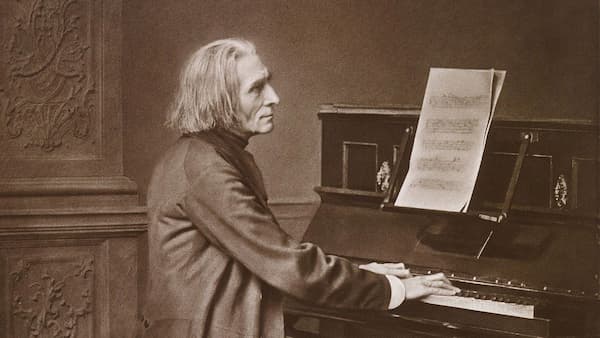
Franz Liszt at the piano
The Schubert song transcriptions by Franz Liszt show us how a great performer can be both a faithful interpreter and a creative reimaginer. They have found new life in the hands of great pianists today, yet there is still a lot of exploration to be done.
Late in life, Liszt went a step further and created orchestral versions of six Schubert lieder. Wouldn’t it be fun to compare these to the piano transcriptions of his 1830s?
For more of the best in classical music, sign up for our E-Newsletter