Nowadays, we remember Robert Schumann as a composer.
However, during his lifetime, he was also widely known as a music critic and founder of the periodical Neue Zeitschrift für Musik (New Journal for Music).
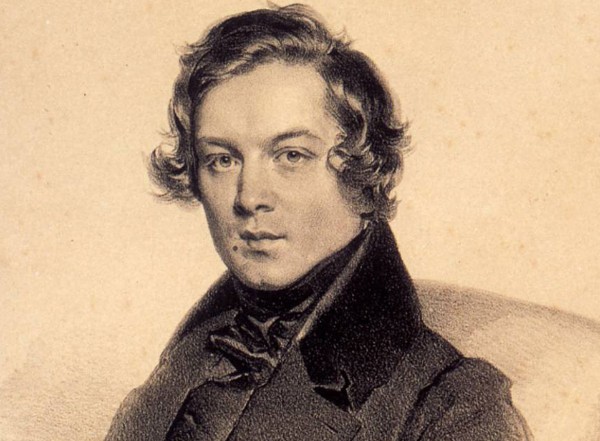
Robert Schumann
Today, we’re looking at Schumann’s work on Neue Zeitschrift für Musik, as well as what a typical issue looked like…and what the most famous article he ever wrote for it was.
The First Issues of Neue Zeitschrift für Musik
Robert Schumann founded the Neue Zeitschrift für Musik in early 1834, a few months before his twenty-fourth birthday.
The first issue appeared on 3 April 1834 under the title Neue Leipziger Zeitschrift für Musik (New Leipzig Journal for Music).
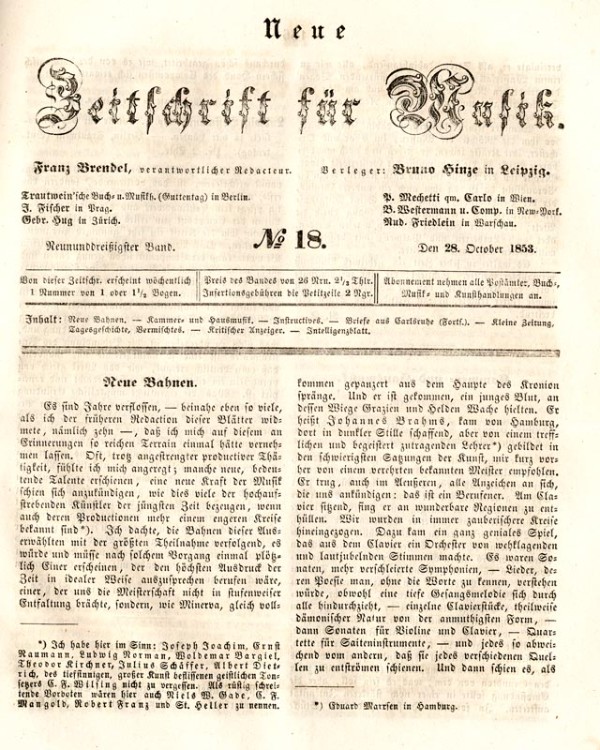
Neue Zeitschrift für Musik
A year into its run, the magazine’s name was changed to Neue Zeitschrift für Musik (New Journal for Music), reflecting the way the journal was examining musical life beyond Leipzig. This is the name that the journal is remembered by today.
Its subtitle was “Herausgegeben durch einen Verein von Künstlern und Kunstfreunden” (“published by a society of artists and arts lovers”).
This subtitle was important. It underlined how Schumann envisioned the journal’s audience as being a circle of like-minded musical friends.
The Staff of Neue Zeitschrift für Musik
At launch, the staff included Schumann and three others. Unfortunately, it quickly became clear that all three would have trouble carrying out their duties.
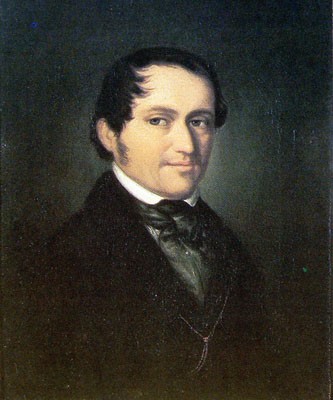
Friedrich Wieck
First was Friedrich Wieck, Robert’s piano teacher. At this time, Wieck’s first priority was always the education of his daughter Clara, who was one of the greatest piano prodigies of her generation.
Clara was fourteen years old and just starting her international career in earnest when the first issue of Neue Zeitschrift für Musik was published. Wieck needed to accompany her on her European tours, and wasn’t always available to contribute.
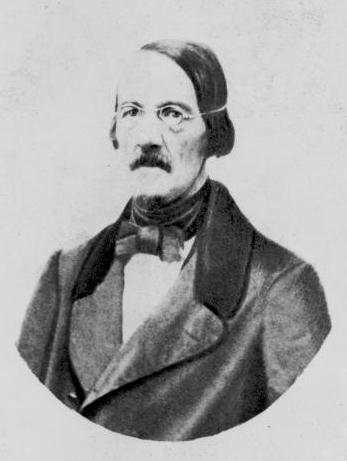
Julius Knorr © Wikipedia
Meanwhile, pianist Julius Knorr (the man who had introduced Chopin’s music to Schumann) and Ludwig Schunke both suffered from ill health. Schunke would actually die of tuberculosis in December 1834, at the age of 23.
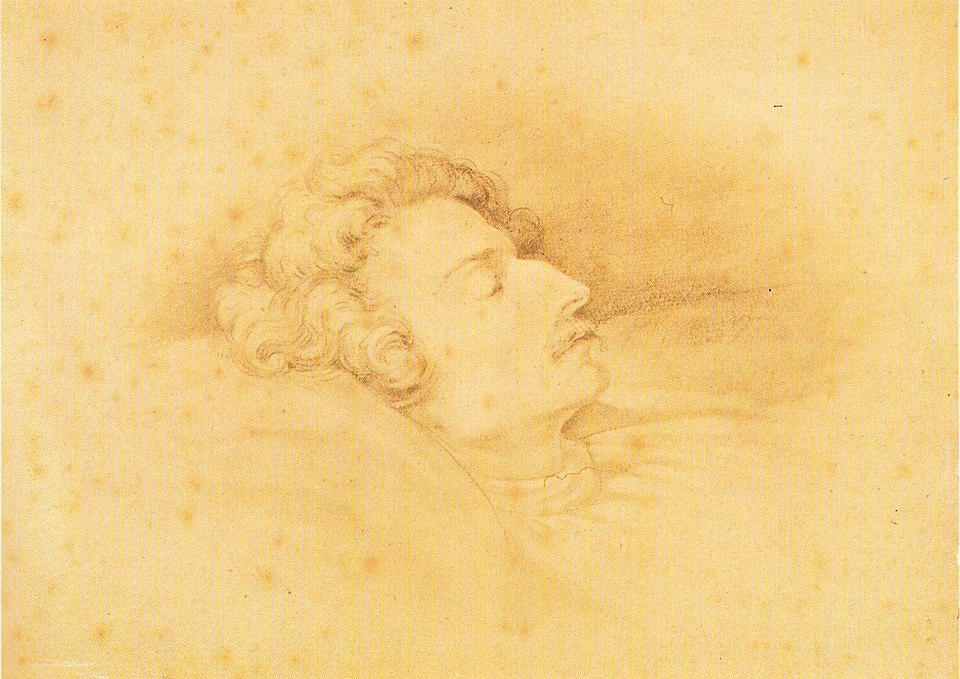
The only portrait of Ludwig Schuncke, done on his deathbed in 1834 © Wikipedia
What was Schumann’s creative vision for the Neue Zeitschrift für Musik?
Schumann had a creative vision for the journal. He desperately wanted to break away from the milquetoast reviews common in rival music journals during the 1830s.
He wrote that contemporary music critics too often uplifted the “arch-enemies of our art and every other: the untalented, the dime-a-dozen talent…and the talented, facile scribblers.”
Schumann wanted to spread the word about new talent, while simultaneously pushing back against performers who he felt were second-rate imitators of icons like Liszt and Paganini.
At the same time, he was also interested in exploring music of the past and spotlighting works that he felt had the potential to be relevant throughout the generations.
What did a typical issue of Neue Zeitschrift für Musik look like?
Historian Annette Vosteen has researched and written about the Neue Zeitschrift für Musik (for information, click here).
The journal was published on a demanding schedule: twice a week, without fail.
Each issue was four pages long in quarto format, with each page split into two columns.
A typical issue contained the following features.
- An epigraph from one of Schumann’s favorite authors, such as Shakespeare, Goethe, or Jean Paul.
- A long and deeply researched essay on a topic like biography, aesthetics, the state of regional musical performance, or even assessments of the output of other rival music journals.
- Personal touches, including satirical articles featuring input from partially fictional alter egos like Schumann’s characters “Eusebius” and “Florestan.”
- Reviews, which included the subheadings “Kritik” (Criticism) and “Anzeigen” (Notices). Here, contributors would review printed works, as well as works still in manuscript.
- Correspondence. In Vosteen’s words, “The correspondence reports offer a comprehensive and lively description of musical life in various towns and cities throughout Germany and abroad.”
- Miscellany, where Schumann would include items like brief news updates, upcoming concert dates, and riddles.
- Final section. “The final section of each issue often consisted of advertisements, offers of employment (or employment wanted advertisements) and references to supplements,” Vosteen writes.
Who could write for Neue Zeitschrift für Musik?
Schumann was not picky about the qualifications of contributors, as long as he liked their writing and they shared musical ideals.
He relied on correspondents to report on concert life outside of Leipzig. Many of these correspondents were not professional writers; they were just talented communicators passionate about the art.
It’s interesting to note that not every article was published with an official byline. This helped to strengthen the impression of the journal being the voice for a kind of secret artistic society.
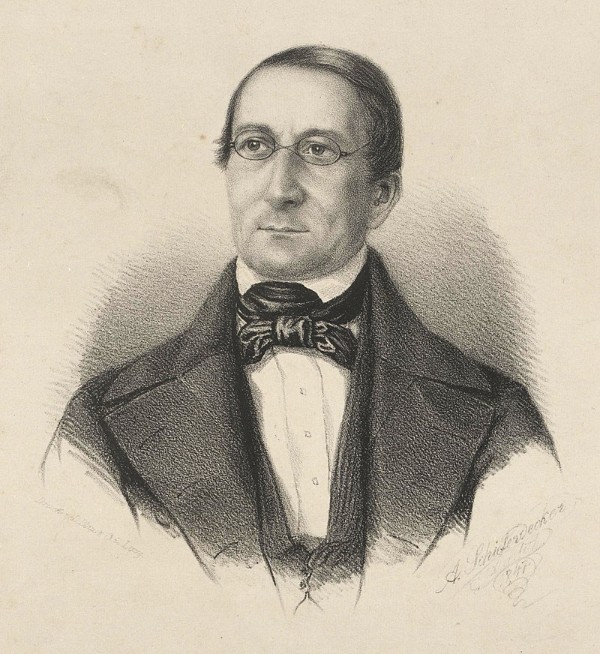
Carl Ferdinand Becker
Some regular contributors included violinist and organist Carl Ferdinand Becker, music teacher Oswald Lorenz (the man to whom Schumann dedicated his Frauen-Liebe und Leben song cycle), and folksong collector Anton Wilhelm von Zuccalmaglio.
To make matters more intriguing – albeit confusing – contributors often used coded initials, and sometimes those coded initials were used by multiple people. Nowadays, this practice can make identifying the authors of specific articles difficult.
The End of Schumann’s Time at Neue Zeitschrift für Musik
In 1843, Schumann resigned as editor of Neue Zeitschrift für Musik.
After an initial period of happiness as a newlywed (he married Clara Wieck in September 1840), his mental health began deteriorating, even as he entered a musically productive time of his life.
In early 1844, he accompanied Clara on a grueling months-long tour of Russia. He returned to Leipzig with his mental and physical health in tatters.
He knew that editing Neue Zeitschrift für Musik was taking up limited energy that he wanted to give to composing. So in 1844, he sold the journal to a man named Franz Brendel.
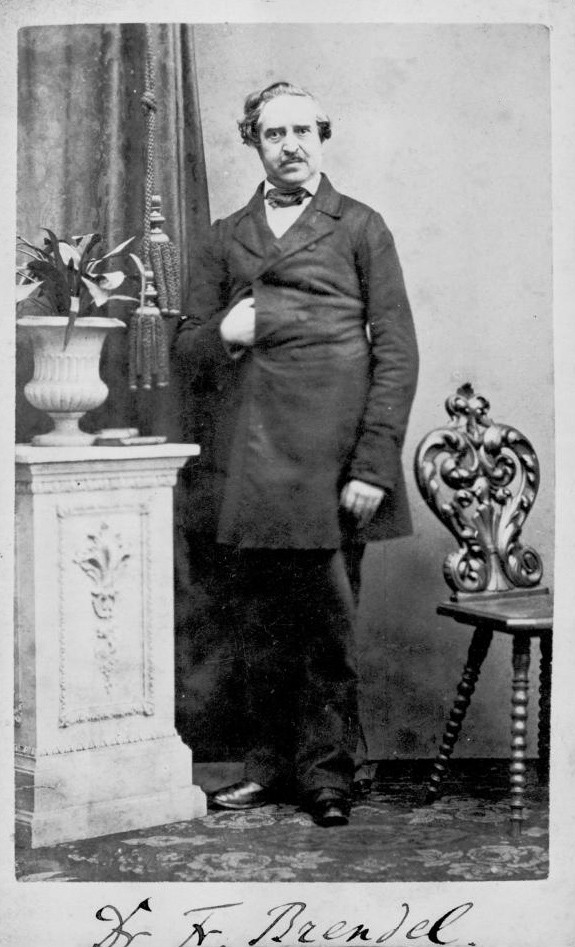
Franz Brendel
Schumann’s Final Article
Schumann wasn’t done contributing, though. In October 1853, he submitted his final article to Neue Zeitschrift für Musik. He called it “Neue Bahnen” (New Paths).
It was about a young composer whom he’d just met, named Johannes Brahms, who he believed would be the saviour of German music. It was a prophetic endorsement.
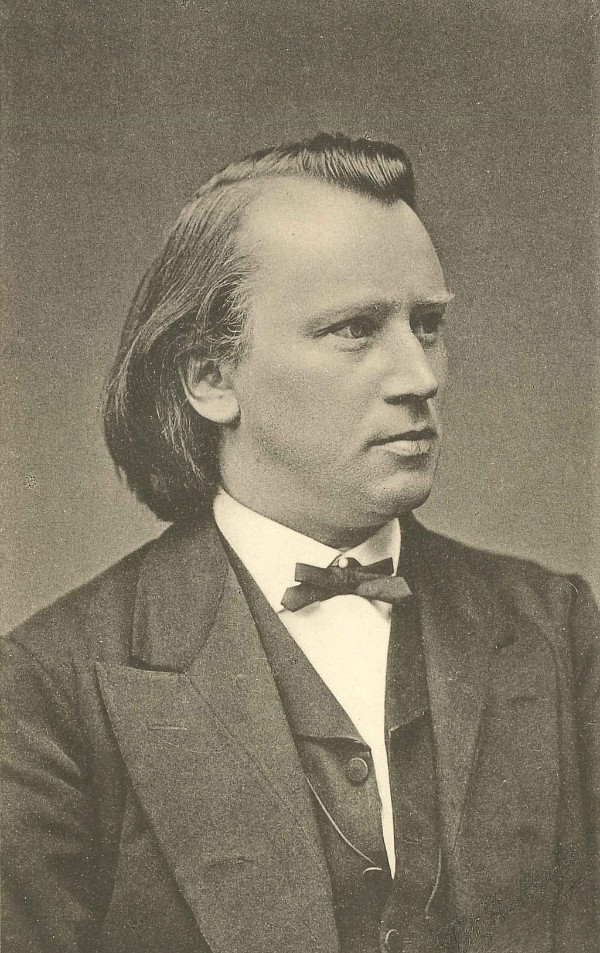
Johannes Brahms, ca 1875
Just months after publishing the article in October 1853, Schumann’s mental health deteriorated to the point where he made a suicide attempt in February 1854.
He understood that he was profoundly unwell and was afraid to be around his wife and children, so he agreed to move to an asylum. He died there in 1856.
He would be remembered for his music, but his work as a publisher was vitally important, too.
For more of the best in classical music, sign up for our E-Newsletter